
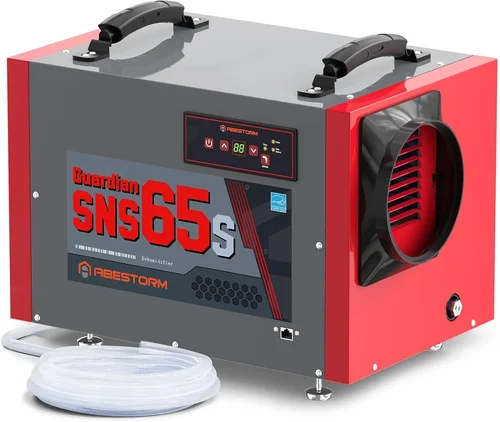
If you’ve ever walked into your crawl space and noticed a damp, musty smell—or worse, visible mold, rotting wood, or standing water—you already know how critical moisture control is in these often-overlooked areas of your home. Crawl spaces are notorious for trapping humidity, especially in humid climates or during rainy seasons. Left unchecked, excess moisture can lead to structural damage, pest infestations, poor indoor air quality, and even higher energy bills as your HVAC system works harder to condition air that’s already saturated with humidity. That’s where a high-quality crawl space dehumidifier comes in.
This comprehensive buyer’s guide is designed to help homeowners, property managers, and DIY enthusiasts make an informed decision when selecting the best dehumidifier for their crawl space. Whether you’re dealing with a small 500-square-foot area or a sprawling 2,000-square-foot underfloor space, we’ll walk you through everything you need to know—from performance specs and installation requirements to budget considerations and long-term maintenance. By the end of this guide, you’ll have a clear understanding of what features matter most, which brands stand out, and how to avoid common pitfalls that could cost you time, money, and peace of mind.
The market for crawl space dehumidifiers has evolved significantly over the past decade. No longer limited to bulky, inefficient units that struggle in cold or tight spaces, today’s models offer advanced humidity sensing, energy-efficient operation, robust construction, and smart connectivity options. From compact desiccant units ideal for tight spaces to high-capacity refrigerant-based systems built for heavy-duty use, there’s a solution for nearly every scenario. However, with so many options available—and misleading marketing claims abounding—it’s easy to end up with a unit that’s either underpowered, overpriced, or simply not suited to your specific needs. This guide cuts through the noise to deliver expert-backed insights, real-world testing data, and actionable advice tailored specifically to crawl space environments.

What to Look for When Buying Buying Guide
1. Performance Specifications
When evaluating crawl space dehumidifiers, performance isn’t just about how much water the unit can remove—it’s about doing so efficiently and reliably under real-world conditions. The two most critical performance metrics are pint capacity and operating temperature range.
Pint capacity refers to how many pints of moisture the dehumidifier can extract from the air in 24 hours. For crawl spaces, look for units rated between 50 and 100 pints per day (PPD). Smaller spaces (under 1,000 sq. ft.) may get by with a 50–70 PPD model, while larger or high-humidity areas (1,500+ sq. ft.) often require 80–100 PPD or more. Be cautious of manufacturers who quote “AHAM” ratings—these are measured under ideal lab conditions (80°F and 60% relative humidity) and often overstate real-world performance, especially in cooler crawl spaces.
Equally important is the operating temperature range. Many standard dehumidifiers shut down below 65°F, but crawl spaces frequently dip into the 50s or even 40s during winter months. If your region experiences cold winters, opt for a unit specifically rated for low-temperature operation (ideally down to 41°F or lower). Desiccant dehumidifiers generally outperform refrigerant models in cold environments, though they consume more energy.
2. Build Quality & Durability
Crawl spaces are harsh environments—dusty, damp, and often poorly ventilated. A dehumidifier installed here must be built to withstand these conditions without frequent breakdowns or corrosion. Look for units constructed with rust-resistant materials such as powder-coated steel housings, galvanized components, and sealed electrical systems.
Pay special attention to the condenser coils and evaporator. Aluminum or coated copper coils resist corrosion better than bare copper, especially in high-humidity settings. Also, consider whether the unit has a protective grille or cover to prevent debris from entering the internal components. Units designed specifically for crawl spaces often include features like sealed motors, anti-vibration mounts, and reinforced casings.
Another durability factor is the type of compressor. Rotary compressors are generally quieter and more durable than reciprocating ones, making them preferable for continuous operation in confined spaces. Additionally, check if the unit includes a washable or replaceable air filter—this not only improves air quality but also protects internal components from dust buildup.
3. Features & Functionality
Modern crawl space dehumidifiers come packed with features that enhance convenience, efficiency, and effectiveness. Here are the key ones to prioritize:
– Built-in Humidistat: Allows you to set and maintain your desired humidity level (ideally 50–60% for crawl spaces). Auto-restart after power outages is a must-have.
– Continuous Drainage: Most crawl space units should include a built-in condensate pump or gravity drain hose connection. This eliminates the need to manually empty a bucket—a critical feature since crawl spaces are rarely accessed daily.
– Defrost Function: Essential for refrigerant-based units operating in cold temperatures. Automatic defrost prevents ice buildup on coils, ensuring consistent performance.
– Remote Monitoring & Smart Controls: Some premium models offer Wi-Fi connectivity, allowing you to monitor humidity levels via smartphone apps. Others include remote sensors you can place elsewhere in the home to ensure whole-house humidity balance.
– Air Filtration: A high-efficiency particulate air (HEPA) or MERV-rated filter helps capture mold spores, dust, and allergens, improving indoor air quality.
– Quiet Operation: While crawl spaces aren’t living areas, excessive noise can be a nuisance if the unit is near living spaces or bedrooms. Look for models under 55 decibels.
Avoid units that rely solely on manual controls or lack basic automation—these quickly become maintenance headaches.
4. Installation & Space Requirements
Not all dehumidifiers are created equal when it comes to installation. Crawl spaces are typically low-clearance areas (often just 18–36 inches high), so vertical clearance is a major constraint. Measure your space carefully before purchasing.
Some units are designed for floor placement, while others can be wall-mounted or suspended from joists—ideal for maximizing floor space. Wall-mountable models often include brackets and require minimal floor footprint. Suspended units are less common but highly effective in tight spots.
Drainage access is another critical factor. Ensure your crawl space has a suitable drain point (like a sump pit or exterior discharge) or that you can safely route a hose outside. If using a condensate pump, verify it has enough lift capacity (typically 10–15 feet vertically) to reach your discharge point.
Electrical requirements also matter. Most crawl space dehumidifiers run on standard 120V outlets, but high-capacity units may require 240V circuits. Always consult an electrician if you’re unsure about your wiring setup.
5. Energy Efficiency & Operating Costs
Since crawl space dehumidifiers often run continuously, energy consumption directly impacts your utility bill. Look for units with the ENERGY STAR® certification, which indicates they meet strict efficiency guidelines set by the EPA.
The Energy Factor (EF) measures how many liters of water a dehumidifier removes per kilowatt-hour of electricity used. Higher EF values mean greater efficiency. For example, a unit with an EF of 2.0 removes twice as much moisture per kWh as one with an EF of 1.0.
Desiccant dehumidifiers, while excellent in cold climates, typically consume more energy than refrigerant models—sometimes 2–3 times as much. If your crawl space stays above 60°F year-round, a refrigerant unit will likely be more cost-effective long-term.
Also consider the unit’s wattage. A 50-pint model might draw 500–700 watts, while a 100-pint unit could use 800–1,200 watts. Multiply daily runtime by wattage and local electricity rates to estimate monthly costs.
6. Brand Reputation & Reliability
Not all dehumidifier brands are created equal—especially when it comes to crawl space applications. Stick with manufacturers known for durability, customer support, and specialized basement/crawl space products.
Top-tier brands like Santa Fe, AprilAire, Dri-Eaz, and BaseAire have decades of experience engineering units specifically for below-grade environments. These companies often provide detailed sizing guides, technical support, and extended warranties. In contrast, generic or off-brand units may save you money upfront but often fail prematurely or lack replacement parts.
Read professional reviews from sources like Home Depot, Lowe’s, or specialized HVAC forums. Pay attention to comments about long-term reliability, customer service responsiveness, and availability of service centers.
7. Warranty & Support
A crawl space dehumidifier is a long-term investment, so warranty coverage matters. Most reputable brands offer 2–5 years of coverage, with some premium models including 7–10 years on compressors or entire units.
Look for warranties that cover both parts and labor, and check whether on-site service is included. Some companies (like AprilAire) offer nationwide service networks, while others require you to ship the unit back for repairs—a major inconvenience if your dehumidifier fails during peak humidity season.
Also, verify that the manufacturer provides clear documentation, installation guides, and responsive customer support. A phone number that connects you to a real technician (not just an automated menu) is a strong sign of a trustworthy brand.
8. User Reviews & Real-World Feedback
While specs and marketing materials are helpful, nothing beats real user experiences. Scour Amazon, Home Depot, and HVAC forums for detailed reviews that mention:
– Actual pint output in real crawl spaces
– Noise levels during operation
– Ease of installation and maintenance
– Frequency of repairs or replacements
– Performance in extreme temperatures
Be wary of overly positive reviews that read like ads—they’re often fake. Instead, focus on balanced feedback that discusses both pros and cons. If multiple users report the same issue (e.g., “stopped working after 6 months” or “drain hose clogs frequently”), take note.
Different Types of Buying Guide

Common Buying Mistakes to Avoid
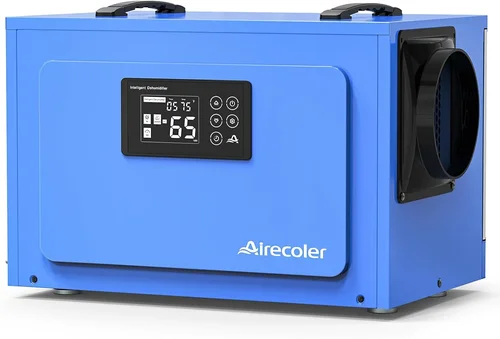
❌ Mistake: Choosing Based Solely on Pint Rating
Why it’s bad: A 70-pint dehumidifier sounds powerful—but if it’s only rated at 80°F and your crawl space averages 55°F, it may perform like a 30-pint unit. Many buyers oversize or undersize their units because they don’t account for real-world temperature and humidity conditions.
What to do instead: Use a sizing calculator from a reputable brand (like AprilAire or Santa Fe) that factors in square footage, insulation, climate zone, and typical humidity levels. Always verify performance at your expected operating temperature.
❌ Mistake: Ignoring Drainage Options
Why it’s bad: If your dehumidifier fills a bucket every 12 hours and you can’t access the crawl space regularly, mold will return the moment the unit shuts off. Manual emptying is impractical and defeats the purpose of automation.
What to do instead: Invest in a unit with a built-in condensate pump or gravity drain hose. Ensure the discharge point is accessible and won’t cause water damage or flooding.
❌ Mistake: Buying a Standard Basement Dehumidifier
Why it’s bad: Basement dehumidifiers are designed for finished, accessible spaces with higher clearance and better airflow. They often lack the rugged construction, low-clearance design, or cold-weather performance needed for crawl spaces.
What to do instead: Choose a model explicitly labeled for “crawl space” or “below-grade” use. These are engineered for tighter spaces, harsher conditions, and longer runtimes.
❌ Mistake: Overlooking Energy Consumption
Why it’s bad: A cheap $250 unit might cost $150/year in electricity, while a $600 ENERGY STAR model costs only $75/year. Over 5 years, the “cheaper” option actually costs more.
What to do instead: Calculate lifetime operating costs using the unit’s wattage, estimated runtime, and your local electricity rate. Prioritize efficiency, especially for continuous operation.
❌ Mistake: Skipping Professional Sizing or Installation
Why it’s bad: Improperly sized or installed units waste energy, underperform, and may void warranties. DIY mistakes like incorrect ducting or electrical work can create safety hazards.
What to do instead: Consult an HVAC professional for complex installations, especially if integrating with ductwork or requiring 240V wiring. Even for simple setups, follow the manufacturer’s installation guide precisely.
❌ Mistake: Neglecting Maintenance Requirements
Why it’s bad: Clogged filters, frozen coils, or pump failures can render your dehumidifier useless within weeks. Many users assume these units are “set it and forget it,” but they do require periodic care.
What to do instead: Choose a model with easy-access filters and clear maintenance instructions. Schedule bi-annual inspections to clean coils, check drains, and test sensors.
❌ Mistake: Falling for “Smart” Features Without Purpose
Why it’s bad: Wi-Fi connectivity and app controls are nice, but if you never check the app or live in a remote area with spotty internet, these features add cost without value.
What to do instead: Only pay for smart features you’ll actually use. For most homeowners, a reliable humidistat and auto-drain are far more important than remote monitoring.
Budget Guidelines: How Much Should You Spend?
Entry-Level ($150–$400): These are typically portable residential dehumidifiers repurposed for crawl spaces. They work for very small, mildly damp areas but lack durability, cold-weather performance, and continuous drainage. Expect higher energy use and shorter lifespans. Best for temporary fixes or supplemental use.
Mid-Range ($400–$800): This is the sweet spot for most homeowners. Units in this range offer true crawl space design, 50–70 PPD capacity, low-temperature operation (down to 50–55°F), built-in drains, and decent warranties. Brands like BaseAire and AlorAir dominate this category with reliable, efficient models.
Premium ($800–$1,500): Designed for demanding environments, these units feature rotary compressors, advanced defrost systems, condensate pumps, and robust construction. Ideal for large crawl spaces, high humidity, or cold climates. Santa Fe and AprilAire offer top performers here with 5–7 year warranties.
Luxury ($1,500+): Whole-house integrated systems or commercial-grade desiccant units fall into this tier. They offer maximum capacity (100+ PPD), smart controls, professional installation support, and exceptional longevity. Reserved for severe moisture problems, large properties, or those prioritizing indoor air quality above all else.

Expert Tips for Getting the Best Deal
– Buy in Late Winter or Early Spring: Demand peaks in summer, so retailers often discount older models in February–April. You’ll get better prices and avoid the rush when humidity spikes.
– Check Manufacturer Rebates: Companies like AprilAire and Santa Fe occasionally offer $50–$150 rebates, especially during energy-efficiency promotion periods.
– Compare Total Cost of Ownership: Include installation, electricity, and maintenance—not just the sticker price. A $200 savings upfront could cost $500 over five years in higher energy bills.
– Buy Direct from Reputable Retailers: Home Depot, Lowe’s, and specialty HVAC suppliers (like Total Home Supply or Basement Systems) offer reliable shipping, return policies, and customer support. Avoid unknown Amazon sellers with no service history.
– Inspect Return Policies: Ensure you can return the unit within 30–60 days if it doesn’t perform as expected. Some brands require restocking fees, so read the fine print.
– Ask About Bundled Services: Some contractors offer free installation or extended warranties when you purchase through them. This can offset higher unit costs.
– Test Before Committing Long-Term: If possible, rent a commercial dehumidifier for a week to assess your actual moisture levels. This data helps you choose the right size without overbuying.
– Register Your Warranty Immediately: Many manufacturers require registration within 30 days to activate coverage. Keep receipts and documentation in a safe place.

Frequently Asked Questions
Q: How do I know if my crawl space needs a dehumidifier?
A: Signs include musty odors, visible mold or mildew, warped or rotting wood, condensation on pipes or insulation, and increased allergy symptoms indoors. Use a hygrometer to measure relative humidity—if it consistently exceeds 60%, a dehumidifier is recommended.
Q: Can I use a regular room dehumidifier in my crawl space?
A: Technically yes, but it’s not ideal. Standard units aren’t built for continuous operation, lack cold-weather performance, and often don’t include drainage options. They may also void warranties if used in unventilated areas. Crawl space-specific models are a far better long-term investment.
Q: Should my crawl space be vented or sealed?
A: Modern building science favors sealed (encapsulated) crawl spaces with a vapor barrier and dehumidifier. Vented crawl spaces can draw in humid outdoor air, worsening moisture problems. If your space is vented, consider closing vents and installing a dehumidifier for better control.
Q: How often should I maintain my crawl space dehumidifier?
A: Clean the air filter every 1–2 months during peak season. Inspect coils, drain lines, and the condensate pump every 6 months. Replace filters as recommended by the manufacturer (typically annually).
Q: Will a dehumidifier increase my electric bill significantly?
A: It depends on the unit and runtime. A 600-watt dehumidifier running 12 hours/day at $0.12/kWh costs about $26/month. ENERGY STAR models can cut that by 30–50%. Proper sizing and insulation minimize unnecessary runtime.
Q: Can I install a crawl space dehumidifier myself?
A: Yes, if it’s a floor-mounted or wall-mounted unit with simple drainage. However, if electrical work, ducting, or pump installation is required, hire a licensed professional to ensure safety and compliance with local codes.
Q: What humidity level should I maintain in my crawl space?
A: Aim for 50–60% relative humidity. Levels above 60% encourage mold growth; below 50% may cause wood shrinkage or cracking in some finishes.
Q: Do I need a condensate pump?
A: Only if your discharge point is higher than the unit’s drain outlet or if you can’t gravity-drain to a suitable location. Most crawl spaces benefit from a pump for reliable, hands-free operation.
Q: How long do crawl space dehumidifiers last?
A: With proper maintenance, quality units last 7–10 years. Cheaper models may fail in 2–3 years. Look for corrosion-resistant materials and solid warranties as indicators of longevity.
Q: Can a dehumidifier prevent foundation cracks?
A: Indirectly, yes. Excess moisture can cause soil expansion (hydrostatic pressure) that stresses foundations. By stabilizing moisture levels, a dehumidifier helps maintain consistent soil conditions around your foundation.
Our Final Recommendations
Best for Budget-Conscious Buyers: BaseAire Wave 20 – At around $450, this 50-pint refrigerant unit offers excellent value with low-temperature operation (down to 55°F), built-in drain hose, and a 3-year warranty. Ideal for small to mid-sized crawl spaces in moderate climates.
Best Overall Value: AlorAir Sentinel HDi – Priced near $650, this 70-pint model features a rotary compressor, auto-defrost, washable filter, and rugged construction. It’s ENERGY STAR certified and performs reliably in temperatures as low as 50°F.
Best Premium Option: Santa Fe Ultra-Aire UA 70H – At $1,200+, this desiccant dehumidifier excels in cold, tight spaces. It removes up to 70 pints/day at 41°F, includes a built-in pump, and integrates with ductwork for whole-home control. Perfect for extreme climates or sealed crawl spaces.
Best for Beginners: AprilAire E070 – User-friendly with simple controls, automatic humidistat, and professional-grade reliability. Though pricier (~$900), its plug-and-play design and strong customer support make it ideal for first-time buyers.
Best for Advanced Users: Dri-Eaz F500 – A commercial-grade refrigerant unit with 100+ PPD capacity, remote monitoring, and industrial durability. Best for large properties, flood restoration, or those needing maximum performance with minimal oversight.
Conclusion: Making the Right Choice
Choosing the right crawl space dehumidifier isn’t just about picking the biggest or most expensive unit—it’s about matching the right technology to your specific environment, budget, and long-term goals. From understanding pint ratings under real conditions to prioritizing drainage and durability, every decision you make impacts the health of your home and the efficiency of your investment.
Remember: a well-maintained crawl space doesn’t just prevent mold and structural damage—it improves your home’s energy efficiency, indoor air quality, and overall comfort. By following the guidance in this buyer’s guide, you’re not just solving a moisture problem; you’re protecting your property for decades to come.
Take the time to assess your crawl space honestly. Measure the area, check insulation and ventilation, and consider your local climate. Then, use our recommendations and expert tips to select a dehumidifier that delivers reliable, efficient performance year after year. Your home—and your peace of mind—will thank you.