
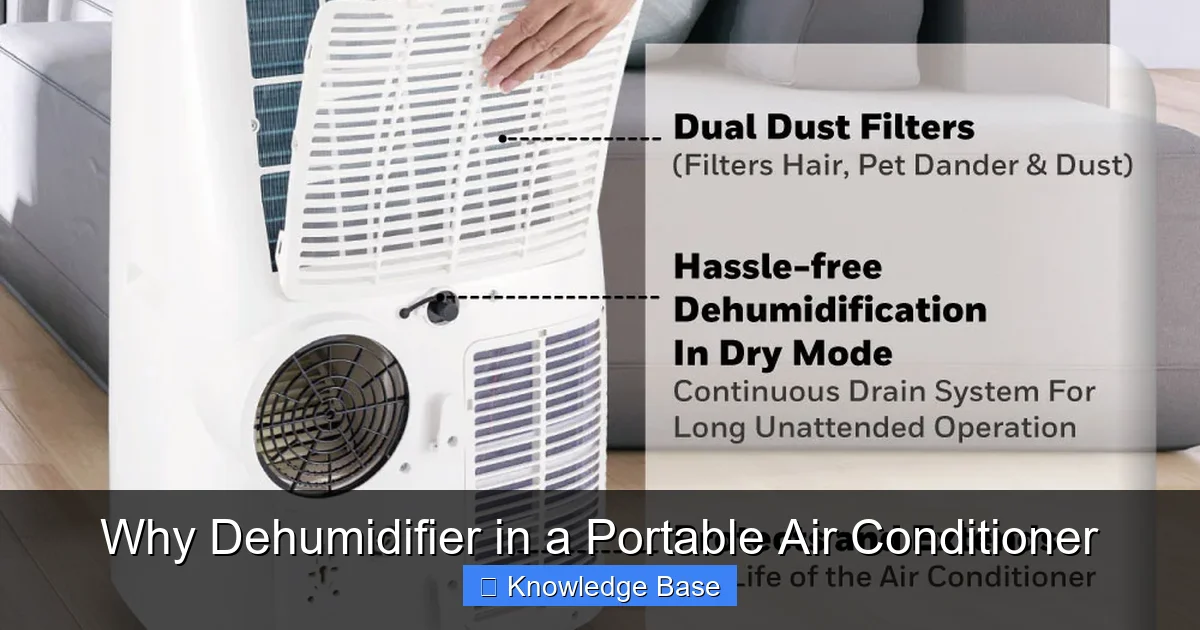
A dehumidifier in a portable air conditioner does more than cool—it removes excess moisture, improves air quality, and boosts efficiency. This dual function prevents mold, reduces allergens, and makes your space feel cooler without overworking the unit.
Key Takeaways
- Improved Comfort: Removing humidity makes the air feel cooler, so you stay comfortable even at higher temperatures.
- Better Air Quality: Lower moisture levels reduce mold, mildew, and dust mites, which can trigger allergies and asthma.
- Energy Efficiency: A dehumidifier helps the AC cool more effectively, reducing runtime and energy bills.
- Prevents Structural Damage: Excess moisture can warp wood, damage paint, and weaken building materials over time.
- Reduces Odors: Damp environments breed musty smells; dehumidifying keeps your space fresh.
- Protects Electronics: High humidity can damage gadgets and appliances; dehumidification safeguards your devices.
- Enhanced Cooling Performance: Dry air is easier to cool, so your portable AC works smarter, not harder.
📑 Table of Contents
- Why Dehumidifier in a Portable Air Conditioner Matters
- How Dehumidification Works in Portable Air Conditioners
- The Science Behind Humidity and Comfort
- Health Benefits of Lower Indoor Humidity
- Energy Efficiency and Cost Savings
- Protecting Your Home and Belongings
- Choosing the Right Portable Air Conditioner with Dehumidifier
- Conclusion
Why Dehumidifier in a Portable Air Conditioner Matters
When the summer heat rolls in, many of us turn to portable air conditioners for quick relief. They’re convenient, easy to move, and don’t require permanent installation. But here’s something you might not realize: most portable air conditioners don’t just cool the air—they also act as dehumidifiers. And that second function is just as important, if not more so, than the cooling itself.
Imagine stepping into a room that’s technically 75°F (24°C), but it still feels sticky and uncomfortable. That’s because high humidity makes the air feel warmer than it actually is. Your body relies on sweat evaporation to cool down, but when the air is saturated with moisture, that process slows way down. That’s where the dehumidifier in a portable air conditioner comes in. By pulling excess moisture from the air, it helps your body cool naturally and makes the room feel significantly more comfortable—even if the thermostat hasn’t dropped much.
But comfort isn’t the only benefit. High indoor humidity can lead to a host of problems, from mold growth to damaged furniture and electronics. A built-in dehumidifier helps prevent these issues, creating a healthier, safer living environment. In this article, we’ll explore exactly how dehumidification works in portable AC units, why it’s so beneficial, and how to make the most of this often-overlooked feature.
How Dehumidification Works in Portable Air Conditioners
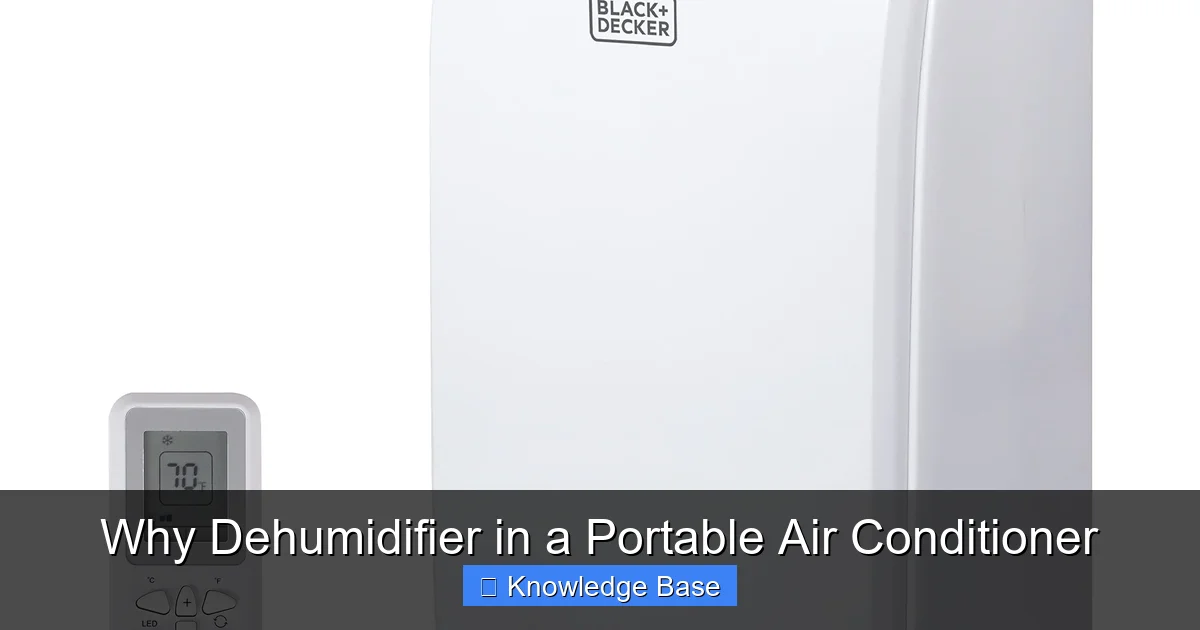
Visual guide about Why Dehumidifier in a Portable Air Conditioner
Image source: m.media-amazon.com
To understand why a dehumidifier in a portable air conditioner is so valuable, it helps to know how it actually works. Unlike standalone dehumidifiers, which are designed solely to remove moisture, portable air conditioners combine cooling and dehumidifying in one system. Here’s a simple breakdown of the process.
The Cooling and Dehumidifying Cycle
Portable air conditioners use a refrigeration cycle similar to window units. Warm air from the room is drawn into the unit through a vent. As this air passes over cold evaporator coils inside the machine, two things happen: the air cools down, and moisture in the air condenses on the coils—just like water droplets form on a cold drink on a humid day.
This condensed water drips into a collection tank or is drained through a hose, depending on the model. The now-cooler, drier air is then blown back into the room. Meanwhile, the heat absorbed from the air is expelled outside through an exhaust hose, usually vented out a window.
Moisture Removal: The Hidden Hero
While the primary goal of an air conditioner is to lower temperature, the dehumidification effect is a natural byproduct of the cooling process. In fact, up to 30% of a portable AC’s energy can go toward removing moisture, especially in humid climates. This dual action means your unit is doing double duty—cooling the air and drying it at the same time.
Some portable ACs even have a “dry mode” or “dehumidifier-only mode,” which allows you to run the unit just for moisture removal without activating the full cooling function. This is especially useful in shoulder seasons like spring or fall, when it’s not hot enough to need full AC, but the air still feels damp.
Drainage Options: Manual vs. Auto
One thing to keep in mind is that portable air conditioners produce water as they dehumidify. How that water is handled depends on the model:
– **Manual Drain:** Some units collect water in an internal tank that needs to be emptied regularly—usually every few hours during heavy use.
– **Continuous Drain:** Others come with a drain hose that can be routed to a floor drain or out a window, allowing for uninterrupted operation.
– **Auto-Evaporative:** Many modern portable ACs use auto-evaporative technology, where the collected water is reused to cool the condenser coils. This increases efficiency and reduces the need for manual draining.
Choosing a model with auto-evaporative drainage can save you time and hassle, especially if you plan to run the unit frequently.
The Science Behind Humidity and Comfort
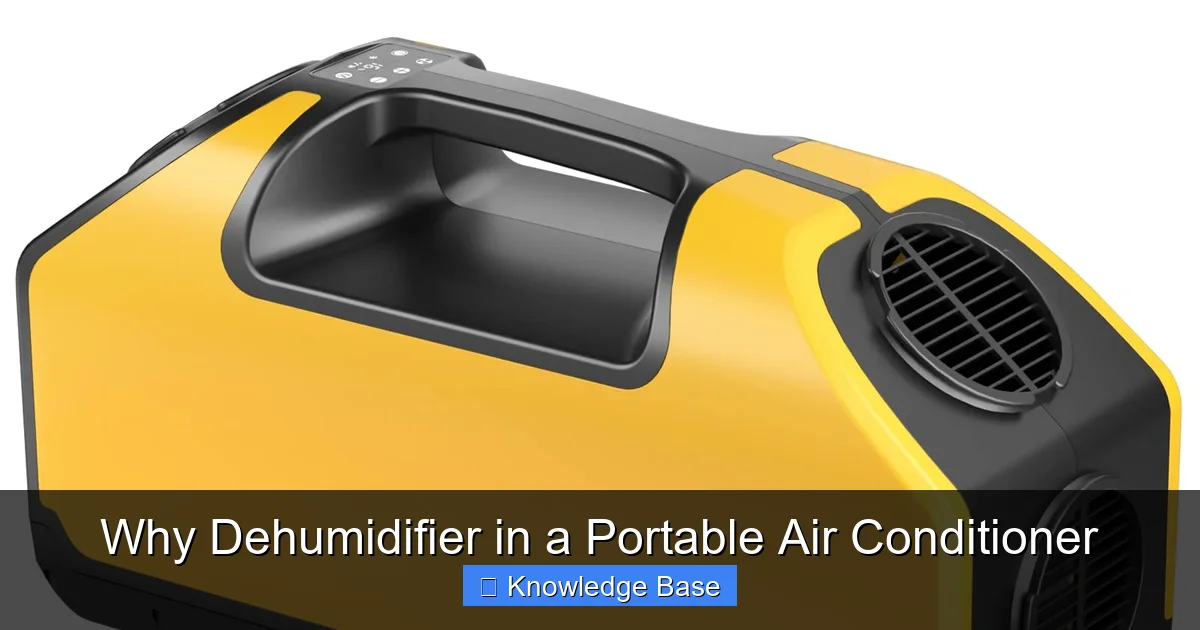
Visual guide about Why Dehumidifier in a Portable Air Conditioner
Image source: m.media-amazon.com
You’ve probably heard the phrase “it’s not the heat, it’s the humidity.” There’s a lot of truth to that. While temperature tells you how hot or cold the air is, humidity—specifically relative humidity (RH)—tells you how much moisture is in the air. And that moisture level has a huge impact on how comfortable you feel.
What Is Relative Humidity?
Relative humidity is the amount of water vapor present in the air compared to the maximum amount the air can hold at that temperature. For example, if the RH is 60%, the air holds 60% of the moisture it could potentially hold at that temperature.
The ideal indoor relative humidity level is between 30% and 50%. Below 30%, the air can feel dry and irritate your skin and respiratory system. Above 50%, it starts to feel sticky, and the risk of mold and dust mites increases.
How Humidity Affects Perceived Temperature
Here’s where it gets interesting: high humidity makes the air feel warmer than it actually is. This is measured by the “heat index” or “feels like” temperature. For instance, at 85°F (29°C) with 70% humidity, it can feel like 95°F (35°C). That’s a 10-degree difference just from moisture in the air.
When a portable air conditioner removes humidity, it lowers the perceived temperature. So even if the thermostat reads 78°F (26°C), the room might feel like 72°F (22°C) because the air is drier. This means you can set your AC to a higher temperature and still feel comfortable—saving energy and money.
The Role of Evaporative Cooling
Your body cools itself through sweat evaporation. When sweat evaporates from your skin, it takes heat with it, making you feel cooler. But in humid conditions, sweat doesn’t evaporate easily because the air is already full of moisture. As a result, you feel hotter and more uncomfortable.
By lowering humidity, a portable AC enhances your body’s natural cooling process. You sweat less, feel cooler, and are less likely to overheat—even if the actual air temperature hasn’t dropped dramatically.
Health Benefits of Lower Indoor Humidity
Beyond comfort, reducing indoor humidity has significant health benefits. High moisture levels create the perfect breeding ground for allergens and pollutants that can affect your respiratory system, skin, and overall well-being.
Preventing Mold and Mildew Growth
Mold and mildew thrive in damp environments. They grow on walls, ceilings, carpets, and even inside air conditioning units if moisture isn’t properly managed. These fungi release spores into the air, which can trigger allergic reactions, asthma attacks, and other respiratory issues.
A dehumidifier in a portable air conditioner helps keep indoor humidity below 50%, which is the threshold where mold growth becomes much less likely. This is especially important in basements, bathrooms, and other areas prone to dampness.
Reducing Dust Mites
Dust mites are microscopic creatures that live in bedding, carpets, and upholstery. They feed on dead skin cells and reproduce rapidly in humid conditions. According to the Asthma and Allergy Foundation of America, dust mites are one of the most common indoor allergens.
Studies show that keeping humidity below 50% can significantly reduce dust mite populations. By using your portable AC’s dehumidifying function, you create an environment where these allergens can’t thrive.
Improving Respiratory Health
High humidity can worsen symptoms for people with asthma, allergies, or chronic obstructive pulmonary disease (COPD). Damp air feels heavier to breathe, and the presence of mold and dust mites can trigger coughing, wheezing, and shortness of breath.
Lowering humidity makes the air easier to breathe and reduces exposure to airborne irritants. Many users report fewer allergy flare-ups and better sleep quality when using a dehumidifying air conditioner.
Protecting Skin and Eyes
Dry skin and irritated eyes aren’t just caused by low humidity—they can also result from high humidity. When the air is too moist, sweat doesn’t evaporate, leading to clogged pores, acne, and skin irritation. Similarly, damp air can cause eye discomfort, especially for contact lens wearers.
Maintaining balanced humidity helps keep your skin hydrated and your eyes comfortable, contributing to overall well-being.
Energy Efficiency and Cost Savings
You might think that running a dehumidifier in a portable air conditioner uses more energy, but the opposite is often true. In fact, dehumidification can make your AC more efficient and reduce your overall energy consumption.
Cooling Dry Air Is Easier
Dry air has a lower heat capacity than moist air, meaning it takes less energy to cool. When humidity is high, your portable AC has to work harder to remove both heat and moisture. But when the air is already dry, the unit can focus on cooling, which requires less power.
This efficiency gain can translate into lower electricity bills, especially during peak summer months when AC usage is highest.
Reduced Runtime and Wear
Because dehumidified air feels cooler, you’re more likely to feel comfortable at a higher thermostat setting. For example, instead of cranking the AC to 70°F (21°C), you might be perfectly fine at 75°F (24°C) when the air is dry. This reduces the amount of time the unit runs, which not only saves energy but also extends the lifespan of the compressor and other components.
Smart Thermostats and Humidity Sensors
Many modern portable air conditioners come with built-in humidity sensors and smart thermostats. These features allow the unit to monitor both temperature and moisture levels, adjusting its operation accordingly. For instance, if humidity spikes due to a shower or cooking, the AC can automatically increase dehumidification without overcooling the room.
This intelligent operation ensures optimal comfort and efficiency, giving you peace of mind without constant manual adjustments.
Real-World Example: The Florida Test
Imagine two identical apartments in Miami during August. Both have portable air conditioners, but one has a strong dehumidifying function, while the other only cools. In the first apartment, the humidity stays around 45%, and the AC runs for 6 hours a day. In the second, humidity climbs to 65%, and the AC runs for 9 hours a day to achieve the same comfort level.
Over a month, the first unit uses significantly less energy—potentially saving $20–$30 on the electric bill. That adds up over time, especially in hot, humid climates.
Protecting Your Home and Belongings
High indoor humidity doesn’t just affect your comfort and health—it can also damage your home and personal belongings. A dehumidifier in a portable air conditioner helps protect your investment by maintaining a stable, dry environment.
Preventing Structural Damage
Excess moisture can warp wooden floors, doors, and furniture. It can also cause paint to peel, wallpaper to bubble, and drywall to soften. In extreme cases, prolonged dampness can lead to structural issues like rot or foundation problems.
By keeping humidity in check, your portable AC helps preserve the integrity of your home’s materials, saving you from costly repairs down the line.
Safeguarding Electronics
Electronics are sensitive to moisture. High humidity can cause condensation inside devices, leading to short circuits, corrosion, and permanent damage. This is especially true for computers, TVs, gaming consoles, and audio equipment.
Running a dehumidifying air conditioner in rooms with electronics helps maintain a safe environment, reducing the risk of malfunctions and extending the life of your gadgets.
Preserving Books, Art, and Fabrics
Books, artwork, photographs, and fabric items like curtains and upholstery are also vulnerable to humidity. Paper can warp and yellow, ink can bleed, and fabrics can develop mold or mildew.
If you have a home library, art collection, or valuable textiles, using a portable AC with dehumidification can help preserve them for years to come.
Reducing Musty Odors
Damp environments often develop a musty smell—think of that stale, earthy odor in a basement or closet. This smell comes from mold, mildew, and bacterial growth. By removing moisture, your portable AC helps eliminate these odors, keeping your space smelling fresh and clean.
Choosing the Right Portable Air Conditioner with Dehumidifier
Not all portable air conditioners are created equal when it comes to dehumidification. If you live in a humid climate or have specific moisture concerns, it’s important to choose a unit that excels in both cooling and drying.
Look for High Dehumidification Capacity
Dehumidification capacity is measured in pints per day (PPD)—the amount of moisture the unit can remove in 24 hours. For most homes, a unit that removes 30–50 pints per day is sufficient. In very humid areas, you may want a model with 50+ PPD.
Check the product specifications to see the dehumidification rate, not just the cooling capacity (measured in BTUs).
Auto-Evaporative vs. Manual Drain
As mentioned earlier, auto-evaporative models are more convenient because they reuse collected water to cool the condenser, reducing the need for manual draining. If you plan to run the unit frequently, this feature is worth the extra cost.
Manual drain models are cheaper but require more maintenance. If you choose one, make sure the water tank is easy to access and empty.
Size and Placement Matter
A portable AC that’s too small for your space will struggle to dehumidify effectively. Use a sizing guide based on room square footage and humidity levels. For example, a 10,000 BTU unit can typically handle a 300–400 sq. ft. room, but in high humidity, you may need a larger unit.
Also, place the unit away from moisture sources like showers or kitchens, and ensure proper ventilation for the exhaust hose.
Additional Features to Consider
– **Remote Control:** Lets you adjust settings without getting up.
– **Timer Function:** Automatically turns the unit on or off at set times.
– **Washable Air Filter:** Traps dust and allergens, improving air quality.
– **Quiet Operation:** Look for models under 55 decibels for bedroom use.
Maintenance Tips
To keep your dehumidifying portable AC running smoothly:
– Clean or replace the air filter every 2–4 weeks.
– Empty the water tank regularly (if not auto-evaporative).
– Wipe down the exterior and vents to prevent dust buildup.
– Check the exhaust hose for kinks or blockages.
Regular maintenance ensures optimal performance and extends the life of your unit.
Conclusion
The dehumidifier in a portable air conditioner is more than just a bonus feature—it’s a crucial component that enhances comfort, protects your health, and safeguards your home. By removing excess moisture, it makes the air feel cooler, reduces allergens, prevents mold, and improves energy efficiency.
Whether you live in a humid coastal city or a damp basement apartment, a portable AC with strong dehumidification can make a noticeable difference in your daily life. It’s not just about staying cool—it’s about creating a healthier, more comfortable living environment.
So the next time you shop for a portable air conditioner, don’t just look at the BTU rating. Pay attention to the dehumidification capacity, drainage options, and smart features. Your comfort, your health, and your wallet will thank you.
Frequently Asked Questions
Does every portable air conditioner have a dehumidifier?
Most portable air conditioners include dehumidification as part of the cooling process, but the effectiveness varies. Some models have a dedicated “dry mode” for moisture removal without cooling.
Can I use a portable air conditioner as a standalone dehumidifier?
Yes, many portable ACs have a dehumidifier-only mode. This is useful in cooler months when you need to reduce humidity but don’t need cooling.
How often do I need to empty the water tank?
It depends on humidity levels and usage. In high humidity, you may need to empty the tank every 6–8 hours. Auto-evaporative models reduce or eliminate this need.
Will a dehumidifying AC help with allergies?
Yes. By reducing mold, dust mites, and other allergens, a dehumidifier in a portable air conditioner can significantly improve indoor air quality and ease allergy symptoms.
Is it safe to run a portable AC with dehumidifier overnight?
Yes, as long as the unit is properly vented and the water tank won’t overflow. Choose a quiet model with auto-shutoff or continuous drainage for peace of mind.
Does dehumidification use more electricity?
Not necessarily. While dehumidifying uses some energy, it can make cooling more efficient, potentially lowering overall power consumption and saving money.