

Dehumidifiers blow warm air because they generate heat during the moisture removal process. This is a normal part of their operation and doesn’t mean the unit is broken. Understanding why this happens helps you use your dehumidifier more effectively and maintain a comfortable indoor environment.
Key Takeaways
- Heat is a byproduct of dehumidification: The process of removing moisture from the air naturally generates warmth, which is released through the exhaust.
- Compressor-based models produce more heat: These units use refrigeration cycles that involve compressing and expanding gases, creating noticeable warmth.
- Desiccant dehumidifiers also emit warm air: They use heat to regenerate moisture-absorbing materials, resulting in warm exhaust air.
- Warm air output is normal and expected: It’s not a sign of malfunction—just a result of the energy used to extract water vapor.
- Room temperature may rise slightly: In small, enclosed spaces, the added heat can increase ambient temperature by a few degrees.
- Proper placement improves efficiency: Positioning your dehumidifier away from walls and in well-ventilated areas helps manage heat output.
- Energy efficiency matters: Modern units are designed to minimize excess heat while maximizing moisture removal.
📑 Table of Contents
- Why Do Dehumidifiers Blow Warm Air?
- How Dehumidifiers Work: The Science Behind Moisture Removal
- The Role of Heat in the Dehumidification Process
- Types of Dehumidifiers and Their Heat Output
- Managing Heat Output: Tips for Efficient Use
- Common Misconceptions About Dehumidifier Heat
- When to Be Concerned About Excessive Heat
- Conclusion: Embracing the Warmth for a Drier, More Comfortable Home
Why Do Dehumidifiers Blow Warm Air?
If you’ve ever stood near a running dehumidifier, you’ve probably noticed something curious: the air coming out feels warm—sometimes even hot. At first glance, this might seem odd. After all, you’re trying to make your home less humid and more comfortable, not warmer. So why does a device designed to improve indoor air quality end up blowing warm air?
The short answer is that heat is a natural byproduct of the dehumidification process. Whether your unit uses a compressor or a desiccant system, it requires energy to pull moisture from the air. That energy doesn’t just disappear—it transforms into heat, which is then released into the room. This isn’t a flaw or a malfunction. In fact, it’s a sign that your dehumidifier is working as intended.
Understanding why dehumidifiers blow warm air helps you use them more effectively. It also helps you set realistic expectations about how they’ll affect your home’s temperature and humidity levels. Whether you’re dealing with a damp basement, a musty closet, or a humid living room, knowing how your dehumidifier operates can make a big difference in your comfort and energy use.
In this guide, we’ll break down the science behind dehumidifiers, explain the different types of systems, and show you how to manage the heat they produce. By the end, you’ll have a clear picture of why warm air is part of the process—and how to make the most of your dehumidifier without overheating your space.
How Dehumidifiers Work: The Science Behind Moisture Removal

Visual guide about Why Do Dehumidifiers Blow Warm Air
Image source: i.ytimg.com
To understand why dehumidifiers blow warm air, it helps to first understand how they remove moisture from the air. At their core, dehumidifiers are designed to pull water vapor from indoor air and collect it in a reservoir or drain it away. But the method they use to do this varies depending on the type of unit.
Most residential dehumidifiers fall into one of two categories: refrigerant (compressor-based) or desiccant. Both systems rely on energy to extract moisture, and both generate heat in the process. Let’s take a closer look at how each one works.
Refrigerant (Compressor-Based) Dehumidifiers
Refrigerant dehumidifiers are the most common type found in homes. They operate similarly to air conditioners or refrigerators, using a closed-loop system of refrigerant gas to cool and condense moisture from the air.
Here’s how it works: A fan pulls humid air into the unit and passes it over a set of cold coils. These coils are cooled by the refrigerant circulating inside them. As the warm, moist air hits the cold surface, the water vapor condenses into liquid droplets—just like how dew forms on a cold drink on a hot day. The collected water drips into a bucket or is pumped out through a hose.
Once the air is dried, it passes over a set of warm coils. These coils are heated by the same refrigerant system as it completes its cycle. The now-dry air is warmed up before being blown back into the room. This is why the exhaust air feels warm—it’s been reheated after losing its moisture.
The entire process relies on the compression and expansion of refrigerant gas. When the gas is compressed, it heats up. When it expands, it cools down. This cycle is what allows the unit to cool the coils for condensation and then warm the air before releasing it. The heat generated during compression is a natural part of this thermodynamic process.
Desiccant Dehumidifiers
Desiccant dehumidifiers work differently. Instead of using cold coils, they use a moisture-absorbing material—usually a silica gel or similar desiccant—to trap water vapor from the air. These units are often used in colder environments or in spaces where refrigerant units might struggle, like garages or crawl spaces.
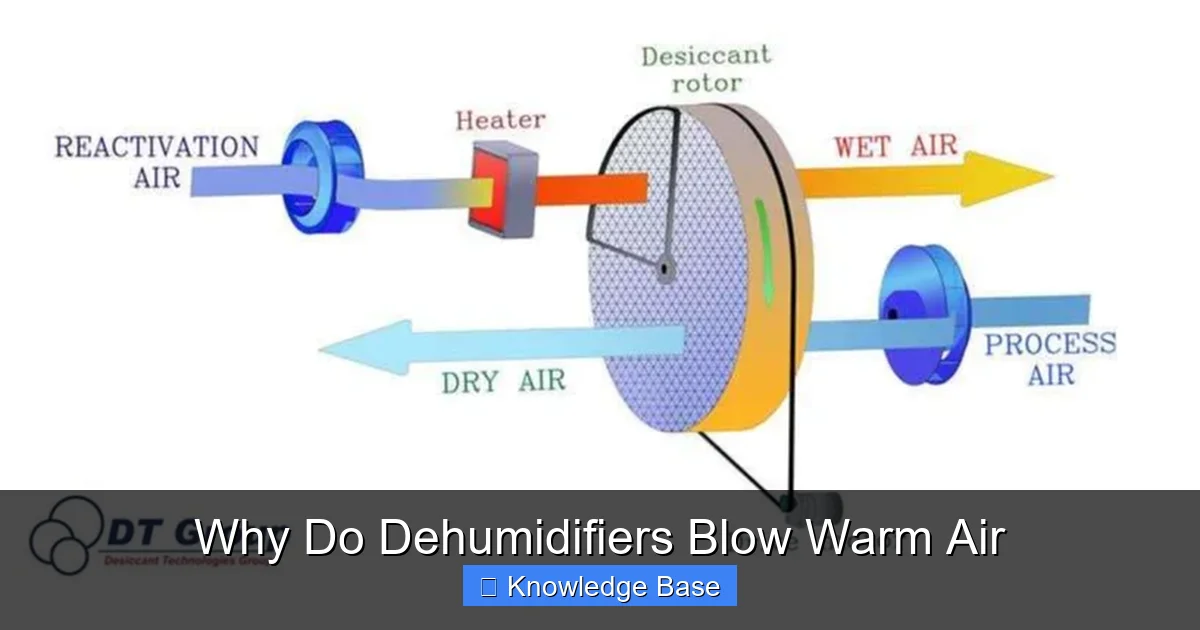
Air is drawn into the unit and passes over a rotating desiccant wheel. The desiccant material absorbs moisture from the air, leaving it dry. But the desiccant can’t hold water forever—it eventually becomes saturated. To keep working, it needs to be “regenerated.”
This is where heat comes in. A separate heating element warms the desiccant to release the trapped moisture, which is then vented out of the unit. The dried desiccant can then continue absorbing moisture from incoming air. The warm air used in this regeneration process is often mixed with the dried air before being expelled, which is why desiccant dehumidifiers also blow warm air.
While they don’t use a compressor, desiccant units still consume energy—and that energy turns into heat. So even though their mechanism is different, the result is the same: warm air coming out of the unit.
The Role of Heat in the Dehumidification Process
Visual guide about Why Do Dehumidifiers Blow Warm Air
Image source: files.websitebuilder.prositehosting.co.uk
Now that we’ve covered how dehumidifiers work, let’s dive deeper into why heat is such a big part of the process. It’s not just a side effect—it’s actually essential to how these machines function.
Energy Conversion and Heat Generation
Every time your dehumidifier runs, it uses electricity to power its components. Whether it’s a compressor, a fan, or a heating element, that electrical energy has to go somewhere. According to the laws of thermodynamics, energy cannot be created or destroyed—only transformed. In this case, electrical energy is converted into mechanical energy (to run the fan and compressor) and thermal energy (heat).
In refrigerant dehumidifiers, the compressor does the heavy lifting. It compresses the refrigerant gas, increasing its pressure and temperature. This hot, high-pressure gas then flows through the condenser coils, where it releases heat into the surrounding air. That’s why the coils and the air leaving the unit feel warm.
Similarly, in desiccant models, the heating element used to regenerate the desiccant consumes a lot of energy. That energy is directly converted into heat, which is then transferred to the air being expelled.
Even the fan motor generates a small amount of heat as it spins. While this is minimal compared to the compressor or heater, it still contributes to the overall warmth of the exhaust air.
Why Warm Air Isn’t a Problem
At this point, you might be wondering: if dehumidifiers make the air warmer, doesn’t that defeat the purpose of improving comfort? After all, many people use dehumidifiers to combat that sticky, clammy feeling that comes with high humidity.
The key here is understanding the difference between temperature and humidity. Warm air can actually feel more comfortable if it’s dry. High humidity makes sweat evaporate more slowly, which is why a hot, humid day feels so much worse than a hot, dry one. By removing moisture, dehumidifiers help your body cool itself more efficiently, even if the air is slightly warmer.
In fact, in many cases, the slight increase in temperature is more than offset by the improved comfort from lower humidity. You may even find that you can set your air conditioner a few degrees higher without sacrificing comfort—potentially saving on energy bills.
That said, in small, poorly ventilated spaces, the added heat can become noticeable. A dehumidifier running in a tiny closet or a sealed basement might raise the temperature by a few degrees. But in most living areas, the effect is minimal and often unnoticeable.
Types of Dehumidifiers and Their Heat Output
Not all dehumidifiers produce the same amount of heat. The type of unit you have—and how it’s designed—plays a big role in how warm the exhaust air will be. Let’s compare the main types and what you can expect from each.
Refrigerant Dehumidifiers: High Efficiency, Noticeable Heat
Refrigerant dehumidifiers are the most energy-efficient option for warm, humid environments—typically rooms above 65°F (18°C). They’re great for basements, laundry rooms, and living areas during the summer.
Because they rely on a compressor and refrigerant cycle, they generate a significant amount of heat. The exhaust air can be 10–20°F warmer than the incoming air, depending on the model and operating conditions. This is perfectly normal and expected.
One advantage of refrigerant units is that they’re highly efficient at removing moisture when conditions are right. They can extract several pints of water per day with relatively low energy use. However, they struggle in cold environments because the coils can frost over, reducing efficiency.
Desiccant Dehumidifiers: Consistent Performance, Steady Heat
Desiccant dehumidifiers don’t rely on temperature to work, so they perform well in cold spaces like garages, crawl spaces, or unheated basements. They’re also quieter and often more compact than refrigerant models.
However, they tend to produce a steady stream of warm air because of the heating element used to regenerate the desiccant. The exhaust air is typically warm—sometimes hot—especially during the regeneration phase.
While they’re less energy-efficient than refrigerant units in warm climates, they excel in low-temperature environments. If you’re using one in a chilly basement, the added warmth might even be a bonus during colder months.
Thermo-Electric Dehumidifiers: Low Heat, Limited Capacity
A third, less common type is the thermo-electric (Peltier) dehumidifier. These small, portable units use a solid-state cooling chip to condense moisture. They don’t have a compressor or refrigerant, so they’re very quiet and compact.
Because they don’t use a traditional refrigeration cycle, they generate much less heat. The exhaust air is only slightly warmer than the intake air. However, their moisture removal capacity is very low—usually less than a pint per day—making them suitable only for tiny spaces like closets or RVs.
While they produce minimal heat, they’re also much less effective at dehumidifying larger areas. They’re best used as a supplemental solution rather than a primary dehumidifier.
Managing Heat Output: Tips for Efficient Use
Even though warm air is a normal part of dehumidifier operation, there are ways to manage the heat and improve overall efficiency. With a few smart practices, you can keep your space comfortable without overheating it.
Proper Placement Matters
Where you place your dehumidifier can make a big difference in how heat affects your room. Avoid placing it in a corner or too close to walls, as this can restrict airflow and cause the unit to overheat. Leave at least 6–12 inches of clearance on all sides.
Also, try to position the unit in a central location where air can circulate freely. This helps distribute the warm exhaust air more evenly and prevents hot spots. If possible, place it near a vent or open area where the heat can dissipate.
Use in Conjunction with Ventilation
In tightly sealed spaces like basements or bathrooms, the heat from a dehumidifier can build up over time. To prevent this, use the unit alongside proper ventilation.
Open a window slightly (if outdoor humidity is low) or use an exhaust fan to help remove warm, moist air. This not only reduces the load on your dehumidifier but also helps manage the temperature rise.
In bathrooms, running the exhaust fan while showering and for 20–30 minutes afterward can significantly reduce the need for constant dehumidifier use.
Choose the Right Size for Your Space
Using an oversized dehumidifier can lead to short cycling—where the unit turns on and off frequently—which wastes energy and generates unnecessary heat. Conversely, an undersized unit will run constantly, overheating the space and failing to control humidity.
Check the manufacturer’s recommendations for room size and humidity level. Most units are rated by the number of pints they can remove per day. For example, a 30-pint unit is suitable for a moderately damp 1,000-square-foot space, while a 50-pint model is better for larger or very damp areas.
Maintain Your Unit Regularly
A well-maintained dehumidifier runs more efficiently and produces less excess heat. Clean the air filter every few weeks to ensure proper airflow. A clogged filter forces the fan to work harder, increasing energy use and heat output.
Also, empty the water tank regularly or use a continuous drainage hose to prevent the unit from shutting off prematurely. And check the coils (in refrigerant models) for dust or frost buildup, which can reduce efficiency.
Consider the Season and Climate
In hot, humid climates, the heat from a dehumidifier is usually not a concern. But in cooler months or in air-conditioned homes, the added warmth might be unwelcome.
If you’re using a dehumidifier in winter, consider a desiccant model, which can provide gentle warmth while drying the air. Alternatively, run the unit only when necessary—such as after laundry or showers—to minimize heat buildup.
In summer, pair your dehumidifier with an air conditioner. The AC will cool the air, while the dehumidifier removes moisture, creating a more comfortable environment with less strain on your cooling system.
Common Misconceptions About Dehumidifier Heat
Despite how common dehumidifiers are, there are still several myths and misunderstandings about why they blow warm air. Let’s clear up some of the most frequent misconceptions.
“Warm Air Means the Unit Is Broken”
This is perhaps the biggest myth. Many people assume that if a dehumidifier is blowing warm air, it’s malfunctioning or not working properly. But as we’ve seen, warm exhaust is a normal and expected part of the process.
Unless the unit is overheating to the point of shutting down or making unusual noises, the warmth is not a sign of trouble. In fact, it’s a sign that the dehumidifier is actively removing moisture and releasing the heat generated during that process.
“Dehumidifiers Should Cool the Air”
Some people expect dehumidifiers to act like air conditioners, lowering both temperature and humidity. But that’s not their job. Dehumidifiers are designed solely to reduce moisture levels. They don’t cool the air—they may even warm it slightly.
If you need both cooling and dehumidification, consider a portable air conditioner with a dehumidify mode, or use a standalone dehumidifier alongside your central AC.
“All Dehumidifiers Are the Same”
Not all dehumidifiers are created equal. As we’ve discussed, refrigerant, desiccant, and thermo-electric models all work differently and produce varying amounts of heat. Assuming they all behave the same way can lead to confusion and frustration.
Understanding the type of unit you have helps you set the right expectations and use it more effectively.
“The Heat Is Wasted Energy”
While it’s true that some energy is lost as heat, modern dehumidifiers are designed to be as efficient as possible. The heat isn’t “wasted” in the sense that it serves a purpose—it’s a byproduct of a necessary process.
In fact, some of that heat can be beneficial, especially in cooler environments. And because dehumidifiers reduce the load on air conditioners, they can actually save energy overall by improving comfort and allowing for higher thermostat settings.
When to Be Concerned About Excessive Heat
While warm air is normal, there are times when the heat output might indicate a problem. Here’s how to tell the difference between normal operation and a potential issue.
Overheating and Automatic Shutoff
Most dehumidifiers have thermal protection that shuts the unit off if it overheats. If your dehumidifier keeps turning off unexpectedly, it could be due to restricted airflow, a dirty filter, or a malfunctioning component.
Check for blockages around the intake and exhaust vents. Clean the filter and ensure the unit has adequate space to breathe. If the problem persists, contact the manufacturer or a technician.
Burning Smell or Unusual Noises
A burning smell, smoke, or loud grinding noises are not normal. These could indicate an electrical issue, a failing motor, or a refrigerant leak. Turn off the unit immediately and unplug it. Do not attempt to use it until it’s been inspected by a professional.
Excessive Heat in a Small Space
If you’re using a large dehumidifier in a very small, enclosed area—like a tiny closet or under a sink—the heat buildup could become uncomfortable or even pose a fire risk. In such cases, consider a smaller, thermo-electric model or limit the runtime.
Always follow the manufacturer’s guidelines for safe operation and avoid running the unit unattended in confined spaces.
Conclusion: Embracing the Warmth for a Drier, More Comfortable Home
So, why do dehumidifiers blow warm air? The answer lies in the fundamental physics of moisture removal. Whether they use a compressor, a desiccant, or a Peltier chip, all dehumidifiers convert electrical energy into heat as they extract water vapor from the air. This warm exhaust is not a flaw—it’s a natural and expected part of how these devices work.
Understanding this process helps you use your dehumidifier more effectively. You’ll know what to expect, how to manage the heat, and how to maintain your unit for optimal performance. Whether you’re tackling a damp basement, preventing mold in a bathroom, or improving indoor air quality, your dehumidifier is doing its job—even if it’s making the air a little warmer in the process.
By choosing the right type of unit, placing it correctly, and maintaining it regularly, you can enjoy the benefits of lower humidity without worrying about excess heat. And remember: a slightly warmer room with dry air often feels more comfortable than a cooler one that’s sticky and damp.
So the next time you feel that warm breeze from your dehumidifier, don’t be alarmed. Smile—because it means your home is getting drier, healthier, and more comfortable, one pint of water at a time.
Frequently Asked Questions
Why does my dehumidifier blow hot air instead of cool air?
Dehumidifiers blow warm air because the process of removing moisture generates heat. In refrigerant models, the compressor heats up the refrigerant, and in desiccant models, a heating element regenerates the moisture-absorbing material. This warm exhaust is normal and expected.
Is it safe for a dehumidifier to blow warm air?
Yes, it’s completely safe. The warm air is a natural byproduct of dehumidification and doesn’t indicate a malfunction. Just ensure the unit has proper ventilation and isn’t placed in a confined space where heat could build up excessively.
Can a dehumidifier make my room too hot?
In small, poorly ventilated spaces, a dehumidifier can raise the temperature by a few degrees. However, in most rooms, the effect is minimal. Proper placement and ventilation help manage any heat buildup.
Do all dehumidifiers produce the same amount of heat?
No. Refrigerant models tend to produce the most heat due to the compressor cycle, while desiccant units generate steady warmth from the regeneration heater. Thermo-electric models produce the least heat but have limited capacity.
Should I be worried if my dehumidifier is very hot to the touch?
If the exterior is extremely hot or the unit shuts off frequently, it could indicate a problem like restricted airflow or a faulty component. Check the filter and vents, and consult a technician if issues persist.
Can I use a dehumidifier in winter without overheating my home?
Yes, especially with a desiccant model, which works well in cold temperatures and can provide gentle warmth. Use it only when needed, and ensure the room is well-ventilated to prevent excessive heat buildup.