

Dehumidifiers need frost control to prevent ice buildup on the evaporator coils, which can block airflow, reduce efficiency, and damage the unit. Without this feature, performance drops and the risk of mechanical failure increases, especially in cooler or high-humidity conditions.
Key Takeaways
- Prevents Ice Buildup: Frost control stops ice from forming on the cold evaporator coils, which can block airflow and reduce moisture removal.
- Maintains Efficiency: By defrosting coils when needed, the system keeps running at peak performance, saving energy and improving output.
- Protects Internal Components: Ice can damage compressors and fans; frost control helps avoid costly repairs and extends the unit’s lifespan.
- Enables Use in Cooler Environments: Frost control allows dehumidifiers to operate effectively in basements, garages, or unheated spaces where temperatures dip below 65°F (18°C).
- Automates Maintenance: Modern frost control systems detect ice and initiate defrost cycles automatically, requiring no user intervention.
- Improves Air Quality: Consistent operation means better humidity control, reducing mold, mildew, and allergens in your home.
- Enhances Safety: Prevents overheating and electrical issues caused by restricted airflow due to ice accumulation.
📑 Table of Contents
- Why Do Dehumidifiers Need Frost Control?
- How Dehumidifiers Work: A Quick Refresher
- What Is Frost Control and How Does It Work?
- The Consequences of Operating Without Frost Control
- When Is Frost Control Most Important?
- How to Choose a Dehumidifier with Effective Frost Control
- Maintaining Your Dehumidifier’s Frost Control System
- The Future of Frost Control Technology
- Conclusion
Why Do Dehumidifiers Need Frost Control?
If you’ve ever owned a dehumidifier, especially one used in a basement, garage, or crawl space, you might have noticed it suddenly stops working—or works much slower—after a few hours. You check the water tank, clean the filter, and everything seems fine. So why the drop in performance? The answer often lies in a hidden enemy: frost.
Yes, frost. Even though dehumidifiers are designed to remove moisture from the air, they can actually create ice under certain conditions. This is where frost control comes in. It’s not just a fancy feature—it’s a critical system that ensures your dehumidifier keeps working efficiently, safely, and reliably, no matter the environment.
In this article, we’ll explore why dehumidifiers need frost control, how it works, and what happens when it’s missing. Whether you’re dealing with a damp basement in winter or trying to protect your home from mold, understanding frost control can save you time, money, and frustration.
How Dehumidifiers Work: A Quick Refresher

Visual guide about Why Do Dehumidifiers Need Frost Control
Image source: cdnweb.danby.com
Before diving into frost control, it helps to understand how dehumidifiers function. Most residential dehumidifiers use a refrigeration-based system, similar to an air conditioner or refrigerator. Here’s a simplified breakdown:
Warm, humid air is drawn into the unit by a fan. This air passes over a set of cold evaporator coils. As the air cools, its ability to hold moisture decreases, causing water vapor to condense into liquid droplets. These droplets collect in a drip tray and eventually flow into a water tank or drain hose. The now-drier air then passes over warm condenser coils, reheats, and is blown back into the room.
This process works beautifully—until the temperature drops. When the air entering the unit is too cool, the evaporator coils can get so cold that moisture in the air freezes instead of condensing. That’s when frost begins to form.
The Role of Temperature and Humidity
The ideal operating temperature for most standard dehumidifiers is between 65°F and 80°F (18°C to 27°C). In this range, the coils stay cold enough to condense moisture but not so cold that ice forms. However, in cooler environments—like unheated basements during winter—the incoming air may be below 60°F (15°C). At these temperatures, the evaporator coils can drop below freezing, turning condensation into ice.
High humidity makes the problem worse. More moisture in the air means more water vapor hitting the cold coils, increasing the chance of rapid ice buildup. Even in moderately cool conditions, a humid environment can trigger frost formation.
Why Frost Is a Problem
At first glance, a little ice might not seem like a big deal. But even a thin layer of frost can cause serious issues:
– It acts as an insulator, reducing the coil’s ability to absorb heat from the air.
– It blocks airflow, forcing the fan to work harder and reducing moisture removal.
– Over time, thick ice can physically damage coils, fans, or other components.
– The unit may overheat or shut down entirely to prevent damage.
Without intervention, a dehumidifier can become ineffective within hours—leaving your space damp, musty, and vulnerable to mold growth.
What Is Frost Control and How Does It Work?
Visual guide about Why Do Dehumidifiers Need Frost Control
Image source: cardehumidifiers.com
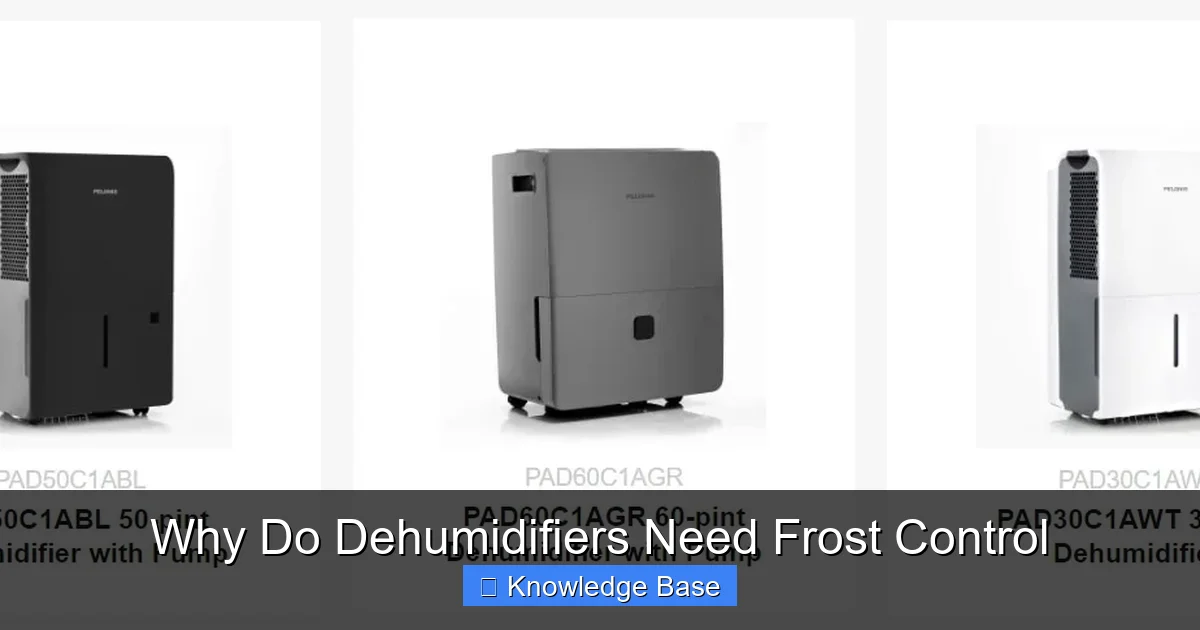
Frost control is a built-in system that detects ice buildup on the evaporator coils and initiates a defrost cycle to melt it. Think of it like the defrost function on your freezer—but automated and optimized for continuous dehumidification.
There are two main types of frost control systems: timer-based and sensor-based.
Timer-Based Frost Control
Older or budget dehumidifiers often use a timer that triggers a defrost cycle at regular intervals—say, every 30 or 60 minutes—regardless of whether ice has formed. While this approach prevents major ice buildup, it’s not very efficient. The unit may defrost when it’s not needed, wasting energy and interrupting moisture removal. Conversely, if ice forms quickly, the timer might not activate soon enough.
Sensor-Based Frost Control
Modern dehumidifiers typically use sensor-based frost control. These systems include temperature sensors or optical detectors that monitor the coils in real time. When ice is detected—either by a drop in coil temperature or reduced airflow—the system automatically initiates a defrost cycle.
During defrosting, the unit temporarily stops the cooling process. The compressor may shut off, and the fan may continue running to circulate warmer air over the coils. In some models, a heating element briefly activates to speed up melting. Once the ice is gone, the system resumes normal operation.
This intelligent approach ensures defrosting only happens when necessary, maximizing efficiency and performance.
Benefits of Automatic Frost Control
– **Energy Efficiency:** Defrosts only when needed, reducing unnecessary power use.
– **Consistent Performance:** Maintains steady moisture removal without interruptions.
– **Longer Lifespan:** Prevents ice-related damage to internal parts.
– **User Convenience:** No need to manually restart or adjust the unit.
For example, imagine running your dehumidifier in a chilly basement during winter. Without frost control, it might stop working after a few hours. With it, the unit detects ice, melts it in minutes, and keeps going—all without you lifting a finger.
The Consequences of Operating Without Frost Control
Using a dehumidifier without frost control in cool or humid conditions is like driving a car with no oil—it might work for a while, but eventually, something will break.
Reduced Moisture Removal
Ice buildup on the evaporator coils acts like a barrier. It prevents warm, humid air from reaching the cold surface, drastically reducing condensation. Even a thin layer of frost can cut moisture removal by 50% or more. Your dehumidifier might run constantly but collect very little water—leaving your space damp and uncomfortable.
Increased Energy Consumption
When airflow is blocked by ice, the fan has to work harder to pull air through the unit. The compressor may also run longer to try to cool the coils, increasing power usage. This not only raises your electricity bill but also puts extra strain on the motor and electrical components.
Risk of Mechanical Failure
Ice can cause physical damage in several ways:
– **Coil Damage:** Repeated freezing and thawing can weaken metal coils, leading to cracks or leaks.
– **Fan Stress:** Ice can unbalance the fan blades or jam the motor, causing it to overheat or fail.
– **Compressor Overload:** If the system can’t release heat properly due to blocked airflow, the compressor may overheat and shut down—or worse, burn out.
In extreme cases, ice can completely block the air intake, causing the unit to overheat and potentially trigger a fire hazard.
Shortened Lifespan
Constant stress from ice buildup accelerates wear and tear. A dehumidifier without frost control may last only a few years in cool environments, while one with proper frost management can run reliably for a decade or more.
Real-World Example
Let’s say you have a 70-pint dehumidifier in your basement. In summer, it works perfectly, pulling gallons of water from the air each day. But in winter, when the basement temperature drops to 55°F (13°C), you notice it’s barely collecting any water. You check the coils and find them covered in a thick layer of ice. Without frost control, the unit can’t defrost itself. It keeps running, but the ice just gets thicker. Eventually, the fan motor burns out, and the dehumidifier stops working altogether.
With frost control, the same unit would detect the ice, pause cooling, and melt it within minutes—then resume normal operation. No damage, no downtime.
When Is Frost Control Most Important?
Frost control isn’t just for extreme cold. It’s essential in any environment where the dehumidifier operates below 65°F (18°C) or in high-humidity conditions.
Basements and Crawl Spaces
These areas are often cool and damp, especially in winter. Even if the air doesn’t feel freezing, the temperature can be low enough to cause frost on the coils. Basements are prime candidates for mold and mildew, so consistent dehumidification is crucial—and that requires frost control.
Garages and Workshops
Unheated garages can get very cold, particularly in northern climates. If you use a dehumidifier to protect tools, vehicles, or stored items from rust and moisture, frost control ensures it keeps working year-round.
Laundry Rooms
Laundry rooms generate a lot of steam, especially when using dryers without proper ventilation. If the room is also cool—like in a basement laundry area—the combination of high humidity and low temperature can trigger frost formation.
Seasonal Use
Even in warmer climates, seasonal temperature drops can affect dehumidifier performance. For example, a home in the Pacific Northwest might have mild winters, but nighttime temperatures can still dip into the 50s°F (10–15°C)—enough to cause frost if humidity is high.
Energy-Efficient Homes
Modern, tightly sealed homes often have lower indoor temperatures because they’re better insulated. While this saves energy, it can create cooler microclimates where dehumidifiers operate—making frost control more important than ever.
How to Choose a Dehumidifier with Effective Frost Control
Not all frost control systems are created equal. When shopping for a dehumidifier, look for these features:
Automatic Defrost with Sensors
Avoid models that rely solely on timers. Opt for units with temperature or optical sensors that detect ice in real time. This ensures defrosting happens only when necessary.
Low-Temperature Operation Rating
Check the product specifications for the minimum operating temperature. Many standard dehumidifiers are rated down to 41°F (5°C) or lower—thanks to effective frost control. If a unit only works above 65°F (18°C), it likely lacks robust frost management.
Energy Star Certification
Energy Star-certified dehumidifiers are tested for efficiency in various conditions, including cold environments. These models often include advanced frost control to maintain performance and save energy.
Drain Hose Compatibility
During defrost cycles, melted ice turns into water. If your dehumidifier uses a drain hose for continuous drainage, make sure it’s connected and unobstructed. Otherwise, the water may overflow and cause a mess.
User Reviews and Brand Reputation
Look for feedback from users in similar climates. Brands like Frigidaire, hOmeLabs, and Ivation are known for reliable frost control in their dehumidifiers. Avoid cheap, no-name models that may cut corners on critical features.
Practical Tip: Placement Matters
Even with frost control, avoid placing your dehumidifier in extremely cold spots—like near a drafty window or uninsulated wall. Keep it in a central location with good airflow. This helps maintain a stable operating temperature and reduces the workload on the frost control system.
Maintaining Your Dehumidifier’s Frost Control System
Like any mechanical system, frost control works best with regular maintenance.
Clean the Air Filter Monthly
A dirty filter restricts airflow, making it harder for the unit to pull in warm air. This can cause coils to get colder than intended, increasing the risk of frost. Most filters are washable—just rinse with water and let dry.
Inspect Coils for Dust and Debris
Over time, dust can accumulate on the evaporator and condenser coils, reducing heat transfer. Use a soft brush or vacuum with a brush attachment to gently clean them every few months.
Check the Drain System
Ensure the water tank is emptied regularly or the drain hose is clear. If water backs up, it can freeze and interfere with the defrost cycle.
Monitor Performance
If your dehumidifier starts collecting less water or runs constantly without filling the tank, it could be a sign of frost issues—even with frost control. Check the coils for ice and ensure the unit is in a suitable environment.
Avoid Overloading the Unit
Running a small dehumidifier in a very large, damp space can cause it to work overtime, increasing the chance of frost. Choose a unit with the right capacity (measured in pints per day) for your room size.
The Future of Frost Control Technology
As dehumidifiers become smarter and more efficient, frost control systems are evolving too. Some newer models use AI-driven sensors that learn usage patterns and adjust defrost cycles accordingly. Others integrate with smart home systems, sending alerts when maintenance is needed or when ice is detected.
Heat pump technology is also improving, allowing dehumidifiers to operate efficiently at even lower temperatures. These advancements mean better performance, lower energy bills, and longer-lasting units—all thanks to smarter frost control.
Conclusion
So, why do dehumidifiers need frost control? Because without it, they can’t perform reliably in real-world conditions. Frost buildup on the evaporator coils blocks airflow, reduces efficiency, and can cause serious damage—especially in cool or high-humidity environments.
Frost control isn’t a luxury; it’s a necessity for anyone using a dehumidifier in a basement, garage, or seasonal space. By automatically detecting and melting ice, it ensures consistent moisture removal, protects internal components, and extends the life of your unit.
When choosing a dehumidifier, prioritize models with sensor-based frost control, low-temperature operation, and Energy Star certification. And don’t forget regular maintenance—clean filters and clear drains go a long way in supporting the system.
In the end, frost control is what separates a dehumidifier that works when you need it from one that quits when the temperature drops. Invest in the right features, and you’ll enjoy drier, healthier air—year after year.
Frequently Asked Questions
Can a dehumidifier work in cold temperatures without frost control?
It may work briefly, but ice will quickly build up on the coils, reducing efficiency and potentially damaging the unit. Without frost control, the dehumidifier will likely stop working within hours in temperatures below 65°F (18°C).
How often does frost control activate?
It depends on the environment. In cool, humid conditions, defrost cycles may occur every 30–60 minutes. In warmer or drier air, they may never activate. Sensor-based systems only defrost when ice is detected.
Will frost control increase my energy bill?
Not significantly. While defrosting uses a small amount of extra energy, it prevents the unit from working harder due to ice buildup. Overall, frost control improves efficiency and can actually reduce long-term energy use.
Can I manually defrost my dehumidifier?
You can turn it off and let ice melt naturally, but this interrupts moisture removal and isn’t practical for continuous use. Automatic frost control is far more reliable and convenient.
Do all dehumidifiers have frost control?
No. Basic or older models may lack this feature. Always check the specifications before buying, especially if you plan to use the unit in cool areas like basements or garages.
What happens if frost control fails?
The dehumidifier may stop removing moisture, overheat, or suffer mechanical damage. If you notice ice buildup and the unit isn’t defrosting, contact the manufacturer or a technician for repair.