
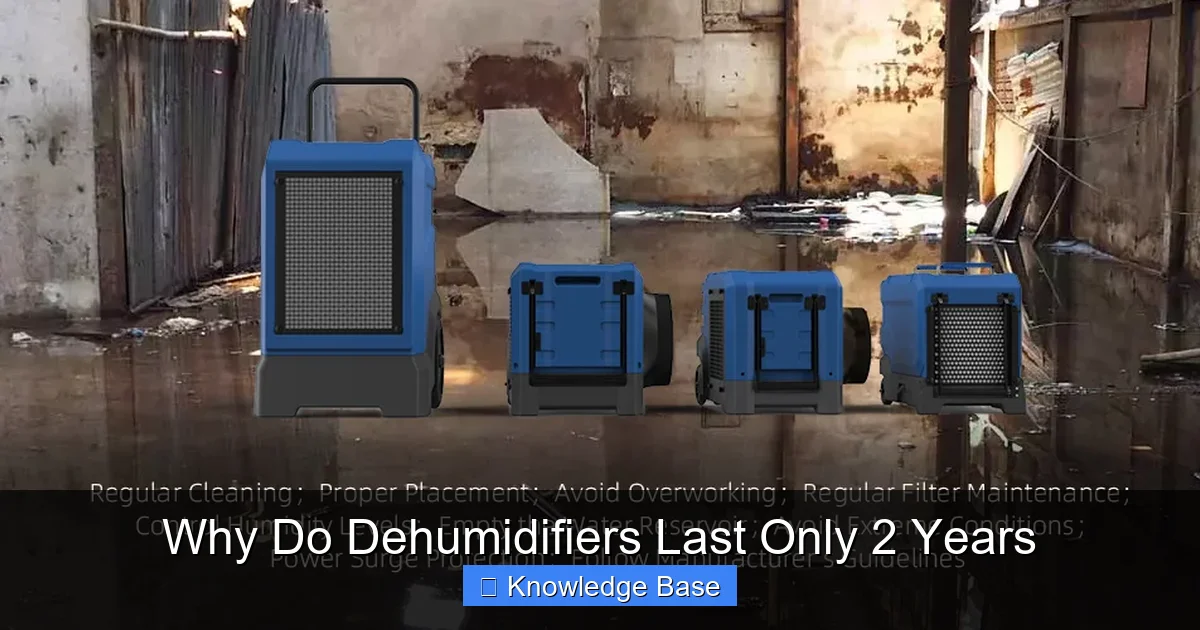
Many dehumidifiers fail after just 2 years due to poor maintenance, low-quality components, and harsh operating conditions. With proper care, regular cleaning, and smart usage habits, you can significantly extend their lifespan and improve performance.
Key Takeaways
- Frequent lack of maintenance: Dust buildup, clogged filters, and dirty coils reduce efficiency and strain the compressor, leading to early failure.
- Low-quality internal components: Budget models often use cheaper compressors, fans, and capacitors that wear out faster under continuous use.
- Operating in extreme conditions: Running dehumidifiers in very cold or hot environments forces the unit to work harder, shortening its life.
- Continuous overuse without breaks: Running 24/7 without periodic rest periods increases wear and tear on motors and electrical parts.
- Poor ventilation and placement: Placing units in tight, poorly ventilated spaces traps heat and moisture, reducing airflow and efficiency.
- Refrigerant leaks and corrosion: Moisture exposure can cause internal corrosion and refrigerant loss, especially in high-humidity areas like basements.
- Ignoring manufacturer guidelines: Skipping recommended service intervals or using incorrect settings accelerates component degradation.
📑 Table of Contents
Why Do Dehumidifiers Last Only 2 Years?
If you’ve ever bought a dehumidifier only to find it sputtering out after just two years, you’re not alone. Many homeowners are shocked when their once-reliable appliance suddenly stops working—especially when they expected it to last five, seven, or even ten years. The truth is, while some high-end models can indeed last a decade or more, the average consumer-grade dehumidifier often fails around the two-year mark. But why?
It’s not that all dehumidifiers are poorly made. In fact, the technology behind them is sound. The real issue lies in a combination of design limitations, environmental stress, and—most importantly—how we use and maintain these machines. Think of your dehumidifier like a car: even the best-engineered vehicle will break down early if you never change the oil, drive it through deep mud, or ignore warning lights. The same logic applies here.
Understanding why dehumidifiers fail so quickly is the first step toward fixing the problem. By identifying the root causes—whether it’s dust-clogged filters, overworked compressors, or poor placement—you can take proactive steps to extend your unit’s life. This guide will walk you through the most common reasons dehumidifiers don’t last long, offer practical solutions, and help you get the most out of your investment.
Common Causes of Early Dehumidifier Failure

Visual guide about Why Do Dehumidifiers Last Only 2 Years
Image source: freshandbreezy.com
There’s no single reason why dehumidifiers fail early—it’s usually a mix of factors. But if you look closely, several recurring themes emerge. Most failures stem from neglect, misuse, or simply buying a model that wasn’t built to handle real-world conditions.
One of the biggest culprits is lack of maintenance. Many people treat dehumidifiers like set-it-and-forget-it appliances. They plug them in, set the humidity level, and walk away. But dehumidifiers are mechanical devices with moving parts, filters, and coils that need regular attention. When these components get dirty or clogged, the unit has to work harder to pull moisture from the air. Over time, this extra strain leads to overheating, motor burnout, or compressor failure.
Another major factor is the quality of the unit itself. Budget dehumidifiers—often sold for under $150—are built with cost-cutting in mind. They may use smaller compressors, thinner wiring, or lower-grade capacitors that can’t handle continuous operation. These components are more prone to overheating and electrical failure, especially in high-humidity environments like basements or laundry rooms.
Environmental conditions also play a huge role. Running a dehumidifier in a cold basement (below 60°F) can cause the coils to frost over, forcing the unit into frequent defrost cycles. This not only reduces efficiency but also puts stress on the compressor. Similarly, placing the unit in a hot, poorly ventilated closet traps heat, causing the motor to overheat.
Finally, many people run their dehumidifiers nonstop, 24/7, without giving the machine a break. While it might seem like a good idea to keep humidity levels perfectly controlled, this constant operation wears down internal parts faster than necessary. Just like any motor, the fan and compressor need downtime to cool off and reset.
Neglecting Regular Maintenance
Let’s start with the most common—and most preventable—cause of early failure: skipping maintenance. It’s easy to forget about your dehumidifier once it’s running. After all, it doesn’t make loud noises or require daily attention. But that silence can be deceptive.
Over time, dust, pet hair, and airborne debris accumulate on the air filter and condenser coils. A clogged filter restricts airflow, forcing the fan to work harder. This increases energy consumption and generates excess heat. Meanwhile, dirty coils reduce the unit’s ability to transfer heat, making the compressor run longer and hotter than it should.
For example, imagine your dehumidifier is in a basement with a dog that sheds. Every time the fan pulls air in, it’s also pulling in fur and dust. Within a few months, the filter is packed. The unit now has to spin the fan faster to pull the same amount of air, which draws more current and heats up the motor. Eventually, the motor burns out—or worse, the compressor fails.
The solution? Clean the filter every two weeks during heavy use, or at least once a month. Most filters are washable—just rinse them under warm water and let them dry completely before reinstalling. Also, vacuum the exterior vents and wipe down the coils with a soft brush or coil cleaner once every three to six months.
Using Low-Quality or Underpowered Units
Not all dehumidifiers are created equal. If you’ve ever bought a cheap model from a big-box store and watched it die within a year or two, you’ve experienced the downside of cutting corners.
Budget dehumidifiers often use smaller, less durable components. Their compressors may be rated for lighter duty cycles, meaning they’re not designed for continuous operation. The capacitors—small electrical components that help start the motor—may be made from lower-grade materials that degrade faster under heat and humidity.
Take the example of a $120 dehumidifier rated for 30 pints per day. It might work fine in a small bathroom or closet, but if you place it in a 1,000-square-foot basement with high humidity, it will struggle. The compressor will run almost nonstop, and within months, it could overheat and fail.
In contrast, a higher-end model from a reputable brand like Frigidaire, hOmeLabs, or AprilAire uses industrial-grade parts, better insulation, and more efficient heat exchangers. These units are built to handle daily use in demanding environments. They also often include features like auto-defrost, washable filters, and thermal overload protection—all of which contribute to a longer lifespan.
So, if you’re serious about longevity, invest in a quality unit. Look for models with Energy Star ratings, strong warranties (at least 2–3 years), and customer reviews that mention durability. It may cost more upfront, but it will save you money in the long run by avoiding frequent replacements.
Operating in Extreme Environmental Conditions
Dehumidifiers are designed to work best within a specific temperature and humidity range—typically between 65°F and 80°F. When you push them outside these limits, problems arise.
Cold environments are a major issue. If you run a standard refrigerant dehumidifier in a basement that drops below 60°F, the coils can freeze. When this happens, the unit enters a defrost cycle, where it temporarily stops dehumidifying and uses heat to melt the ice. This cycle repeats frequently in cold spaces, putting extra stress on the compressor and reducing overall efficiency.
For instance, a dehumidifier in an unheated garage during winter may spend more time defrosting than actually removing moisture. Over time, the constant on-off cycling wears out the compressor and electrical components.
On the flip side, extremely hot environments—like an attic or sunroom—can also cause trouble. High ambient temperatures make it harder for the unit to dissipate heat. The compressor and fan motor run hotter, increasing the risk of overheating and failure.
The solution? Use the right type of dehumidifier for your environment. For cold spaces, consider a desiccant dehumidifier, which uses a moisture-absorbing material instead of refrigeration and works well down to 40°F. For hot areas, ensure the unit has adequate ventilation and avoid placing it near heat sources like furnaces or water heaters.
Overuse and Lack of Downtime
Many people run their dehumidifiers around the clock, thinking it’s the best way to control humidity. But constant operation is one of the fastest ways to shorten a unit’s lifespan.
Motors and compressors are not designed to run nonstop. Like any mechanical system, they need rest to cool down and prevent overheating. Running 24/7 without breaks leads to cumulative wear, especially on the fan motor and compressor seals.
Imagine your dehumidifier as a treadmill. If you run it at full speed for 24 hours straight, the belt will wear out quickly, the motor will overheat, and the electronics may fail. The same principle applies here.
A better approach is to use a humidistat to set your desired humidity level (ideally between 30% and 50%) and let the unit cycle on and off as needed. This not only saves energy but also gives the machine time to rest. Some smart dehumidifiers even have timers or Wi-Fi controls, so you can schedule operation during off-peak hours or when humidity is highest.
Additionally, consider running the dehumidifier only when necessary. For example, in a basement, you might only need it during the humid summer months. In winter, when the air is drier, you can unplug it entirely. This seasonal use can double or even triple the life of your unit.
Poor Placement and Ventilation
Where you place your dehumidifier matters more than you might think. Plugging it into a corner, behind furniture, or in a cramped closet may seem convenient, but it can seriously impact performance and longevity.
Dehumidifiers need good airflow to work efficiently. They pull in moist air, pass it over cold coils to remove moisture, and then expel dry, warm air back into the room. If the intake or exhaust is blocked, the unit has to work harder to move air, which increases strain on the fan and motor.
For example, placing a dehumidifier in a small, enclosed space with no airflow—like a storage closet—traps heat and moisture. The unit recirculates the same air over and over, never getting a fresh supply. This leads to overheating and reduced dehumidification.
To avoid this, place your dehumidifier in an open area with at least 6–12 inches of clearance on all sides. Keep it away from walls, furniture, and curtains. If possible, position it near the source of moisture—like a washing machine, water heater, or sump pump—so it can target problem areas directly.
Also, avoid placing it on soft surfaces like carpet, which can block the intake vents. Use a hard, level surface, and consider placing it on a small platform or stand to improve airflow.
How to Extend the Life of Your Dehumidifier

Visual guide about Why Do Dehumidifiers Last Only 2 Years
Image source: iororwxhqijjlk5q.ldycdn.com
Now that you know why dehumidifiers fail early, let’s talk about how to prevent it. With a few simple habits, you can keep your unit running smoothly for five, seven, or even ten years.
The first step is regular maintenance. Make it a habit to clean the filter every two weeks during peak use. Set a reminder on your phone or calendar so you don’t forget. While you’re at it, wipe down the exterior, check the water tank for mold, and inspect the power cord for damage.
Next, monitor the environment. Use a hygrometer to check humidity levels and adjust the dehumidifier accordingly. If your basement stays below 60°F, consider upgrading to a cold-climate model. If it’s too hot, improve ventilation or use a fan to circulate air.
Also, avoid overloading the unit. Choose a model with the right capacity for your space. A 50-pint dehumidifier is better suited for a large basement than a 30-pint model. Oversized units cycle on and off too frequently, while undersized ones run constantly—both are hard on the system.
Finally, give your dehumidifier a break. Use a timer or smart plug to limit operation to 8–12 hours per day. This reduces wear and saves energy. And when the season changes, unplug and store the unit properly—clean it, empty the tank, and cover it to keep dust out.
When to Replace vs. Repair Your Dehumidifier
Even with the best care, dehumidifiers don’t last forever. So how do you know when it’s time to repair or replace?
If your unit is still under warranty and stops working, contact the manufacturer first. Many brands offer free repairs or replacements for defects. But if the warranty has expired, consider the cost of repair versus replacement.
Simple fixes—like replacing a clogged filter, cleaning the coils, or fixing a loose connection—are usually worth it. But if the compressor fails or the refrigerant leaks, repairs can cost half the price of a new unit. In most cases, it’s better to upgrade.
Also, consider energy efficiency. Older dehumidifiers use more electricity than modern Energy Star models. Replacing a 10-year-old unit could save you $50–$100 per year on your electric bill.
Conclusion
So, why do dehumidifiers last only 2 years? The answer isn’t that they’re poorly designed—it’s that they’re often misused, neglected, or placed in unsuitable environments. With proper care, the right model, and smart usage habits, your dehumidifier can last much longer.
Start by choosing a quality unit suited to your space and needs. Clean the filter regularly, ensure good airflow, and avoid running it nonstop. Monitor humidity levels and adjust settings as needed. And when the time comes, don’t hesitate to upgrade to a more efficient model.
By treating your dehumidifier like the hardworking appliance it is, you’ll enjoy cleaner, healthier air—and a machine that lasts for years to come.
Frequently Asked Questions
Why do dehumidifiers stop working after 2 years?
Most dehumidifiers fail early due to poor maintenance, low-quality components, or harsh operating conditions. Dust buildup, clogged filters, and overworked compressors are common culprits. Regular cleaning and proper placement can prevent many of these issues.
Can a dehumidifier last longer than 2 years?
Yes, with proper care, many dehumidifiers can last 5–10 years. High-quality models from reputable brands, combined with regular maintenance and smart usage, significantly extend lifespan.
How often should I clean my dehumidifier filter?
Clean the filter every two weeks during heavy use, or at least once a month. A dirty filter restricts airflow, reduces efficiency, and strains the motor.
Is it bad to run a dehumidifier 24/7?
Running a dehumidifier nonstop increases wear on the compressor and fan. It’s better to use a humidistat and let the unit cycle on and off as needed.
What temperature is too cold for a dehumidifier?
Most refrigerant dehumidifiers work best above 65°F. Below 60°F, coils can frost over, reducing efficiency. Use a desiccant model for cold spaces.
Should I unplug my dehumidifier when not in use?
Yes, unplugging the unit during dry seasons or when not needed saves energy and reduces wear. Always clean and store it properly to prevent dust buildup.