

Emptying your dehumidifier daily isn’t unusual—it’s often a sign your unit is working hard to remove excess moisture. High humidity, poor ventilation, or a small tank size can all contribute to frequent filling. Understanding the root causes helps you manage moisture better and protect your home from mold, musty odors, and structural damage.
Key Takeaways
- High indoor humidity levels force your dehumidifier to work harder, collecting more water and filling the tank faster.
- Poor ventilation in damp areas like basements or bathrooms traps moisture, increasing the dehumidifier’s workload.
- Seasonal changes, especially in humid climates or during rainy seasons, can dramatically increase moisture in the air.
- Small or undersized tanks require more frequent emptying—larger units or continuous drainage options help reduce maintenance.
- Leaky windows, doors, or foundations allow outdoor moisture to seep in, overwhelming your dehumidifier’s capacity.
- Running the dehumidifier in the wrong settings or in overly large spaces can reduce efficiency and increase water collection.
- Regular maintenance like cleaning filters and coils ensures optimal performance and prevents overworking the unit.
📑 Table of Contents
Why Do I Have to Empty My Dehumidifier Every Day?
If you’ve found yourself reaching for the dehumidifier bucket every single day—sometimes more than once—you’re not alone. Many homeowners are surprised when their dehumidifier fills up so quickly, especially if they expected it to run quietly in the background with minimal upkeep. But the truth is, daily emptying is often a normal part of the process, especially in certain environments or during specific times of the year.
Dehumidifiers are designed to pull moisture from the air, and when there’s a lot of humidity present, they collect a lot of water. Think of it like a sponge soaking up spills—the wetter the floor, the faster the sponge fills. Similarly, the more humid your home, the harder your dehumidifier works, and the quicker its tank fills. While it might seem inconvenient, this frequent filling is actually a sign that your unit is doing its job effectively.
But before you start worrying that something’s wrong, take a breath. Daily emptying doesn’t necessarily mean your dehumidifier is broken or undersized. Instead, it usually points to environmental factors—like high humidity, poor airflow, or seasonal weather patterns—that are increasing the moisture load in your home. The good news? Once you understand why this is happening, you can take steps to reduce the frequency of emptying and improve your dehumidifier’s efficiency.
Understanding How Dehumidifiers Work
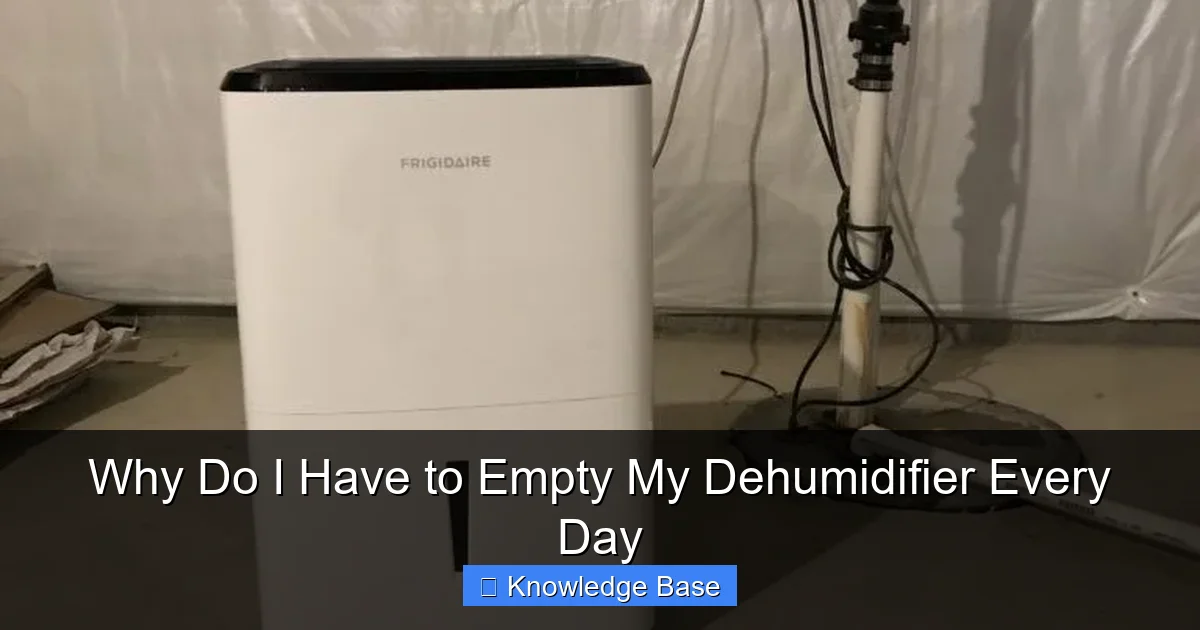
Visual guide about Why Do I Have to Empty My Dehumidifier Every Day
Image source: housenotebook.com
To truly grasp why your dehumidifier fills up so fast, it helps to know how these machines operate. Most residential dehumidifiers use a refrigeration-based system, which works similarly to an air conditioner. Here’s a simple breakdown of the process:
Warm, moist air is drawn into the unit through a grille by an internal fan. As the air passes over cold evaporator coils, the moisture in the air condenses into water droplets—just like how dew forms on a cold drink can. This collected water drips into a removable bucket or reservoir inside the dehumidifier. Meanwhile, the now-drier air passes over warm condenser coils, which reheat it slightly before blowing it back into the room.
This cycle repeats continuously as long as the unit is running. The amount of water collected depends on several factors: the humidity level in the air, the temperature of the room, the size and efficiency of the dehumidifier, and how long it runs each day.
For example, a dehumidifier running in a damp basement during a humid summer might collect 10 to 20 pints of water in 24 hours. In contrast, the same unit in a dry, air-conditioned living room might only collect a few pints over several days. So when you’re emptying the tank daily, it’s often because your home is producing a lot of moisture—and your dehumidifier is successfully capturing it.
Types of Dehumidifiers and Their Water Collection Rates
Not all dehumidifiers are created equal. The type of unit you have can influence how much water it collects and how often you need to empty it. The most common types include:
– **Refrigerant (compressor) dehumidifiers**: These are the most popular for home use. They work best in warm, humid environments (above 60°F) and can remove large amounts of moisture quickly. However, they’re less effective in cold spaces like unheated garages.
– **Desiccant dehumidifiers**: These use a moisture-absorbing material (like silica gel) to pull water from the air. They’re quieter and work well in colder temperatures, but they typically collect less water and may require more frequent maintenance.
– **Whole-house dehumidifiers**: Integrated into your HVAC system, these units treat the entire home and often include automatic drainage, so you rarely—if ever—need to empty a tank.
The size of your dehumidifier also matters. Units are rated by how many pints of moisture they can remove in 24 hours under standard conditions (usually 80°F and 60% relative humidity). A 30-pint dehumidifier can handle moderate humidity, while a 50-pint or 70-pint model is better for high-moisture areas like basements or crawl spaces.
If your unit is on the smaller side but you’re dealing with high humidity, it’s no surprise the tank fills up fast. Upgrading to a larger capacity model or adding a second unit can help reduce daily emptying.
Common Reasons Your Dehumidifier Fills Up Daily
Visual guide about Why Do I Have to Empty My Dehumidifier Every Day
Image source: familyhandyman.com
Now that you understand how dehumidifiers work, let’s explore the most common reasons why yours might need daily—or even multiple daily—emptying.
High Indoor Humidity Levels
The number one reason your dehumidifier fills up quickly is simply that there’s a lot of moisture in your home’s air. Ideal indoor humidity levels should be between 30% and 50%. When humidity climbs above 60%, you’re in the danger zone for mold growth, dust mites, and musty odors.
Several factors can drive indoor humidity up:
– **Weather and climate**: If you live in a humid region—like the Southeast U.S., coastal areas, or tropical climates—outdoor air is naturally moist. This humidity seeps indoors through windows, doors, and cracks.
– **Seasonal changes**: Summer brings heat and humidity, while spring and fall rains can saturate the ground, increasing evaporation into basements and crawl spaces.
– **Indoor activities**: Cooking, showering, doing laundry, and even breathing release moisture into the air. A family of four can add several gallons of water to the indoor environment each week through normal daily activities.
For example, a long, hot shower can raise bathroom humidity to 90% or higher. Without proper ventilation, that moisture spreads to other rooms. If your dehumidifier is in a central location, it will work overtime to pull that excess moisture out of the air—resulting in a full tank by the end of the day.
Poor Ventilation in Damp Areas
Ventilation plays a huge role in moisture control. Areas like basements, bathrooms, laundry rooms, and crawl spaces are naturally prone to dampness because they’re often poorly ventilated and cooler than the rest of the house.
Cold surfaces attract condensation. When warm, moist air hits a cold wall, window, or concrete floor, it cools down and releases moisture—just like breath fogging a mirror. This process, called condensation, adds to the overall humidity load.
If your dehumidifier is placed in a basement with no windows, poor airflow, and cold concrete walls, it’s fighting an uphill battle. The unit pulls moisture from the air, but new moisture keeps forming on surfaces, creating a cycle that keeps the tank filling.
Improving ventilation can help. Use exhaust fans in bathrooms and kitchens, open windows when weather permits, and consider installing a basement ventilation fan or air exchanger. Even cracking a window slightly on a dry day can make a difference.
Leaky Windows, Doors, or Foundations
Another major contributor to high indoor humidity is air infiltration. Gaps around windows, doors, and foundations allow outdoor air—and its moisture—to enter your home.
In humid climates, this means your dehumidifier is constantly pulling in fresh, damp air. Even small leaks can add up over time. For instance, a 1/8-inch gap around a basement window might not seem like much, but it can let in enough moist air to fill your dehumidifier tank multiple times a day.
Check for drafts and seal any gaps with weatherstripping, caulk, or foam sealant. Pay special attention to basement windows, sump pump openings, and areas where utilities enter the home. A well-sealed home reduces the moisture load and helps your dehumidifier work more efficiently.
Undersized or Inefficient Unit
Sometimes, the issue isn’t the environment—it’s the dehumidifier itself. If your unit is too small for the space or outdated, it may struggle to keep up with moisture levels.
For example, a 20-pint dehumidifier might be fine for a small closet or bathroom, but it will be overwhelmed in a 1,000-square-foot basement with high humidity. The unit will run constantly, collecting water nonstop, and still not make a dent in the overall moisture.
Similarly, older models may have worn-out compressors or dirty coils, reducing their efficiency. A dirty air filter can restrict airflow, forcing the unit to work harder and collect less water—or worse, overheat and shut down.
To determine if your unit is the right size, consider the square footage of the area and the humidity level. Most manufacturers provide sizing charts. As a general rule:
– 30-pint unit: Up to 1,500 sq. ft., moderate humidity
– 50-pint unit: Up to 2,500 sq. ft., high humidity
– 70-pint unit: Large basements or whole-house use
If you’re consistently emptying a small tank daily, upgrading to a larger model or adding a second unit can reduce maintenance and improve results.
Continuous Use Without Drainage
Many dehumidifiers come with a built-in pump or hose connection for continuous drainage. If yours doesn’t have this feature—or if you’re not using it—you’re relying solely on the internal tank.
A typical dehumidifier tank holds between 1 and 2 gallons (about 8 to 16 pints). Once it’s full, the unit automatically shuts off to prevent overflow. That means your dehumidifier stops working until you empty it.
In high-moisture environments, the tank can fill in just a few hours. Without continuous drainage, you’re stuck with daily—or more frequent—emptying.
The solution? Use a hose to drain the water directly into a floor drain, sump pump, or outside. Most units have a threaded port for this purpose. Just make sure the hose slopes downward and isn’t kinked. Some models even include a built-in pump that can push water upward, allowing you to drain into a sink or elevated drain.
This simple upgrade can save you time and ensure your dehumidifier runs 24/7 without interruption.
How to Reduce the Frequency of Emptying
If daily emptying is becoming a hassle, there are several practical steps you can take to reduce how often you need to empty the tank.
Install Continuous Drainage
As mentioned earlier, the easiest way to eliminate daily emptying is to set up continuous drainage. Attach a standard garden hose to the drain port and route it to a nearby floor drain, sump pit, or outside.
Make sure the hose is secured and slopes downward to allow gravity to do the work. If your unit has a built-in pump, you can even drain water upward—perfect for basements without floor drains.
This setup keeps your dehumidifier running nonstop, even during heavy moisture periods. No more waking up to a full tank or worrying about overflow.
Improve Home Ventilation
Better airflow reduces moisture buildup and takes some of the load off your dehumidifier. Here are a few tips:
– Run exhaust fans in bathrooms and kitchens during and after use.
– Open windows on dry, low-humidity days to let stale air out and fresh air in.
– Use ceiling fans to circulate air and prevent stagnant, damp pockets.
– Consider installing a whole-house ventilation system or energy recovery ventilator (ERV) for long-term moisture control.
In basements, a dehumidifier works best when paired with a ventilation fan that exchanges stale air with drier outdoor air.
Seal Air Leaks
Preventing moisture from entering your home in the first place reduces the workload on your dehumidifier. Inspect your home for leaks, especially in basements, attics, and around windows and doors.
Use caulk to seal small gaps and weatherstripping for movable parts like windows and doors. For larger gaps around pipes or electrical conduits, use expanding foam.
Don’t forget the foundation. Cracks in basement walls or floors can let in groundwater and humid air. Seal them with hydraulic cement or epoxy injections.
Upgrade to a Larger or More Efficient Model
If your current dehumidifier is too small or outdated, upgrading can make a big difference. Look for an ENERGY STAR-certified model with a higher pint rating and built-in pump.
Modern units often include smart features like humidity sensors, auto-restart after power outages, and washable filters—making them easier to maintain and more effective.
For whole-home moisture control, consider a whole-house dehumidifier integrated with your HVAC system. These units are more expensive upfront but offer automatic drainage and consistent humidity control throughout your home.
Maintain Your Dehumidifier Regularly
A well-maintained dehumidifier works more efficiently and collects water more effectively. Neglecting maintenance can lead to reduced performance and faster tank filling.
Follow these simple steps:
– **Clean the air filter monthly**: A clogged filter restricts airflow, forcing the unit to work harder. Most filters are washable—just rinse with water and let dry.
– **Wipe down the coils**: Dust and debris on the evaporator and condenser coils reduce heat exchange efficiency. Use a soft brush or vacuum attachment to clean them gently.
– **Empty and clean the tank weekly**: Even if you use continuous drainage, bacteria and mold can grow in the tank. Wash it with mild soap and water, and dry thoroughly.
– **Check for frost buildup**: In cold environments, refrigerant dehumidifiers can frost over. If you see ice on the coils, turn off the unit and let it thaw. Consider switching to a desiccant model for cold spaces.
Regular maintenance ensures your dehumidifier runs smoothly and lasts longer.
When to Worry: Signs of a Problem
While daily emptying is often normal, there are times when it could signal a deeper issue. Here’s when to be concerned:
Unit Runs Constantly But Collects Little Water
If your dehumidifier runs nonstop but the tank fills slowly—or not at all—it may have a refrigerant leak, faulty compressor, or blocked coils. This means it’s not removing moisture effectively, even though it’s working hard.
Unusual Noises or Odors
Grinding, rattling, or squealing sounds could indicate a mechanical problem. Musty or burning smells may point to mold growth inside the unit or an electrical issue.
Water Leaks or Overflow
If water is leaking from the tank, hose, or base of the unit, check for cracks, loose connections, or a clogged drain hose. Overflow can damage floors and create mold hazards.
Ice on the Coils
Frost or ice buildup on the evaporator coils usually means the unit is too cold or the defrost function isn’t working. This reduces efficiency and can damage the compressor.
If you notice any of these signs, consult the user manual or contact the manufacturer. In some cases, professional repair or replacement may be necessary.
Conclusion
So, why do you have to empty your dehumidifier every day? In most cases, it’s because your home has high humidity levels, and your dehumidifier is doing exactly what it’s supposed to do—removing excess moisture to protect your health and your home.
Daily emptying isn’t a flaw; it’s a feature of a hardworking appliance. But that doesn’t mean you have to live with the hassle. By improving ventilation, sealing air leaks, upgrading your unit, or installing continuous drainage, you can reduce how often you need to empty the tank—and enjoy a drier, more comfortable home.
Remember, the goal isn’t to stop your dehumidifier from collecting water. It’s to manage moisture effectively so your unit works efficiently with minimal maintenance. With the right setup and a little know-how, you can keep your home dry, healthy, and mold-free—without spending every day chasing a full water tank.
Frequently Asked Questions
Is it normal to empty a dehumidifier every day?
Yes, it’s completely normal—especially in humid climates, during rainy seasons, or in damp areas like basements. A dehumidifier filling up daily often means it’s successfully removing excess moisture from your home.
How much water should a dehumidifier collect in a day?
Most residential dehumidifiers collect between 10 and 20 pints of water per day in high-humidity conditions. The exact amount depends on the unit size, humidity level, and runtime.
Can I leave my dehumidifier on all the time?
Yes, you can run your dehumidifier continuously, especially in humid environments. Just make sure it has continuous drainage or you empty the tank regularly to prevent overflow.
What happens if I don’t empty my dehumidifier?
If the tank fills up and isn’t emptied, most units will automatically shut off to prevent spills. This stops moisture removal until the tank is emptied, allowing humidity to rise again.
How do I stop my dehumidifier from filling up so fast?
Install continuous drainage, improve home ventilation, seal air leaks, upgrade to a larger unit, and maintain the filter and coils regularly. These steps reduce moisture load and improve efficiency.
Should I use a dehumidifier in winter?
It depends. In cold, dry climates, you may not need one. But in humid or poorly insulated homes, especially in basements, a desiccant dehumidifier can help prevent condensation and mold growth.