
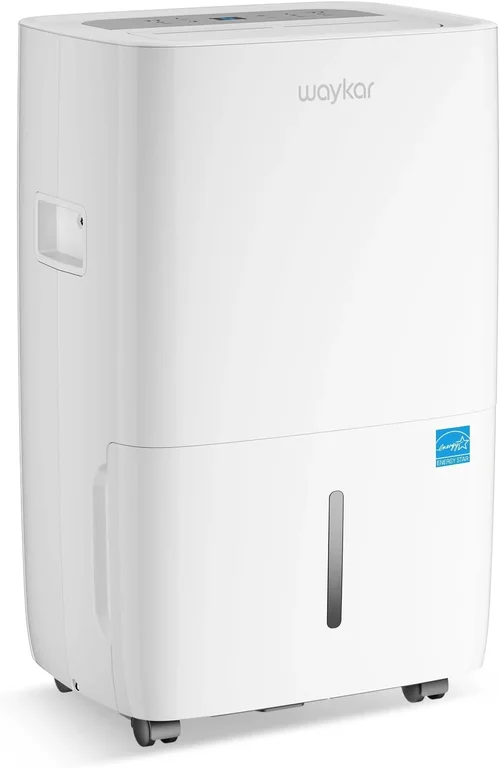
Dealing with a damp, musty basement is more than just an inconvenience—it’s a threat to your home’s structural integrity, your family’s health, and your peace of mind. Whether you’re storing seasonal gear, running a home gym, or simply trying to keep mold at bay, excess moisture in below-grade spaces is a persistent challenge. That’s where a high-quality dehumidifier comes in. But with dozens of brands, models, and features flooding the market in 2026, choosing the right one can feel overwhelming. This comprehensive buying guide cuts through the noise to help you make a confident, informed decision.
In this guide, you’ll learn everything you need to know about selecting the best dehumidifier for your basement—from understanding key performance specs like pint capacity and energy efficiency, to evaluating build quality, smart features, and long-term reliability. We’ll compare top brands like Frigidaire, hOmeLabs, GE, Midea, and AprilAire, and break down real-world performance based on expert testing and thousands of user reviews. Whether you’re on a tight budget or ready to invest in a premium whole-home solution, this guide will equip you with the knowledge to pick a unit that delivers consistent results, lasts for years, and protects your basement from humidity-related damage.
The dehumidifier market has evolved significantly in recent years. Advances in compressor technology, smart home integration, and energy-saving designs have made modern units far more effective and user-friendly than their predecessors. However, not all dehumidifiers are created equal—especially when it comes to basement use, where conditions are often harsher: colder temperatures, higher humidity levels, and limited ventilation. A unit that works well in a living room may struggle in a 1,500-square-foot basement with 70% humidity. That’s why it’s crucial to choose a model specifically designed for basement environments. By the end of this guide, you’ll know exactly what to look for, which brands deliver the best value, and how to avoid common pitfalls that lead to buyer’s remorse.

What to Look for When Buying Buying Guide
1. Pint Capacity and Coverage Area
The most critical specification for any basement dehumidifier is its pint capacity—the amount of moisture it can remove from the air in 24 hours under standard testing conditions (typically 80°F and 60% relative humidity). For basements, which are prone to high humidity and poor airflow, you’ll want a unit with a capacity of at least 50 pints per day (pints/day). Larger or more humid basements may require 70-pint or even 90-pint models.
But capacity alone isn’t enough. You also need to match the unit’s coverage area to your basement’s square footage. Most manufacturers provide a recommended coverage range (e.g., “up to 1,500 sq. ft.”), but these estimates are often optimistic. A better approach is to consider your basement’s condition: Is it finished or unfinished? Does it have a history of flooding or condensation? Is it well-insulated? For damp or very wet basements, opt for a model rated for a larger space than your actual square footage—this ensures it can handle peak humidity without overworking.
2. Energy Efficiency and Operating Costs
Basement dehumidifiers often run for 12–24 hours a day, especially during humid seasons, so energy efficiency directly impacts your utility bill. The key metric here is the Energy Factor (EF), measured in liters of water removed per kilowatt-hour (L/kWh). Higher EF values mean greater efficiency. For example, a unit with an EF of 1.5 removes 1.5 liters of water per kWh, while one with 2.0 removes twice as much for the same energy cost.
In 2026, the most efficient basement dehumidifiers boast EF ratings of 2.0 or higher. Many also carry the ENERGY STAR certification, which indicates they meet strict efficiency guidelines set by the U.S. Environmental Protection Agency. ENERGY STAR models use up to 15% less energy than standard units, saving you $10–$20 per year in electricity costs. Over a 5–7 year lifespan, that adds up to significant savings.
Additionally, consider the unit’s wattage. A 50-pint dehumidifier typically draws between 500–700 watts. Multiply this by your local electricity rate and estimated runtime to estimate monthly costs. For example, a 600-watt unit running 12 hours a day at $0.12/kWh costs about $26 per month. While this may seem high, it’s far cheaper than repairing water damage or replacing mold-infested belongings.
3. Low-Temperature Performance
One of the biggest challenges with basement dehumidifiers is that basements are often cooler than other parts of the house—sometimes as low as 50–60°F. Most standard dehumidifiers use refrigerant-based systems that lose efficiency as temperatures drop. Below 65°F, many units will ice up on the coils and shut down, rendering them ineffective.
To combat this, look for a dehumidifier with a “low-temperature operation” feature or one specifically designed for cold environments. These models often include automatic defrost cycles that melt ice buildup without interrupting operation. Some premium units use dual-inverter compressors or specialized refrigerants that maintain performance down to 41°F. Brands like AprilAire and Santa Fe offer whole-home dehumidifiers engineered for unconditioned spaces like basements and crawl spaces.
If your basement stays above 65°F year-round, a standard model may suffice. But if it’s unheated or prone to seasonal cooling, investing in a low-temperature unit is essential. Otherwise, you’ll end up with a machine that works great in summer but fails when you need it most.
4. Drainage Options and Water Tank Capacity
Dehumidifiers collect moisture in an internal tank, which must be emptied manually—unless you have a continuous drainage option. For basement use, continuous drainage is often the best choice, especially if you can’t check the unit daily. Most models include a built-in pump or gravity drain hose connection. A gravity drain requires the unit to be positioned above a floor drain or sump pit, while a built-in pump (like those found on the hOmeLabs 90-Pint or Frigidaire FFAD9022W1) can push water vertically up to 15 feet, offering greater flexibility.
If you prefer manual emptying, consider the tank size. A 1–2 gallon tank may need emptying every 8–12 hours in high-humidity conditions, which is impractical for most users. Larger tanks (3+ gallons) reduce maintenance but take up more space. Some models, like the GE APER50LZ, feature full-tank alerts and auto-shutoff to prevent overflow.
5. Noise Level and Placement Flexibility
Basement dehumidifiers can be noisy, especially older models with loud compressors and fans. Noise is measured in decibels (dB), with most units ranging from 45 dB (quiet library) to 60 dB (normal conversation). For basements used as living spaces—like home theaters, gyms, or workshops—a quieter unit (under 50 dB) is ideal.
Placement also matters. Look for models with front or top air discharge to avoid blocking vents against walls. Some units, like the Midea MAD50C1ZWS, have 360-degree air outlets for flexible positioning. Weight and portability are also considerations: a 50-pound unit with recessed handles and wheels is easier to move than a bulky, stationary model.
6. Smart Features and Automation
Modern dehumidifiers increasingly include smart features that enhance convenience and efficiency. Wi-Fi connectivity allows you to monitor and control the unit via smartphone apps (e.g., Frigidaire’s SmartHQ or GE’s SmartHQ). You can set humidity levels, receive alerts when the tank is full, and even integrate with smart home systems like Amazon Alexa or Google Assistant.
Other useful features include:
– Humidistat: Lets you set a target humidity level (ideally 30–50% for basements).
– Auto-Restart: Resumes operation after a power outage.
– Timer: Schedule on/off cycles to save energy.
– Filter Indicator: Alerts you when the air filter needs cleaning.
While not essential, these features can significantly improve usability, especially in hard-to-reach basements.
7. Build Quality and Durability
Basements are harsh environments—dusty, damp, and prone to temperature swings. A dehumidifier with a sturdy, corrosion-resistant chassis and sealed electronics will last longer. Look for models with powder-coated metal housings (like the AprilAire E080) rather than all-plastic construction. Internal components should be well-insulated and protected from moisture ingress.
Also consider the compressor type. Rotary compressors (found in premium models) are quieter, more efficient, and longer-lasting than reciprocating compressors. Scroll compressors, used in high-end units, offer even greater reliability but come at a higher price.
8. Brand Reputation and Customer Support
Not all dehumidifier brands are equal. Established manufacturers like Frigidaire, GE, and Midea have decades of experience and robust customer support networks. Others, like hOmeLabs and Ivation, are newer but have built strong reputations through consistent performance and responsive service.
Before buying, check online reviews on sites like Amazon, Home Depot, and Consumer Reports. Pay attention to comments about reliability, noise, and customer service. A brand with a high return rate or frequent complaints about compressor failure should raise red flags.
Different Types of Buying Guide
Common Buying Mistakes to Avoid
❌ Mistake: Choosing Based on Price Alone
Why it’s bad: The cheapest dehumidifier often lacks the capacity, durability, or features needed for basement use. A $150 unit may struggle in a damp 1,200 sq. ft. basement, leading to constant cycling, high energy bills, and premature failure.
What to do instead: Focus on value, not just cost. A mid-range $350 model with a 70-pint capacity, continuous drainage, and ENERGY STAR rating will outperform and outlast a budget unit, saving money in the long run.
❌ Mistake: Ignoring Low-Temperature Performance
Why it’s bad: Most basements drop below 65°F in winter. A standard dehumidifier will ice up and stop working, leaving your basement vulnerable to mold and mildew.
What to do instead: Select a model rated for low-temperature operation (down to 41°F) or consider a desiccant dehumidifier, which performs better in cold, dry air.
❌ Mistake: Overlooking Drainage Needs
Why it’s bad: Manual emptying is tedious and often neglected. A full tank can cause overflow, water damage, or automatic shutdown.
What to do instead: Install a continuous drainage system using a hose connected to a floor drain or sump pump. If that’s not possible, choose a model with a built-in pump for vertical drainage.
❌ Mistake: Buying the Wrong Size
Why it’s bad: An undersized unit will run constantly, wear out quickly, and fail to control humidity. An oversized unit may short-cycle, reducing efficiency and lifespan.
What to do instead: Calculate your basement’s square footage and humidity level. Use manufacturer guidelines as a starting point, but add 10–20% capacity for safety.
❌ Mistake: Neglecting Maintenance
Why it’s bad: Dirty filters and coils reduce efficiency, increase energy use, and can lead to mold growth inside the unit.
What to do instead: Clean the air filter monthly and inspect coils annually. Replace filters as recommended—many models include washable filters for easy upkeep.
❌ Mistake: Ignoring Warranty and Support
Why it’s bad: Dehumidifiers have complex components like compressors that can fail. A short or limited warranty leaves you exposed to costly repairs.
What to do instead: Choose a brand with at least a 2-year warranty on parts and labor, and check if extended warranties are available. Read the fine print—some exclude compressor coverage.
❌ Mistake: Not Testing Before Committing
Why it’s bad: You won’t know how a unit performs in your specific basement until it’s running. A model that works in a friend’s home may struggle in yours.
What to do instead: Buy from retailers with generous return policies (e.g., 30–90 days). Run the unit for a week and monitor humidity levels with a hygrometer. If it’s not effective, return it.
Budget Guidelines: How Much Should You Spend?
Entry-Level ($150 – $250): These are basic 30–50 pint units ideal for small, mildly damp basements. Expect plastic construction, manual drainage, and limited features. Brands like Ivation and Tosot offer decent options, but durability and efficiency may be compromised. Best for seasonal use or as a temporary solution.
Mid-Range ($250 – $500): This is the sweet spot for most basement owners. You’ll find 50–70 pint models with ENERGY STAR ratings, continuous drainage, auto-defrost, and digital controls. Top performers include the Frigidaire FFAD7033R1, hOmeLabs 70-Pint, and GE APER50LZ. These units balance performance, reliability, and value.
Premium ($500 – $900): Designed for large or very humid basements, these models offer 70–90 pint capacity, built-in pumps, smart connectivity, and superior build quality. The hOmeLabs 90-Pint and Frigidaire Gallery Series fall here. They’re ideal for finished basements, home gyms, or areas with chronic moisture issues.
Luxury ($900+): Whole-home dehumidifiers like the AprilAire E080 or Santa Fe Compact 70 provide centralized humidity control for your entire house, including the basement. These are professionally installed, highly efficient, and built to last 10+ years. Best for new builds, high-end homes, or severe moisture problems.
Expert Tips for Getting the Best Deal
– Buy in Spring: Dehumidifiers are in highest demand during summer. Retailers often offer discounts in spring (March–May) to clear inventory before peak season. Look for sales at Home Depot, Lowe’s, and Costco.
– Check for Rebates: Some utility companies offer rebates for ENERGY STAR dehumidifiers. Visit the ENERGY STAR website or contact your provider to see if you qualify.
– Compare Online and In-Store: Online retailers like Amazon often have lower prices and faster shipping, but in-store purchases allow you to inspect the unit and take advantage of price-matching policies.
– Read Return Policies: Choose retailers with at least a 30-day return window. Some, like Costco, offer 90-day returns with no restocking fees.
– Consider Refurbished Models: Certified refurbished units from manufacturers like Frigidaire or GE can save you 20–30% and often come with the same warranty as new models.
– Test with a Hygrometer: Before and after installation, use a digital hygrometer to measure humidity levels. This helps you verify performance and adjust settings for optimal results.
– Install a Backup Sump Pump: If your basement is prone to flooding, pair your dehumidifier with a battery-backed sump pump for added protection.
– Seal Air Leaks: Improve your dehumidifier’s efficiency by sealing cracks in walls, windows, and foundations. This reduces moisture infiltration and lightens the load on your unit.

Frequently Asked Questions
Q: How do I know if my basement needs a dehumidifier?
A: Signs include musty odors, condensation on walls or windows, peeling paint, rust on metal surfaces, or visible mold. Use a hygrometer to measure humidity—if it’s consistently above 60%, a dehumidifier is recommended.
Q: Can I use a regular dehumidifier in my basement?
A: Yes, but only if it’s rated for low-temperature operation and has adequate capacity. Standard models may fail in cold, damp basements. Choose a basement-specific or whole-home unit for best results.
Q: How much does it cost to run a dehumidifier in a basement?
A: A 70-pint ENERGY STAR unit uses about 700 watts and costs roughly $25–$35 per month if run 12 hours daily at $0.12/kWh. Actual costs depend on usage, electricity rates, and efficiency.
Q: Should I run my dehumidifier year-round?
A: In most climates, yes—especially in basements. Humidity can remain high even in winter due to groundwater seepage. Set the humidistat to 40–50% and let it run continuously.
Q: Can a dehumidifier prevent mold?
A: Yes, by maintaining humidity below 60%, you create an environment where mold cannot thrive. However, it won’t remove existing mold—clean affected areas with a mold-killing solution first.
Q: Do I need a dehumidifier if I have a sump pump?
A: Yes. A sump pump removes standing water, but it doesn’t address airborne moisture. A dehumidifier controls humidity, preventing mold, odors, and structural damage.
Q: How often should I clean my dehumidifier?
A: Clean the air filter every 2–4 weeks during peak use. Wipe down the water tank monthly and inspect coils annually. Follow the manufacturer’s maintenance schedule.
Q: Can I connect my dehumidifier to a smart thermostat?
A: Some whole-home dehumidifiers integrate with HVAC systems and smart thermostats. Portable units typically don’t, but Wi-Fi models can be controlled via apps.
Q: What’s the difference between a dehumidifier and an air purifier?
A: A dehumidifier removes moisture from the air, while an air purifier filters particles like dust, pollen, and smoke. They serve different purposes but can be used together for better indoor air quality.
Q: How long do dehumidifiers last?
A: With proper maintenance, most last 5–7 years. High-end models with durable compressors and sealed systems can last 10+ years.
Our Final Recommendations
Best for Budget-Conscious Buyers: Frigidaire FFAD5033R1 (50-Pint) – At under $250, this ENERGY STAR-certified model offers reliable performance, continuous drainage, and a 2-year warranty. Ideal for small to medium basements.
Best Overall Value: hOmeLabs 70-Pint Dehumidifier – Combines 70-pint capacity, built-in pump, smart features, and quiet operation at a mid-range price. Consistently top-rated for performance and durability.
Best Premium Option: AprilAire E080 Whole-Home Dehumidifier – A professional-grade solution for large homes with severe moisture issues. Offers 80-pint capacity, ultra-low energy use, and 5-year warranty.
Best for Beginners: GE APER50LZ (50-Pint) – User-friendly controls, clear display, and reliable performance make this a great entry point. Includes auto-defrost and full-tank alert.
Best for Advanced Users: Midea MAD90C1ZWS (90-Pint) – High-capacity, Wi-Fi enabled, and designed for large basements. Features a built-in pump, app control, and 3-year compressor warranty.
Conclusion: Making the Right Choice
Choosing the best dehumidifier for your basement isn’t just about picking the most powerful or expensive model—it’s about matching the right features to your specific needs. Consider your basement’s size, humidity level, temperature, and usage patterns. Prioritize capacity, low-temperature performance, and drainage options, and don’t overlook energy efficiency and build quality.
Avoid common pitfalls like undersizing, ignoring maintenance, or choosing based solely on price. Instead, focus on long-term value and reliability. Whether you opt for a portable unit from a trusted brand or invest in a whole-home system, the right dehumidifier will protect your home, improve air quality, and give you peace of mind.
Take the time to research, compare models, and read real user reviews. Use the tips and recommendations in this guide to narrow your options and make a confident purchase. Your basement—and your home—will thank you.