
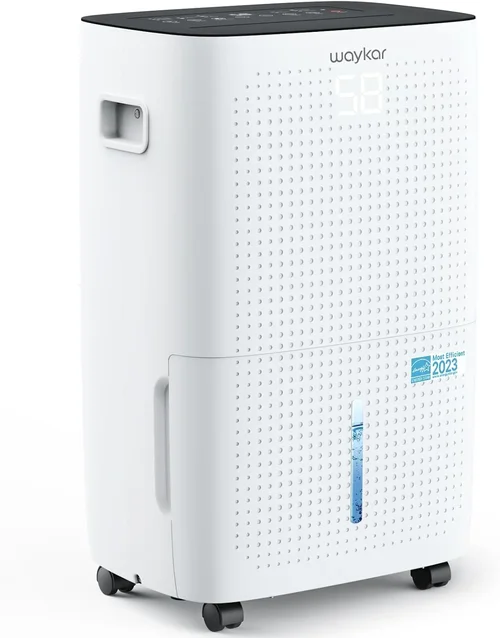
When it comes to maintaining a healthy, safe, and efficient commercial environment, humidity control is often an overlooked yet critical factor. Whether you’re managing a warehouse, a manufacturing facility, a data center, a restaurant kitchen, or even a large residential complex, excess moisture in the air can lead to serious problems—mold growth, structural damage, equipment corrosion, compromised product quality, and even health hazards for employees or occupants. That’s where a high-performance commercial dehumidifier becomes not just a convenience, but a necessity.
This comprehensive buying guide is designed to help you navigate the complex world of commercial dehumidifiers with confidence. We’ll walk you through everything you need to know—from understanding key performance metrics and evaluating build quality to comparing different types and avoiding common purchasing pitfalls. Whether you’re a facility manager, business owner, contractor, or maintenance professional, this guide will equip you with the knowledge to make a smart, informed decision that aligns with your specific needs and budget. The market is flooded with options, and while that’s great for choice, it can also be overwhelming. Our goal is to cut through the noise and deliver expert-level insights that prioritize functionality, durability, and long-term value.
By the end of this guide, you’ll understand how to assess your space’s unique dehumidification requirements, interpret technical specifications like pints per day (PPD) and airflow rates, and identify the features that truly matter in a commercial setting. We’ll also break down the different types of commercial dehumidifiers—refrigerant, desiccant, low-grain refrigerant (LGR), and more—so you can choose the right technology for your application. From budget considerations to brand reliability and warranty support, we’ve covered every angle. Let’s dive in and help you find the best commercial dehumidifier for your operation.

What to Look for When Buying Buying Guide
1. Performance Specifications
Performance is the backbone of any commercial dehumidifier. Unlike residential units, commercial models are built to handle larger spaces, higher humidity levels, and continuous operation over extended periods. The most critical performance metric is the dehumidification capacity, typically measured in pints per day (PPD) or liters per day. This tells you how much moisture the unit can remove from the air in a 24-hour period under standard conditions (usually 80°F and 60% relative humidity).
For example, a 100 PPD unit is suitable for a 1,000–1,500 sq. ft. warehouse with moderate humidity, while a 300+ PPD model may be necessary for a 5,000 sq. ft. industrial space with high moisture levels due to production processes or poor ventilation. But capacity isn’t the only factor—airflow rate (measured in cubic feet per minute, or CFM) is equally important. Higher CFM means the unit can circulate and process more air, which is essential for maintaining consistent humidity levels across large or open areas.
Another key specification is the operating temperature range. Most refrigerant-based dehumidifiers work best between 65°F and 95°F. If your facility operates in colder environments—like a refrigerated storage unit or unheated warehouse in winter—you’ll need a low-temperature model or a desiccant dehumidifier, which performs well even below 50°F. Also, check the humidity removal efficiency, often expressed as liters per kilowatt-hour (L/kWh). A higher L/kWh rating means the unit removes more moisture per unit of energy consumed, which translates to lower operating costs over time.
2. Build Quality & Durability
Commercial environments are tough. Dust, vibrations, temperature swings, and constant use can quickly wear down equipment that isn’t built to last. That’s why build quality should be a top priority when selecting a commercial dehumidifier. Look for units constructed with heavy-duty materials such as powder-coated steel cabinets, corrosion-resistant components, and reinforced frames. These features ensure the unit can withstand the rigors of industrial or commercial use without frequent breakdowns.
Pay close attention to the internal components as well. High-quality compressors, copper coils, and sealed bearings are signs of a well-engineered machine. Avoid units with plastic housings or flimsy controls—these are more typical of residential models and won’t hold up under commercial demands. Additionally, check for features like protective grilles, sealed electrical compartments, and anti-vibration mounts, which help extend the lifespan of the unit.
Another aspect of durability is the unit’s resistance to environmental stressors. If your facility is prone to high dust levels—such as a woodworking shop or construction site—look for models with washable or replaceable air filters and sealed motors. For coastal or high-salinity environments, corrosion-resistant coatings and stainless-steel components are essential to prevent rust and degradation.
3. Features & Functionality
Modern commercial dehumidifiers come with a range of advanced features that enhance performance, convenience, and energy efficiency. One of the most valuable is a built-in humidistat, which allows the unit to automatically maintain a set humidity level. This prevents over-drying and reduces energy consumption by cycling the compressor only when needed. Some models even offer programmable timers, remote monitoring, or integration with building management systems (BMS), which is ideal for large facilities with centralized HVAC control.
Drainage options are another critical feature. Most commercial units offer continuous drainage via a built-in condensate pump or gravity-fed hose connection. A condensate pump is especially useful when the dehumidifier is located below floor level or far from a drain. Look for models with pump lift capabilities of 10–15 feet or more, and ensure the pump is reliable and easy to service.
Other useful features include auto-defrost (for low-temperature operation), filter change indicators, error code displays, and multi-speed fan controls. Some high-end models also include data logging, which records humidity levels and runtime for compliance or maintenance tracking. While not all features are necessary for every application, having the right ones can significantly improve operational efficiency and reduce downtime.
4. Size & Portability
Even in commercial settings, space and mobility matter. A dehumidifier that’s too large may not fit in tight mechanical rooms or under shelving, while one that’s too small may not cover the required area. Consider the physical dimensions of the unit and ensure it can be installed where needed—whether that’s on the floor, mounted on a wall, or suspended from the ceiling.
Portability is another important factor, especially if you need to move the unit between different areas or job sites. Look for models with integrated handles, swivel casters, or forklift pockets. Some units are designed with modular components that can be disassembled for transport and reassembled on-site. Weight is also a consideration—larger units can weigh 100–300 pounds, so ensure your team can safely move them or that the unit is installed in a permanent location.
For permanent installations, consider noise levels. While commercial dehumidifiers are generally louder than residential models, excessive noise can be disruptive in office environments or near workstations. Look for units with insulated cabinets or variable-speed fans that reduce sound output during low-demand periods.
5. Brand Reputation & Reliability
Not all dehumidifier brands are created equal. In the commercial sector, reliability and service support are paramount. Established brands like Dri-Eaz, AprilAire, Quest, Santa Fe, and Therma-Stor have decades of experience engineering dehumidifiers for demanding applications. These companies invest in R&D, rigorous testing, and customer support, which translates to better performance and longer product lifespans.
When evaluating brands, look beyond marketing claims and examine real-world performance. Check for certifications from organizations like AHAM (Association of Home Appliance Manufacturers) or ETL/UL listings, which indicate compliance with safety and performance standards. Also, research the company’s history—how long have they been in business? Do they specialize in commercial equipment, or are they primarily a residential brand?
Customer service is another key differentiator. A reputable brand will offer responsive technical support, accessible spare parts, and clear documentation. Some even provide on-site training or maintenance contracts, which can be invaluable for large facilities. Avoid lesser-known or generic brands that may offer lower prices but lack the support infrastructure to back up their products.
6. Warranty & Support
A strong warranty is a clear indicator of a manufacturer’s confidence in their product. For commercial dehumidifiers, look for warranties of at least 2–5 years on the entire unit, with extended coverage on critical components like the compressor (often 5–7 years). Some premium brands offer lifetime warranties on cabinets or 10-year compressor coverage, which can save thousands in replacement costs over time.
But warranty terms matter just as much as duration. Read the fine print to understand what’s covered—labor, parts, shipping, on-site service—and what voids the warranty (e.g., improper installation, lack of maintenance). Also, check if the warranty is transferable, which can be important if you sell or lease the equipment.
Support services are equally important. Does the manufacturer offer 24/7 technical support? Are service technicians available in your area? Can you easily order replacement filters, pumps, or control boards? A robust support network ensures minimal downtime and faster resolution of issues, which is critical in commercial operations where every hour counts.
7. Energy Efficiency & Operating Costs
While the upfront cost of a commercial dehumidifier is important, the long-term operating costs can far exceed the purchase price. Energy efficiency directly impacts your utility bills, especially if the unit runs continuously. Look for models with high energy efficiency ratios (EER) or energy factor (EF) ratings. The Department of Energy (DOE) sets minimum efficiency standards, but many commercial units exceed these benchmarks.
Some manufacturers publish annual operating cost estimates based on average usage and local electricity rates. Use these to compare models and calculate potential savings. For example, a unit that costs $2,000 more upfront but saves $500 per year in energy costs will pay for itself in four years.
Additionally, consider the cost of consumables like filters and desiccant wheels (for desiccant models). High-efficiency particulate air (HEPA) filters or electrostatic filters may cost more but can improve air quality and reduce maintenance frequency. Always factor in these ongoing expenses when evaluating total cost of ownership.
8. User Reviews & Real-World Performance
Spec sheets and marketing materials provide valuable data, but real-world user reviews offer insights you can’t get anywhere else. Look for feedback from other commercial users—facility managers, contractors, or industrial engineers—who have used the unit in similar environments. Pay attention to comments about reliability, ease of maintenance, noise levels, and customer service experiences.
Online marketplaces like Amazon, Grainger, or HVAC supply websites often have detailed reviews with photos and videos. Industry forums and professional groups (e.g., on LinkedIn or Reddit) can also be excellent sources of unbiased opinions. Be cautious of overly positive or negative reviews—look for balanced feedback that highlights both strengths and weaknesses.
Also, check for consistency in reviews. If multiple users report the same issue—such as a faulty pump or poor low-temperature performance—it’s likely a design flaw rather than an isolated incident. Conversely, consistent praise for durability or ease of use is a strong indicator of a quality product.
Different Types of Buying Guide

Common Buying Mistakes to Avoid
❌ Mistake: Choosing Based on Price Alone
Why it’s bad: Opting for the cheapest model may save money upfront, but it often leads to higher long-term costs due to poor performance, frequent repairs, and excessive energy consumption. Low-cost units may also lack essential features like condensate pumps or humidity controls, requiring additional equipment or manual intervention.
What to do instead: Focus on total cost of ownership, including energy use, maintenance, and expected lifespan. Invest in a mid-to-high-tier model from a reputable brand that offers reliable performance and strong warranty support.
❌ Mistake: Undersizing the Unit
Why it’s bad: A dehumidifier that’s too small for the space will run continuously without effectively reducing humidity. This leads to wasted energy, premature wear, and inadequate moisture control, which can result in mold, corrosion, or product damage.
What to do instead: Calculate your space’s dehumidification needs based on square footage, humidity levels, and environmental factors. Use manufacturer sizing guides or consult with an HVAC professional to select a unit with sufficient capacity.
❌ Mistake: Ignoring Drainage Requirements
Why it’s bad: Many commercial dehumidifiers produce several gallons of water per day. Without proper drainage, you’ll need to manually empty buckets frequently, which is impractical in busy environments. Overflow can also cause water damage.
What to do instead: Choose a model with continuous drainage options—either gravity-fed or pump-assisted. Ensure the pump has sufficient lift and is reliable. Install the unit near a floor drain or sump pit when possible.
❌ Mistake: Overlooking Maintenance Needs
Why it’s bad: Commercial dehumidifiers require regular maintenance—filter cleaning, coil inspection, pump servicing—to operate efficiently. Neglecting maintenance reduces performance, increases energy use, and shortens the unit’s lifespan.
What to do instead: Select a model with easy-access components and clear maintenance instructions. Schedule routine servicing and keep spare filters or parts on hand. Some units include maintenance reminders or diagnostic alerts.
❌ Mistake: Buying Without Testing or Demo
Why it’s bad: Performance can vary significantly between models, even with similar specs. Buying sight unseen increases the risk of selecting a unit that doesn’t meet your needs or has hidden flaws.
What to do instead: If possible, request a demo or trial period from the supplier. Test the unit in your actual environment to evaluate noise, airflow, and moisture removal. Some manufacturers offer rental programs for this purpose.
❌ Mistake: Not Considering Noise Levels
Why it’s bad: In office buildings, hotels, or healthcare facilities, excessive noise from a dehumidifier can disrupt operations, disturb occupants, or violate local noise ordinances.
What to do instead: Check the decibel (dB) rating and look for models with insulated cabinets or variable-speed fans. Consider ducting the unit to a remote location or using sound-dampening enclosures if noise is a concern.
❌ Mistake: Skipping Professional Installation
Why it’s bad: Improper installation—such as incorrect ducting, poor drainage setup, or electrical issues—can compromise performance, void warranties, or create safety hazards.
What to do instead: Hire a qualified HVAC technician or contractor to install the unit. Ensure all connections, electrical work, and drainage systems meet local codes and manufacturer specifications.
Budget Guidelines: How Much Should You Spend?
Entry-Level ($1,500 – $3,000): These models are suitable for small to medium commercial spaces with moderate humidity issues. They typically offer 50–150 PPD capacity and basic features like manual controls and gravity drainage. While affordable, they may lack durability, advanced controls, or low-temperature performance. Best for temporary use or low-demand environments.
Mid-Range ($3,000 – $6,000): This is the sweet spot for most commercial buyers. Units in this range offer 150–300 PPD, robust construction, programmable humidistats, condensate pumps, and energy-efficient operation. They’re ideal for warehouses, offices, retail stores, and light industrial applications. Brands like Dri-Eaz and AprilAire offer excellent options here with strong warranties and support.
Premium ($6,000 – $10,000): Designed for demanding environments, these dehumidifiers deliver 300+ PPD, advanced controls, data logging, and integration with building management systems. They’re built for continuous operation in high-humidity or high-temperature settings, such as manufacturing plants, data centers, or food processing facilities. Expect top-tier materials, extended warranties, and superior energy efficiency.
Luxury ($10,000+): These are top-of-the-line systems for mission-critical applications. They may include desiccant technology, custom configurations, remote monitoring, and ultra-low humidity capabilities. Common in museums, pharmaceutical labs, or military facilities where precise environmental control is essential. While expensive, they offer unmatched reliability and performance.

Expert Tips for Getting the Best Deal
– Buy During Off-Peak Seasons: Demand for dehumidifiers peaks in spring and summer. Purchasing in fall or winter can yield discounts of 10–20%, especially from retailers clearing inventory.
– Compare Total Cost of Ownership: Don’t just look at the sticker price. Factor in energy efficiency, maintenance costs, and expected lifespan. A slightly more expensive unit with lower operating costs can save thousands over time.
– Check for Rebates and Incentives: Some utility companies offer rebates for energy-efficient commercial dehumidifiers. Check with your local provider or visit the Database of State Incentives for Renewables & Efficiency (DSIRE).
– Buy from Authorized Dealers: Purchasing from authorized resellers ensures you receive genuine products, full warranty coverage, and access to technical support. Avoid gray-market or unauthorized sellers.
– Negotiate for Bulk or Multi-Unit Purchases: If you need multiple units, ask for a volume discount. Many suppliers offer tiered pricing for bulk orders.
– Review Return and Exchange Policies: Ensure the seller offers a reasonable return window (30–90 days) in case the unit doesn’t meet your needs. Some companies also offer trial periods.
– Inspect Before Finalizing: If buying in person, inspect the unit for damage, test the controls, and verify all components are included. For online purchases, check the packaging and documentation upon delivery.
– Consider Leasing or Financing: For large purchases, leasing or financing options can spread the cost over time, preserving cash flow for other business needs.

Frequently Asked Questions
Q: How do I calculate the right size dehumidifier for my space?
A: Start by measuring the square footage of the area. Then assess the humidity level—mild, moderate, or severe. Use a sizing chart from the manufacturer, which typically recommends PPD based on square footage and humidity. For example, a 2,000 sq. ft. space with high humidity may require a 200–300 PPD unit. Always round up to ensure adequate coverage.
Q: Can a commercial dehumidifier be used in cold environments?
A: Standard refrigerant models lose efficiency below 65°F. For cold spaces like walk-in freezers or unheated warehouses, choose a desiccant dehumidifier or a low-temperature refrigerant model with auto-defrost. These can operate effectively down to 30°F or lower.
Q: How often should I clean or replace the filter?
A: Most manufacturers recommend checking the filter monthly and cleaning or replacing it every 1–3 months, depending on dust levels. Clogged filters reduce airflow and efficiency. Some models have washable filters, while others require replacement.
Q: Is it safe to run a dehumidifier 24/7?
A: Yes, commercial dehumidifiers are designed for continuous operation. In fact, running them constantly is often more efficient than cycling on and off. Just ensure proper drainage and regular maintenance to prevent issues.
Q: Can I duct a portable dehumidifier?
A: Some models support ducting for air intake or exhaust, which helps direct moisture-laden air away from sensitive areas. Check the manufacturer’s specifications to see if your unit supports ducting and what size ducts are required.
Q: What’s the difference between a condensate pump and gravity drainage?
A: Gravity drainage requires the unit to be higher than the drain point, using a hose to let water flow downhill. A condensate pump actively lifts water to a higher elevation (e.g., into a sink or ceiling drain), offering more installation flexibility.
Q: Do commercial dehumidifiers require special electrical wiring?
A: Most units run on standard 120V or 240V circuits, but high-capacity models may require dedicated circuits or three-phase power. Consult an electrician to ensure your facility’s electrical system can support the unit.
Q: How long do commercial dehumidifiers typically last?
A: With proper maintenance, a quality commercial dehumidifier can last 8–15 years. Desiccant models may have longer lifespans due to fewer moving parts, while refrigerant units depend on compressor durability.
Q: Can I use a residential dehumidifier in a commercial setting?
A: Generally, no. Residential units lack the capacity, durability, and features needed for commercial use. They’re not built for continuous operation and may fail prematurely under heavy loads.
Q: What should I do if my dehumidifier isn’t removing enough moisture?
A: First, check the filter and coils for dirt. Ensure the unit is properly sized and located in a central area. Verify that doors and windows are closed. If the problem persists, the refrigerant may be low or the compressor faulty—contact a technician.
Our Final Recommendations
– Best for Budget-Conscious Buyers: Dri-Eaz F413 Revolution – Offers 150 PPD, robust build, and reliable performance at under $3,000. Ideal for small warehouses or offices.
– Best Overall Value: AprilAire E130 – A 130 PPD whole-house dehumidifier with smart controls, energy efficiency, and excellent warranty. Perfect for large homes or light commercial use.
– Best Premium Option: Quest 50 – A 500 PPD powerhouse with advanced controls, data logging, and industrial-grade construction. Built for demanding environments like data centers or manufacturing.
– Best for Beginners: Santa Fe Compact 70 – Easy to install and operate, with 70 PPD capacity and a user-friendly interface. Great for first-time buyers or small businesses.
– Best for Advanced Users: Therma-Stor Santa Fe Rx – A desiccant dehumidifier with ultra-low humidity control, remote monitoring, and custom configurations. Ideal for labs, archives, or restoration professionals.
Conclusion: Making the Right Choice
Selecting the best commercial dehumidifier is not just about removing moisture—it’s about protecting your assets, ensuring occupant comfort, and maintaining operational efficiency. As we’ve explored, the right choice depends on a careful balance of performance, durability, features, and budget. By understanding your specific needs and evaluating units based on real-world performance and expert insights, you can avoid costly mistakes and invest in a solution that delivers lasting value.
Remember, the cheapest option is rarely the best long-term investment. Prioritize quality, reliability, and support, and don’t hesitate to consult with professionals when in doubt. Whether you’re managing a single facility or an entire portfolio, the right dehumidifier can make a significant difference in air quality, equipment longevity, and overall business success.
Take the time to assess your space, compare models, and ask the right questions. With the knowledge from this guide, you’re now equipped to make a confident, informed decision. Don’t wait for mold to grow or equipment to fail—act now to create a healthier, safer, and more efficient environment. Your investment today will pay dividends for years to come.