
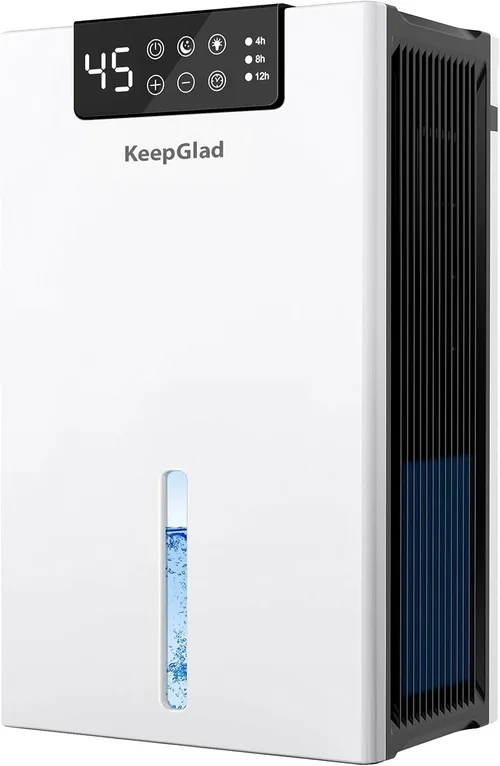
If you’ve ever walked into a basement that smells like damp socks, noticed condensation fogging up your windows, or spotted mold creeping along baseboards, you already know how disruptive excess humidity can be. High moisture levels don’t just damage your home—they can trigger allergies, worsen asthma, and create an environment where dust mites and mold thrive. While portable dehumidifiers with manual emptying are fine for occasional use, they quickly become impractical in consistently damp spaces. That’s where a continuous run dehumidifier comes in: a powerful, set-it-and-forget-it solution designed to maintain optimal indoor humidity without constant intervention.
This guide is built for homeowners, property managers, and renters who need reliable, long-term humidity control. Whether you’re dealing with a chronically wet crawl space, a humid garage workshop, or a finished basement prone to musty odors, we’ll help you find the right continuous run model for your needs. You’ll learn what separates a basic dehumidifier from a true continuous system, how to evaluate performance specs that actually matter, and which brands deliver durability and support. We’ll also walk you through common pitfalls, budget considerations, and expert-backed tips to ensure you get the best value—not just the lowest price.
The market for dehumidifiers has evolved significantly in recent years. What was once dominated by clunky, inefficient units now features smart sensors, energy-efficient compressors, and robust drainage options that support unattended operation for weeks or even months. Continuous run models are no longer niche products—they’re essential tools for maintaining healthy indoor air quality in high-moisture environments. From compact units ideal for small spaces to heavy-duty commercial-grade machines, there’s a wide range of options. But with so many choices, it’s easy to get overwhelmed. This guide cuts through the noise, offering clear, actionable advice based on real-world performance, technical specifications, and user feedback. By the end, you’ll have the confidence to choose a dehumidifier that works as hard as you do—without requiring constant attention.
What to Look for When Buying Buying Guide
1. Drainage Capability & Continuous Operation Features
The defining feature of a continuous run dehumidifier is its ability to operate without manual water removal. Most models achieve this through a built-in condensate pump or gravity-fed drainage hose connection. Look for units with a dedicated drain port (usually ⅜” or ½” barbed hose fitting) and confirm whether a pump is included or optional. Gravity drainage works well if you can route a hose downhill to a floor drain, sink, or sump pit—but it won’t work if the dehumidifier is below the drain level. In those cases, an internal condensate pump is essential, as it can push water vertically (often up to 15 feet) and horizontally over longer distances.
Some advanced models include auto-restart after power outages, overflow protection, and hose blockage alerts—features that prevent flooding or system shutdowns during extended absences. Always verify the maximum lift height and horizontal run distance if using a pump, and ensure your chosen location has access to a suitable drain point. A unit that claims “continuous operation” but lacks reliable drainage support is essentially just a larger bucket waiting to overflow.
2. Performance Specifications
Dehumidifier performance is typically measured in pints per day (PPD)—the amount of moisture removed under standard test conditions (80°F and 60% relative humidity). However, real-world performance varies significantly based on temperature and humidity levels. For example, a unit rated at 70 PPD may only extract 30–40 pints in a cold basement (50–60°F). Always check the manufacturer’s performance chart across different temperature ranges, not just the headline number.
Look for Energy Factor (EF) ratings, measured in liters per kilowatt-hour (L/kWh). Higher EF values mean greater efficiency—critical for units running 24/7. The Department of Energy requires dehumidifiers to meet minimum efficiency standards, but top performers exceed them by 20–30%. Also consider the unit’s operating temperature range. Most residential models work down to 41°F, but if you’re placing it in an unheated garage or crawl space, ensure it functions reliably in colder conditions. Some premium models include hot-gas defrost systems to prevent ice buildup on coils in low temperatures.
3. Build Quality & Durability
Since continuous run dehumidifiers often operate unattended for weeks, durability is non-negotiable. Inspect the cabinet material—high-impact plastic or powder-coated metal resists corrosion better than thin, untreated steel. Check the quality of seals around the compressor and evaporator coils; poor sealing leads to refrigerant leaks over time. Internal components like fan motors and pumps should be rated for continuous duty, not intermittent use.
Look for units with washable or reusable air filters—these reduce maintenance and improve airflow over time. Avoid models with flimsy control panels or exposed wiring. If you’re installing the unit in a dusty or dirty environment (like a garage or workshop), consider models with sealed electronics or IP-rated enclosures. Long-term reliability often comes down to brand engineering philosophy: some manufacturers prioritize longevity over cost-cutting, while others design for planned obsolescence.
4. Features & Functionality
Beyond basic humidity control, modern continuous run dehumidifiers offer a suite of smart features. Digital hygstats allow you to set precise humidity targets (typically between 30–80% RH), while auto-defrost prevents coil freezing in cold environments. Timer functions let you schedule operation during off-peak energy hours, and remote monitoring via smartphone apps is becoming more common in premium models.
Look for units with multiple fan speeds—low speed is quieter and sufficient for maintenance mode, while high speed tackles heavy moisture quickly. Some models include air filtration upgrades like HEPA or activated carbon filters, which improve air quality beyond just dehumidification. Auto-restart after power loss is crucial for unattended operation, especially in areas prone to outages. Finally, consider noise levels: most units range from 45–60 decibels. If placing near living spaces, opt for quieter models with insulated compressor compartments.
5. Brand Reputation & Reliability
Not all dehumidifier brands are created equal. Established manufacturers like AprilAire, Santa Fe, and Dri-Eaz have decades of experience in moisture control and stand behind their products with strong warranties and responsive customer service. Lesser-known brands may offer lower prices, but often cut corners on components or lack technical support.
Research brand history: Do they specialize in dehumidifiers, or are they general appliance makers? Check third-party reviews from HVAC professionals and long-term users. Brands with a reputation for reliability often use higher-grade compressors (like rotary or scroll types) instead of cheaper reciprocating models. Also consider availability of replacement parts—some brands make it easy to service units years later, while others discontinue parts within a few years.
6. Warranty & Support
A continuous run dehumidifier is a long-term investment, so warranty coverage matters. Most reputable brands offer 2–5 years on parts and labor, with some extending coverage to the compressor (the most expensive component). Look for warranties that cover both parts and in-home service—mail-in repairs can leave you without humidity control for weeks.
Check the fine print: some warranties void if the unit is used in commercial settings or installed incorrectly. Ensure the manufacturer has a network of certified technicians in your area. Customer support responsiveness is equally important—can you reach a human quickly? Are troubleshooting guides available online? Brands with dedicated support lines for dehumidifiers (not general appliances) tend to provide better assistance.
7. Size & Portability
While many continuous run dehumidifiers are stationary, portability can still be a factor—especially during installation or seasonal relocation. Look for units with integrated handles, recessed wheels, or lift points. Weight varies widely: compact models start around 50 pounds, while commercial units can exceed 150 pounds.
Consider clearance requirements: most units need 6–12 inches of space around vents for proper airflow. If installing in a tight crawl space or utility closet, measure carefully. Some models offer vertical or horizontal discharge options, allowing flexible placement. For wall-mounted installations, ensure the unit includes mounting hardware and that your structure can support the weight.
8. User Reviews & Real-World Performance
Spec sheets tell part of the story—user reviews reveal the rest. Look for patterns in feedback: Do multiple users report pump failures after six months? Is the humidity sensor consistently inaccurate? Are drainage hoses prone to kinking?
Pay attention to reviews from users with similar environments (e.g., cold basements, high-humidity garages). Beware of fake or incentivized reviews; focus on detailed accounts with photos or videos. Long-term owners (1+ years) provide the most valuable insights into reliability and maintenance needs. Also check professional forums and HVAC communities—technicians often share honest assessments of which brands hold up under continuous use.
Different Types of Buying Guide

Common Buying Mistakes to Avoid
❌ Mistake: Ignoring Drainage Requirements
Why it’s bad: A continuous run dehumidifier is only as good as its drainage system. Choosing a unit without verifying hose compatibility, pump capability, or drain access leads to overflow, water damage, and system shutdowns. Many buyers assume all “continuous” models include pumps—but some require separate purchases.
What to do instead: Before buying, map your installation location. Identify the nearest drain point and measure vertical/horizontal distances. Confirm the unit’s pump specs (if included) or budget for an add-on pump. Test hose routing during installation to avoid kinks or siphoning issues.
❌ Mistake: Overlooking Real-World Performance
Why it’s bad: Manufacturers often advertise PPD ratings based on ideal lab conditions (80°F/60% RH). In colder or less humid environments, actual output drops significantly. Buying a 70-PPD unit for a 55°F crawl space may result in underperformance and wasted money.
What to do instead: Always check the performance curve graph in the manual or spec sheet. Match the unit’s output at your expected temperature and humidity levels. When in doubt, size up slightly—better to have excess capacity than insufficient drying power.
❌ Mistake: Choosing Based Solely on Price
Why it’s bad: The cheapest dehumidifier often costs more in the long run due to higher energy bills, frequent repairs, or premature failure. Low-cost models may use inferior compressors, lack proper insulation, or omit critical safety features.
What to do instead: Calculate total cost of ownership: purchase price + estimated annual energy cost + potential repair/replacement costs. A mid-range unit with high efficiency and a solid warranty often provides better value over 5–7 years.
❌ Mistake: Neglecting Installation Best Practices
Why it’s bad: Even the best dehumidifier won’t perform well if installed incorrectly. Blocked airflow, improper drainage slope, or placement in a corner reduces efficiency and shortens lifespan. Some users also fail to insulate drain lines, leading to condensation and mold growth.
What to do instead: Follow the manufacturer’s installation guide precisely. Ensure 6–12 inches of clearance around vents, use smooth-bend hoses (no sharp kinks), and insulate drain lines in cold areas. Consider professional installation for whole-house or complex setups.
❌ Mistake: Skipping Regular Maintenance
Why it’s bad: Continuous operation accelerates wear on filters, coils, and pumps. Clogged filters restrict airflow, dirty coils reduce efficiency, and neglected pumps fail prematurely. Many users treat these units as “set and forget,” leading to hidden performance degradation.
What to do instead: Create a maintenance schedule: clean or replace filters monthly, inspect coils quarterly, and test the pump every 3–6 months. Keep a log to track performance changes. Some smart models send maintenance alerts—enable them if available.
❌ Mistake: Assuming All “Energy Star” Models Are Equal
Why it’s bad: Energy Star certification ensures minimum efficiency, but it doesn’t guarantee top-tier performance or durability. Some certified models still use outdated compressors or lack advanced features like auto-defrost.
What to do instead: Use Energy Star as a baseline, not a gold standard. Compare EF ratings within the certified pool—higher is better. Also check for additional certifications like AHRI or UL listings, which indicate third-party testing for performance and safety.
❌ Mistake: Not Planning for Power Outages
Why it’s bad: If your area experiences frequent power interruptions, a dehumidifier without auto-restart will shut down and remain off until manually reset. This can lead to rapid humidity spikes and mold growth during extended outages.
What to do instead: Choose a model with auto-restart functionality. For critical applications (e.g., flood-prone basements), consider a battery backup or generator-compatible unit. Test the auto-restart feature after installation by briefly unplugging the unit.
Budget Guidelines: How Much Should You Spend?
Entry-Level ($150 – $300): These models are best suited for small, intermittently damp spaces like closets or single rooms. They typically offer 30–50 PPD capacity, basic gravity drainage (no pump), and limited features. Build quality is adequate for light use, but expect shorter lifespans and higher noise levels. Ideal for renters or temporary solutions, but not recommended for 24/7 operation in high-moisture areas.
Mid-Range ($300 – $600): This is the sweet spot for most homeowners. Units in this range offer 50–70 PPD, reliable condensate pumps, digital controls, and auto-defrost. Brands like Frigidaire, hOmeLabs, and Ivation dominate this segment with good warranties and solid performance. You’ll find Energy Star ratings, washable filters, and quieter operation. Perfect for basements, garages, and crawl spaces with moderate to high humidity.
Premium ($600 – $1,200): Designed for demanding environments, these dehumidifiers feature rotary compressors, advanced humidity sensors, and robust construction. Expect 70–100+ PPD capacity, extended warranties (3–5 years), and smart features like app control or remote monitoring. Brands like AprilAire and Santa Fe excel here, offering whole-house integration and industrial-grade reliability. Ideal for large basements, new constructions, or allergy-sensitive households.
Luxury ($1,200+): At this level, you’re investing in commercial-grade performance and longevity. These units often exceed 100 PPD, include dual pumps, HEPA filtration, and corrosion-resistant coatings. They’re built for 24/7 operation in harsh conditions—think warehouses, restoration sites, or coastal homes. While overkill for most residential needs, they’re unmatched in durability and precision humidity control.
Expert Tips for Getting the Best Deal
1. Buy During Off-Season Sales: Dehumidifiers peak in demand during spring and summer. Shop in late fall or winter (October–February) for discounts of 20–30%. Retailers clear inventory to make room for air conditioners, making it the perfect time to score a deal on a high-end model.
2. Compare Online vs. In-Store Pricing: Online retailers often offer lower prices and better return policies, but in-store purchases let you inspect build quality firsthand. Use price-matching policies at big-box stores if you find a better online deal. Also check manufacturer websites—they sometimes run exclusive promotions or bundle accessories.
3. Look for Bundled Accessories: Some sellers include drain hoses, condensate pumps, or wall-mount kits at no extra cost. These can save $50–$150 compared to buying separately. Check the product description carefully—bundles are often buried in fine print.
4. Verify Warranty Transferability: If buying refurbished or open-box, ensure the warranty transfers to you. Some manufacturers void coverage on secondhand units, leaving you unprotected. Always register your purchase online to activate warranty terms.
5. Read Return Policies Before Buying: Continuous run dehumidifiers are heavy and expensive to return. Confirm the return window (ideally 30+ days), restocking fees, and who pays return shipping. Some retailers offer free returns, while others deduct 15–20% for “opened” items.
6. Test Before Committing to Long-Term Placement: Run the unit for 48–72 hours in your intended location. Monitor humidity levels with a separate hygrometer (don’t rely solely on the built-in sensor). Check for unusual noises, vibrations, or drainage issues. If performance is lacking, return it before the window closes.
7. Consider Certified Refurbished Models: Reputable brands like AprilAire and Dri-Eaz offer certified refurbished units with full warranties at 20–40% off retail. These are thoroughly tested and often indistinguishable from new—just avoid third-party “refurbished” sellers with no brand backing.
8. Join Loyalty Programs or Subscribe for Alerts: Sign up for newsletters from appliance retailers or manufacturers. You’ll get early access to sales, exclusive coupons, and restock notifications. Some programs offer member-only discounts or free shipping.

Frequently Asked Questions
Q: Can I use a regular dehumidifier for continuous operation?
A: Technically yes, but it’s not recommended. Standard dehumidifiers lack robust drainage systems, auto-restart, and components rated for 24/7 use. They’re more likely to overheat, fail prematurely, or overflow. For unattended operation, invest in a purpose-built continuous run model.
Q: How do I know if I need a condensate pump?
A: If your dehumidifier is installed below the level of your drain (e.g., in a basement with no floor drain), you need a pump. Gravity drainage only works when the hose slopes downward. Measure the vertical distance to your drain—if it’s more than a few inches above the unit, a pump is essential.
Q: What humidity level should I set my dehumidifier to?
A: For most homes, aim for 40–50% relative humidity. This range prevents mold growth, reduces dust mites, and feels comfortable. In colder months, you may need to lower it slightly (35–40%) to avoid window condensation. Use a standalone hygrometer to verify readings.
Q: Will a continuous run dehumidifier increase my electricity bill significantly?
A: It depends on the unit’s efficiency and runtime. A 500-watt model running 12 hours/day costs about $20–$30/month. Energy-efficient models (EF > 2.0 L/kWh) can cut that by 25–30%. Use a timer or smart plug to limit operation during peak rate hours.
Q: Can I install a continuous run dehumidifier myself?
A: Yes, for most residential units. Basic models require only hose routing and electrical connection. However, whole-house systems or units tied into HVAC ductwork should be installed by a licensed technician to ensure proper airflow and safety compliance.
Q: How often should I clean the filter and coils?
A: Clean the air filter every 4–6 weeks during heavy use, or monthly in dusty environments. Coils should be inspected every 3–6 months and cleaned with a soft brush or coil cleaner if dirty. Neglecting maintenance reduces efficiency and shortens lifespan.
Q: Are desiccant dehumidifiers better for cold basements?
A: Yes. Unlike refrigerant models, desiccant dehumidifiers don’t rely on cooling coils, so they work effectively in temperatures as low as 30°F. They’re quieter and more compact but consume more energy. Ideal for unheated spaces where refrigerant units would ice up.
Q: What’s the difference between pints per day (PPD) and liters per day?
A: 1 pint ≈ 0.47 liters. Most U.S. manufacturers use PPD, while international brands may use liters. When comparing, convert to the same unit: a 50-PPD unit removes about 23.5 liters per day. Always check the measurement standard to avoid confusion.
Q: Can I connect multiple dehumidifiers to one drain?
A: Generally no—each unit should have its own dedicated drain line to prevent backflow or pressure issues. If you need coverage for a large area, consider a single high-capacity unit instead of daisy-chaining smaller ones.
Q: Do I need a permit to install a whole-house dehumidifier?
A: It depends on local codes and whether the unit integrates with your HVAC system. In many areas, standalone units don’t require permits, but ducted systems may. Check with your local building department before installation.
Our Final Recommendations
Best for Budget-Conscious Buyers: hOmeLabs 50 Pint Dehumidifier with Pump
At under $300, this model delivers reliable continuous operation with an included condensate pump, digital controls, and Energy Star efficiency. It’s ideal for small to medium basements and includes a 2-year warranty. While not as durable as premium brands, it offers exceptional value for the price.
Best Overall Value: Frigidaire FFAD7033R1 70 Pint Dehumidifier
Priced around $450, this unit balances performance, efficiency, and features. It includes a built-in pump, auto-defrost, and a washable filter. With a 1-year warranty and strong user ratings, it’s a proven choice for most homeowners seeking dependable humidity control.
Best Premium Option: AprilAire E080 Pro 80 Pint Whole-House Dehumidifier
At $1,200+, this is a serious investment—but it’s built to last. Designed for whole-home integration, it features a rotary compressor, MERV 11 filtration, and a 5-year warranty. Perfect for large homes, new constructions, or those with severe moisture issues.
Best for Beginners: Ivation 50 Pint Energy Star Dehumidifier with Pump
Simple controls, clear instructions, and reliable performance make this model ideal for first-time buyers. It includes a pump, timer, and filter indicator—all for under $350. Great for learning the basics of continuous dehumidification without complexity.
Best for Advanced Users: Santa Fe Ultra-Aire UA70X 70 Pint Dehumidifier
With ducting options, remote monitoring, and commercial-grade construction, this unit is for those who want full control. Priced around $900, it’s used by restoration professionals and serious DIYers alike. Includes a 3-year warranty and exceptional build quality.
Conclusion: Making the Right Choice
Choosing the best continuous run dehumidifier isn’t just about picking the highest capacity or the lowest price—it’s about matching the right tool to your specific environment, needs, and long-term goals. We’ve covered everything from drainage logistics and real-world performance to budget tiers and expert buying strategies. The key is to prioritize reliability, efficiency, and ease of maintenance, especially since these units often operate out of sight and mind.
Remember: a dehumidifier is only effective if it runs consistently and without failure. Invest in a model with proven durability, solid warranty support, and the right features for your space. Don’t let short-term savings lead to long-term headaches. Whether you’re protecting your home from mold, preserving belongings in a garage, or creating a healthier living environment, the right continuous run dehumidifier is a quiet guardian working around the clock.
Take the time to assess your space, compare your options, and read real user experiences. Use the guidelines in this article to narrow your choices and avoid common pitfalls. And when you find the right unit, install it properly and maintain it regularly—your future self (and your home) will thank you. Ready to take control of your indoor air quality? Start by identifying your drain point, measuring your space, and selecting a model that fits both your budget and your humidity challenges. The perfect dehumidifier is out there—now you know exactly how to find it.