

Crawl spaces are often overlooked, yet they play a critical role in the overall health and efficiency of your home. These tight, enclosed areas beneath your house can trap moisture, foster mold growth, attract pests, and compromise indoor air quality—especially in humid climates or during rainy seasons. Left unchecked, excess humidity in a crawl space can lead to structural damage, increased energy bills, and even respiratory issues for occupants. That’s where a high-quality crawl space dehumidifier comes in. Designed specifically for these challenging environments, these units work tirelessly to maintain optimal humidity levels, protect your home’s foundation, and improve your living conditions.
But with so many models on the market—ranging from compact residential units to heavy-duty commercial-grade systems—choosing the right one can feel overwhelming. That’s exactly why this comprehensive buying guide exists. Whether you’re a first-time homeowner dealing with dampness under your house or a seasoned contractor looking for reliable equipment, this guide will walk you through everything you need to know. You’ll learn how to evaluate performance specs, understand key features, avoid common pitfalls, and ultimately select a dehumidifier that fits your budget, space, and long-term needs.
The crawl space dehumidifier market has evolved significantly over the past decade. Today’s models are more energy-efficient, durable, and feature-rich than ever before. Brands like AprilAire, Santa Fe, Dri-Eaz, and AlorAir dominate the space, offering solutions tailored for everything from small 500-square-foot crawl areas to expansive 3,000+ square foot zones. With advancements in condensate pump integration, remote monitoring, and smart controls, modern units deliver not just moisture removal but also peace of mind. By the end of this guide, you’ll be equipped with expert-level knowledge to make a confident, informed decision—and keep your crawl space dry, healthy, and problem-free for years to come.

What to Look for When Buying Buying Guide
1. Budget & Price Range
Your budget is often the first filter when shopping for a crawl space dehumidifier, but it shouldn’t be the only deciding factor. Prices vary widely—from under $300 for basic portable units to over $2,000 for industrial-grade systems with advanced controls and built-in pumps. While it’s tempting to go for the cheapest option, remember that crawl spaces demand robust, long-lasting equipment. A low-cost model may save you money upfront but could fail prematurely in the damp, dusty environment beneath your home, leading to costly repairs or replacements.
When setting your budget, consider not just the purchase price but also long-term operating costs. Energy-efficient models may cost more initially but can save hundreds in electricity over their lifespan. Additionally, factor in potential add-ons like condensate pumps, ducting kits, or remote hygrometers, which may not be included in the base price. For most homeowners, investing between $600 and $1,200 strikes a solid balance between affordability and performance. However, if you live in a high-humidity region or have a large crawl space, stretching your budget slightly for a more capable unit is usually worth it.
2. Performance Specifications
Performance is the heart of any dehumidifier, and crawl space models are no exception. The most critical spec to examine is the pint-per-day (PPD) rating, which indicates how much moisture the unit can remove in 24 hours under standard conditions (typically 80°F and 60% relative humidity). For small crawl spaces (under 1,000 sq. ft.), a 30–50 PPD unit is usually sufficient. Medium spaces (1,000–2,000 sq. ft.) may require 50–70 PPD, while larger or high-moisture areas might need 70+ PPD.
But don’t rely solely on PPD. Also check the unit’s airflow rate (measured in cubic feet per minute, or CFM), as higher airflow ensures better circulation and more effective moisture extraction. Look for models with at least 150–200 CFM. Another key metric is the operating temperature range. Crawl spaces can get cold in winter, so choose a unit that functions efficiently down to at least 40°F—some premium models work even at 30°F. Finally, consider the humidity control precision. Units with digital hygrometers allow you to set and maintain specific humidity levels (ideally 50–55%), preventing over-drying or under-drying.
3. Build Quality & Durability
Crawl spaces are harsh environments—dusty, damp, and often poorly ventilated. A dehumidifier placed here must withstand these conditions without frequent breakdowns. Look for units built with corrosion-resistant materials like powder-coated steel or aluminum housings. Internal components should be sealed or protected to prevent dust and moisture ingress. The compressor, evaporator coils, and fan motor should be designed for continuous operation, as crawl space dehumidifiers often run 24/7 during humid months.
Pay close attention to the quality of the condensate management system. Many units rely on gravity drainage, which works only if the dehumidifier is positioned higher than the drain point. If your crawl space lacks proper drainage slope, you’ll need a model with a built-in condensate pump—a feature that automatically lifts and expels water to a nearby floor drain or sump pit. Also, check for reinforced casings and protective grilles that shield internal parts from physical damage during installation or maintenance.
4. Features & Functionality
Modern crawl space dehumidifiers come packed with features that enhance convenience, efficiency, and control. One of the most valuable is automatic humidity sensing and adjustment. Instead of running constantly, these units monitor ambient humidity and activate only when needed, saving energy and extending component life. Look for models with digital displays that show current humidity levels and allow easy programming of target settings.
Remote monitoring and smart connectivity are becoming increasingly common. Some units offer Wi-Fi-enabled apps that let you check status, adjust settings, or receive alerts from your smartphone—ideal if your crawl space is hard to access. Others include remote thermostats or hygrometers that can be mounted in a more convenient location (like a basement wall) while the main unit operates out of sight. Automatic defrost is another essential feature for colder climates, preventing ice buildup on coils during winter operation.
Other useful features include washable air filters (for easy maintenance), quiet operation (under 50 decibels), and compatibility with ducting kits for targeted airflow. Some premium models even integrate with whole-home HVAC systems, allowing centralized control and reporting.
5. Brand Reputation
Not all dehumidifier brands are created equal—especially when it comes to crawl space applications. Established manufacturers like AprilAire, Santa Fe, and Dri-Eaz have decades of experience engineering equipment for challenging environments. They invest heavily in R&D, rigorous testing, and customer support, resulting in products that are reliable, efficient, and backed by strong warranties.
Research customer feedback and professional reviews before committing to a lesser-known brand. Look for consistency in performance reports, durability claims, and after-sales service. A reputable brand often means better access to replacement parts, technical support, and firmware updates (for smart models). While generic or off-brand units may seem appealing due to lower prices, they often lack the engineering refinement and long-term reliability needed for crawl space use.
6. Warranty & Support
A solid warranty is a strong indicator of a manufacturer’s confidence in their product. Most reputable crawl space dehumidifiers come with warranties ranging from 2 to 7 years, covering parts, labor, and sometimes even the compressor separately. For example, AprilAire offers a 5-year warranty on its whole-home dehumidifiers, while Santa Fe provides up to 7 years on certain models.
Read the fine print carefully. Some warranties require professional installation to remain valid, while others exclude damage from improper use or lack of maintenance. Also, check whether the warranty is transferable—this can add value if you sell your home. Beyond the warranty, evaluate the availability of customer support. Can you easily reach a technician? Are troubleshooting guides and video tutorials available online? Prompt, knowledgeable support can make all the difference if your unit encounters an issue.
7. Size & Portability
While crawl space dehumidifiers are typically installed permanently, their physical dimensions still matter—especially in tight or irregularly shaped crawl areas. Measure your available space before purchasing, including clearance for airflow (most units need at least 6–12 inches of clearance on all sides). Compact models are ideal for narrow access points, but ensure they don’t sacrifice performance for size.
Portability may also be a consideration if you plan to move the unit seasonally or use it in multiple locations (e.g., basement and crawl space). Some models come with handles or casters for easier transport, though true crawl space units are usually heavier and designed for stationary use. If portability is a priority, look for lightweight designs with integrated lifting handles.
8. User Reviews & Ratings
Never underestimate the power of real-world user feedback. Professional reviews provide valuable insights, but customer experiences reveal how a dehumidifier performs over time in actual homes. Check verified purchase reviews on retailer sites like Amazon, Home Depot, or specialty HVAC suppliers. Pay attention to recurring themes—both positive and negative.
Look for comments about noise levels, ease of installation, reliability after 6–12 months, and responsiveness of customer service. Be wary of overly glowing or suspiciously negative reviews that seem inauthentic. Instead, focus on balanced feedback that discusses pros and cons honestly. If multiple users report the same issue—like frequent pump failures or inaccurate humidity readings—it’s likely a design flaw worth avoiding.
Different Types of Buying Guide

Common Buying Mistakes to Avoid

❌ Mistake: Choosing Based Solely on Pint Rating
Why it’s bad: A high pint-per-day rating doesn’t guarantee effectiveness in your specific crawl space. Factors like airflow, temperature, and insulation play huge roles. A unit with a 70 PPD rating may underperform in a cold, poorly ventilated area if it lacks proper defrost or low-temperature operation.
What to do instead: Match the PPD rating to your square footage and climate. Use manufacturer sizing charts and consult HVAC professionals if unsure. Prioritize units with verified performance data across a range of conditions.
❌ Mistake: Ignoring Condensate Drainage Options
Why it’s bad: If your crawl space doesn’t have a floor drain or sump pit, a gravity-draining unit will overflow, causing water damage and mold growth. Many buyers assume all dehumidifiers include pumps—but most don’t.
What to do instead: Confirm your drainage setup before buying. If no drain is available, choose a model with a built-in condensate pump or budget for an external pump kit.
❌ Mistake: Overlooking Energy Efficiency
Why it’s bad: Crawl space dehumidifiers run continuously during humid months. An inefficient unit can add $100–$200+ to your annual electricity bill, negating any upfront savings.
What to do instead: Look for ENERGY STAR® certified models or those with high efficiency ratings (measured in liters per kilowatt-hour). Compare annual operating costs using the manufacturer’s energy consumption data.
❌ Mistake: Skipping Professional Installation
Why it’s bad: Improper installation—like blocking airflow, using incorrect ducting, or failing to seal the crawl space—can render even the best dehumidifier ineffective. DIY errors may also void your warranty.
What to do instead: Hire a certified HVAC technician for installation, especially for ducted or whole-home systems. Ensure the crawl space is properly encapsulated (with a vapor barrier) to maximize efficiency.
❌ Mistake: Buying a General-Purpose Dehumidifier
Why it’s bad: Standard basement or room dehumidifiers aren’t built for the extreme conditions of crawl spaces. They may lack durability, low-temperature operation, or condensate pumps, leading to early failure.
What to do instead: Purchase a model specifically designed for crawl space or whole-home use. These are engineered for continuous operation, corrosion resistance, and harsh environments.
❌ Mistake: Neglecting Maintenance Requirements
Why it’s bad: Dust, debris, and mineral buildup can clog filters and coils, reducing performance and increasing energy use. Many users forget to clean or replace filters regularly.
What to do instead: Choose units with washable, accessible filters and set calendar reminders for monthly maintenance. Consider models with filter change indicators for added convenience.
❌ Mistake: Not Checking Local Climate Conditions
Why it’s bad: A dehumidifier optimized for Florida’s humidity may struggle in Minnesota’s cold winters if it can’t operate below 50°F. Climate directly impacts performance and longevity.
What to do instead: Select a unit with an operating range that matches your region’s seasonal extremes. Look for auto-defrost and low-temp capabilities if you live in a colder climate.
Budget Guidelines: How Much Should You Spend?
Entry-Level ($250–$500): This tier includes compact, portable dehumidifiers best suited for very small crawl spaces or temporary use. Expect basic functionality—manual controls, limited PPD (20–40), and no condensate pump. Build quality is often lower, with plastic components and shorter lifespans. Ideal for renters or those testing moisture levels before investing in a permanent solution.
Mid-Range ($600–$1,200): This is the sweet spot for most homeowners. Units in this range offer 50–70 PPD, digital hygrometers, automatic defrost, and often include condensate pumps. Brands like AprilAire and AlorAir dominate here with reliable, energy-efficient models. Many feature washable filters, quiet operation, and compatibility with ducting. Expect 3–5 year warranties and solid customer support.
Premium ($1,300–$2,000): Designed for large or high-moisture crawl spaces, these models deliver 70+ PPD, high CFM airflow, and advanced controls. Look for stainless steel construction, smart connectivity, remote monitoring, and integration with HVAC systems. Brands like Santa Fe and Dri-Eaz offer commercial-grade durability and 5–7 year warranties. Perfect for humid climates, expansive homes, or professional contractors.
Luxury ($2,000+): Top-tier systems with industrial-strength components, ultra-quiet operation, and comprehensive smart features. These units often include multi-zone control, data logging, and predictive maintenance alerts. While overkill for most residential needs, they’re ideal for historic homes, luxury estates, or properties with complex moisture challenges.

Expert Tips for Getting the Best Deal
1. Buy During Off-Peak Seasons: Dehumidifier demand peaks in spring and summer. Shop in late fall or winter (October–February) for discounts, clearance sales, or bundled offers. Retailers often discount older models to make room for new inventory.
2. Compare Retailers Strategically: Check prices across Home Depot, Lowe’s, Amazon, and specialty HVAC suppliers like Total Home Supply or Dehumidifier.com. Online retailers may offer better pricing, but local stores provide immediate pickup and in-person support.
3. Look for Rebates and Incentives: Many utility companies offer rebates for ENERGY STAR® certified dehumidifiers. Check your local provider’s website—some programs cover up to $100 off qualifying models.
4. Prioritize Total Cost of Ownership: A cheaper unit with high energy use can cost more over time. Use the manufacturer’s annual kWh estimate to calculate yearly operating costs. Aim for models under 500 kWh/year for mid-sized units.
5. Verify Return and Exchange Policies: Ensure the seller allows returns within 30–60 days, especially if the unit doesn’t fit or perform as expected. Some retailers charge restocking fees, so read the fine print.
6. Test Before Finalizing Installation: Run the dehumidifier for a week before permanent mounting. Monitor humidity levels, noise, and drainage. This helps confirm compatibility and performance in your specific environment.
7. Bundle with Crawl Space Encapsulation: If you’re already installing a vapor barrier or sealing vents, ask contractors about package deals. Combining services often reduces overall costs and ensures system synergy.
8. Register Your Warranty Immediately: Some manufacturers require registration within 30 days of purchase to activate coverage. Keep receipts and serial numbers accessible for future claims.
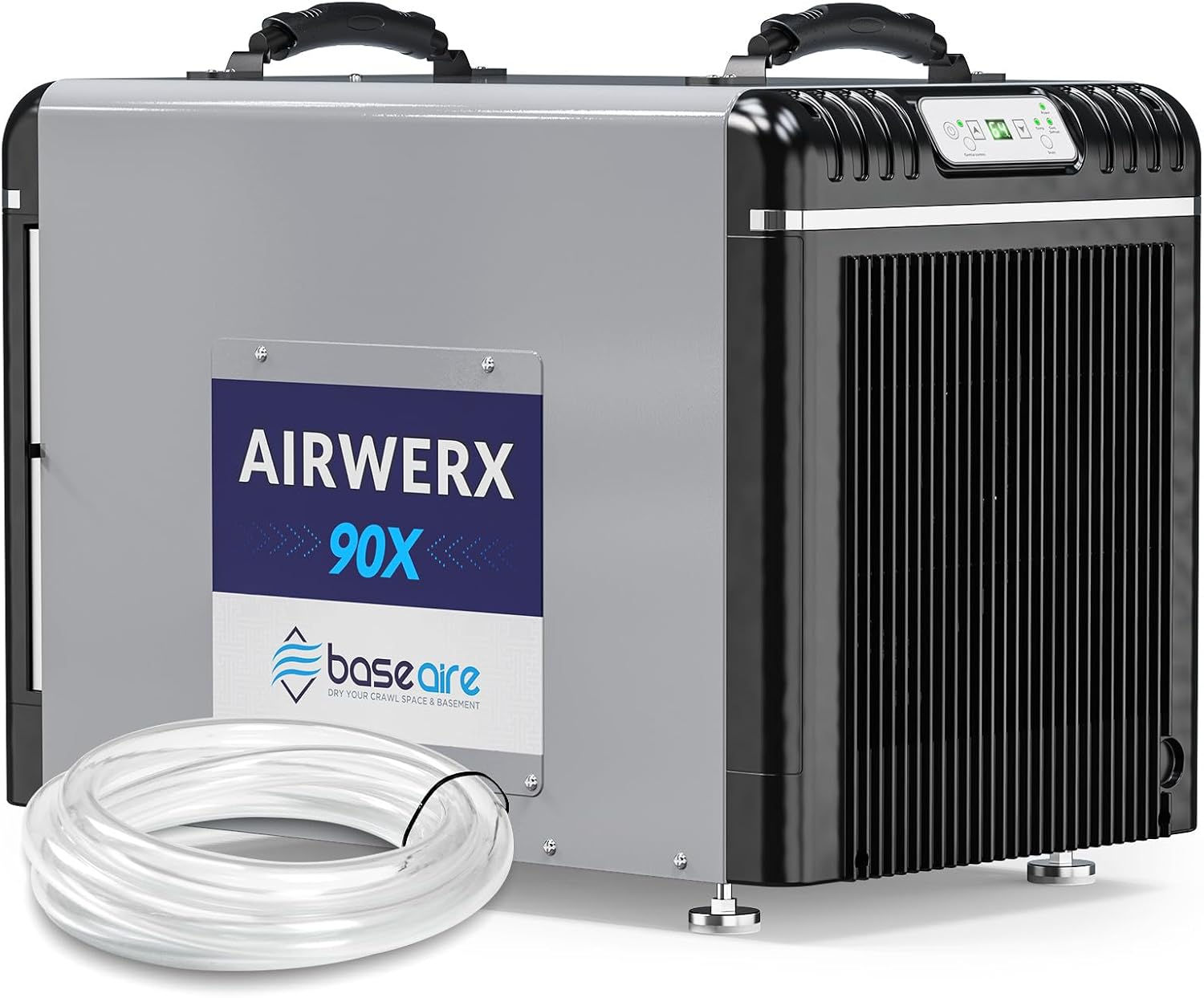
Frequently Asked Questions
Q: How do I know if my crawl space needs a dehumidifier?
A: Signs include musty odors, visible mold or mildew, condensation on pipes or insulation, warped wood, or increased allergy symptoms. Use a hygrometer to measure humidity—if it consistently exceeds 60%, a dehumidifier is recommended.
Q: Can I use a regular dehumidifier in my crawl space?
A: Not recommended. Standard units lack the durability, low-temperature operation, and condensate pumps needed for crawl space conditions. They may fail prematurely or pose safety risks.
Q: Do I need a vapor barrier with a dehumidifier?
A: Yes. A 6-mil polyethylene vapor barrier on the crawl space floor and walls reduces ground moisture, making the dehumidifier more effective and efficient. Encapsulation is considered best practice.
Q: How often should I clean the filter?
A: Every 4–6 weeks during peak season, or monthly if the space is particularly dusty. A clogged filter restricts airflow and reduces performance.
Q: Will a dehumidifier lower my energy bills?
A: Indirectly, yes. By reducing humidity, your HVAC system doesn’t have to work as hard to cool your home, potentially lowering summer energy use. However, the dehumidifier itself consumes electricity, so choose an efficient model.
Q: Can I install the dehumidifier myself?
A: Basic portable units can be DIY-installed, but whole-home or ducted systems should be handled by a licensed HVAC technician to ensure proper setup, safety, and warranty compliance.
Q: What humidity level should I maintain in my crawl space?
A: Aim for 50–55% relative humidity. This range prevents mold growth, protects wood structures, and avoids over-drying, which can cause cracking.
Q: How long do crawl space dehumidifiers last?
A: With proper maintenance, most quality units last 7–10 years. Heavy-duty commercial models may exceed 10 years with regular servicing.
Q: Are smart dehumidifiers worth the extra cost?
A: If you value remote monitoring, alerts, and integration with smart home systems, yes. For others, basic digital controls may suffice. Evaluate based on your tech preferences and access to the crawl space.
Q: What if my crawl space floods?
A: A dehumidifier won’t handle standing water. Install a sump pump for flood protection and ensure proper drainage. The dehumidifier works best in conjunction with, not as a replacement for, flood mitigation systems.
Our Final Recommendations
Best for Budget-Conscious Buyers: AlorAir Sentinel HDi – At around $550, this unit offers 70 PPD, auto-defrost, and a built-in pump. It’s compact, efficient, and backed by a 5-year warranty—making it an exceptional value for small to medium crawl spaces.
Best Overall Value: AprilAire E080 – Priced near $900, this whole-home dehumidifier delivers 80 PPD, smart controls, and seamless HVAC integration. Its energy efficiency, durability, and user-friendly interface make it the top choice for most homeowners.
Best Premium Option: Santa Fe Compact 70 – At $1,600+, this commercial-grade unit removes 70 pints daily with ultra-quiet operation and advanced diagnostics. Ideal for large or high-moisture environments where reliability is non-negotiable.
Best for Beginners: Dri-Eaz F413 – With simple controls, clear indicators, and reliable performance, this $700 model is easy to set up and maintain. Great for first-time users who want hassle-free moisture control.
Best for Advanced Users: AprilAire E130C – Featuring Wi-Fi connectivity, remote sensors, and precise humidity management, this $1,400 system offers professional-grade control for tech-savvy homeowners or contractors managing multiple properties.
Conclusion: Making the Right Choice
Choosing the best crawl space dehumidifier isn’t just about picking the most powerful or cheapest model—it’s about finding the right balance of performance, durability, features, and value for your unique situation. Throughout this guide, we’ve covered everything from key specs and budget considerations to common pitfalls and expert tips. Remember: your crawl space is the foundation of your home’s health. Investing in a quality dehumidifier protects not only your structure but also your family’s comfort and safety.
Start by assessing your space, climate, and moisture levels. Then, prioritize features that align with your needs—whether that’s a built-in pump, smart controls, or whisper-quiet operation. Don’t rush the decision; take time to read reviews, compare models, and consult professionals if needed. And once you’ve made your choice, commit to regular maintenance to ensure long-term success.
Ultimately, the right dehumidifier will run quietly in the background, keeping your crawl space dry, your air clean, and your peace of mind intact. Use this guide as your trusted companion, and you’ll be well on your way to a healthier, more efficient home. Ready to take the next step? Browse our top recommendations and start your journey toward a drier, safer crawl space today.