
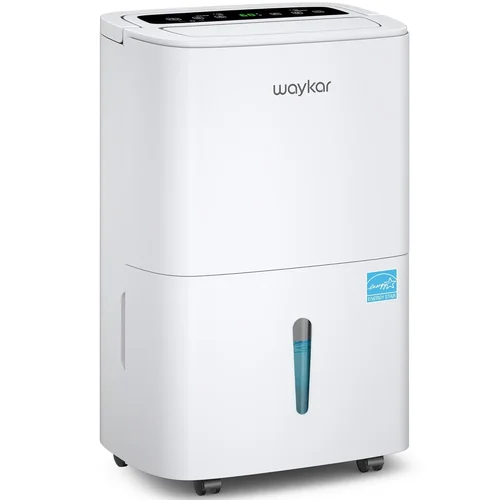
If you’re dealing with persistent dampness, musty odors, or visible mold in a large home—especially one around 3,000 square feet—you already know how disruptive high humidity can be. It’s not just uncomfortable; it can damage your walls, furniture, HVAC system, and even your health. That’s why choosing the right dehumidifier isn’t just about convenience—it’s a critical investment in your home’s long-term integrity and indoor air quality. But with dozens of models on the market, each boasting different capacities, features, and price tags, it’s easy to feel overwhelmed. This guide cuts through the noise to help you make a confident, informed decision.
In this comprehensive buying guide, you’ll learn exactly what to look for when selecting the best dehumidifier for a 3,000-square-foot space. We’ll break down key performance metrics like pint capacity, energy efficiency, and coverage area, explain the differences between compressor-based and desiccant models, and walk you through real-world considerations such as noise levels, drainage options, and smart controls. Whether you’re tackling a damp basement, managing humidity in a sprawling single-story home, or maintaining ideal conditions in a finished attic or sunroom, we’ve got you covered. By the end, you’ll have a clear roadmap to find a unit that matches your needs, budget, and lifestyle—without overspending or underperforming.
The dehumidifier market has evolved significantly in recent years. Once limited to bulky, inefficient units that guzzled electricity and required constant emptying, today’s models offer advanced features like auto-humidistats, programmable timers, Wi-Fi connectivity, and even integration with smart home systems. For large spaces like 3,000 square feet, manufacturers now offer whole-house dehumidifiers designed to work alongside your HVAC system, as well as high-capacity portable units capable of handling expansive areas. However, not all “high-capacity” labels are created equal—some models claim coverage far beyond their actual capabilities. This guide will help you separate marketing hype from real performance, so you can choose a dehumidifier that truly delivers.

What to Look for When Buying Buying Guide
1. Pint Capacity and Coverage Area
The most critical factor when shopping for a dehumidifier for a 3,000-square-foot space is its pint capacity—the amount of moisture it can remove from the air in 24 hours. For large homes, you’ll typically need a unit rated between 50 and 70 pints per day (pint/day), depending on humidity levels. In moderately damp conditions (50–60% relative humidity), a 50-pint model may suffice. But if you live in a humid climate, have a basement with water intrusion, or experience frequent condensation, aim for 60–70 pints or higher.
Don’t rely solely on the manufacturer’s “coverage area” claim. Many brands overstate how much space their units can effectively dehumidify. Instead, cross-reference the pint rating with your home’s specific conditions. The Association of Home Appliance Manufacturers (AHAM) provides standardized testing conditions (80°F and 60% RH), but real-world performance often varies. For a 3,000-square-foot home, especially one with open floor plans or high ceilings, consider a unit with at least 60 pints/day capacity. If your space includes a crawl space, garage, or multiple levels, you may need supplemental units or a whole-house system.
2. Energy Efficiency and Operating Costs
Dehumidifiers run for hours each day, especially in humid climates, so energy efficiency directly impacts your utility bill. Look for the Energy Factor (EF), measured in liters of water removed per kilowatt-hour (L/kWh). The higher the EF, the more efficient the unit. ENERGY STAR-certified models typically have an EF of 1.75 or higher, meaning they remove at least 1.75 liters of moisture per kWh—about 15–30% more efficient than standard units.
For a 3,000-square-foot home, a high-efficiency dehumidifier can save you $50–$100 annually on electricity. Over five years, that’s $250–$500 in savings—enough to offset a higher upfront cost. Additionally, efficient units generate less heat, reducing strain on your air conditioner. When comparing models, check the annual energy consumption (usually listed in kWh/year) and calculate estimated costs using your local electricity rate (average U.S. rate is about $0.15/kWh).
3. Drainage Options and Maintenance
Emptying a water bucket every few days is tedious, especially in large homes where the dehumidifier runs constantly. For 3,000-square-foot spaces, continuous drainage is almost essential. Most high-capacity models include a built-in pump or gravity drain hose connection. A built-in condensate pump allows you to send water vertically (up to 15 feet) and horizontally (up to 100 feet), ideal for basements or homes without floor drains. Gravity drainage requires a slight downward slope but works well if you have a nearby sink or sump pit.
Maintenance also matters. Look for units with washable or reusable air filters—these reduce recurring costs and improve air quality by trapping dust and allergens. Some models feature filter change indicators or automatic shutoff when the filter is clogged. Avoid units with sealed or non-removable filters unless you’re prepared for frequent replacements. Also, consider ease of access: Can you easily remove the bucket or hose without tipping the unit? Is the control panel intuitive?
4. Noise Level and Placement Flexibility
Dehumidifiers aren’t silent—most produce between 45 and 60 decibels (dB), comparable to a quiet conversation or moderate rainfall. For a 3,000-square-foot home, you may place the unit in a basement, utility room, or central hallway. But if it’s near living areas or bedrooms, noise becomes a concern. Look for models with a low dB rating (under 50 dB) or multiple fan speeds, including a “quiet” or “sleep” mode.
Placement flexibility is equally important. Heavy-duty dehumidifiers can weigh 50–80 pounds. Ensure the unit has built-in handles and caster wheels for easy movement. Some models are designed for permanent installation (e.g., ducted whole-house systems), while others are portable. If you need to move the unit between floors or rooms, prioritize lightweight designs with sturdy wheels. Also, check the power cord length—ideally 6 feet or more—to avoid extension cords.
5. Smart Features and Automation
Modern dehumidifiers offer smart capabilities that enhance convenience and efficiency. Look for features like Wi-Fi connectivity, allowing you to monitor humidity levels, adjust settings, and receive alerts via a smartphone app. Some models integrate with Alexa, Google Assistant, or Apple HomeKit, enabling voice control. Others include auto-humidistats that maintain your desired humidity level (typically 40–50%) without manual adjustments.
Additional automation features include programmable timers (e.g., run only during peak humidity hours), auto-restart after power outages, and defrost functions for cold environments (below 65°F). For large homes, these features prevent over-drying, reduce energy use, and ensure consistent performance. However, smart features often come at a premium—evaluate whether the added cost justifies the convenience for your lifestyle.
6. Build Quality and Durability
A dehumidifier for a 3,000-square-foot home is a long-term investment. Cheap plastic casings, flimsy controls, and thin coils can lead to premature failure. Look for units with metal compressor housings, corrosion-resistant coils, and reinforced plastic exteriors. Brands like Frigidaire, AprilAire, and Santa Fe are known for robust construction. Check customer reviews for reports of leaks, compressor failures, or electrical issues.
Also consider the compressor type. Rotary compressors are quieter and more efficient than reciprocating ones, making them ideal for large spaces. Desiccant dehumidifiers, while less common for whole-house use, excel in cold environments and are often used in crawl spaces. Avoid units with exposed wiring or poorly sealed seams—these can pose safety risks or allow moisture ingress.
7. Warranty and Customer Support
A strong warranty signals manufacturer confidence. For high-capacity dehumidifiers, look for at least a 2-year limited warranty, with 5 years on the compressor. Some premium brands (e.g., AprilAire) offer up to 5 years of full coverage. Check what’s included: Does it cover parts, labor, and shipping? Are there exclusions for commercial use or improper installation?
Customer support is equally vital. Can you reach a live agent quickly? Are troubleshooting guides and replacement parts readily available? Brands with dedicated support lines and online resources (e.g., video tutorials, FAQs) tend to provide better post-purchase experiences. Avoid obscure brands with no U.S. presence—repairing or returning a 70-pound unit internationally is costly and time-consuming.
8. Brand Reputation and User Reviews
Stick with established brands that specialize in dehumidification or HVAC systems. Frigidaire, Honeywell, LG, and AprilAire have decades of experience and consistent positive feedback. Read verified customer reviews on Amazon, Home Depot, and specialty HVAC sites. Pay attention to comments about real-world performance, noise, and reliability over time—not just initial impressions.
Be wary of “too good to be true” deals. A $200 dehumidifier claiming to cover 3,000 square feet is likely undersized or poorly built. Conversely, don’t assume higher price equals better quality—some premium models offer marginal gains at double the cost. Balance brand trust with value, and prioritize units with at least 4.0 stars from 500+ reviews.
Different Types of Buying Guide

Common Buying Mistakes to Avoid
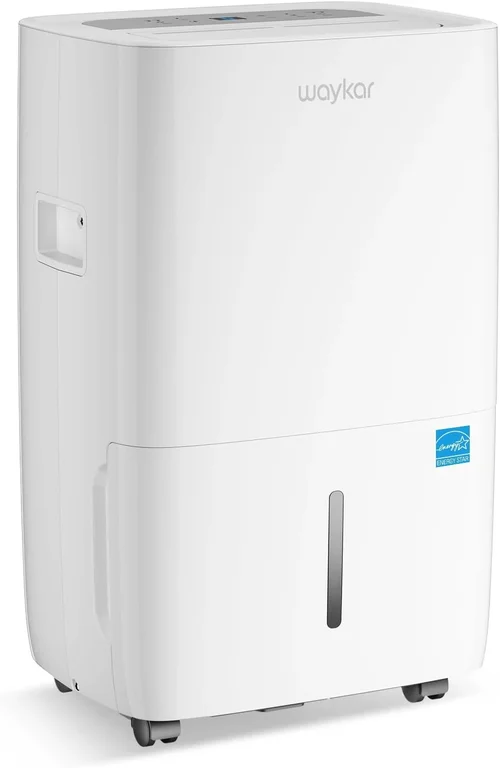
❌ Mistake: Choosing Based Solely on Square Footage Claims
Why it’s bad: Many manufacturers advertise coverage areas that assume ideal conditions (e.g., 80°F, 60% RH). In reality, factors like insulation, ventilation, and outdoor humidity drastically affect performance. A unit rated for “3,000 sq ft” may struggle in a poorly insulated home or during summer storms.
What to do instead: Focus on pint capacity and your home’s actual humidity level. Use a hygrometer to measure indoor RH, then match it to the dehumidifier’s performance chart. When in doubt, go one size up.
❌ Mistake: Ignoring Drainage Needs
Why it’s bad: A 70-pint dehumidifier can fill its bucket in under 12 hours during peak humidity. Constantly emptying it is impractical and leads to neglect, reducing effectiveness.
What to do instead: Invest in a model with a built-in pump or gravity drain hose. Ensure your installation location has access to a floor drain, sump pit, or outdoor discharge point.
❌ Mistake: Overlooking Energy Efficiency
Why it’s bad: A cheap, inefficient unit may cost less upfront but consume significantly more electricity over time. In a large home, this can add hundreds to your annual bill.
What to do instead: Prioritize ENERGY STAR certification and high EF ratings. Calculate long-term costs using the unit’s kWh/year and your electricity rate.
❌ Mistake: Buying a Unit Too Small for the Space
Why it’s bad: An undersized dehumidifier will run continuously, overheat, and fail prematurely. It won’t lower humidity effectively, leaving your home damp and mold-prone.
What to do instead: For 3,000 sq ft, choose at least a 60-pint model. If you have a basement, garage, or high ceilings, consider 70+ pints or multiple units.
❌ Mistake: Skipping the Warranty Check
Why it’s bad: Compressor failures are common in dehumidifiers and can cost $200–$400 to repair. Without warranty coverage, you’re stuck with the bill.
What to do instead: Only buy from brands offering at least 2 years of coverage, with 5 years on the compressor. Register your product immediately after purchase.
❌ Mistake: Neglecting Noise Levels
Why it’s bad: A loud dehumidifier (60+ dB) can disrupt sleep, conversations, or work-from-home calls—especially if placed near living areas.
What to do instead: Check decibel ratings and opt for models with quiet modes. Place the unit in a basement or utility room whenever possible.
❌ Mistake: Assuming All Smart Features Are Useful
Why it’s bad: Wi-Fi and app controls add cost and complexity. If you rarely use them, you’ve paid a premium for unused features.
What to do instead: Only invest in smart capabilities if you value remote monitoring or integration with other smart home devices. Otherwise, a manual unit with auto-humidistat may suffice.
Budget Guidelines: How Much Should You Spend?
Dehumidifiers for 3,000-square-foot homes span a wide price range, reflecting differences in capacity, efficiency, and features. Here’s a realistic breakdown to help you plan:
Entry-Level ($250–$400): These are typically 50-pint portable units with basic controls, manual drainage, and limited smart features. They’re suitable for mildly damp spaces but may struggle in high-humidity conditions. Expect shorter lifespans and higher energy use. Brands like hOmeLabs and Tosot offer decent options in this range, but read reviews carefully.
Mid-Range ($400–$800): This is the sweet spot for most homeowners. You’ll find 60–70-pint models with ENERGY STAR ratings, continuous drainage, auto-humidistats, and washable filters. Brands like Frigidaire, Honeywell, and LG dominate this category. These units balance performance, efficiency, and affordability, making them ideal for 3,000-square-foot homes with moderate to high humidity.
Premium ($800–$1,500): Designed for demanding environments, these dehumidifiers offer advanced features like built-in pumps, Wi-Fi connectivity, dual-speed fans, and superior build quality. They’re perfect for basements, large open-concept homes, or regions with extreme humidity. Models from AprilAire and Santa Fe excel here, with longer warranties and professional-grade components.
Luxury ($1,500+): Whole-house dehumidifiers and ducted systems fall into this tier. They integrate with your HVAC system, provide whole-home coverage, and require professional installation. While expensive, they offer unmatched convenience, efficiency, and longevity—ideal for new builds or major renovations. Expect to pay $2,000–$4,000+ for equipment and installation.

Expert Tips for Getting the Best Deal
Finding the right dehumidifier at the right price requires strategy. Here are proven tips to maximize value:
- Shop during off-seasons: Dehumidifiers are in highest demand during spring and summer. Buy in fall or winter (October–February) for discounts of 15–30%. Retailers often clear inventory before new models arrive.
- Compare retailers: Check Amazon, Home Depot, Lowe’s, and specialty HVAC sites like Sylvane or Total Home Supply. Online retailers often offer better prices and free shipping, while in-store purchases allow you to inspect build quality.
- Look for bundle deals: Some brands offer discounts when you buy a dehumidifier with a humidifier, air purifier, or smart thermostat. These can save $50–$150.
- Check for rebates: Utility companies and state programs sometimes offer rebates for ENERGY STAR appliances. Visit ENERGY STAR’s rebate finder to see if you qualify.
- Read the fine print on warranties: Some warranties require professional installation or annual maintenance. Ensure you can comply before buying.
- Test before committing: If buying in-store, ask to see a demo unit. Check noise levels, control responsiveness, and ease of accessing the water bucket.
- Consider refurbished models: Certified refurbished units from reputable sellers (e.g., Amazon Renewed, manufacturer outlets) can save 20–40% and often include full warranties.
- Negotiate on whole-house systems: HVAC contractors may offer discounts if you bundle installation with other services (e.g., duct cleaning or AC tune-up).
Frequently Asked Questions
Q: Can one dehumidifier cover a 3,000-square-foot home?
A: Yes, but only if it’s properly sized and placed. A 60–70-pint portable unit can work in open-plan homes with good air circulation. However, for multi-level homes, basements, or areas with poor airflow, you may need supplemental units or a whole-house system.
Q: How often should I run my dehumidifier?
A: Run it continuously during humid months or set it to maintain 40–50% RH using the auto-humidistat. In drier seasons, use it only when needed (e.g., after showers or laundry).
Q: Should I buy a portable or whole-house dehumidifier?
A: Portable units are cheaper and easier to install, ideal for renters or temporary use. Whole-house systems are more efficient and convenient for permanent homes but require professional installation and higher upfront costs.
Q: Do dehumidifiers use a lot of electricity?
A: It depends. A 70-pint ENERGY STAR model uses about 700–900 kWh/year, costing $100–$135 annually at $0.15/kWh. Inefficient models can double that. Always check the EnergyGuide label.
Q: Can I install a whole-house dehumidifier myself?
A: Generally, no. These systems require ductwork modifications, electrical connections, and refrigerant handling—tasks best left to licensed HVAC technicians.
Q: What’s the ideal humidity level for a home?
A: Between 30% and 50%. Below 30%, air becomes too dry; above 50%, mold and dust mites thrive. Use a hygrometer to monitor levels.
Q: Do dehumidifiers help with allergies?
A: Yes. By reducing moisture, they inhibit mold, mildew, and dust mite growth—common allergens. Pair with an air purifier for best results.
Q: How long do dehumidifiers last?
A: Quality units last 5–10 years with proper maintenance. Clean filters monthly, inspect coils annually, and avoid running in freezing temperatures.
Q: Can I use a dehumidifier in winter?
A: Only if temperatures stay above 65°F. Below that, compressor units may ice up. Desiccant models work in cold environments but are less efficient.
Q: What’s the difference between a dehumidifier and an air conditioner?
A: Air conditioners cool and dehumidify, but they’re inefficient at removing moisture alone. Dehumidifiers focus solely on humidity, making them better for damp, cool spaces like basements.
Our Final Recommendations
After evaluating performance, efficiency, features, and value, here are our top picks for a 3,000-square-foot home:
Best for Budget-Conscious Buyers: Frigidaire FFAD7033R1 – A 70-pint ENERGY STAR model with continuous drainage, auto-humidistat, and washable filter. Priced around $450, it offers excellent performance for the cost and is ideal for basements or large living areas.
Best Overall Value: Honeywell TP70WKN – This 70-pint smart dehumidifier features Wi-Fi connectivity, a built-in pump, and quiet operation (48 dB). At $650, it’s a mid-range powerhouse with premium features, perfect for tech-savvy homeowners.
Best Premium Option: AprilAire E080 – A whole-house dehumidifier designed for homes up to 3,000 sq ft. It integrates with HVAC systems, removes 80 pints/day, and includes a 5-year warranty. Priced at $1,800+, it’s the gold standard for permanent, whole-home humidity control.
Best for Beginners: hOmeLabs HME020034N – A user-friendly 70-pint unit with simple controls, gravity drain, and a large bucket. At $350, it’s easy to set up and ideal for first-time buyers.
Best for Advanced Users: Santa Fe Advance 2 – A high-efficiency, ducted dehumidifier with advanced controls, remote monitoring, and exceptional build quality. At $2,200+, it’s for those who demand precision and durability.
Conclusion: Making the Right Choice
Choosing the best dehumidifier for a 3,000-square-foot home isn’t just about finding the biggest or most expensive model—it’s about matching the right capacity, efficiency, and features to your specific needs. Whether you’re battling basement dampness, managing humidity in a sprawling ranch, or investing in long-term indoor air quality, the right unit can transform your living environment. Prioritize pint capacity over square footage claims, invest in continuous drainage, and don’t overlook energy efficiency and warranty coverage.
Remember, a dehumidifier is more than an appliance—it’s a guardian of your home’s health. By following this guide, you’ll avoid common pitfalls, make a smart investment, and enjoy drier, cleaner, more comfortable air year-round. Take the time to assess your space, compare models, and consider both upfront and long-term costs. Your home—and your peace of mind—will thank you.
Ready to take control of your indoor humidity? Start by measuring your home’s current moisture levels, then use our recommendations and tips to find the perfect dehumidifier. Breathe easier, live better.