

If you’ve ever walked into a basement that smells like old socks, noticed condensation fogging up your windows, or seen mold creeping along the corners of your bathroom walls, you already know how disruptive excess humidity can be. High indoor moisture doesn’t just create unpleasant odors—it can damage furniture, warp wood floors, trigger allergies, and even compromise the structural integrity of your home over time. That’s where a reliable dehumidifier comes in. But not all dehumidifiers are built for the long haul. Many units falter after a few months of daily use, while others lack the capacity or durability to handle continuous operation without overheating or breaking down.
This guide is designed for homeowners, renters, and property managers who need a dehumidifier they can count on day in and day out—whether it’s running 24/7 in a damp crawl space, maintaining comfort in a humid coastal climate, or protecting stored belongings in a garage. We’ll walk you through everything you need to know to choose the right model for your needs, from understanding key performance specs to avoiding common pitfalls that lead to buyer’s remorse. By the end, you’ll have a clear roadmap to find a unit that delivers consistent results, lasts for years, and offers real value for your investment.
The dehumidifier market has exploded in recent years, with dozens of brands offering models ranging from under $100 to well over $1,000. While budget options might seem tempting, they often cut corners on components like compressors, coils, and drainage systems—making them ill-suited for continuous use. On the flip side, premium models aren’t always necessary unless you’re dealing with extreme conditions or large square footage. Our goal here is to cut through the noise and help you identify what truly matters when selecting a dehumidifier built to run reliably, efficiently, and safely—day after day.

What to Look for When Buying Buying Guide
1. Capacity (Pints per Day)
The most critical spec for any dehumidifier is its moisture removal capacity, measured in pints per day (PPD). This tells you how much water the unit can extract from the air in a 24-hour period under standard testing conditions (typically 60% relative humidity at 80°F). For continuous use, you’ll want a model with sufficient capacity to match your space’s humidity load—not just its square footage.
For example, a 30-pint unit may be adequate for a small, moderately damp basement (up to 500 sq ft), but if your area is chronically wet due to poor ventilation or groundwater seepage, you might need a 50- or 70-pint model. Oversizing slightly is generally better than undersizing—a dehumidifier that’s too small will run constantly, wear out faster, and fail to control humidity effectively. Conversely, an oversized unit may cycle on and off too frequently, which can also reduce efficiency and lifespan.
Always check the AHAM (Association of Home Appliance Manufacturers) rating, which provides standardized testing results. Avoid relying solely on manufacturer claims, as some brands inflate numbers based on non-standard conditions.
2. Energy Efficiency (Energy Factor & ENERGY STAR Certification)
Since dehumidifiers for continuous use will be plugged in and running for extended periods—sometimes nonstop—energy efficiency isn’t just a nice-to-have; it’s a financial necessity. Look for the Energy Factor (EF), measured in liters of water removed per kilowatt-hour (L/kWh). Higher EF values mean more moisture removed per unit of electricity consumed.
ENERGY STAR-certified models meet strict efficiency guidelines set by the U.S. Environmental Protection Agency and typically use 15–30% less energy than standard units. While they may cost more upfront, the long-term savings on your electricity bill can be substantial—especially if you’re running the unit year-round. For instance, a 50-pint ENERGY STAR dehumidifier might save you $50–$100 annually compared to a non-certified equivalent.
Also consider units with variable-speed compressors or smart humidity sensors that adjust output based on real-time conditions. These features prevent unnecessary cycling and reduce wear on components, extending the unit’s life while lowering energy use.
3. Drainage Options & Continuous Operation Features
A dehumidifier that requires you to empty a bucket every 8–12 hours isn’t practical for continuous use—especially if you’re away from home or managing multiple properties. That’s why built-in drainage options are essential.
Look for models with a built-in pump or gravity-fed hose connection (usually ⅜” or ½” threaded outlet). A gravity drain hose allows you to route water directly into a floor drain, sink, or sump pit without manual intervention. Even better, units with internal condensate pumps can push water vertically (up to 15–20 feet) and horizontally, giving you flexibility in placement.
Some advanced models include auto-restart functions that resume operation after a power outage—a must-have for unattended use. Additionally, check for overflow protection: if the bucket fills and there’s no active drainage, the unit should automatically shut off to prevent leaks.
4. Build Quality & Durability
Continuous operation puts significant stress on a dehumidifier’s internal components. Cheap plastic housings, thin refrigerant coils, and low-grade compressors are common in budget models and often lead to premature failure.
Invest in units with metal (not plastic) compressor housings, corrosion-resistant evaporator and condenser coils (often coated with epoxy or hydrophilic film), and robust fan motors. Commercial-grade or “heavy-duty” models are engineered for 24/7 runtime and typically feature reinforced frames, better thermal management, and higher-quality electrical components.
Check the weight—a heavier unit often indicates sturdier construction. Also, inspect user reviews for mentions of longevity. Units that consistently last 5+ years under daily use are worth the extra investment.
5. Noise Level (Decibel Rating)
If your dehumidifier will be running in a living space, bedroom, or office, noise becomes a major consideration. Most residential dehumidifiers operate between 45–65 decibels (dB)—roughly equivalent to a quiet conversation or moderate rainfall. However, cheaper models with single-speed fans and unbalanced compressors can produce annoying hums, rattles, or vibrations.
Look for units rated below 55 dB for quiet operation. Features like insulated compressor compartments, vibration-dampening mounts, and multi-speed fans help reduce noise. Some premium models even include “sleep mode” settings that lower fan speed and mute alerts during nighttime hours.
Keep in mind that noise levels can increase over time as components wear, so opting for a well-built unit from the start pays off in long-term comfort.
6. Smart Features & Controls
Modern dehumidifiers offer a range of intelligent features that enhance usability and efficiency—particularly important for continuous operation. Key functionalities include:
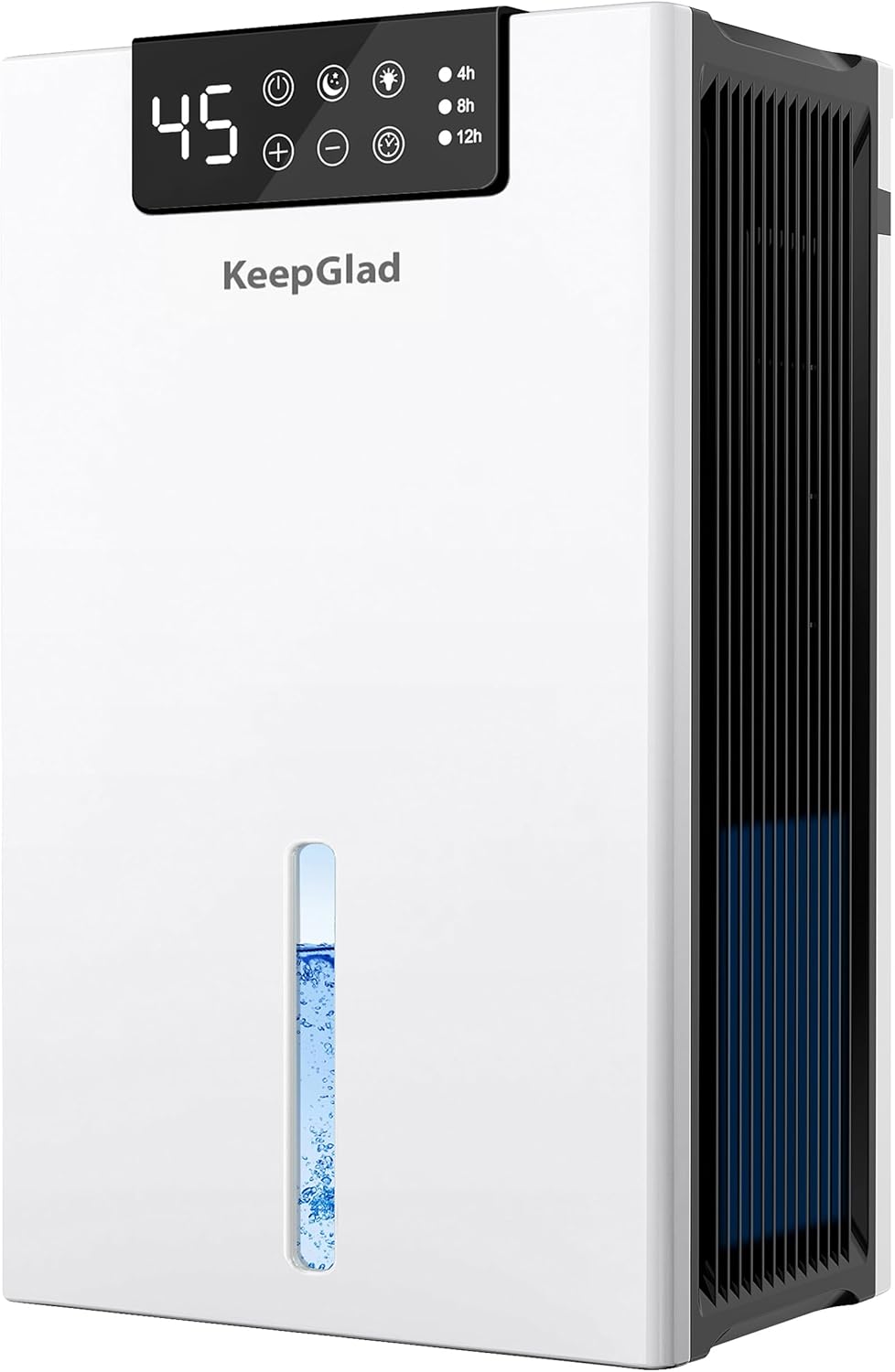
– Humidistat: Allows you to set a target humidity level (e.g., 45–50%), and the unit automatically turns on/off to maintain it.
– Digital Display: Shows current humidity, temperature, and settings at a glance.
– Timer & Scheduling: Lets you program run times (e.g., only during peak humidity hours).
– Wi-Fi Connectivity: Enables remote monitoring and control via smartphone apps (useful for vacation homes or rental properties).
– Filter Alerts: Notifies you when the air filter needs cleaning—critical for maintaining airflow and efficiency.
While not essential, these features reduce manual oversight and help optimize performance. Just ensure the interface is intuitive; overly complex controls can lead to user error or frustration.
7. Portability & Placement Flexibility
Even if you plan to leave your dehumidifier in one spot, ease of movement matters—especially during setup, cleaning, or seasonal relocation. Look for models with recessed handles, smooth-rolling casters, and a compact footprint that fits under sinks or in tight corners.
Weight matters too: units under 40 lbs are manageable for most adults, while heavier models (50+ lbs) may require two people to move safely. If you’re placing the unit in a basement or crawl space, ensure it has front- or top-mounted controls so you don’t have to bend down or reach awkwardly.
Also consider cord length and plug type. A 6–8 ft power cord provides flexibility, and a grounded (3-prong) plug ensures safety. Some commercial models include hardwiring kits for permanent installation.
8. Warranty & Customer Support
A dehumidifier designed for continuous use should come with a solid warranty—ideally 2–5 years on the compressor and sealed system, plus at least 1 year on parts and labor. Longer warranties often indicate manufacturer confidence in durability.
Research the brand’s customer service reputation before buying. Read reviews about response times, replacement part availability, and ease of claiming warranty service. Brands like Frigidaire, AprilAire, and Santa Fe are known for responsive support and readily available service networks.
Avoid no-name brands sold exclusively through third-party marketplaces unless they offer verified customer service channels and clear warranty terms.
Different Types of Buying Guide
Common Buying Mistakes to Avoid

❌ Mistake: Choosing Based Solely on Price
Why it’s bad: The cheapest dehumidifier often costs more in the long run due to higher energy bills, frequent repairs, and short lifespan. Budget models frequently use undersized compressors and lack proper drainage, making them unsuitable for continuous operation.
What to do instead: Treat your dehumidifier as a long-term investment. Allocate at least $300–$500 for a reliable mid-range unit with ENERGY STAR certification and a 2+ year warranty.
❌ Mistake: Ignoring Drainage Needs
Why it’s bad: Manual bucket emptying is impractical for 24/7 use. Overflowing buckets can cause water damage, mold growth, and safety hazards—especially in unattended spaces like basements or vacation homes.
What to do instead: Prioritize models with continuous drainage options (hose outlet or pump). Even if you don’t need it immediately, having the feature adds future flexibility.
❌ Mistake: Overlooking Noise Levels
Why it’s bad: A noisy dehumidifier can disrupt sleep, concentration, or peace in living areas. Constant humming or rattling becomes increasingly irritating over time.
What to do instead: Check decibel ratings and read user reviews about noise. If placing in a bedroom or office, aim for sub-55 dB models with quiet-operation modes.
❌ Mistake: Buying for Square Footage Alone
Why it’s bad: Humidity levels vary widely based on climate, ventilation, water intrusion, and usage (e.g., laundry rooms vs. storage closets). A 500 sq ft basement with a leaky foundation needs more capacity than a 1,000 sq ft dry attic.
What to do instead: Assess your space’s actual moisture problem. Use a hygrometer to measure humidity, and consider factors like groundwater, condensation, or seasonal flooding when sizing your unit.
❌ Mistake: Skipping Maintenance Requirements
Why it’s bad: Clogged filters and dirty coils reduce efficiency, increase energy use, and can lead to compressor failure. Many users forget to clean filters monthly, especially during heavy use seasons.
What to do instead: Choose models with washable, easy-access filters and set calendar reminders for monthly cleaning. Some units include filter-change indicators—take advantage of them.
❌ Mistake: Assuming All ENERGY STAR Models Are Equal
Why it’s bad: ENERGY STAR certification ensures minimum efficiency, but performance varies significantly between models. Some certified units still have poor build quality or limited drainage.
What to do instead: Cross-reference ENERGY STAR listings with independent reviews and warranty terms. Look for models with high Energy Factor (EF > 1.5 L/kWh for 50-pint units).
❌ Mistake: Not Checking Return Policies
Why it’s bad: If a unit doesn’t perform as expected—or arrives damaged—you need a clear path to return or exchange it. Some retailers impose restocking fees or short return windows.
What to do instead: Buy from retailers with at least 30-day return policies and free return shipping. Test the unit immediately upon delivery to confirm functionality.
Budget Guidelines: How Much Should You Spend?
– Entry-Level ($100–$250): These are basic refrigerant models suitable for small, mildly damp spaces (under 500 sq ft) with occasional use. Expect plastic construction, manual drainage, limited controls, and shorter lifespans (1–3 years). Not recommended for continuous operation unless strictly monitored.
– Mid-Range ($250–$500): This is the sweet spot for most buyers needing reliable, continuous dehumidification. Units in this range typically offer 30–70 pint capacity, ENERGY STAR certification, gravity or pump drainage, digital humidistats, and 2–3 year warranties. Brands like Frigidaire, hOmeLabs, and Keystone excel here.
– Premium ($500–$1,000): Designed for demanding environments—large basements, coastal homes, or year-round use. These feature heavy-duty compressors, corrosion-resistant coils, advanced smart controls, low-noise operation, and robust build quality. Models from AprilAire, Santa Fe, and Friedrich dominate this tier.
– Luxury ($1,000+): Whole-house or commercial-grade systems for entire properties, historic homes, or specialized applications (e.g., wine cellars, art studios). These integrate with HVAC, offer ultra-precise humidity control, remote monitoring, and 5+ year lifespans. Ideal for professionals or those with severe moisture challenges.

Expert Tips for Getting the Best Deal
– Buy Off-Season: Prices drop significantly in winter (December–February) when demand is lowest. Many retailers clear inventory before spring humidity spikes. You can save 20–30% by purchasing during these months.
– Check Manufacturer Rebates: ENERGY STAR models often qualify for utility company rebates or tax credits, especially in humid states like Florida or Louisiana. Visit energystar.gov/rebate-finder to search local offers.
– Compare Retailers: Amazon, Home Depot, Lowe’s, and Costco frequently run promotions. Sign up for price alerts using tools like Honey or CamelCamelCamel to track discounts.
– Consider Refurbished Units: Certified refurbished dehumidifiers from reputable sellers (e.g., manufacturer outlets) often come with full warranties and cost 20–40% less than new. Ensure they include original accessories and haven’t been heavily used.
– Read the Fine Print on Warranties: Some brands require product registration within 10–30 days of purchase to activate coverage. Keep your receipt and register immediately.
– Test Before Committing: Run the unit for 48 hours in your intended location. Check for leaks, unusual noises, and whether it maintains your target humidity. Most retailers allow returns if performance is unsatisfactory.
– Bundle with Accessories: Some sellers offer free condensate pumps, extension hoses, or hygrometers with purchase. These add-ons can save $50–$100 if bought separately.
– Avoid “As Seen on TV” Brands: Flashy infomercial models often prioritize marketing over engineering. Stick to established appliance brands with proven track records.

Frequently Asked Questions
Q: Can I run a dehumidifier 24/7?
A: Yes—but only if it’s designed for continuous operation. Look for models with thermal overload protection, auto-restart, and continuous drainage. Avoid cheap units not rated for constant use, as they may overheat or fail prematurely.
Q: How often should I clean the filter?
A: Every 4–6 weeks during heavy use (spring/summer), or monthly if running continuously. A clogged filter restricts airflow, reduces efficiency, and forces the compressor to work harder.
Q: Will a dehumidifier lower my electricity bill?
A: Indirectly, yes. By reducing humidity, your AC doesn’t have to work as hard to cool your home, potentially lowering cooling costs by 5–10%. However, the dehumidifier itself consumes electricity—so choose an ENERGY STAR model to minimize net impact.
Q: What humidity level should I maintain?
A: Ideal indoor relative humidity is 30–50%. Below 30% can cause dry skin and static; above 50% promotes mold and dust mites. Use a hygrometer to monitor levels.
Q: Can I use a dehumidifier in winter?
A: Refrigerant models lose efficiency below 60°F and may ice up. Desiccant dehumidifiers work better in cold spaces like garages or unheated basements.
Q: Do I need a dehumidifier if I have central AC?
A: Not always—but AC only dehumidifies while cooling. In mild weather or humid climates, a dedicated dehumidifier provides more precise control and better moisture removal.
Q: How do I know if my dehumidifier is working properly?
A: Check the water tank (or drain output) daily. If it’s collecting little to no water in a damp environment, the unit may be undersized, low on refrigerant, or have a faulty humidistat.
Q: Are there health benefits to using a dehumidifier?
A: Absolutely. Lower humidity reduces mold, mildew, and dust mites—common triggers for asthma, allergies, and respiratory issues. It also prevents musty odors and protects furnishings.
Q: Can I place my dehumidifier anywhere?
A: No. Keep it at least 6–12 inches away from walls and furniture for proper airflow. Avoid enclosed spaces like closets unless specifically designed for it.
Q: What’s the average lifespan of a dehumidifier?
A: 5–10 years with proper maintenance. Compressor failure is the most common end-of-life issue. Regular filter cleaning and avoiding extreme temperatures extend longevity.
Our Final Recommendations
– Best for Budget-Conscious Buyers: hOmeLabs 50 Pint Dehumidifier – Offers excellent value with ENERGY STAR rating, continuous drainage, and quiet operation under $300. Ideal for medium basements.
– Best Overall Value: Frigidaire FFAD7033R1 70 Pint – Reliable performance, robust build, and smart features like washable filter and digital controls. Consistently top-rated for continuous use.
– Best Premium Option: AprilAire E080 Pro – Whole-house capable, ultra-durable, and integrates with HVAC. Perfect for large homes or high-humidity regions. Justifies its $900+ price with unmatched longevity.
– Best for Beginners: Keystone 50 Pint with Pump – Simple controls, built-in condensate pump, and clear indicators make it user-friendly. Great first dehumidifier for new homeowners.
– Best for Advanced Users: Santa Fe Compact 70 – Commercial-grade construction, precise humidity control, and optional ducting for crawl spaces. Built for professionals and serious DIYers.
Conclusion: Making the Right Choice
Choosing the right dehumidifier for continuous use isn’t just about picking the biggest or most expensive model—it’s about matching the right combination of capacity, efficiency, durability, and features to your specific environment and needs. Whether you’re battling basement dampness, protecting a vacation home, or ensuring year-round comfort in a humid climate, the right unit will pay dividends in air quality, energy savings, and peace of mind.
Remember: prioritize drainage options, energy efficiency, and build quality over flashy extras. Read real user reviews, understand your space’s humidity challenges, and don’t skimp on warranty coverage. A well-chosen dehumidifier should run quietly and reliably for years—not just months.
Take the time to assess your situation honestly, compare models using the criteria in this guide, and invest in a solution that aligns with your long-term goals. Your home—and your health—will thank you.