
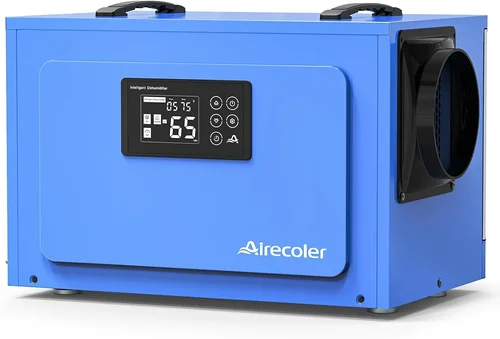
If you’ve ever noticed a musty smell in your basement, warped floorboards, or condensation on cold pipes in your home, chances are your crawlspace is too humid. Crawlspaces—those tight, often forgotten spaces beneath many homes—are notorious for trapping moisture. Left unchecked, that damp environment can lead to mold growth, wood rot, pest infestations, and even structural damage over time. Worse yet, the humid air can migrate upward into your living spaces, affecting indoor air quality and making your HVAC system work harder to maintain comfort.
That’s where a high-quality crawlspace dehumidifier comes in. Unlike standard room dehumidifiers, crawlspace units are specifically engineered to handle the unique challenges of confined, unconditioned spaces with poor ventilation and extreme humidity fluctuations. They’re built tougher, operate more efficiently in cooler temperatures, and often include features like automatic drainage, remote monitoring, and rugged enclosures. But with so many models on the market—ranging from budget-friendly units to industrial-grade systems—it’s easy to feel overwhelmed when trying to choose the right one.
This comprehensive buying guide is designed to cut through the confusion. Whether you’re a homeowner tackling your first crawlspace moisture issue or a contractor looking for reliable equipment, you’ll learn exactly what to look for in a crawlspace dehumidifier. We’ll walk you through key performance specs, build quality considerations, essential features, and common pitfalls to avoid. You’ll also get expert-backed recommendations tailored to different budgets and needs. By the end, you’ll have the knowledge and confidence to select a dehumidifier that not only solves your moisture problem but also delivers long-term value and peace of mind.
—

What to Look for When Buying Buying Guide
1. Performance Specifications
When evaluating crawlspace dehumidifiers, performance isn’t just about how much water they remove—it’s about doing so consistently under real-world conditions. The most important spec is pints per day (PPD), which indicates how much moisture the unit can extract in 24 hours. For crawlspaces, look for models rated between 50–100 PPD. Smaller spaces (under 1,000 sq ft) may get by with 50–70 PPD, while larger or particularly damp areas (1,500+ sq ft) will benefit from 80–100+ PPD units.
But don’t stop there. Check the operating temperature range. Standard dehumidifiers often struggle below 65°F, but crawlspaces can dip into the 50s or even 40s during winter. Look for units rated down to at least 41°F—some premium models go as low as 33°F. Also, pay attention to energy efficiency, measured in liters per kilowatt-hour (L/kWh) or Energy Factor (EF). A higher EF means lower operating costs over time. For example, a unit with an EF of 2.0 removes 2 liters of water per kWh, while one at 1.5 removes only 1.5 liters—a 33% difference in efficiency.
Another critical spec is airflow (CFM). Higher CFM (cubic feet per minute) means the unit circulates air more effectively, ensuring even drying throughout the space. Aim for at least 150–200 CFM for most crawlspaces. Finally, consider humidity control precision. Units with digital hygstats allow you to set exact target humidity levels (ideally 50–55% for crawlspaces), whereas mechanical controls offer less accuracy.
2. Build Quality & Durability
Crawlspaces are harsh environments—dusty, damp, and sometimes infested with pests. Your dehumidifier needs to withstand these conditions for years without failing. Start by examining the cabinet material. Look for powder-coated steel or heavy-duty plastic that resists rust and corrosion. Avoid thin-gauge metal or flimsy plastics that can warp or crack.
The compressor and coils should be designed for continuous operation. Scroll compressors are quieter and more durable than reciprocating ones, though they’re typically found in higher-end models. Similarly, coated evaporator coils (like those with epoxy or hydrophilic coatings) resist corrosion from constant exposure to moisture and airborne contaminants.
Sealing is another durability factor. A well-sealed unit prevents dust and debris from entering internal components, which can clog filters or damage the fan motor. Some premium models even feature IP-rated enclosures for added protection against dust and water ingress.
Don’t overlook the fan and motor. A permanently lubricated, sealed motor will last longer than one requiring regular maintenance. Also, check if the unit has vibration-dampening mounts—these reduce wear and tear and minimize noise transfer to your home’s structure.
3. Features & Functionality
Modern crawlspace dehumidifiers come packed with features that enhance convenience, efficiency, and reliability. The most essential is automatic drainage. Most units include a built-in condensate pump or gravity drain hose connection. A condensate pump is crucial if your crawlspace lacks a floor drain or sump pit—it can push water vertically up to 15 feet and horizontally much farther, eliminating the need to empty buckets manually.
Remote monitoring and control is another game-changer. Many top-tier models offer Wi-Fi connectivity via smartphone apps, allowing you to check humidity levels, adjust settings, and receive alerts from anywhere. Some even integrate with smart home systems like Alexa or Google Home.
Look for defrost functionality if you live in a cold climate. Auto-defrost systems prevent ice buildup on coils during low-temperature operation, ensuring consistent performance year-round. Similarly, filter indicators remind you when it’s time to clean or replace the air filter—a simple but valuable feature for maintaining airflow and efficiency.
Other useful features include:
– Programmable timers for energy savings
– Low-temperature operation modes
– Condensate overflow protection
– Service reminders
Avoid units with overly complex interfaces unless you need advanced diagnostics. Simplicity often equals reliability in harsh environments.
4. Size & Portability
While crawlspace dehumidifiers are generally stationary, their physical dimensions matter—especially if your access hatch is narrow or the space is cramped. Measure your crawlspace entry point and interior clearance before buying. Most units range from 12″ x 12″ x 20″ to 18″ x 18″ x 30″, but some compact models are designed specifically for tight spaces.
Weight is another consideration. Units typically weigh 40–80 lbs. If you’ll be installing it yourself, look for models with integrated handles or wheels (though wheels are rare due to stability concerns in uneven crawlspaces). Some manufacturers offer optional wall-mounting kits, which can save floor space and reduce tripping hazards.
Don’t confuse size with capacity. A smaller unit isn’t necessarily weaker—some high-efficiency models pack serious performance into compact designs. Focus on specs, not dimensions alone.
5. Brand Reputation & Reliability
Not all dehumidifier brands are created equal—especially when it comes to crawlspace-specific models. Stick with manufacturers known for durability and innovation in moisture control. Brands like Dri-Eaz, AprilAire, Santa Fe, Quest, and AlorAir have established track records in both residential and commercial applications.
Research how long the company has been in business and whether they specialize in dehumidification or just offer it as a side product. Specialized brands often invest more in R&D, customer support, and warranty service. Also, check if they provide detailed installation guides, technical documentation, and responsive customer service—these matter when troubleshooting issues in hard-to-reach spaces.
Avoid no-name or ultra-budget brands sold exclusively through third-party online retailers. While they may seem like a bargain, they often lack proper certifications, use inferior components, and disappear when you need support.
6. Warranty & Support
A crawlspace dehumidifier is a long-term investment, so warranty coverage is critical. Most reputable brands offer 2–5 years of protection, with some extending coverage on key components like compressors (up to 10 years in rare cases). Pay close attention to what’s covered: labor, parts, shipping, and whether on-site service is included.
Read the fine print. Some warranties become void if the unit is installed incorrectly, used in unapproved environments, or serviced by unauthorized technicians. Others require registration within 30 days of purchase—don’t skip this step!
Customer support quality varies widely. Look for brands with U.S.-based support teams, extended service hours, and online resources like video tutorials or troubleshooting wizards. A good warranty paired with strong support can save you hundreds in repair costs and downtime.
7. User Reviews & Ratings
While specs and brand matter, real-world performance is what counts. Spend time reading verified customer reviews on trusted platforms like Amazon, Home Depot, or specialty HVAC forums. Look for patterns—do multiple users report similar issues (e.g., pump failures, noise, short lifespan)? Are complaints about installation difficulty or poor instructions?
Pay special attention to reviews from users with similar crawlspace conditions (size, climate, moisture level). A unit that works well in a dry Arizona crawlspace might struggle in a humid Florida basement. Also, note how the company responds to negative reviews—do they offer solutions or ignore complaints?
Avoid relying solely on star ratings. A 4.8-star average based on 10 reviews is less reliable than a 4.3-star rating from 500 users. Depth and consistency matter more than perfection.
8. Budget & Price Range
Crawlspace dehumidifiers vary significantly in price, from under $300 to over $2,000. Your budget should align with your needs, not just your wallet. A cheap unit might save money upfront but cost more in repairs, replacements, or higher energy bills over time.
Consider total cost of ownership: initial price, energy consumption, maintenance (filters, pump servicing), and expected lifespan. A $600 unit that lasts 8 years and uses 300 kWh/year may be cheaper long-term than a $400 model that fails after 3 years and uses 500 kWh/year.
Set a realistic budget based on your crawlspace size and humidity severity. For most homeowners, spending $500–$900 gets you a reliable, feature-rich unit that will perform well for years. Don’t overspend on industrial-grade models unless you have a very large or commercial space.
—
Different Types of Buying Guide

—
Common Buying Mistakes to Avoid
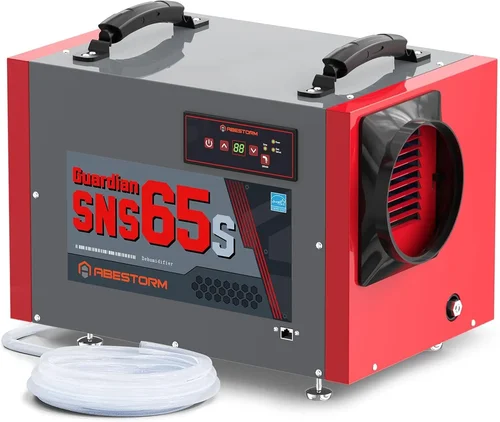
❌ Mistake: Buying a Standard Room Dehumidifier
Why it’s bad: Standard dehumidifiers aren’t built for crawlspace conditions. They often shut off below 65°F, lack proper drainage options, and have flimsy cabinets that corrode quickly in damp environments. Using one in a crawlspace can lead to premature failure, mold growth, and wasted money.
What to do instead: Invest in a dehumidifier specifically designed for crawlspaces or unconditioned areas. These units feature cold-weather operation, robust construction, and integrated pumps or drain hoses.
❌ Mistake: Ignoring Drainage Requirements
Why it’s bad: Many homeowners assume they can just let the unit drain into a bucket—but crawlspace dehumidifiers run continuously for months. A full bucket every few days is impractical and risky (overflow = water damage).
What to do instead: Choose a model with a built-in condensate pump or gravity drain hose. If your crawlspace has a sump pit or floor drain, gravity drainage works. Otherwise, a pump is essential.
❌ Mistake: Overlooking Installation Complexity
Why it’s bad: Crawlspace dehumidifiers often require electrical wiring, drain line routing, and sometimes ducting. Attempting DIY installation without proper knowledge can void warranties, create safety hazards, or lead to poor performance.
What to do instead: Hire a licensed HVAC technician for installation—especially if hardwiring or ductwork is involved. Many manufacturers require professional installation to maintain warranty coverage.
❌ Mistake: Choosing Based on Price Alone
Why it’s bad: The cheapest unit may save you $200 upfront but cost $500 in repairs or replacement within two years. Low-cost models often use inferior compressors, lack defrost features, and have shorter lifespans.
What to do instead: Focus on value, not price. Compare energy efficiency, warranty length, and expected lifespan. A mid-range unit with a 5-year warranty often offers the best long-term ROI.
❌ Mistake: Not Measuring Your Crawlspace Accurately
Why it’s bad: Undersized units struggle to control humidity, while oversized ones cycle too frequently, wasting energy and wearing out components.
What to do instead: Measure length, width, and height. Calculate square footage and note any moisture sources (e.g., dirt floors, poor ventilation). Use manufacturer sizing charts or consult an expert.
❌ Mistake: Skipping Regular Maintenance
Why it’s bad: Clogged filters, frozen coils, or pump failures can render your dehumidifier useless—and you might not notice until mold appears.
What to do instead: Clean the air filter monthly, inspect the drain line quarterly, and schedule annual professional servicing. Set calendar reminders to stay on top of it.
❌ Mistake: Assuming All “Crawlspace” Dehumidifiers Are Equal
Why it’s bad: Some brands market standard units as “crawlspace-ready” with minor modifications. These often lack true cold-weather performance or durable enclosures.
What to do instead: Verify specs like low-temp operation, cabinet material, and pump inclusion. Read independent reviews and look for AHAM certification.
—
Budget Guidelines: How Much Should You Spend?
Entry-Level ($250–$450):
These are typically compact, portable units or basic refrigerant models. They may lack auto-drain, have limited cold-weather performance, and shorter warranties (1–2 years). Best for very small, mildly damp crawlspaces or temporary use. Expect higher energy bills and potential early replacement.
Mid-Range ($500–$900):
This is the sweet spot for most homeowners. Units in this range offer 70–100 PPD capacity, auto-defrost, condensate pumps, digital controls, and 3–5 year warranties. Brands like AlorAir, AprilAire, and Dri-Eaz have strong offerings here. You’ll get reliable performance, decent efficiency, and features that justify the cost.
Premium ($900–$1,500):
Designed for larger or high-moisture crawlspaces, these models boast 100+ PPD, scroll compressors, Wi-Fi connectivity, advanced diagnostics, and rugged construction. Ideal for humid climates, homes with dirt floors, or those seeking “set it and forget it” operation. Energy efficiency is typically excellent.
Luxury ($1,500+):
Commercial-grade or whole-house integrated systems. These include desiccant units, multi-zone controls, and industrial durability. Only necessary for very large properties, severe moisture problems, or professional contractors. Overkill for typical residential use.
—
Expert Tips for Getting the Best Deal
– Buy in late fall or winter: Demand drops after summer, so retailers often discount inventory. You’ll find the best deals from October to February.
– Check manufacturer rebates: Brands like AprilAire and Santa Fe occasionally offer $50–$150 rebates, especially during spring HVAC season.
– Compare total cost, not just sticker price: Factor in energy use, warranty length, and included accessories (e.g., drain hose, remote sensor).
– Buy directly from authorized dealers: This ensures warranty validity and access to genuine parts. Avoid third-party sellers on marketplaces.
– Look for bundle deals: Some companies offer discounts when you buy a dehumidifier with a vapor barrier or insulation kit.
– Read return policies carefully: Crawlspace units are heavy and expensive to return. Ensure the retailer offers at least 30 days for testing.
– Ask about professional installation discounts: Many HVAC contractors offer package pricing if you purchase the unit through them.
– Consider refurbished models: Reputable brands sometimes sell certified refurbished units with full warranties at 20–30% off.
—
Frequently Asked Questions
Q: How do I know if my crawlspace needs a dehumidifier?
A: Signs include musty odors, visible mold or mildew, condensation on pipes or ducts, warped wood, or a damp feel when you enter the space. Use a hygrometer to measure humidity—if it’s consistently above 60%, a dehumidifier is recommended.
Q: Can I use a regular dehumidifier in my crawlspace?
A: Not recommended. Standard units aren’t built for cold, dusty, or unventilated environments. They may overheat, freeze, or corrode quickly. Always choose a model rated for crawlspace or basement use.
Q: Do I need a condensate pump?
A: If your crawlspace has no floor drain or sump pit, yes. Gravity drainage only works if the unit sits higher than the drain point. A pump allows flexible placement and continuous operation.
Q: How often should I clean the filter?
A: Every 4–6 weeks during peak usage (spring/summer). In dusty crawlspaces, check monthly. A clogged filter reduces airflow and efficiency.
Q: Will a dehumidifier increase my electric bill?
A: Yes, but modestly. A 70-PPD unit uses about 300–500 kWh/year, costing $40–$70 annually (at $0.12/kWh). The energy savings from a more efficient HVAC system often offset this.
Q: Should I insulate my crawlspace before installing a dehumidifier?
A: Ideally, yes. Insulating walls and sealing vents (in conditioned crawlspaces) improves dehumidifier efficiency and prevents cold surfaces that attract condensation.
Q: Can a dehumidifier prevent termites?
A: Indirectly, yes. Termites thrive in moist wood. By keeping humidity below 60%, you reduce the risk of wood decay and make the environment less attractive to pests.
Q: How long do crawlspace dehumidifiers last?
A: With proper maintenance, 7–10 years is typical for mid-to-high-end models. Cheap units may fail in 2–3 years.
Q: Do I need to duct the dehumidifier?
A: Only in very large or irregularly shaped crawlspaces. Ducting helps distribute dry air evenly but adds complexity. Most homes don’t require it.
Q: What’s the ideal humidity level for a crawlspace?
A: Between 50% and 55%. This prevents mold growth while avoiding overly dry conditions that can crack wood.
—
Our Final Recommendations
– Best for Budget-Conscious Buyers: AlorAir Sentinel HD55 – At around $550, it offers 55 PPD, auto-defrost down to 36°F, a built-in pump, and a 5-year warranty. Excellent value for small to mid-sized crawlspaces.
– Best Overall Value: AprilAire E080 – Priced near $850, this 80-PPD unit features a robust steel cabinet, Wi-Fi connectivity, and seamless integration with AprilAire’s ecosystem. Ideal for most homeowners seeking reliability and smart features.
– Best Premium Option: Santa Fe Rx – At $1,300+, this commercial-grade beast delivers 100+ PPD, scroll compressor technology, and unmatched durability. Perfect for large or high-moisture spaces.
– Best for Beginners: Dri-Eaz F500 – Simple controls, reliable performance, and excellent customer support make this a great first-time choice. Includes a pump and defrost function.
– Best for Advanced Users: Quest 50 Dual – With dual-coil technology, app control, and extreme efficiency, this unit is for tech-savvy homeowners who want maximum performance and data insights.
—
Conclusion: Making the Right Choice
Choosing the right crawlspace dehumidifier isn’t just about picking the most powerful or cheapest model—it’s about matching the unit’s capabilities to your specific environment, budget, and long-term goals. A well-selected dehumidifier doesn’t just remove moisture; it protects your home’s structure, improves indoor air quality, and reduces energy costs. By focusing on performance specs, build quality, essential features like auto-drain and defrost, and reputable brands with strong warranties, you’ll avoid common pitfalls and invest wisely.
Remember: your crawlspace is the foundation of your home’s health. Neglecting it can lead to costly repairs down the line. But with the right dehumidifier, you’re not just solving a moisture problem—you’re safeguarding your investment for decades to come. Take the time to assess your needs, compare options using the criteria in this guide, and don’t hesitate to consult a professional if you’re unsure. Your future self (and your home) will thank you.