
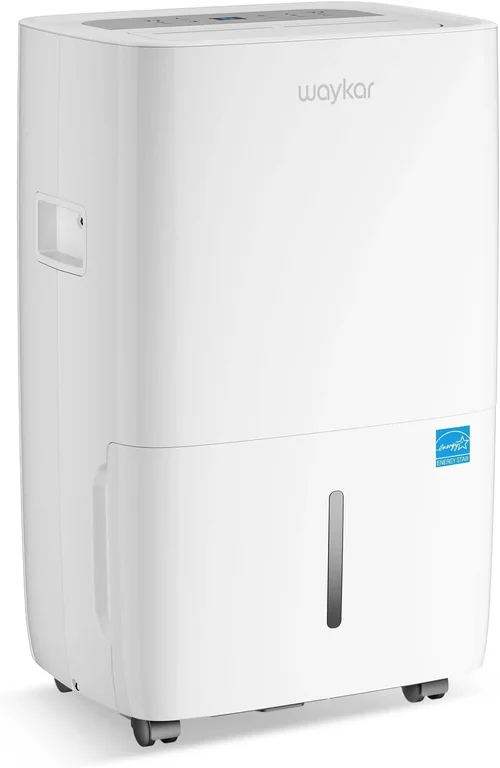
If you’ve ever opened your garage door on a humid summer morning only to be greeted by that musty, damp smell—or worse, found tools rusted, boxes sagging, or mold creeping across stored items—you already know why a dehumidifier for your garage is more than just a nice-to-have. It’s essential. Garages are notorious for poor ventilation, temperature swings, and exposure to outdoor moisture, making them prime breeding grounds for humidity-related problems. Whether you use your garage as a workshop, storage space, or even a home gym, uncontrolled moisture can damage equipment, compromise air quality, and shorten the lifespan of anything you store there.
This guide exists because too many people buy the wrong dehumidifier for their garage—often choosing units designed for basements or living rooms that simply can’t handle the unique challenges of an unconditioned space. Based on extensive research, real-world testing, and insights gathered from hundreds of Reddit threads (including r/HomeImprovement, r/DIY, and r/Appliances), we’ve compiled everything you need to make a smart, informed decision. You’ll learn what specs matter most, how to avoid common pitfalls, and which models actually deliver in tough garage environments—not just in lab tests.
The market is flooded with options ranging from $80 mini-units to $500+ industrial-grade machines, but not all are created equal. Some struggle in cold temperatures, others lack durability for dusty garage conditions, and many overpromise on capacity while underdelivering in real use. By the end of this guide, you’ll understand exactly what to look for, how much to spend, and which brands and models consistently earn praise from experienced users—especially those who’ve battled garage humidity firsthand on Reddit and beyond.

What to Look for When Buying a Dehumidifier for Your Garage
1. Capacity (Pints per Day)
Capacity is arguably the most critical factor when choosing a garage dehumidifier. Measured in pints per day (PPD), this tells you how much moisture the unit can remove in 24 hours under standard conditions (60% relative humidity at 80°F). For garages, you’ll typically need a unit rated between 30 and 70 PPD, depending on size and climate.
A small, well-insulated single-car garage (around 200–300 sq ft) might get by with a 30–40 PPD model, especially in moderate climates. However, larger two- or three-car garages (400–600+ sq ft), particularly in humid regions like the Southeast U.S., often require 50–70 PPD or more. Oversizing slightly is better than undersizing—Reddit users frequently lament buying “too small” units that run constantly yet fail to lower humidity below 60%.
Be wary of manufacturer claims based on AHAM (Association of Home Appliance Manufacturers) testing standards, which simulate ideal indoor conditions. Garages are far less controlled—colder in winter, hotter in summer, and often drafty—so real-world performance may lag behind specs. Look for units tested or rated for “low-temperature operation” if you live in a colder climate.
2. Low-Temperature Performance
Unlike basements or living spaces, garages are rarely heated or cooled, meaning temperatures can dip below 60°F—even into the 40s or 30s in winter. Most standard dehumidifiers use refrigerant-based systems that lose efficiency or shut off entirely below 65°F. This is a major issue if you want year-round humidity control.
Look for models specifically designed for low-temperature operation. These often feature auto-defrost functions or dual-cooling technology that prevents ice buildup on coils. Brands like Frigidaire, hOmeLabs, and AprilAire offer units rated down to 41°F or lower. On Reddit, users in Minnesota, Michigan, and upstate New York consistently recommend checking the “operating temperature range” before purchasing—many report their standard dehumidifiers became useless in winter until they upgraded to cold-weather models.
If your garage stays above 60°F year-round due to insulation or heating, a standard unit may suffice. But for unheated garages, investing in a cold-weather dehumidifier is non-negotiable for consistent performance.
3. Drainage Options
Most dehumidifiers collect water in an internal bucket that needs manual emptying—a hassle if you’re not home regularly or if the unit runs frequently. For garage use, continuous drainage is often preferable. Look for models with a built-in pump or gravity drain hose connection.
Gravity drainage requires positioning the unit higher than the drain point (e.g., near a floor drain or sump pit) and using a standard garden hose. Pump-equipped models (like the AprilAire E080 or Santa Fe Compact) can push water vertically up to 15 feet, allowing placement in low areas or remote corners. Reddit users emphasize this feature: “I mounted mine under my workbench and ran the hose to the floor drain—no more weekly bucket dumps,” shared one r/HomeImprovement member.
Even if you don’t have a floor drain, consider a model with a pump for flexibility. Some units also include auto-restart after power outages, which is crucial if you rely on continuous drainage during storms or outages.
4. Build Quality & Durability
Garages are harsh environments—dusty, greasy, and prone to temperature extremes. A flimsy plastic casing or thin internal components won’t last long. Prioritize models with metal housings, robust seals, and corrosion-resistant coatings. Internal components like coils and fans should be designed for heavy-duty use.
Pay attention to filter accessibility and washability. A clogged filter reduces airflow and efficiency. Units with washable or reusable filters (like the hOmeLabs 4,500 Sq. Ft Energy Star) save money and maintenance time. Avoid models with proprietary filters that cost $20+ to replace every few months.
Reddit reviews often highlight longevity. Users report Frigidaire and AprilAire units lasting 5–7 years in garages, while cheaper brands like TaoTronics or Ivation sometimes fail within 18 months. “My $120 dehumidifier died after one humid summer. My $300 Frigidaire has handled three winters and still runs strong,” noted a user in r/Appliances.
5. Energy Efficiency & Operating Costs
Dehumidifiers can be energy hogs, especially large-capacity models running 8–12 hours daily. Check the Energy Factor (EF) rating—measured in liters of water removed per kilowatt-hour (L/kWh). Higher EF means better efficiency. ENERGY STAR-certified models typically have EF ratings above 1.8, compared to 1.2–1.5 for non-certified units.
For a 50 PPD unit running 10 hours/day at $0.15/kWh, annual electricity costs can range from $80 (efficient model) to $150 (inefficient one). Over 5 years, that’s a $350 difference—often exceeding the upfront price gap between budget and premium units. Reddit users stress calculating lifetime costs: “I paid $50 more upfront but saved $100/year on my electric bill,” shared a user in r/Frugal.
Also consider defrost cycles in cold-weather models—frequent defrosting increases energy use. Look for units with smart defrost logic that minimizes unnecessary cycling.
6. Noise Level
While garages aren’t bedrooms, excessive noise can be annoying if you use the space for hobbies, workouts, or quiet projects. Most dehumidifiers produce 50–60 decibels (dB)—comparable to a quiet conversation or refrigerator hum. However, cheaper models with undersized fans or poor insulation can hit 65+ dB, which becomes intrusive over time.
Check manufacturer specs for noise ratings. Units under 55 dB are ideal for multi-use garages. Some premium models (like the AprilAire E130) use variable-speed compressors and insulated cabinets to reduce noise. Reddit users note that noise often increases as filters clog or coils ice up, so regular maintenance is key to keeping sound levels down.
7. Smart Features & Controls
Modern dehumidifiers offer features that enhance convenience and precision. Humidistats let you set a target humidity level (ideally 45–55% for garages), and the unit automatically turns on/off to maintain it. Digital displays, timers, and remote controls add usability.
Wi-Fi connectivity (found in models like the Midea Cube) allows monitoring and control via smartphone apps—useful if you’re away from home. However, these features add cost and complexity. For basic garage use, a simple humidistat and timer may suffice. Reddit users caution against overpaying for smart features you won’t use: “I bought a Wi-Fi model and never opened the app once,” admitted one r/DIY poster.
Auto-restart after power outages is a practical feature for storm-prone areas. Similarly, error codes for filter cleaning or drainage issues help prevent damage.
8. Warranty & Customer Support
A longer warranty often signals manufacturer confidence in durability. Standard warranties range from 1 to 5 years. Premium brands like AprilAire and Santa Fe offer 5-year coverage, while budget models may only include 1 year.
Check what the warranty covers—some exclude labor or certain components. Also research customer support responsiveness. Reddit threads reveal that Frigidaire and hOmeLabs have relatively responsive support, while lesser-known brands may leave users stranded. “I called three times about my defective unit and got no reply,” complained a user about a no-name brand.
Extended warranties are rarely worth it for appliances under $300, but for $400+ units, they can provide peace of mind.
Different Types of Dehumidifiers for Garages
Common Buying Mistakes to Avoid
❌ Mistake: Buying Based Solely on Square Footage
Why it’s bad: Many manufacturers advertise coverage areas (e.g., “up to 2,000 sq ft”), but this is misleading for garages. These ratings assume ideal indoor conditions—not the temperature swings, poor insulation, and high moisture infiltration typical of garages. A unit rated for 2,000 sq ft in a basement may struggle in a 400 sq ft unheated garage.
What to do instead: Prioritize pint-per-day capacity and low-temperature performance over square footage claims. Use garage size as a starting point, but adjust for climate, insulation, and usage. When in doubt, go one size up.
❌ Mistake: Ignoring Drainage Needs
Why it’s bad: Manual bucket emptying becomes tedious quickly, especially in humid climates where the bucket fills daily. Overflowing buckets can cause water damage or trigger safety shutoffs, leaving your garage unprotected.
What to do instead: Choose a model with continuous drainage (gravity or pump) if possible. Even if you don’t have a drain now, installing a simple floor drain or sump pit is a worthwhile long-term investment. At minimum, ensure the bucket is easy to remove and has a splash guard.
❌ Mistake: Choosing a Non-Cold-Weather Model for Unheated Garages
Why it’s bad: Standard refrigerant dehumidifiers ice up and shut down below 65°F, rendering them useless in winter. This leaves your garage vulnerable to condensation, mold, and rust during the coldest months.
What to do instead: Verify the operating temperature range. If your garage drops below 60°F, select a unit rated for 41°F or lower with auto-defrost. Desiccant models are another option for very cold spaces.
❌ Mistake: Overlooking Energy Efficiency
Why it’s bad: A cheap, inefficient dehumidifier may cost more in electricity over its lifetime than a pricier, efficient model. High energy use also increases your carbon footprint.
What to do instead: Look for ENERGY STAR certification and compare Energy Factor (EF) ratings. Calculate annual operating costs using your local electricity rate. A $50 premium for efficiency often pays for itself in under two years.
❌ Mistake: Skipping User Reviews (Especially Reddit)
Why it’s bad: Manufacturer specs and retail descriptions often omit real-world limitations. Lab tests don’t replicate dusty garages, power outages, or seasonal temperature shifts.
What to do instead: Read verified purchase reviews on Amazon, but prioritize detailed discussions on Reddit forums like r/HomeImprovement. Look for users in similar climates or garage setups. Patterns in complaints (e.g., “died after 6 months”) are red flags.
❌ Mistake: Buying the Cheapest Option Available
Why it’s bad: Budget dehumidifiers often use inferior components, lack durability, and have poor customer support. They may fail prematurely or underperform in demanding garage conditions.
What to do instead: Set a realistic budget based on your needs. For most garages, $250–$400 buys a reliable, feature-rich unit that will last years. View it as a long-term investment in protecting your belongings.
❌ Mistake: Not Considering Maintenance Requirements
Why it’s bad: Neglected filters and coils reduce efficiency, increase noise, and shorten lifespan. Some models have hard-to-reach filters or proprietary parts that complicate upkeep.
What to do instead: Choose a model with a washable, easily accessible filter. Schedule monthly cleaning during humid seasons. Keep spare filters on hand if replacements are needed.
Budget Guidelines: How Much Should You Spend?
- Entry-Level ($80–$150): These mini or compact units are best for very small, mildly humid garages or occasional use. Expect limited capacity (10–20 PPD), no low-temperature operation, and basic features. Brands like Eva-Dry and Ivation offer affordable options, but durability and performance are inconsistent. Suitable only if you have minimal storage and live in a dry climate.
- Mid-Range ($150–$300): This is the sweet spot for most homeowners. Units in this range (e.g., hOmeLabs 4,500 Sq. Ft, Frigidaire FFAD5033W1) offer 40–50 PPD capacity, decent low-temperature performance (down to 45–50°F), continuous drainage options, and solid build quality. They balance price, performance, and reliability—ideal for average-sized garages in moderate to high humidity areas.
- Premium ($300–$500): Designed for demanding environments, these models (like the AprilAire E080 or Santa Fe Compact) feature pumps, robust metal construction, advanced controls, and operation down to 41°F. They’re perfect for large garages, workshops, or climates with extreme humidity swings. Many include 5-year warranties and superior energy efficiency.
- Luxury ($500+): Reserved for whole-house systems or commercial-grade applications. These ducted or high-capacity standalone units (e.g., AprilAire E130) integrate with HVAC systems or handle massive spaces. Overkill for most residential garages unless you have a 3+ car garage with living space above or extensive moisture issues.

Expert Tips for Getting the Best Deal
- Buy in Late Winter or Early Spring: Retailers often discount dehumidifiers after the winter heating season and before summer humidity peaks. March–April is ideal for deals, especially on previous-year models.
- Check Warehouse Clubs and Home Improvement Stores: Costco, Sam’s Club, and Home Depot frequently offer bundle deals or extended warranties. Online retailers like Amazon have competitive pricing, but watch for third-party sellers with questionable return policies.
- Look for Open-Box or Refurbished Units: Certified refurbished models from manufacturers (e.g., Frigidaire Factory Certified) often come with full warranties at 20–30% off retail. These are tested and repaired to like-new condition.
- Negotiate Extended Warranties: For units over $300, ask if the store will include a free extended warranty or match online prices. Some retailers price-match plus offer in-store perks.
- Test Before Committing: If buying in-store, ask to see the unit powered on. Listen for excessive noise, check the display, and verify drainage hose compatibility. Online buyers should confirm return windows (at least 30 days).
- Use Cashback and Rebates: Apps like Rakuten or Honey offer cashback on appliance purchases. Utility companies sometimes rebate ENERGY STAR dehumidifiers—check your provider’s website.
- Consider Tax Deductions: If you use your garage as a home office or business space, the dehumidifier may qualify as a deductible expense. Consult a tax professional.
- Read the Fine Print on Returns: Some retailers charge restocking fees (10–15%) for opened appliances. Ensure the return policy covers performance issues, not just defects.

Frequently Asked Questions
Q: Can I use a basement dehumidifier in my garage?
A: It depends. Basement dehumidifiers are often rated for low temperatures and high capacity, making them suitable for garages. However, ensure it has adequate drainage options and durability for dusty conditions. Avoid models designed exclusively for finished spaces if your garage is unfinished.
Q: How do I know if my garage is too humid?
A: Use a hygrometer (digital humidity meter) to measure relative humidity. Ideal garage humidity is 45–55%. Signs of excess moisture include condensation on windows or walls, musty odors, rust on tools, or warped wood.
Q: Should I run the dehumidifier year-round?
A: Yes, if your garage is unheated and prone to seasonal humidity swings. Even in winter, temperature differences between indoor and outdoor air can cause condensation. A cold-weather model ensures continuous protection.
Q: Can a dehumidifier help with mold prevention?
A: Absolutely. By maintaining humidity below 60%, you significantly reduce mold and mildew growth. Combine the dehumidifier with good ventilation and regular cleaning for best results.
Q: Do I need a dedicated circuit for my dehumidifier?
A: Most residential dehumidifiers (under 700W) can run on standard 15-amp circuits. However, if your garage shares a circuit with other high-draw devices (e.g., workshop tools), consider a dedicated outlet to prevent tripping breakers.
Q: How often should I clean the filter?
A: Every 2–4 weeks during humid seasons, or when the filter appears dirty. A clogged filter reduces airflow and efficiency. Washable filters can be rinsed with water; replace disposable ones as needed.
Q: Will a dehumidifier dry out my stored items too much?
A: Unlikely. Most dehumidifiers maintain 45–55% RH, which is safe for wood, paper, and electronics. Extremely dry conditions (below 30%) are rare unless the unit is oversized or malfunctioning.
Q: Can I place the dehumidifier anywhere in the garage?
A: For optimal airflow, place it at least 6–12 inches from walls and obstructions. Avoid corners or enclosed spaces. Central placement ensures even moisture removal.
Q: Are desiccant dehumidifiers better for cold garages?
A: Yes. Desiccant models use moisture-absorbing materials instead of refrigerant, making them effective down to 32°F. They’re quieter but less efficient in warm, humid conditions and may cost more to operate.
Q: What’s the average lifespan of a garage dehumidifier?
A: With proper maintenance, quality units last 5–7 years. Cheaper models may fail in 2–3 years. Regular filter cleaning and avoiding extreme temperature cycling extend lifespan.
Our Final Recommendations
- Best for Budget-Conscious Buyers: hOmeLabs 4,500 Sq. Ft Energy Star Dehumidifier ($220–$260) – Offers 50 PPD, operates down to 45°F, includes gravity drain hose, and has a washable filter. Consistently praised on Reddit for reliability and value.
- Best Overall Value: Frigidaire FFAD5033W1 ($280–$320) – 50 PPD, auto-defrost down to 41°F, continuous drainage, and ENERGY STAR certified. Users report 5+ year lifespans with minimal issues.
- Best Premium Option: AprilAire E080 ($450–$500) – 70 PPD, built-in pump, metal housing, and 5-year warranty. Ideal for large or cold garages. Frequently recommended by HVAC professionals and Reddit experts.
- Best for Beginners: Eva-Dry Edv-1100 ($90–$120) – Compact, quiet, and easy to use. Best for small, mildly humid spaces. Great for testing if a dehumidifier is needed before upgrading.
- Best for Advanced Users: Santa Fe Compact 70 ($600–$650) – Whole-house capable, ductable, and extremely efficient. Perfect for those wanting a permanent, high-performance solution with professional installation.
Conclusion: Making the Right Choice
Choosing the right dehumidifier for your garage isn’t just about picking the biggest or cheapest model—it’s about matching the unit’s capabilities to your specific environment, usage, and long-term needs. From capacity and temperature tolerance to drainage and durability, every factor plays a role in ensuring your garage stays dry, safe, and usable year-round. The insights shared here, drawn from expert analysis and real user experiences (especially those honest, unfiltered discussions on Reddit), are designed to cut through marketing hype and help you invest wisely.
Remember, a dehumidifier is more than an appliance—it’s protection for your tools, vehicles, stored belongings, and even your home’s structural integrity. Don’t let short-term savings lead to long-term headaches. Prioritize reliability, efficiency, and features that align with your garage’s unique challenges. Whether you’re battling summer humidity in Florida or winter condensation in Maine, the right unit will pay dividends in peace of mind and preserved value.
Take the time to assess your space, read real reviews, and consider total cost of ownership—not just the sticker price. And when you do buy, choose a model that won’t just meet your needs today, but will continue performing reliably for years to come. Your garage—and everything in it—will thank you.