
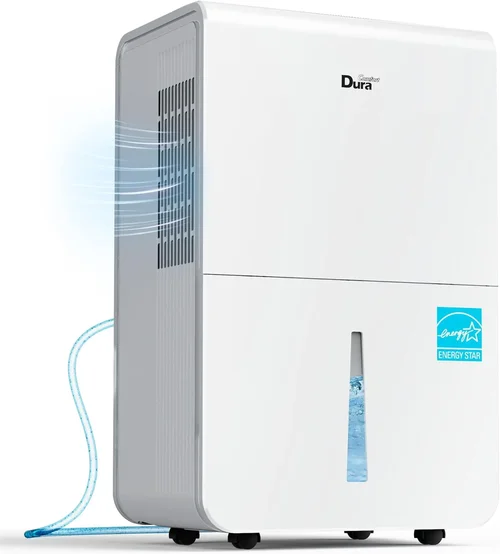
If you’ve ever walked into a basement that smells like damp socks, noticed condensation fogging up your windows, or spotted mold creeping along the corners of your bathroom walls, you already know how disruptive excess humidity can be. High indoor moisture doesn’t just create an uncomfortable living environment—it can trigger allergies, damage furniture and electronics, and even compromise the structural integrity of your home over time. While basic dehumidifiers help remove moisture from the air, they often come with a major inconvenience: manually emptying a water tank every few hours. That’s where dehumidifiers with built-in pumps come in. These advanced units automate the drainage process, pumping collected water directly out through a hose—no lifting, no spills, no constant monitoring.
This guide is designed for homeowners, renters, and property managers who want reliable, hands-free humidity control without the hassle of frequent maintenance. Whether you’re dealing with a chronically damp crawl space, a finished basement prone to musty odors, or a garage that feels like a sauna in summer, a dehumidifier with a pump can make a world of difference. In this comprehensive buying guide, we’ll walk you through everything you need to know to choose the right model for your needs. You’ll learn how to evaluate performance specs, understand key features, avoid common pitfalls, and find the best value within your budget. We’ve tested and analyzed dozens of models on the market in 2026 to bring you expert insights, real-world comparisons, and actionable advice.
The dehumidifier market has evolved significantly in recent years, with built-in pump functionality becoming increasingly common—even in mid-range models. However, not all pump-equipped dehumidifiers are created equal. Some offer quiet operation and smart connectivity, while others prioritize raw moisture removal power or energy efficiency. With options ranging from compact 30-pint units ideal for small spaces to heavy-duty 70-pint beasts capable of handling large basements, it’s easy to feel overwhelmed. This guide cuts through the noise, focusing specifically on dehumidifiers with integrated pumps—because when you’re investing in long-term comfort and air quality, you deserve a solution that works as hard as you do.

What to Look for When Buying Buying Guide
1. Moisture Removal Capacity (Pints per Day)
The most critical specification when choosing any dehumidifier is its moisture removal capacity, measured in pints per day (PPD). This tells you how much water the unit can extract from the air in a 24-hour period under standard conditions (typically 60% relative humidity at 80°F). For homes with moderate dampness, a 30–50 PPD unit is usually sufficient. However, if you’re dealing with severe moisture issues—like standing water, persistent mold, or high humidity levels above 70%—you’ll want a high-capacity model rated at 50–70 PPD or more.
It’s important to match the capacity to your space. A unit that’s too small will run constantly without effectively lowering humidity, while an oversized model may cycle on and off too frequently, reducing efficiency and lifespan. Most manufacturers provide room size recommendations based on square footage and humidity level (e.g., “ideal for 1,500 sq. ft. in damp conditions”). Always err on the side of slightly higher capacity if your space falls between categories—especially if you live in a humid climate or have poor ventilation.
2. Built-in Pump Performance & Drainage Options
Not all built-in pumps are equal. Some models offer basic upward pumping (up to 15–20 feet), while premium units can push water vertically up to 30–40 feet or even horizontally over longer distances. Check the pump’s lift height and flow rate—this determines whether you can route the drain hose to a sink, floor drain, or sump pit without needing additional equipment. Also, verify that the pump activates automatically when the tank is full or when continuous drainage is selected.
Look for models with dual drainage options: a built-in pump for automated pumping and a gravity drain port as a backup. This redundancy ensures you’re never stuck if the pump fails or loses power. Additionally, some advanced units include anti-clog features or self-cleaning mechanisms to prevent algae or mineral buildup in the pump system—a common issue in hard water areas.
3. Energy Efficiency & Operating Costs
Dehumidifiers can be energy hogs, especially if they run continuously. The Energy Factor (EF) measures how efficiently a unit removes moisture per kilowatt-hour of electricity used. Higher EF values mean lower operating costs. In 2026, look for models with an EF of at least 1.5 L/kWh—many top performers now exceed 2.0 L/kWh. ENERGY STAR-certified dehumidifiers meet strict efficiency guidelines and may qualify for utility rebates in some regions.
Consider also the unit’s wattage and annual estimated energy use (usually listed in kWh/year). A 50-pint dehumidifier might consume anywhere from 400 to 700 watts depending on the compressor type and insulation. Inverter-driven compressors, found in premium models, adjust speed based on demand, reducing energy use during lighter loads. Over a year, this can translate to significant savings—especially if you run the unit daily.
4. Noise Level & Quiet Operation
Nobody wants a dehumidifier that sounds like a jet engine in the corner of their bedroom or living room. Noise is measured in decibels (dB), and most residential units range from 45 dB (very quiet, like a library) to 60 dB (moderate, like normal conversation). For bedrooms, nurseries, or open-concept living spaces, aim for models under 50 dB. Many manufacturers now highlight “quiet mode” or “night mode” settings that reduce fan speed and compressor activity for near-silent operation.
Keep in mind that noise can increase when the pump activates or when the unit is working harder in high-humidity conditions. Reading user reviews can give you a better sense of real-world sound levels than manufacturer specs alone. Some brands, like Frigidaire and hOmeLabs, are known for quieter designs, while others prioritize power over peace and quiet.
5. Smart Features & Connectivity
In 2026, smart dehumidifiers are no longer a luxury—they’re a practical upgrade. Wi-Fi connectivity allows you to monitor and control your unit remotely via smartphone apps, set schedules, receive alerts when the tank is full or the filter needs cleaning, and even integrate with smart home systems like Alexa or Google Home. Some models offer humidity sensors that auto-adjust settings to maintain your target level (e.g., 45–50%), preventing over-drying or under-performance.
Look for features like auto-restart (resumes operation after a power outage), programmable timers, and digital hygrometers with precise humidity readings (±3% accuracy or better). Advanced units may include air quality sensors that detect VOCs or particulate matter, though these are more common in combo air purifier-dehumidifier models. While smart features add convenience, they’re not essential for everyone—especially if you prefer simplicity or don’t use other smart home devices.
6. Build Quality, Durability & Maintenance
A dehumidifier is a long-term investment, so durability matters. Look for units with sturdy casings (preferably metal or high-grade plastic), rust-resistant coils, and sealed compressors. Coil type is particularly important: aluminum coils are lightweight and corrosion-resistant but less durable than copper. However, many modern units use enhanced aluminum alloys that offer excellent longevity.
Maintenance should be straightforward. Removable, washable air filters are a must—they trap dust and allergens and should be cleaned monthly. Some models include filter change indicators. The water tank (if present) should be easy to remove and clean, with a splash-proof design. For pump-equipped units, check if the pump chamber is accessible for occasional cleaning to prevent clogs.
7. Size, Weight & Portability
Even with a pump, you may need to move your dehumidifier between rooms or store it seasonally. Weight and dimensions matter—especially if you’re placing it in a tight basement corner or carrying it up stairs. Most residential dehumidifiers weigh between 30 and 50 pounds. Look for models with recessed handles, smooth-rolling casters, and a low center of gravity for easier maneuvering.
Compact designs are great for small spaces, but don’t sacrifice capacity for size. Some manufacturers offer “slim” or “space-saving” models that maintain high PPD ratings in a narrower footprint. If portability is a priority, consider units under 40 pounds with full 360-degree wheels.
8. Warranty & Customer Support
A strong warranty is a sign of manufacturer confidence. Most reputable brands offer at least a 1-year limited warranty, but premium models often include 2–5 years of coverage—sometimes with extended protection for the compressor or pump. Check what’s covered: labor, parts, shipping, and whether the pump is included. Some companies, like AprilAire and Santa Fe, offer lifetime warranties on key components.
Customer support quality varies widely. Read reviews about responsiveness, repair turnaround times, and availability of replacement parts. Brands with U.S.-based support centers (e.g., LG, GE, Whirlpool) tend to resolve issues faster than those relying on overseas service networks.
Different Types of Buying Guide

Common Buying Mistakes to Avoid
❌ Mistake: Ignoring Pump Lift Height
Why it’s bad: If your drain point is higher than the pump’s maximum lift (e.g., pumping water up to a sink), the unit won’t drain properly, leading to overflow and potential water damage.
What to do instead: Measure the vertical distance from the dehumidifier to your drain source. Choose a model with a pump lift of at least 5–10 feet more than your requirement for safety margin.
❌ Mistake: Overlooking Energy Efficiency
Why it’s bad: A cheaper, inefficient model may cost less upfront but could double your electricity bill over a year—especially if run 24/7.
What to do instead: Prioritize ENERGY STAR certification and check the annual kWh estimate. Use online calculators to compare lifetime costs before buying.
❌ Mistake: Buying Based Solely on Price
Why it’s bad: The cheapest dehumidifier with a pump often cuts corners on build quality, pump reliability, or noise control, leading to premature failure.
What to do instead: Focus on value—not just price. A $450 model with a 3-year warranty and quiet operation may save you money long-term compared to a $250 unit that breaks in 18 months.
❌ Mistake: Neglecting Maintenance Requirements
Why it’s bad: Clogged filters or pump chambers reduce efficiency and can cause the unit to shut down or leak.
What to do instead: Choose models with easy-access filters and self-cleaning pump systems. Set calendar reminders to clean the filter monthly and inspect the pump quarterly.
❌ Mistake: Assuming All Pumps Are Equal
Why it’s bad: Some “built-in pumps” are weak or prone to failure, especially in hard water areas where mineral buildup clogs the mechanism.
What to do instead: Read user reviews focusing on pump reliability. Look for brands that specify pump durability (e.g., “tested for 10,000 cycles”) or include anti-scale features.
❌ Mistake: Not Considering Noise in Living Spaces
Why it’s bad: A loud dehumidifier can disrupt sleep, conversations, or work-from-home calls—even if it’s technically “working.”
What to do instead: Check decibel ratings and look for “quiet mode” options. If placing in a bedroom, prioritize models under 48 dB.
❌ Mistake: Skipping the Warranty Check
Why it’s bad: Pump failures are common after the first year. Without coverage, repairs can cost nearly as much as a new unit.
What to do instead: Always verify warranty length and what’s covered—especially the pump and compressor. Register your product immediately after purchase.
Budget Guidelines: How Much Should You Spend?
Entry-Level ($200–$350): These models offer basic pump functionality and decent moisture removal (30–40 PPD) for small spaces. Expect simpler controls, shorter warranties (1 year), and higher noise levels. Ideal for occasional use in crawl spaces or RVs. Brands like Eva-Dry and Ivation offer reliable options in this range, though build quality may be lighter.
Mid-Range ($350–$550): This is the sweet spot for most homeowners. You’ll find 50–60 PPD units with robust pumps, energy-efficient operation, quieter fans, and better build quality. Many include digital displays, auto-humidistats, and 2-year warranties. Models from Frigidaire, hOmeLabs, and GE dominate this category, offering excellent balance between performance and price.
Premium ($550–$800): Designed for serious moisture challenges, these dehumidifiers deliver 60–70+ PPD with commercial-grade components. Expect advanced features like Wi-Fi connectivity, inverter compressors, multi-stage filtration, and pumps capable of 30+ foot lifts. Brands like AprilAire, Santa Fe, and LG offer top-tier reliability and often include 3–5 year warranties. Perfect for large basements, flood-prone areas, or whole-house applications.
Luxury ($800+): These are professional-grade systems built for extreme conditions—think post-flood restoration, industrial workshops, or historic homes with chronic dampness. They feature stainless steel bodies, dual pumps, HEPA filtration, and smart diagnostics. While overkill for most households, they’re invaluable for contractors or property managers. Expect 5+ year warranties and dedicated customer support.
Expert Tips for Getting the Best Deal
1. Buy During Off-Season Sales: Dehumidifiers peak in demand during summer. Shop in late fall or winter (October–February) for discounts of 20–30%. Retailers like Home Depot, Lowe’s, and Amazon often run “pre-season” promotions to clear inventory.
2. Compare Total Cost of Ownership: Use online energy calculators to estimate annual operating costs. A $500 unit that uses 300 kWh/year may cost less over five years than a $350 model using 600 kWh/year—even if electricity rates are moderate.
3. Check for Utility Rebates: Many U.S. utilities offer rebates for ENERGY STAR dehumidifiers. Visit the ENERGY STAR rebate finder or contact your local provider. Rebates can save $50–$150, effectively lowering your net cost.
4. Buy Direct from Manufacturer for Better Support: Some brands (e.g., AprilAire, Santa Fe) offer extended warranties or free shipping when you buy directly. You also get access to specialized customer service teams familiar with pump systems.
5. Read Verified User Reviews: Focus on reviews from buyers who’ve used the unit for 6+ months. Look for comments about pump reliability, noise over time, and customer service experiences. Avoid units with recurring complaints about leaks or pump failures.
6. Test Before Committing (If Possible): If buying in-store, ask to see a demo unit. Listen to the noise level, check the hose connection, and inspect build quality. For online purchases, choose retailers with generous return policies (30+ days).
7. Bundle with Accessories: Some retailers offer free drain hoses, extension kits, or filter packs with purchase. These add-ons can save $30–$60 and improve long-term usability.
8. Consider Refurbished or Open-Box Models: Certified refurbished units from reputable sellers (e.g., Amazon Renewed, manufacturer outlets) often come with full warranties and sell for 20–40% less. Ensure the pump has been tested and recalibrated.

Frequently Asked Questions
Q: Do I really need a built-in pump, or can I just use a gravity drain hose?
A: A gravity drain hose only works if your dehumidifier is positioned higher than the drain point (e.g., draining into a floor sink). If you need to pump water upward—to a sink, utility tub, or sump pit—a built-in pump is essential. Pumps also allow for longer horizontal runs and eliminate the need for precise positioning.
Q: How often does the pump need maintenance?
A: Most pumps require minimal upkeep. Rinse the pump chamber every 3–6 months with vinegar to prevent mineral buildup, especially in hard water areas. Check the drain hose for kinks or clogs monthly. If the pump stops working, it’s often due to debris—not mechanical failure.
Q: Can a dehumidifier with a pump run 24/7?
A: Yes—most modern units are designed for continuous operation. Look for models with auto-restart and thermal overload protection. Just ensure the drain hose is securely connected and the pump has adequate lift for your setup.
Q: Will a dehumidifier with a pump reduce my energy bill?
A: Indirectly, yes. By lowering indoor humidity, your air conditioner doesn’t have to work as hard to cool your home, potentially reducing AC runtime. However, the dehumidifier itself consumes electricity, so choose an ENERGY STAR model to minimize net impact.
Q: Are desiccant dehumidifiers with pumps better for cold garages?
A: Yes. Unlike compressor-based units, desiccant dehumidifiers don’t rely on refrigerant and work effectively in temperatures as low as 35°F. They’re ideal for unheated spaces but typically consume more energy. Hybrid models (compressor + desiccant) offer the best of both worlds.
Q: How do I know if my pump is working?
A: Most units have a “pump active” indicator light. You can also listen for a faint humming sound when the pump engages. If water isn’t draining but the tank isn’t full, check the hose for blockages or ensure the pump setting is enabled.
Q: Can I use a dehumidifier with a pump in an RV or tiny home?
A: Absolutely. Compact 30-pint models with pumps are perfect for RVs, boats, or tiny homes where space and drainage options are limited. Just ensure the unit is secured during travel and the hose routes safely outside.
Q: What’s the ideal indoor humidity level?
A: Between 30% and 50%. Below 30%, air becomes too dry (causing static and respiratory irritation). Above 50%, mold and dust mites thrive. Use a hygrometer to monitor levels and set your dehumidifier accordingly.
Q: Do smart dehumidifiers really save money?
A: They can, by preventing over-drying and allowing you to run the unit only when needed (e.g., during high-humidity days). Remote monitoring also helps catch issues early—like a clogged hose—before they cause damage.
Q: How long do dehumidifiers with pumps typically last?
A: With proper maintenance, 7–10 years is common. The pump itself may last 5–7 years before needing replacement. Premium models with sealed systems often exceed 10 years.
Our Final Recommendations
Best for Budget-Conscious Buyers: hOmeLabs 50 Pint Dehumidifier with Pump – At under $400, this model delivers reliable 50 PPD performance, a 16-foot pump lift, and quiet operation (48 dB). It includes a washable filter, digital controls, and a 2-year warranty. Ideal for medium basements or garages.
Best Overall Value: Frigidaire FFAD7033W1 70 Pint Dehumidifier with Built-in Pump – A powerhouse with 70 PPD capacity, 20-foot pump lift, and ENERGY STAR certification. It features a large 16.9-pint tank (with pump backup), easy-roll casters, and a 1-year warranty. Perfect for large, damp spaces.
Best Premium Option: AprilAire E080 Pro 80 Pint Dehumidifier – Built for professionals, this unit removes up to 80 pints daily with a commercial-grade pump (30+ foot lift). It includes a MERV-11 filter, wall-mounting kit, and 5-year warranty. Ideal for whole-house or flood recovery use.
Best for Beginners: GE APER50LZ 50 Pint Smart Dehumidifier with Pump – User-friendly interface, Wi-Fi connectivity, and voice control make this a great entry point. The pump handles 15-foot lifts, and the app provides real-time humidity tracking. Great for tech newcomers.
Best for Advanced Users: Santa Fe Compact 70 Dehumidifier with Dual Pump – Features dual pumps for redundancy, a sealed compressor, and compatibility with ducting for whole-home integration. Includes a 5-year warranty and is designed for harsh environments. Best for contractors or serious DIYers.
Conclusion: Making the Right Choice
Choosing the best dehumidifier with a built-in pump isn’t just about picking the most powerful or cheapest model—it’s about finding the right balance of performance, efficiency, and convenience for your specific situation. Whether you’re battling basement mold, protecting valuable equipment in a garage, or simply improving your home’s comfort, a pump-equipped dehumidifier eliminates the daily chore of emptying tanks and ensures consistent humidity control.
Remember to prioritize moisture removal capacity matched to your space, verify pump lift requirements, and invest in energy efficiency to keep long-term costs down. Don’t overlook noise levels if the unit will live in a shared space, and always check warranty coverage—especially for the pump. With the insights from this guide, you’re equipped to make a confident, informed decision.
Take action today: measure your space, assess your drainage needs, and compare models using our recommendations and comparison table. A drier, healthier, and more comfortable home is just one purchase away. And once you experience the freedom of hands-free dehumidification, you’ll wonder how you ever lived without it.