
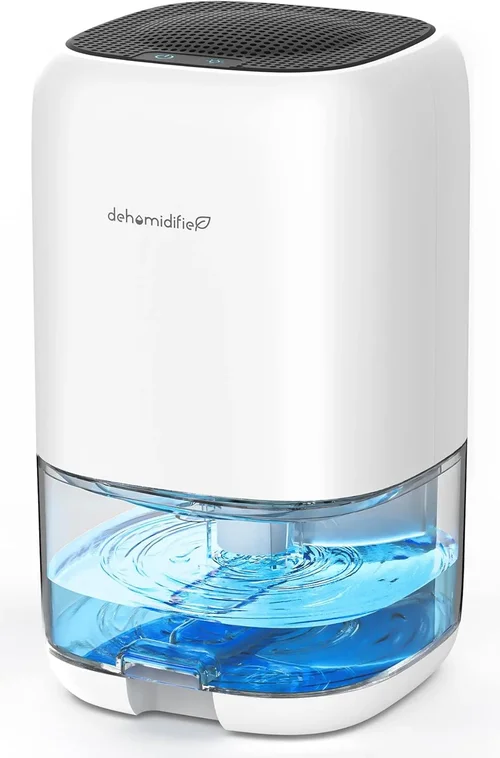
Bathrooms are notorious for their high humidity levels—steam from hot showers, poor ventilation, and limited airflow create the perfect environment for moisture buildup. Over time, this excess moisture doesn’t just fog up mirrors or make walls feel damp; it can lead to serious issues like mold growth, peeling paint, warped wood, and even structural damage. For many homeowners and renters, a mini dehumidifier has become an essential tool to maintain a healthy, dry, and comfortable bathroom environment. But with so many models on the market—ranging from ultra-compact USB-powered units to more powerful refrigerant-based systems—choosing the right one can feel overwhelming.
That’s exactly why this comprehensive buying guide exists. Whether you’re dealing with a small powder room, a large master bath, or a rental space where installing permanent ventilation isn’t an option, we’ve done the research to help you find the best mini dehumidifier for your specific needs. In this guide, you’ll learn how to evaluate performance, understand key features, avoid common pitfalls, and ultimately select a unit that delivers reliable moisture control without breaking the bank. We’ll cover everything from technical specs to real-world usability, so you can make a confident, informed decision.
The market for mini dehumidifiers has exploded in recent years, driven by growing awareness of indoor air quality and the health risks associated with mold and mildew. Today’s models come in various types—thermoelectric (Peltier), refrigerant, desiccant, and even hybrid systems—each with distinct advantages depending on your climate, room size, and usage patterns. Some are designed purely for convenience and portability, while others offer smart features like auto-shutoff, humidity sensors, and Wi-Fi connectivity. With options ranging from under $30 to over $200, there’s something for every budget and lifestyle. By the end of this guide, you’ll not only know which features matter most but also how to match them to your unique bathroom setup.

What to Look for When Buying a Mini Dehumidifier for Your Bathroom
1. Moisture Removal Capacity (Pints per Day)
The most critical specification when choosing a mini dehumidifier is its moisture removal capacity, typically measured in pints per day (PPD). This tells you how much water the unit can extract from the air within a 24-hour period under standard conditions (usually 60–80% relative humidity at 68–86°F). For bathrooms, which are generally smaller than living rooms or basements but experience intense bursts of humidity after showers, a capacity between 0.5 and 2 pints per day is usually sufficient.
However, don’t be fooled by exaggerated claims. Many budget models advertise high PPD ratings based on ideal lab conditions that don’t reflect real-world use. A unit rated for 1 pint/day might only remove half that in a cold or poorly ventilated bathroom. Always check independent reviews or look for AHAM (Association of Home Appliance Manufacturers) certification, which ensures standardized testing. If your bathroom is larger than 150 square feet or you live in a very humid climate, consider stepping up to a 2–3 PPD model—even if it’s still classified as “mini.”
2. Tank Size vs. Continuous Drainage Options
Mini dehumidifiers typically collect moisture in an internal water tank that must be manually emptied. Tank sizes range from 0.2 liters (about 7 oz) on the smallest USB models to over 2 liters on larger units. While a bigger tank means less frequent emptying, it also increases the overall size and weight of the device. For daily bathroom use, a 1–1.5 liter tank strikes a good balance—it’ll usually last 12–24 hours before needing a dump.
But what if you don’t want to remember to empty it every day? Look for models with continuous drainage options. These allow you to attach a hose (often included) to the unit and route it into a sink, bathtub, or floor drain. This is especially useful in master bathrooms or vacation homes where the dehumidifier runs unattended for days. Some premium models even include built-in pumps for upward drainage. Just ensure your bathroom has a nearby drain or that you can safely run a hose without creating a tripping hazard.
3. Noise Level and Operating Sound
Since bathrooms are often adjacent to bedrooms or used early in the morning or late at night, noise can be a dealbreaker. Mini dehumidifiers vary widely in sound output—from whisper-quiet thermoelectric models (under 35 dB) to louder refrigerant units that can hit 50 dB or more (comparable to a quiet conversation).
Thermoelectric (Peltier) dehumidifiers are generally the quietest because they have no compressor—just a small fan and cooling element. They’re ideal for light-duty use in small spaces. Refrigerant models, while more powerful, use compressors that generate noticeable hums and clicks. If you plan to run your dehumidifier overnight or during quiet hours, prioritize low-decibel ratings and look for “silent mode” or “night mode” features that reduce fan speed.
4. Energy Efficiency and Power Consumption
Even though mini dehumidifiers use far less energy than full-sized units, their efficiency still matters—especially if you run them daily. Most mini models consume between 20 and 70 watts, depending on type and settings. Thermoelectric units tend to be less efficient per pint removed but draw minimal power overall (20–40W). Refrigerant models are more energy-efficient at higher capacities but may use 50–70W.
Look for ENERGY STAR certification if available (though rare for mini units), or check the wattage and estimated annual cost in the product specs. A 30W unit running 8 hours a day would cost roughly $10–$15 per year in electricity, depending on your local rate. While this isn’t a huge expense, it adds up over time—and choosing an efficient model reduces your environmental footprint too.
5. Build Quality, Materials, and Safety Features
Bathrooms are harsh environments: high humidity, temperature swings, and occasional splashes mean your dehumidifier needs to be built to last. Avoid flimsy plastic housings or units with exposed electronics. Opt for models with sealed components, rust-resistant coatings, and water-resistant controls.
Safety is equally important. Look for automatic shutoff when the tank is full—this prevents overflow and potential water damage. Overheat protection, tip-over switches, and child-safe designs (like recessed buttons) are also valuable, especially in households with kids or pets. UL (Underwriters Laboratories) or ETL certification ensures the unit meets U.S. safety standards.
6. Smart Features and Automation
Modern mini dehumidifiers are getting smarter. Features like built-in hygrometers (humidity sensors), auto mode, timer functions, and LED indicators make operation effortless. Auto mode adjusts fan speed based on ambient humidity, maintaining your desired level without constant monitoring. Timers let you schedule operation—say, running only during shower times—to save energy.
Some high-end models even offer Wi-Fi connectivity and app control, allowing you to monitor humidity levels remotely or receive alerts when the tank needs emptying. While these features aren’t essential, they add convenience and precision, particularly for tech-savvy users or those managing multiple properties.
7. Portability and Placement Flexibility
Mini dehumidifiers shine because they’re compact and easy to move. But “mini” doesn’t always mean “portable.” Consider weight (most range from 2 to 8 pounds), handle design, and footprint. A unit that fits neatly on a shelf, under the sink, or inside a cabinet is ideal for small bathrooms.
Also think about cord length and plug placement. Longer cords (6+ feet) offer more flexibility, while right-angle plugs help save space behind furniture. If you plan to move the unit between rooms (e.g., bathroom to closet), lightweight designs with carrying handles are worth the extra cost.
8. Brand Reputation and Customer Support
Not all mini dehumidifiers are created equal—even if they look similar. Established brands like Eva-Dry, Pro Breeze, hOmeLabs, and Ivation have proven track records for reliability and customer service. They often provide better warranties, clearer manuals, and responsive support teams.
Avoid unknown brands selling ultra-cheap units on marketplace platforms unless they have hundreds of verified positive reviews. These knockoffs may lack safety certifications, fail prematurely, or use subpar components that pose fire or electrical risks. Stick with reputable retailers and read recent user feedback to gauge long-term performance.
Different Types of Mini Dehumidifiers
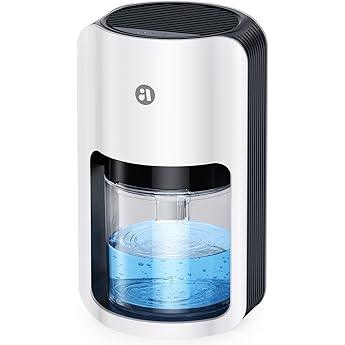
Each type has its sweet spot. Thermoelectric models are perfect for light, quiet duty in small spaces. Refrigerant units deliver serious drying power for steamy bathrooms but require warmer ambient temperatures (above 65°F). Desiccant dehumidifiers excel in chilly environments where compressors struggle. Hybrid systems offer flexibility, while rechargeable silica gel packs are great for targeted moisture control without electricity.
Common Buying Mistakes to Avoid
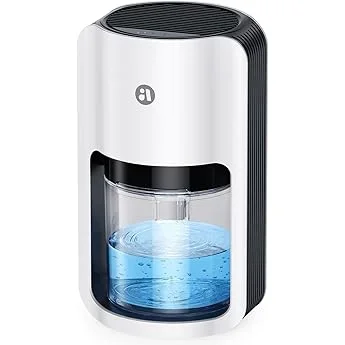
❌ Mistake: Choosing Based Solely on Price
Why it’s bad: The cheapest mini dehumidifiers often use low-quality components, lack safety features, and fail within months. They may also be wildly inefficient, costing more in electricity and replacement than a mid-tier model would have.
What to do instead: Treat price as one factor among many. A $40 unit with auto-shutoff, a 1-liter tank, and UL certification is a smarter investment than a $25 model with no reviews and questionable build quality.
❌ Mistake: Ignoring Room Size and Humidity Level
Why it’s bad: A dehumidifier too small for your bathroom will run constantly, overheat, and fail to reduce humidity effectively. Conversely, an oversized unit may cycle on and off too frequently, wasting energy and wearing out faster.
What to do instead: Measure your bathroom’s square footage and assess your typical humidity. If mirrors stay fogged for hours after showers, you likely need a stronger unit—even if the room is small.
❌ Mistake: Overlooking Tank Emptying Frequency
Why it’s bad: Many buyers are surprised when their “set-it-and-forget-it” dehumidifier stops working because the tank filled up overnight. Manual emptying is a hassle, especially in busy households.
What to do instead: Choose a model with a large enough tank for your usage cycle—or opt for continuous drainage. If you travel often, prioritize units with full-tank auto-shutoff.
❌ Mistake: Assuming All “Mini” Units Are Equal
Why it’s bad: “Mini” is a marketing term, not a technical classification. Some mini dehumidifiers are barely powerful enough for a shoebox, while others rival small room units.
What to do instead: Focus on specs—not labels. Compare PPD, wattage, tank size, and noise level directly between models.
❌ Mistake: Neglecting Ventilation and Source Control
Why it’s bad: A dehumidifier treats symptoms, not causes. If your bathroom lacks an exhaust fan or has poor airflow, moisture will keep returning no matter how good your unit is.
What to do instead: Use the dehumidifier alongside good habits: run exhaust fans during and after showers, keep doors open when possible, and fix any leaks promptly.
❌ Mistake: Buying Without Checking Return Policies
Why it’s bad: Some dehumidifiers perform poorly in real-world conditions despite glowing online reviews. If you can’t return it, you’re stuck with a dud.
What to do instead: Buy from retailers with generous return windows (30+ days) and clear policies. Amazon, Best Buy, and manufacturer websites often offer hassle-free returns.
Budget Guidelines: How Much Should You Spend?
– Entry-Level ($20–$50): Ideal for very small spaces (closets, RVs, tiny powder rooms) or occasional use. Expect thermoelectric operation, small tanks (0.2–0.8L), basic controls, and limited durability. Great for spot treatment but not reliable for daily bathroom humidity control.
– Mid-Range ($50–$100): The sweet spot for most bathroom users. These models typically offer 1–1.5L tanks, auto-shutoff, decent PPD (0.8–1.5), and better build quality. Many include timer functions and improved noise levels. Refrigerant or hybrid units in this range provide solid performance for medium-sized bathrooms.
– Premium ($100–$180): Designed for heavy-duty or continuous use. Expect larger tanks (1.5–2L+), continuous drainage options, smart features (hygrometers, app control), and robust construction. These are best for large master baths, humid climates, or users who want minimal maintenance.
– Luxury ($180+): Top-tier units with advanced automation, Wi-Fi connectivity, ultra-quiet operation, and extended warranties. Often made by specialty brands or designed for commercial/residential hybrid use. Only necessary for extreme conditions or tech enthusiasts.
Expert Tips for Getting the Best Deal
– Buy Off-Season: Dehumidifiers are in highest demand during summer. Shop in fall or winter (October–February) for discounts of 20–30% as retailers clear inventory.
– Check Manufacturer Rebates: Brands like hOmeLabs and Ivation occasionally offer direct rebates or bundle deals (e.g., free replacement filters).
– Use Price Tracking Tools: Set alerts on CamelCamelCamel (for Amazon) or Honey to notify you when prices drop on specific models.
– Consider Refurbished Units: Certified refurbished dehumidifiers from reputable sellers often come with full warranties and cost 30–50% less.
– Read Recent Reviews: Product performance can change with new batches. Focus on reviews from the past 6–12 months.
– Test Before Committing: If possible, run the unit for a week and monitor humidity with a standalone hygrometer. Return it if it doesn’t meet expectations.
– Prioritize Warranty Length: A 2-year warranty signals manufacturer confidence. Avoid brands offering only 90 days unless the price is exceptionally low.
– Bundle with Other Products: Some retailers offer discounts when you buy a dehumidifier with air purifiers, humidifiers, or smart home devices.

Frequently Asked Questions
Q: Can a mini dehumidifier replace a bathroom exhaust fan?
A: No—but it can complement one. Exhaust fans remove moist air directly at the source (during showers), while dehumidifiers treat residual humidity afterward. For best results, use both: run the fan during showers and the dehumidifier afterward.
Q: Will a mini dehumidifier prevent mold?
A: Yes, if used consistently. By keeping relative humidity below 60% (ideally 40–50%), you create an environment where mold spores cannot thrive. Combine with regular cleaning for maximum protection.
Q: How often should I empty the water tank?
A: It depends on humidity levels and tank size. In a typical bathroom, expect to empty a 1-liter tank every 12–24 hours during shower season. Models with auto-shutoff will alert you when full.
Q: Are mini dehumidifiers safe to leave unattended?
A: Yes, if they have auto-shutoff and overheat protection—which all reputable models should. Still, avoid placing them near flammable materials or in standing water.
Q: Do they work in cold bathrooms?
A: Thermoelectric and desiccant models work down to 40–50°F. Refrigerant units lose efficiency below 65°F and may ice up. Choose desiccant for unheated spaces.
Q: Can I use a mini dehumidifier in other rooms?
A: Absolutely! Many users move them between bathroom, bedroom, closet, or basement depending on need. Just clean the filter regularly to prevent cross-contamination.
Q: How do I clean and maintain my dehumidifier?
A: Wipe the exterior with a damp cloth monthly. Clean or replace the air filter every 2–3 months. Empty and rinse the tank weekly to prevent bacterial growth. Never use harsh chemicals.
Q: Are there eco-friendly mini dehumidifiers?
A: Look for models with low global warming potential (GWP) refrigerants, energy-efficient designs, and recyclable packaging. Rechargeable silica gel units are the greenest option.
Q: What’s the difference between relative humidity and absolute humidity?
A: Relative humidity (RH) is what dehumidifiers measure—it’s the amount of moisture in the air compared to what it can hold at that temperature. Absolute humidity is the actual water vapor content. RH is more practical for home use.
Q: Should I run my dehumidifier all the time?
A: Not necessarily. Use auto mode or a timer to run it only when needed (e.g., 2 hours post-shower). Continuous operation wastes energy unless humidity remains consistently high.
Our Final Recommendations
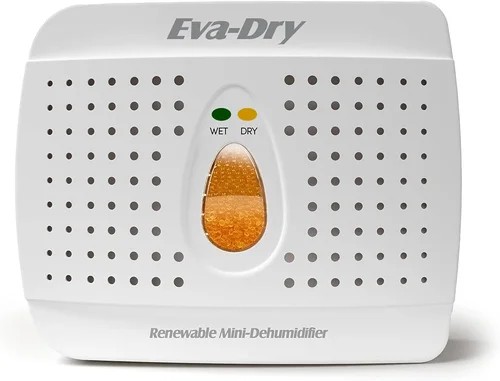
– Best for Budget-Conscious Buyers: Eva-Dry E-333 Renewable Mini Dehumidifier – At under $30, this rechargeable silica gel unit is perfect for small bathrooms or closets. No power needed, silent, and lasts 20–30 days per charge. Ideal for low-maintenance spot drying.
– Best Overall Value: Pro Breeze PB-02 Mini Dehumidifier – Priced around $70, this thermoelectric model offers a 1.8L tank, auto-shutoff, ultra-quiet operation (<35 dB), and reliable performance for bathrooms up to 150 sq ft. Excellent build quality and consistent user reviews. - Best Premium Option: hOmeLabs HME020034N – A compact refrigerant dehumidifier ($130–$150) with 2L tank, continuous drainage, digital hygrometer, and 1.8 PPD capacity. Perfect for large or high-humidity bathrooms. Energy-efficient and backed by a 2-year warranty.
– Best for Beginners: Ivation IVAMD10 Small Room Dehumidifier – Simple controls, 1.8L tank, auto-defrost, and intuitive LED indicators make this $90 unit beginner-friendly. Great for first-time buyers who want plug-and-play reliability.
– Best for Advanced Users: SEAVON 2-in-1 Dehumidifier with Air Purifier – Combines dehumidification (1.8L tank, 1.5 PPD) with HEPA filtration ($120). Features app control, sleep mode, and real-time humidity monitoring. Ideal for users who want smart integration and multi-functionality.
Conclusion: Making the Right Choice
Choosing the best mini dehumidifier for your bathroom isn’t just about picking the most powerful or cheapest option—it’s about matching the right technology, capacity, and features to your specific environment and lifestyle. Whether you’re battling persistent mold in a windowless basement bathroom or simply want to keep your towels dry and your mirror clear, there’s a mini dehumidifier designed for your needs.
Remember to prioritize moisture removal capacity, tank size, noise level, and safety features above all else. Consider your budget wisely: mid-range models often deliver the best balance of performance and value. And don’t forget to pair your dehumidifier with good ventilation habits for lasting results.
Ultimately, the right mini dehumidifier will become an invisible guardian of your home’s air quality—working quietly in the background to protect your health, your belongings, and your peace of mind. Take the time to evaluate your options using the guidelines in this guide, and you’ll invest in a solution that pays dividends in comfort and cleanliness for years to come.