
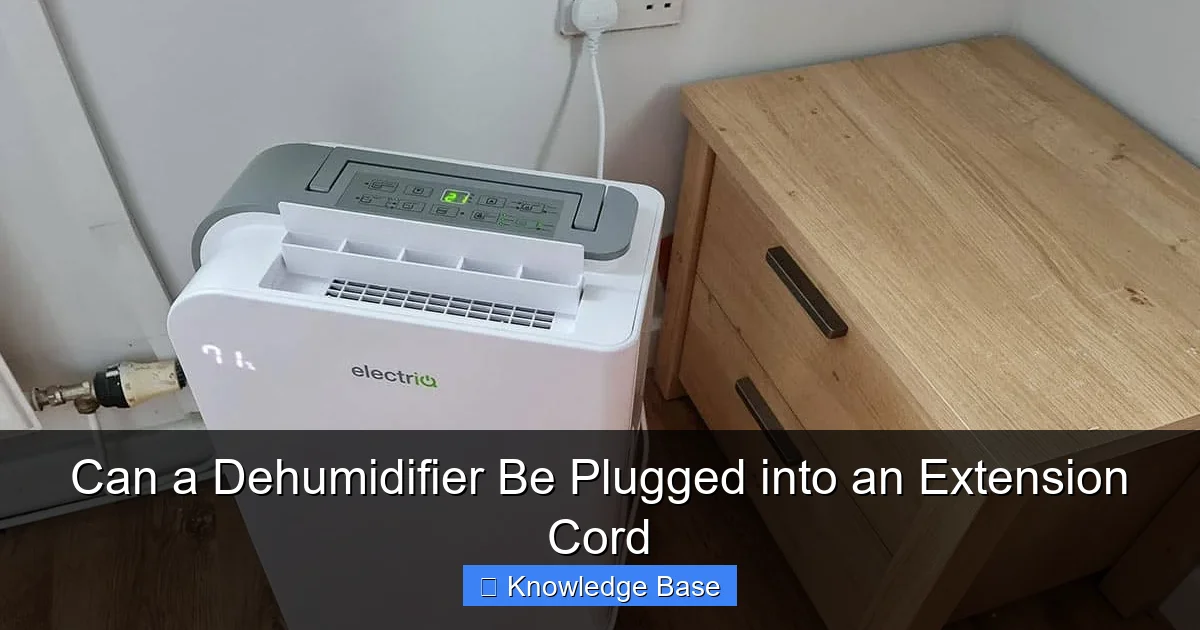
Plugging a dehumidifier into an extension cord is possible but not always safe. While convenient, using the wrong cord can cause overheating, fire hazards, or damage to your unit. Always follow manufacturer guidelines and choose heavy-duty cords rated for high-wattage appliances.
You’ve just bought a shiny new dehumidifier to tackle that musty basement smell or keep your laundry room from feeling like a rainforest. But there’s one problem: the nearest wall outlet is ten feet away, and your dehumidifier’s power cord barely reaches. So you grab that old extension cord from the garage—maybe the one you used for your holiday lights last year—and think, “Can a dehumidifier be plugged into an extension cord?”
It’s a totally reasonable question, and you’re not alone. Many homeowners face this dilemma, especially in older homes with limited outlets or in spaces like basements, crawl spaces, or garages where dehumidifiers are commonly used. The short answer? Yes, you *can* plug a dehumidifier into an extension cord—but only under very specific conditions. Do it wrong, and you could be risking overheating, electrical fires, or even damaging your expensive appliance.
Dehumidifiers aren’t like your phone charger or desk lamp. They’re high-wattage appliances that draw significant electrical current—often between 500 and 1,500 watts, depending on the model and size. That kind of power demand puts stress on wiring, outlets, and especially extension cords not designed for heavy loads. Think of it like trying to water your garden with a drinking straw—it might work for a second, but it’s not built for the job.
In this guide, we’ll walk you through everything you need to know about safely using an extension cord with your dehumidifier. We’ll cover why some cords are safe and others aren’t, how to choose the right one, what the manufacturer says, and when it’s better to just move the outlet or rearrange your space. By the end, you’ll know exactly how to keep your home dry—and safe.
Key Takeaways
- Check the manufacturer’s manual first: Most dehumidifier makers warn against using extension cords unless absolutely necessary and specify approved types.
- Use only heavy-duty, grounded extension cords: Light-duty or indoor-only cords can overheat under the high electrical load of a dehumidifier.
- Match the cord’s amperage and wattage rating: Your extension cord must handle at least the same amperage (usually 10–15 amps) as your dehumidifier draws.
- Avoid daisy-chaining multiple cords: Connecting several extension cords increases resistance and fire risk—use one long, properly rated cord instead.
- Keep cords short and uncoiled: Longer cords increase voltage drop; always fully unroll the cord to prevent heat buildup.
- Inspect cords regularly for damage: Frayed wires, cracked insulation, or loose plugs can lead to shocks or fires—replace damaged cords immediately.
- When in doubt, plug directly into a wall outlet: The safest option is always a dedicated, grounded wall outlet close to your dehumidifier.
Quick Answers to Common Questions
Can I use a regular indoor extension cord for my dehumidifier?
No. Regular indoor cords are too thin and not rated for the high current draw of a dehumidifier, which can lead to overheating and fire.
What gauge extension cord should I use for a 50-pint dehumidifier?
Use at least a 14-gauge cord for distances up to 25 feet, or a 12-gauge cord for longer runs. Check your model’s amperage first.
Is it okay to coil up an extension cord while the dehumidifier is running?
No. Coiling traps heat and can cause the cord to overheat. Always fully unroll the cord during use.
Will using an extension cord void my dehumidifier warranty?
Possibly. Many manufacturers void warranties if improper cords are used. Always check your manual.
Can I plug my dehumidifier into a power strip?
Only if the power strip is heavy-duty, surge-protected, and rated for high-wattage appliances. Most standard power strips are not suitable.
📑 Table of Contents
Why Dehumidifiers Need Special Electrical Considerations
Dehumidifiers work by pulling moist air over cold coils, causing condensation to collect in a tank or drain hose. This process requires a compressor, fan, and sometimes a pump—all of which consume a lot of electricity. Most residential dehumidifiers run on standard 120-volt household circuits, but they can draw anywhere from 3 to 7 amps (or more for large commercial units). That’s comparable to running a microwave, space heater, or vacuum cleaner simultaneously.
Because of this high energy demand, dehumidifiers are classified as “continuous load” appliances. This means they often run for hours at a time—sometimes nonstop during humid seasons. Continuous use generates heat, both inside the unit and in the electrical components supplying power. If that power comes through a weak or undersized extension cord, the cord itself can overheat.
Electrical resistance increases in thinner or longer wires. When current flows through a narrow-gauge wire (like those found in cheap indoor extension cords), the wire heats up. Over time, this heat can melt insulation, degrade connections, and in worst-case scenarios, ignite nearby materials. That’s why the National Electrical Code (NEC) and most appliance manufacturers emphasize using properly rated cords and avoiding unnecessary extensions.
Another factor is voltage drop. The farther electricity travels from the outlet, the more voltage is lost—especially in low-quality or long extension cords. A dehumidifier operating at reduced voltage may struggle to start its compressor, run inefficiently, or cycle on and off unpredictably. This not only reduces performance but can also shorten the lifespan of the motor and other components.
So while it might seem harmless to “just use an extension cord for a few days,” the cumulative risk adds up—particularly if you’re running the dehumidifier daily during summer months. Safety isn’t just about avoiding shocks; it’s about preventing long-term damage to your home’s electrical system and your appliance.
When Is It Safe to Use an Extension Cord?
Not all extension cords are created equal—and not all situations call for one. The key to safe usage lies in understanding your dehumidifier’s power requirements and matching them with the right cord.
First, consult your dehumidifier’s user manual. Most reputable brands (like Frigidaire, hOmeLabs, GE, or Keepsafe) explicitly state whether extension cords are permitted. Many will say something like: “Do not use an extension cord unless it is a heavy-duty, grounded type rated for at least 15 amps.” Some even provide a list of approved cord specifications.
If your manual gives the green light, here’s what you need to look for:
Heavy-Duty, Grounded Cords Only
Never use a lightweight, indoor-only extension cord—the kind with thin wires and two-prong plugs. These are designed for lamps, clocks, or small electronics, not appliances drawing 10+ amps. Instead, opt for a heavy-duty, outdoor-rated extension cord with a three-prong grounded plug. These cords have thicker internal wires (typically 12- or 14-gauge) that handle higher currents without overheating.
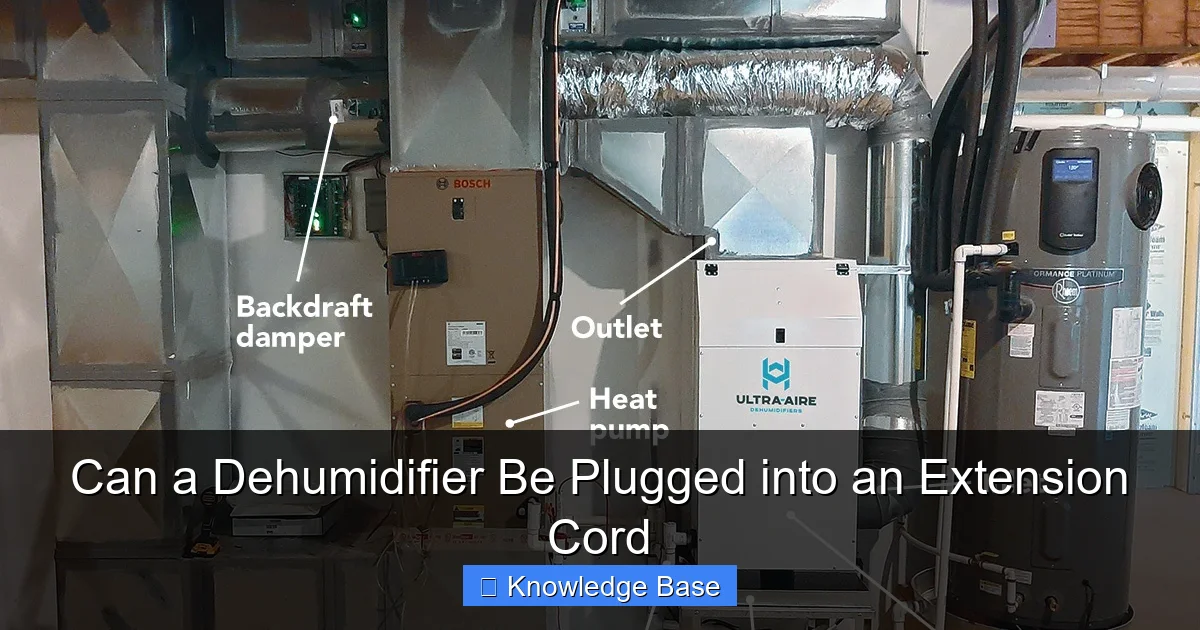
Visual guide about Can a Dehumidifier Be Plugged into an Extension Cord
Image source: s3.amazonaws.com
Correct Wire Gauge Matters
Wire gauge refers to the thickness of the copper wire inside the cord. The lower the gauge number, the thicker the wire. For dehumidifiers:
- 14-gauge: Suitable for cords up to 25 feet long if your dehumidifier draws ≤12 amps.
- 12-gauge: Recommended for longer cords (25–50 feet) or higher-wattage units (13–15 amps).
- Avoid 16- or 18-gauge cords: These are too thin and pose a serious fire risk under continuous load.
You can usually find the gauge printed on the cord’s insulation (e.g., “12/3” means 12-gauge wire with three conductors).
Length Should Be Minimized
Shorter is better. A 6-foot heavy-duty cord is far safer than a 50-foot one, even if both are 12-gauge. Longer cords increase resistance and voltage drop, forcing your dehumidifier to work harder. If you must use a long cord, go one gauge thicker than recommended (e.g., use 10-gauge for a 50-foot run).
Fully Unroll the Cord
Never coil or wrap an extension cord while it’s in use. Coiling traps heat, which can melt insulation and create hotspots. Always lay the cord flat and straight—even if it means rearranging furniture temporarily.
Use a Surge Protector (Optional but Smart)
While not required, plugging your dehumidifier (via a heavy-duty cord) into a high-quality surge protector adds an extra layer of protection against power spikes. Just ensure the surge protector is also rated for high-wattage appliances and has a joule rating of at least 1,000.
Risks of Using the Wrong Extension Cord
Using an incompatible extension cord with your dehumidifier isn’t just inconvenient—it’s dangerous. Here are the most common risks:
Overheating and Fire Hazard
The number one danger is overheating. Thin wires in low-quality cords can’t dissipate heat fast enough when carrying high current. According to the U.S. Fire Administration, electrical distribution systems (including extension cords) cause over 30,000 home fires annually. Many of these start with overloaded or damaged cords.
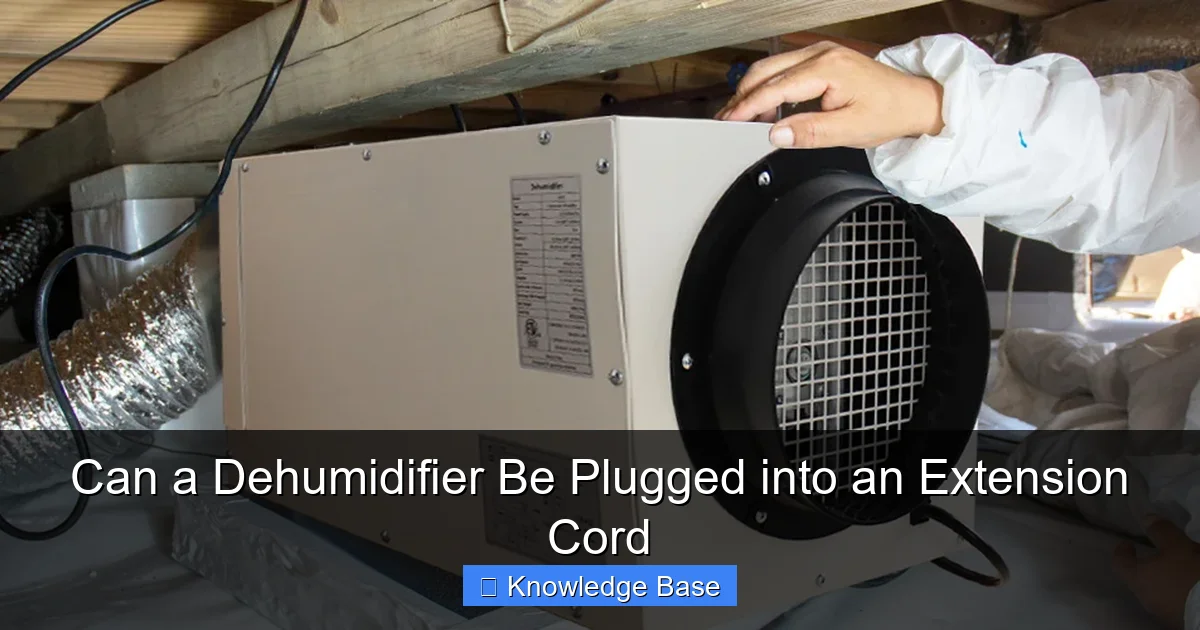
Visual guide about Can a Dehumidifier Be Plugged into an Extension Cord
Image source: preair.com
Reduced Performance and Appliance Damage
A dehumidifier running on insufficient voltage due to a long or undersized cord may fail to start, cycle erratically, or shut off prematurely. Repeated strain on the compressor can lead to premature failure, costing hundreds in repairs or replacement.
Voided Warranty
Most manufacturers will void your warranty if they discover you used an improper extension cord. If your unit breaks down and service techs find scorch marks on a cheap cord or evidence of overheating, you’re likely out of luck.
Tripped Breakers or Blown Fuses
If your extension cord can’t handle the load, it may cause your circuit breaker to trip frequently. While this protects your home, it’s annoying and indicates an underlying electrical mismatch.
Electric Shock Risk
Damaged or poorly insulated cords increase the risk of electric shock, especially in damp environments like basements. Always inspect cords before each use and replace any with frayed wires, cracked casings, or loose plugs.
How to Choose the Right Extension Cord
Choosing the right extension cord isn’t rocket science—but it does require attention to detail. Follow this step-by-step checklist:
Step 1: Check Your Dehumidifier’s Power Rating
Look on the unit’s label or in the manual for “Amps” or “Watts.” Most home dehumidifiers draw 3–7 amps. Multiply amps by voltage (120V) to get watts (e.g., 5 amps × 120V = 600W).
Step 2: Match Cord Rating to Appliance
Your extension cord should be rated for at least the same amperage as your dehumidifier—preferably higher. Look for cords labeled “15A” or “13A minimum.” Avoid anything labeled “for indoor use only” or “light duty.”
Step 3: Select the Correct Gauge and Length
Use this quick reference:
- Up to 25 ft, ≤12A: 14-gauge
- 25–50 ft, ≤15A: 12-gauge
- Over 50 ft or high-wattage units: 10-gauge (rare, but available)
Step 4: Inspect Before Use
Before plugging in, check for:
- Cracks or splits in the outer jacket
- Exposed copper wires
- Loose or bent prongs
- Burn marks or melted spots
If you see any of these, discard the cord immediately.
Step 5: Plug Directly—Don’t Daisy-Chain
Never connect multiple extension cords together (“daisy-chaining”). This increases resistance and creates multiple potential failure points. If you need more length, buy a single, longer heavy-duty cord.
Alternatives to Using an Extension Cord
If you’re hesitant about using an extension cord—or your dehumidifier’s manual strictly prohibits it—consider these safer alternatives:
Relocate the Dehumidifier
Sometimes, the simplest solution is to move the unit closer to an existing outlet. Basement corners, laundry rooms, and garages often have outlets you might not notice. Rearranging storage or furniture can free up space near a wall socket.
Install a New Outlet
If you frequently use high-wattage appliances in a specific area, hire a licensed electrician to install a new grounded outlet. This is a one-time cost that eliminates the need for extension cords altogether and improves overall safety.
Use a Dedicated Circuit
For large dehumidifiers (70-pint or higher), consider having a dedicated 15- or 20-amp circuit installed. This prevents overloading shared circuits and ensures stable power delivery.
Opt for a Model with a Longer Cord
Some dehumidifiers come with extra-long power cords (8–10 feet). If outlet placement is a recurring issue, choose a model designed for flexibility.
Best Practices for Safe Operation
Whether you use an extension cord or not, follow these best practices to keep your dehumidifier running safely:
- Plug directly into a wall outlet whenever possible.
- Use only UL-listed or ETL-certified extension cords.
- Never run cords under rugs, carpets, or furniture.
- Keep cords away from water sources and high-traffic areas.
- Unplug the dehumidifier before cleaning or emptying the tank.
- Schedule annual maintenance to check internal wiring and connections.
Conclusion
So, can a dehumidifier be plugged into an extension cord? Yes—but only if you use a heavy-duty, grounded cord that matches your unit’s power requirements. Lightweight or indoor-only cords are a hard no. Always prioritize safety over convenience. When in doubt, plug directly into a wall outlet or consult a professional electrician.
Remember: your dehumidifier is an investment in your home’s comfort and health. Protect it—and your family—by treating its electrical needs with respect. A few extra minutes spent choosing the right cord or relocating the unit can prevent costly damage, fire hazards, and peace-of-mind headaches down the road.
Stay dry, stay safe, and breathe easy knowing your home is protected the right way.
Frequently Asked Questions
What happens if I use the wrong extension cord?
Using an undersized or low-quality cord can cause overheating, voltage drop, reduced performance, or even electrical fires. It may also damage your dehumidifier or void its warranty.
How do I know if my extension cord is heavy-duty?
Look for labels like “12/3” or “14/3,” a three-prong grounded plug, outdoor rating, and certification from UL or ETL. Heavy-duty cords are usually thicker and more rigid than indoor ones.
Can I use an extension cord temporarily?
Yes, but only if it meets all safety requirements (correct gauge, length, and rating). Temporary use is still risky if the cord isn’t properly rated—don’t assume short-term use is safe.
Should the extension cord be the same length as the dehumidifier’s cord?
Not necessarily, but shorter is better. Aim to minimize total cord length to reduce voltage drop and heat buildup.
Are there dehumidifiers that don’t require extension cords?
Some models come with longer power cords (up to 10 feet). Check product specs before buying if outlet placement is a concern.
What should I do if my extension cord feels warm during use?
Unplug it immediately. A warm cord indicates it’s overloaded or undersized. Replace it with a heavier-gauge cord or plug the dehumidifier directly into a wall outlet.