
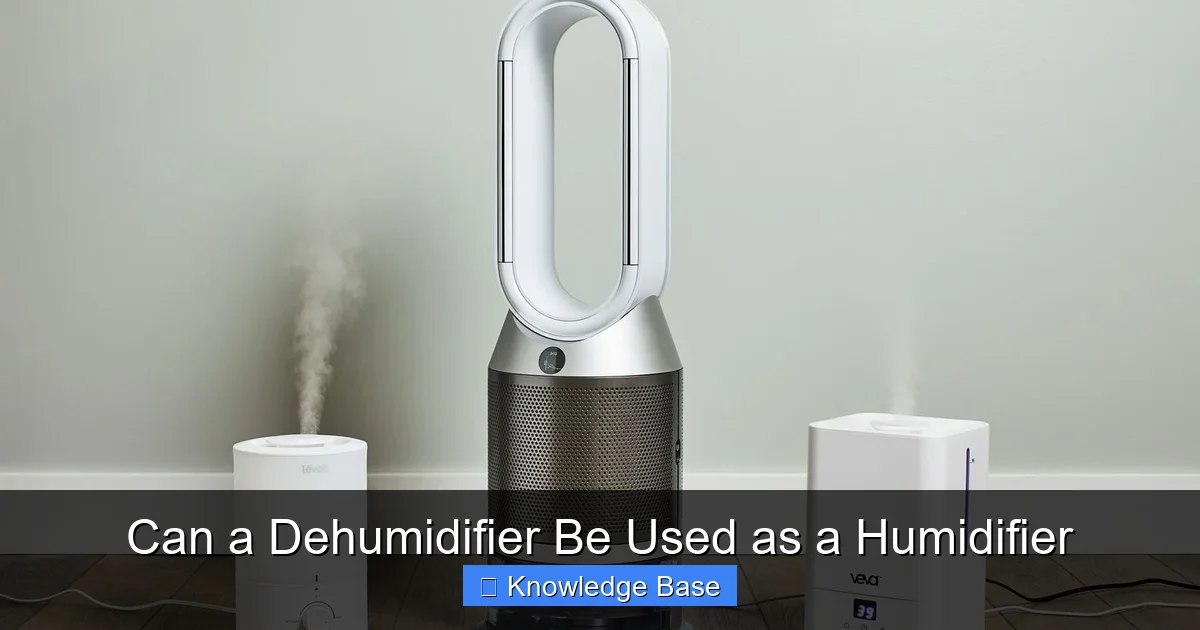
No, a dehumidifier cannot be used as a humidifier. These devices serve opposite purposes—dehumidifiers remove moisture from the air, while humidifiers add moisture. Using one in place of the other won’t work and could damage your device or harm indoor air quality.
Key Takeaways
- Dehumidifiers and humidifiers do opposite jobs: One removes moisture, the other adds it—they’re not interchangeable.
- Mechanisms are fundamentally different: Dehumidifiers use refrigeration or desiccants to pull water from air; humidifiers use evaporation, ultrasonic vibrations, or steam.
- Using a dehumidifier to add moisture won’t work: It lacks the components needed to release water vapor into the air.
- Running a dehumidifier in dry conditions can over-dry the air: This may cause discomfort, dry skin, or respiratory issues.
- Humidity levels should stay between 30–50%: Both devices help maintain this ideal range but in different environments.
- Some combo units exist: A few advanced systems offer both humidifying and dehumidifying functions, but standard units don’t.
- Choosing the right device saves money and improves health: Match the appliance to your climate and indoor air needs.
Quick Answers to Common Questions
Can I run a dehumidifier and humidifier at the same time?
Yes, but only if you have separate zones with different humidity needs (e.g., a damp basement and a dry bedroom). Running both in the same room cancels out their effects and wastes energy.
What happens if I use a dehumidifier in dry air?
It will continue removing moisture, potentially dropping humidity below 30%. This can cause dry skin, respiratory irritation, and static electricity.
Do dehumidifiers use a lot of electricity?
It depends on the model and usage. Energy-efficient units with auto shut-off and humidistats use less power. Look for ENERGY STAR-certified models.
Can a humidifier cause mold?
Yes, if humidity levels exceed 60%. Always monitor with a hygrometer and clean the unit regularly to prevent mold and bacteria growth.
Are there devices that do both humidifying and dehumidifying?
Yes, some whole-home HVAC systems offer both functions, but standalone combo units are rare and expensive. Most homes use separate devices.
📑 Table of Contents
- Can a Dehumidifier Be Used as a Humidifier? The Short Answer
- How Dehumidifiers Work: Removing Moisture from the Air
- How Humidifiers Work: Adding Moisture to Dry Air
- Why You Can’t Use a Dehumidifier as a Humidifier
- When You Might Need Both Devices
- How to Choose the Right Device for Your Home
- Common Myths and Misconceptions
- Final Thoughts: Choose the Right Tool for the Job
Can a Dehumidifier Be Used as a Humidifier? The Short Answer
If you’ve ever walked into a damp basement or felt the sticky air during summer, you’ve probably considered a dehumidifier. On the flip side, if you’ve battled dry skin, static shocks, or a scratchy throat in winter, a humidifier might have crossed your mind. But what if you only have one of these devices? Can a dehumidifier double as a humidifier in a pinch?
The short and simple answer is **no**—a dehumidifier cannot be used as a humidifier. They are designed for completely opposite tasks. While a dehumidifier pulls excess moisture out of the air to prevent mold and musty odors, a humidifier adds moisture to dry indoor air to improve comfort and health. Trying to use one in place of the other won’t just fail—it could even damage the machine or make your indoor air quality worse.
Understanding why these devices aren’t interchangeable starts with knowing how they work. It’s not just about flipping a switch or changing a setting. The internal mechanisms, components, and engineering are built around specific goals. In this article, we’ll explore the science behind both appliances, explain why they can’t swap roles, and help you choose the right solution for your home.
How Dehumidifiers Work: Removing Moisture from the Air

Visual guide about Can a Dehumidifier Be Used as a Humidifier
Image source: housefresh.com
To understand why a dehumidifier can’t act as a humidifier, let’s first look at how dehumidifiers function. These devices are essential in humid climates, basements, laundry rooms, and any space where moisture builds up. Their job is to reduce relative humidity—ideally keeping it between 30% and 50%—to prevent mold, dust mites, and structural damage.
The Refrigeration Process
Most household dehumidifiers use a refrigeration-based system, similar to an air conditioner. Here’s how it works step by step:
1. **Air Intake:** A fan pulls humid indoor air into the dehumidifier through an intake vent.
2. **Cooling Coils:** The air passes over cold evaporator coils. As the air cools, its ability to hold moisture drops, causing water vapor to condense into liquid droplets.
3. **Water Collection:** The condensed water drips into a built-in collection tank or drains out through a hose.
4. **Reheating:** The now-dry air passes over warm condenser coils, which reheat it to room temperature.
5. **Air Output:** The dry, warm air is released back into the room.
This cycle repeats continuously until the desired humidity level is reached, usually controlled by a built-in humidistat.
Desiccant Dehumidifiers: An Alternative Method
Not all dehumidifiers use refrigeration. Some, especially compact or portable models, use a desiccant—a moisture-absorbing material like silica gel. These units work differently:
– Humid air passes over a rotating desiccant wheel that absorbs moisture.
– A separate heating element warms the wheel to release the trapped water, which is then collected.
– The dry air is circulated back into the room.
Desiccant dehumidifiers are often quieter and work better in colder temperatures, but they still only remove moisture—they don’t add it.
What Dehumidifiers Can and Cannot Do
Dehumidifiers are excellent at:
– Reducing mold and mildew growth
– Preventing musty smells
– Protecting furniture, books, and electronics from moisture damage
– Improving air quality in damp areas
But they cannot:
– Add moisture to dry air
– Increase humidity levels
– Function as a humidifier under any circumstances
Even if you try to modify a dehumidifier—say, by adding water to the tank and hoping it evaporates—it won’t work. The system isn’t designed to release moisture back into the air. In fact, doing so could cause leaks, electrical issues, or mold growth inside the unit.
How Humidifiers Work: Adding Moisture to Dry Air
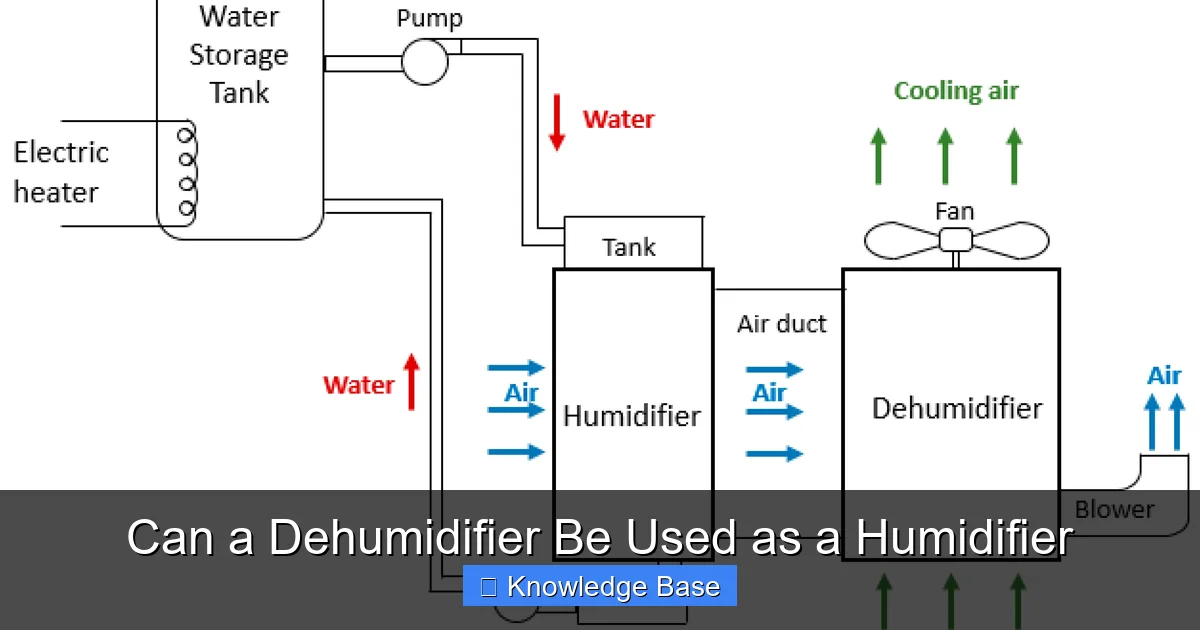
Visual guide about Can a Dehumidifier Be Used as a Humidifier
Image source: pub.mdpi-res.com
Now let’s flip the script and look at humidifiers. These devices are common in dry climates, during winter months, or in homes with forced-air heating systems that dry out indoor air. Their goal is to increase humidity to a comfortable and healthy level.
Types of Humidifiers and Their Mechanisms
There are several types of humidifiers, each using a different method to add moisture:
Evaporative Humidifiers
These are the most common and affordable. They use a fan to blow air through a wet wick or filter. As air passes through, water evaporates naturally and is released into the room. The process is self-regulating—the drier the air, the faster the evaporation.
Ultrasonic Humidifiers
These use high-frequency vibrations (ultrasound) to create a fine mist of water droplets. A small metal diaphragm vibrates rapidly, breaking water into tiny particles that float into the air. They’re quiet and energy-efficient, but can leave white dust if you use hard water.
Steam Vaporizers (Warm Mist Humidifiers)
These boil water to produce steam, which cools slightly before exiting the unit. They’re effective and kill bacteria in the water, but use more energy and can pose a burn risk if not handled carefully.
Impeller Humidifiers
Similar to ultrasonic models, impeller humidifiers use a rotating disk to fling water at a diffuser, breaking it into droplets. They’re safe for children and pets since they don’t use heat.
Why Humidifiers Are Essential in Dry Conditions
Dry indoor air can cause a range of problems:
– Dry skin, lips, and eyes
– Irritated nasal passages and throat
– Increased susceptibility to colds and respiratory infections
– Static electricity and damage to wooden furniture or musical instruments
Humidifiers help by adding moisture back into the air, making breathing easier and improving overall comfort. However, they must be used correctly. Over-humidifying can lead to condensation, mold, and dust mites—so it’s important to monitor humidity levels with a hygrometer.
Why You Can’t Use a Dehumidifier as a Humidifier
At this point, it should be clear: dehumidifiers and humidifiers are built for opposite purposes. But let’s dig deeper into why you can’t just “repurpose” a dehumidifier to add moisture.
Fundamental Design Differences
The core issue lies in the design and function of each device:
– **Dehumidifiers remove water.** They extract moisture from the air and store it in a tank. They don’t have a mechanism to release water vapor back into the room.
– **Humidifiers add water.** They take water from a reservoir and disperse it as mist or steam. They don’t collect or remove moisture.
Trying to use a dehumidifier to humidify would be like using a vacuum cleaner to blow air—it’s not what it’s built for.
No Water Release System
Even if you fill a dehumidifier’s tank with water, the unit won’t release it into the air. The fan blows air *over* the coils to dry it, not *through* water to moisten it. There’s no nozzle, misting mechanism, or evaporation chamber designed to add humidity.
In fact, adding extra water could cause:
– Leaks from overfilling
– Electrical shorts if water reaches internal components
– Mold or bacteria growth in stagnant water
Energy Waste and Inefficiency
Running a dehumidifier in a dry environment doesn’t just fail to add moisture—it actively removes what little humidity exists. This can drop indoor humidity below 30%, leading to:
– Dry, itchy skin
– Cracked lips and nasal passages
– Increased static electricity
– Respiratory discomfort
You’d be spending money on electricity to make the air *drier*, which is the opposite of what you want.
Potential Damage to the Unit
Dehumidifiers aren’t designed to operate in very dry conditions. Running one when humidity is already low can cause the coils to freeze (in refrigeration models) or the desiccant to overwork. This may shorten the lifespan of the unit or lead to costly repairs.
When You Might Need Both Devices
While a single dehumidifier can’t double as a humidifier, there are situations where you might need both—depending on the season, climate, or indoor conditions.
Seasonal Changes
In many regions, humidity levels fluctuate dramatically:
– **Summer:** High outdoor humidity leads to damp basements, sticky air, and mold risk. A dehumidifier is essential.
– **Winter:** Indoor heating dries out the air, causing dry skin and respiratory issues. A humidifier becomes necessary.
Owning both devices allows you to maintain optimal humidity year-round.
Regional Climate Differences
– **Humid Climates (e.g., Southeast U.S., coastal areas):** Dehumidifiers are often needed year-round to combat constant moisture.
– **Dry Climates (e.g., Southwest U.S., mountainous regions):** Humidifiers are more common, especially in winter.
– **Temperate Climates:** You may need both, switching between them as seasons change.
Special Indoor Environments
Certain spaces have unique humidity needs:
– **Basements:** Often damp—require dehumidifiers.
– **Nurseries or bedrooms:** May need humidifiers to soothe baby’s breathing or reduce snoring.
– **Art studios or libraries:** Require stable humidity to protect sensitive materials.
Combo Units: The Exception to the Rule
While standard dehumidifiers can’t act as humidifiers, some advanced HVAC systems or whole-home units offer both functions. These combo systems use separate components to add or remove moisture as needed, often controlled by a smart thermostat.
However, these are expensive and typically installed by professionals. For most homeowners, buying separate units is more practical and cost-effective.
How to Choose the Right Device for Your Home
Now that you know a dehumidifier can’t replace a humidifier, how do you decide which one (or both) you need?
Step 1: Measure Your Indoor Humidity
Use a hygrometer (a small, inexpensive device) to check humidity levels in different rooms. Ideal indoor humidity is between 30% and 50%.
– Below 30%: You likely need a humidifier.
– Above 50%: A dehumidifier may be necessary.
Check multiple times a day and in different seasons, as levels can vary.
Step 2: Assess Your Climate and Home Type
– **Live in a humid area?** Invest in a dehumidifier, especially for basements or crawl spaces.
– **Have dry winters or use central heating?** A humidifier can improve comfort.
– **Own a large home?** Consider whole-house systems or multiple portable units.
Step 3: Consider Room Size and Features
– **Capacity:** Choose a unit rated for your room size (measured in pints per day for dehumidifiers, or output in gallons per day for humidifiers).
– **Tank Size:** Larger tanks mean less frequent emptying.
– **Auto Shut-Off:** Prevents overflow when the tank is full.
– **Humidistat:** Allows you to set and maintain a target humidity level.
– **Filters:** Some models include air filters to improve air quality.
Step 4: Maintain Your Devices
Proper maintenance ensures efficiency and longevity:
– **Clean tanks and filters regularly** to prevent mold and bacteria.
– **Use distilled water** in humidifiers to reduce mineral buildup.
– **Empty dehumidifier tanks** or connect a drain hose for continuous use.
– **Replace filters** as recommended by the manufacturer.
Step 5: Use Smart Controls
Many modern units come with timers, remote controls, or app connectivity. These let you adjust settings based on time of day or weather, helping you maintain ideal humidity without constant monitoring.
Common Myths and Misconceptions
Despite clear differences, some myths persist about dehumidifiers and humidifiers. Let’s clear them up.
Myth 1: “I Can Modify a Dehumidifier to Work as a Humidifier”
Some people think adding water to the tank or reversing the airflow could make a dehumidifier add moisture. This is not only ineffective but dangerous. It can damage the unit, cause leaks, or create electrical hazards.
Myth 2: “All Air Moisture Devices Are Interchangeable”
While both devices affect humidity, they do so in opposite ways. You can’t substitute one for the other any more than you can use a heater as an air conditioner.
Myth 3: “More Humidity Is Always Better”
Too much humidity (above 60%) promotes mold, dust mites, and bacteria. Balance is key. Use a hygrometer to monitor levels and adjust your devices accordingly.
Myth 4: “Humidifiers Are Only for Winter”
While dry winter air is a common trigger, humidifiers can be useful year-round in dry climates or air-conditioned homes that remove moisture.
Final Thoughts: Choose the Right Tool for the Job
So, can a dehumidifier be used as a humidifier? The answer remains a firm **no**. These devices are engineered for opposite purposes, with different mechanisms, components, and outcomes. Using one in place of the other won’t work and could lead to wasted energy, damaged equipment, or poor indoor air quality.
Instead, focus on understanding your home’s humidity needs. Use a hygrometer to monitor levels, consider your climate and season, and choose the right device—or both—for optimal comfort and health. Whether you’re fighting summer dampness or winter dryness, the right appliance makes all the difference.
Investing in the correct tool not only improves your living environment but also protects your home and health. And remember: when it comes to air quality, balance is everything.
Frequently Asked Questions
Can a dehumidifier add moisture to the air?
No, a dehumidifier cannot add moisture. It is designed to remove water vapor from the air through condensation or absorption. It has no mechanism to release moisture back into the room.
Is it safe to run a dehumidifier in a dry room?
It’s not recommended. Running a dehumidifier in already dry air can over-dry the environment, leading to discomfort, dry skin, and respiratory issues. Use a hygrometer to check humidity levels first.
What’s the ideal indoor humidity level?
The ideal range is between 30% and 50%. Levels below 30% are too dry, while levels above 50% can promote mold and dust mites.
Can I use a humidifier in the summer?
Generally, no—summer air is usually more humid. However, in dry climates or heavily air-conditioned homes, a humidifier may still be beneficial.
Do I need both a humidifier and a dehumidifier?
It depends on your climate and home. Many people use a dehumidifier in summer and a humidifier in winter. Assess your seasonal humidity levels to decide.
How often should I clean my humidifier or dehumidifier?
Clean your humidifier every 3–7 days to prevent mold and bacteria. Dehumidifiers should be cleaned monthly, with filters replaced as needed.