
While a dehumidifier can make a room feel cooler by reducing humidity, it is not a replacement for an air conditioner. It doesn’t lower air temperature like an AC unit, but it can improve comfort in damp environments. Understanding how each device works helps you choose the right solution for your home.
Key Takeaways
- Dehumidifiers reduce moisture, not temperature: They remove excess humidity from the air, which can make a room feel more comfortable, but they do not cool the air like an air conditioner.
- Air conditioners cool and dehumidify: AC units lower both temperature and humidity by circulating refrigerant and expelling heat outside.
- Dehumidifiers generate heat: The process of removing moisture releases heat, which can slightly increase room temperature.
- Best for humid climates: Dehumidifiers are ideal in damp areas like basements or during humid seasons, but not for hot, dry heat.
- Energy efficiency varies: Dehumidifiers use less energy than ACs but are not designed for large-scale cooling.
- Complementary use is effective: Using a dehumidifier alongside an air conditioner can improve efficiency and comfort.
- Not a standalone cooling solution: Relying solely on a dehumidifier for cooling in hot weather is ineffective and impractical.
Quick Answers to Common Questions
Can a dehumidifier cool a room?
No, a dehumidifier does not cool the air. It removes moisture, which can make a room feel more comfortable, but it does not lower the temperature.
Does a dehumidifier use a lot of electricity?
Dehumidifiers typically use 300–700 watts, which is less than most air conditioners. Energy use depends on size, humidity levels, and runtime.
Can I run a dehumidifier and air conditioner at the same time?
Yes, and it’s often beneficial. The dehumidifier reduces moisture, allowing the AC to cool more efficiently.
Is a dehumidifier good for basements?
Yes, dehumidifiers are ideal for basements, which are prone to high humidity, mold, and musty odors.
Will a dehumidifier help with allergies?
Yes, by reducing humidity, it helps prevent mold, dust mites, and other allergens, improving indoor air quality.
📑 Table of Contents
- Can a Dehumidifier Be Used as an Air Conditioner?
- How Does a Dehumidifier Work?
- How Does an Air Conditioner Work?
- Key Differences Between Dehumidifiers and Air Conditioners
- Can a Dehumidifier Make a Room Feel Cooler?
- Should You Use a Dehumidifier with an Air Conditioner?
- When a Dehumidifier Alone Isn’t Enough
- Conclusion
Can a Dehumidifier Be Used as an Air Conditioner?
If you’ve ever walked into a damp basement or a sticky living room during summer, you know how uncomfortable high humidity can be. The air feels thick, clothes stick to your skin, and even a slight breeze doesn’t help. In such moments, you might wonder: *Can I just use my dehumidifier to cool down the room?* After all, it’s running, making noise, and pulling moisture out of the air—surely that counts for something, right?
The short answer is: not really. While a dehumidifier can make a room *feel* cooler by reducing humidity, it is not designed to function as an air conditioner. Air conditioners and dehumidifiers serve different purposes, even though they both affect indoor air quality and comfort. Understanding the differences between these two appliances is key to creating a comfortable, healthy home environment—especially during the sweltering summer months.
In this article, we’ll dive deep into how dehumidifiers and air conditioners work, why one can’t fully replace the other, and when it makes sense to use them together. Whether you’re dealing with a muggy basement, a small apartment without central AC, or just trying to save on energy bills, this guide will help you make smart, informed decisions about your indoor climate control.
How Does a Dehumidifier Work?

Visual guide about Can a Dehumidifier Be Used as an Air Conditioner
Image source: i.pinimg.com
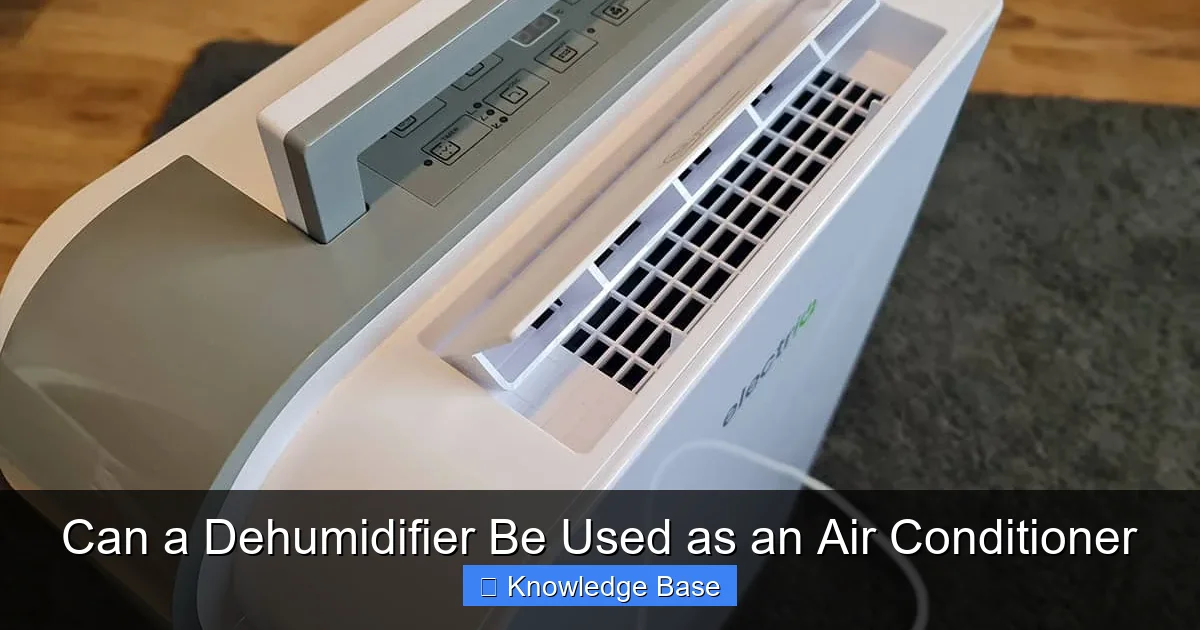
To understand whether a dehumidifier can act as an air conditioner, we first need to know how it operates. At its core, a dehumidifier is designed to reduce the amount of moisture in the air. It does this by pulling in humid air, removing the water vapor, and then releasing drier air back into the room.
The Basic Mechanics of a Dehumidifier
Most residential dehumidifiers use a refrigeration-based system, similar in principle to an air conditioner or refrigerator. Here’s a step-by-step breakdown:
1. **Air Intake:** A fan draws warm, humid air from the room into the dehumidifier.
2. **Cooling Coils:** The air passes over cold evaporator coils. As the air cools, its ability to hold moisture decreases, causing water vapor to condense into liquid droplets.
3. **Water Collection:** The condensed water drips into a built-in collection tank or is drained directly via a hose.
4. **Reheating:** The now-dry air passes over warm condenser coils, where it is reheated to near its original temperature.
5. **Air Output:** The drier, slightly warmer air is blown back into the room.
This cycle repeats continuously until the desired humidity level is reached, typically set between 30% and 50% on most models.
Types of Dehumidifiers
There are two main types of dehumidifiers: refrigerant (compressor-based) and desiccant.
– **Refrigerant Dehumidifiers:** These are the most common and work best in warm, humid environments (above 65°F). They use a compressor and refrigerant gas to cool the coils, making them efficient for typical home use.
– **Desiccant Dehumidifiers:** These use a moisture-absorbing material (like silica gel) to pull water from the air. They work well in cooler temperatures and are often used in basements or garages. However, they tend to be less energy-efficient and can produce more heat.
Both types remove moisture, but neither lowers the actual air temperature. In fact, because the dehumidifier reheats the air before releasing it, the room may feel slightly warmer—not cooler.
Energy Use and Heat Output
One important thing to note is that dehumidifiers generate heat as a byproduct of their operation. The compressor and fan motors produce heat, and the reheating process adds even more. This means that while the air feels less sticky, the room’s overall temperature may actually increase slightly.
For example, if you run a 50-pint dehumidifier in a small, enclosed space like a basement, you might notice the temperature rising by a degree or two over time. This is normal and expected—but it’s the opposite of what an air conditioner does.
How Does an Air Conditioner Work?
Visual guide about Can a Dehumidifier Be Used as an Air Conditioner
Image source: thehumidistat.com
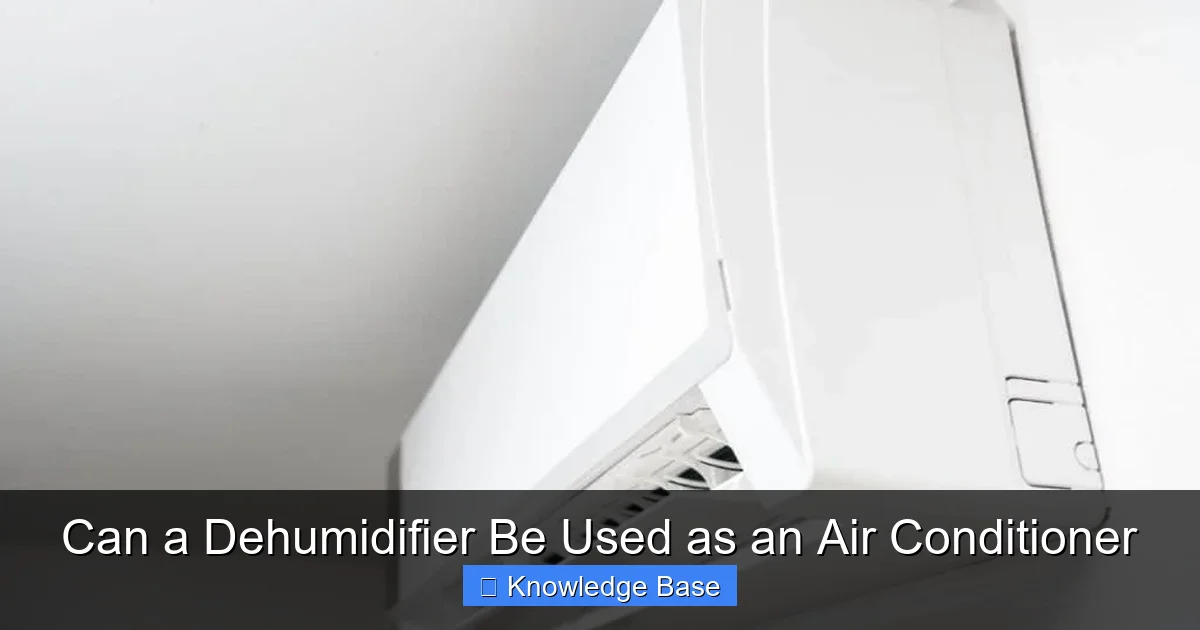
Now let’s look at the air conditioner—the device most people rely on to stay cool during hot weather. Unlike a dehumidifier, an air conditioner is specifically designed to lower air temperature. But it also removes humidity as a side effect, which adds to the comfort.
The Cooling Cycle Explained
An air conditioner uses a closed-loop refrigeration system to transfer heat from inside your home to the outside. Here’s how it works:
1. **Indoor Unit (Evaporator):** Warm indoor air is drawn over cold evaporator coils. As the air cools, moisture condenses and is drained away (this is why you see water dripping from window AC units).
2. **Refrigerant Circulation:** A refrigerant gas absorbs heat from the indoor air and becomes a low-pressure vapor.
3. **Compressor:** The vapor is sent to the compressor (usually in the outdoor unit), where it’s pressurized and heated.
4. **Outdoor Unit (Condenser):** The hot, high-pressure gas flows to the condenser coils, where it releases heat to the outside air and condenses back into a liquid.
5. **Expansion Valve:** The liquid refrigerant passes through an expansion valve, which reduces its pressure and temperature, preparing it to absorb heat again.
This cycle continuously removes heat from your home, lowering both temperature and humidity.
Types of Air Conditioners
There are several types of air conditioning systems, each suited to different needs:
– **Central Air Conditioning:** Uses ductwork to cool entire homes. Most efficient for large spaces.
– **Window Units:** Self-contained units installed in windows. Good for single rooms.
– **Portable Air Conditioners:** Mobile units that vent hot air through a window hose. Convenient but less efficient.
– **Split Systems (Mini-Split):** No ducts required; ideal for homes without existing ductwork.
– **Evaporative Coolers (Swamp Coolers):** Use water evaporation to cool air. Best in dry climates.
All of these systems actively cool the air, unlike dehumidifiers.
Dehumidification as a Byproduct
While cooling is the primary goal of an air conditioner, dehumidification happens naturally during the process. As warm air passes over the cold evaporator coils, moisture condenses and is removed. This is why you often see water dripping from AC units or draining into a pan.
In fact, a typical central AC system can remove several gallons of water per day during humid weather. This dual function—cooling and dehumidifying—is what makes air conditioners so effective at improving indoor comfort.
Key Differences Between Dehumidifiers and Air Conditioners
Now that we understand how both devices work, let’s compare them side by side. This will help clarify why a dehumidifier can’t truly replace an air conditioner.
Primary Function
– **Dehumidifier:** Removes moisture from the air to reduce humidity levels.
– **Air Conditioner:** Lowers air temperature by removing heat from indoor spaces.
These are fundamentally different goals. One targets humidity; the other targets temperature.
Effect on Room Temperature
– **Dehumidifier:** Does not cool the air. In fact, it may slightly increase room temperature due to heat generated by the compressor and reheating process.
– **Air Conditioner:** Actively cools the air by extracting heat and expelling it outside.
This is the most critical difference. If your goal is to lower the temperature, a dehumidifier won’t help—and might even work against you.
Humidity Control
– **Dehumidifier:** Excellent at reducing humidity, especially in damp areas like basements, crawl spaces, or laundry rooms.
– **Air Conditioner:** Also reduces humidity, but less efficiently in very humid conditions. Some high-end models have enhanced dehumidification modes.
In extremely humid climates, an air conditioner alone may not be enough to control moisture. That’s where a dehumidifier can complement the system.
Energy Consumption
– **Dehumidifier:** Typically uses 300–700 watts, depending on size and efficiency. Energy use depends on humidity levels and runtime.
– **Air Conditioner:** Uses significantly more energy—window units can use 500–1500 watts, while central systems use several thousand watts.
While dehumidifiers are generally more energy-efficient than ACs, they are not designed for cooling. Running a dehumidifier in hopes of cooling a room is inefficient and ineffective.
Installation and Portability
– **Dehumidifier:** Usually portable, with a water tank or drain hose. Easy to move from room to room.
– **Air Conditioner:** Varies by type. Window and portable units are movable; central and split systems are permanent installations.
Portability can be an advantage for dehumidifiers, but again, this doesn’t make them suitable for cooling.
Best Use Cases
– **Dehumidifier:** Ideal for damp environments, preventing mold, mildew, and musty odors. Great for basements, RVs, or during rainy seasons.
– **Air Conditioner:** Best for hot weather, providing relief from high temperatures and improving overall comfort.
Using the right tool for the job ensures better performance and energy efficiency.
Can a Dehumidifier Make a Room Feel Cooler?
Here’s where things get interesting. Even though a dehumidifier doesn’t lower air temperature, it can make a room *feel* cooler. This is due to how our bodies perceive comfort in relation to humidity.
The Science of Perceived Temperature
Our bodies cool themselves through sweat evaporation. When the air is humid, sweat doesn’t evaporate easily, making us feel hotter and stickier. This is why a 75°F room can feel uncomfortable in high humidity but pleasant in dry air.
By reducing humidity, a dehumidifier improves the rate of sweat evaporation, which can make you feel cooler—even if the thermometer hasn’t changed. This effect is known as the “wet-bulb temperature” effect and is a key factor in human thermal comfort.
For example, if the air temperature is 80°F with 80% humidity, it can feel like 87°F. But if you reduce the humidity to 50%, it might feel closer to 82°F—noticeably more comfortable.
When It Works Best
This perceived cooling effect is most noticeable in:
– Humid climates (like the southeastern U.S. or tropical regions)
– Damp indoor spaces (basements, bathrooms, laundry rooms)
– During shoulder seasons (spring and fall) when temperatures are mild but humidity is high
In these situations, running a dehumidifier can improve comfort without needing to turn on the AC.
Limitations and Misconceptions
However, there are limits. In hot, dry climates (like deserts), humidity is already low, so a dehumidifier won’t make much difference. And in extreme heat, no amount of dehumidification will compensate for the lack of actual cooling.
Also, remember that dehumidifiers add heat to the room. In a small, poorly ventilated space, this can offset any comfort gains from lower humidity.
Should You Use a Dehumidifier with an Air Conditioner?
While a dehumidifier can’t replace an air conditioner, it can work alongside one to improve efficiency and comfort. This is especially true in humid climates or during peak summer months.
Improved AC Efficiency
When humidity is high, your air conditioner has to work harder. It spends extra energy removing moisture before it can effectively cool the air. This is called “sensible cooling” vs. “latent cooling.”
By using a dehumidifier to handle the moisture load, your AC can focus on lowering temperature. This can lead to:
– Faster cooling
– Lower energy bills
– Reduced strain on the AC system
– Longer equipment lifespan
For example, in a humid basement apartment, running a dehumidifier during the day can reduce the humidity so that when you turn on the window AC in the evening, it cools the room more quickly and efficiently.
Enhanced Comfort
Even with the AC running, high humidity can leave you feeling clammy. A dehumidifier helps maintain optimal humidity levels (around 40–50%), making the cooled air feel fresher and more comfortable.
This is especially helpful in homes with poor insulation, large windows, or high occupancy—factors that can increase indoor moisture.
Preventing Mold and Allergens
Excess humidity promotes mold growth, dust mites, and other allergens. By keeping humidity in check, a dehumidifier improves indoor air quality and reduces health risks.
This is particularly important for people with asthma, allergies, or respiratory conditions.
Practical Tips for Combined Use
– **Run the dehumidifier during off-peak hours:** Use it in the morning or when the AC is off to reduce humidity before cooling.
– **Place it strategically:** Put the dehumidifier in the most humid area (e.g., basement) and the AC where you spend the most time.
– **Use a hygrometer:** Monitor humidity levels to avoid over-drying the air (below 30% can cause dry skin and static).
– **Maintain both units:** Clean filters, empty water tanks, and ensure proper ventilation for optimal performance.
When a Dehumidifier Alone Isn’t Enough
Despite its benefits, there are clear situations where a dehumidifier simply can’t do the job of an air conditioner.
Hot Weather Conditions
On a 95°F summer day, no amount of dehumidification will make you feel cool. Your body needs actual temperature reduction to stay comfortable and safe. Relying on a dehumidifier in extreme heat can lead to heat exhaustion or heat stroke.
Large Living Spaces
Dehumidifiers are designed for specific room sizes (e.g., 30-pint for 500 sq ft). They can’t handle the cooling demands of an entire house. Even the largest residential models won’t make a dent in a 2,000-square-foot home during a heatwave.
Lack of Air Circulation
Dehumidifiers don’t move air around like fans or ACs. They sit in one spot and process air slowly. Without proper airflow, the benefits are limited to a small area.
Energy Inefficiency for Cooling
Using a dehumidifier to “cool” a room is like using a space heater to dry clothes—it might work indirectly, but it’s not efficient. You’ll spend more on electricity for minimal comfort gains.
Conclusion
So, can a dehumidifier be used as an air conditioner? The answer is a clear **no**—but that doesn’t mean it’s useless. A dehumidifier is a powerful tool for managing humidity, improving air quality, and enhancing comfort in damp environments. It can make a room feel cooler by reducing moisture, but it won’t lower the actual temperature like an air conditioner.
Understanding the differences between these devices helps you use them effectively. In humid climates, combining a dehumidifier with an air conditioner can boost efficiency and comfort. But in hot weather, you’ll still need proper cooling to stay safe and comfortable.
Think of it this way: a dehumidifier is like a sponge for moisture, while an air conditioner is like a heat pump. They serve different purposes, but when used together, they create a healthier, more comfortable home.
If you’re dealing with high humidity, consider investing in a quality dehumidifier. But don’t expect it to replace your AC—especially when the temperature soars. For true cooling, nothing beats a properly sized and maintained air conditioning system.
Frequently Asked Questions
Can a dehumidifier replace an air conditioner?
No, a dehumidifier cannot replace an air conditioner. It reduces humidity but does not cool the air. For temperature control, an AC is necessary.
Does a dehumidifier make the room hotter?
Yes, slightly. The process of removing moisture generates heat, which can increase room temperature by a small amount.
How often should I empty a dehumidifier’s water tank?
It depends on humidity levels and tank size. Most models need emptying every 12–24 hours. Some have continuous drain options.
Can I use a dehumidifier in winter?
Yes, especially in damp areas like basements. Desiccant dehumidifiers work better in cold temperatures than refrigerant models.
What humidity level should I maintain at home?
Ideal indoor humidity is between 30% and 50%. Use a hygrometer to monitor levels and adjust your dehumidifier accordingly.
Are dehumidifiers noisy?
Most produce a low hum from the fan and compressor. Noise levels vary by model, but many are quiet enough for bedrooms or living areas.