

Using a dehumidifier is generally safe and beneficial for indoor air quality, but improper use can sometimes contribute to cracking in certain materials. This article explores the science behind humidity, building materials, and how to use dehumidifiers responsibly to avoid unintended damage.
Key Takeaways
- Dehumidifiers reduce excess moisture but can cause dryness-related cracks if overused. Over-drying indoor air may shrink wood, plaster, or concrete over time.
- Cracks from dehumidifiers are rare and usually result from extreme settings or poor maintenance. Most modern units have auto-humidity controls to prevent this.
- Wooden structures and finishes are most vulnerable to low humidity. Furniture, flooring, and trim can warp or split when air becomes too dry.
- Proper humidity levels (30–50%) protect both your home and your health. This range prevents mold growth without over-drying materials.
- Regular monitoring with a hygrometer helps avoid over-dehumidification. Check humidity levels weekly, especially in basements and crawl spaces.
- Seasonal adjustments are key—use dehumidifiers more in summer, less in winter. Indoor humidity needs change with outdoor weather and heating systems.
- Proper placement and sizing of the dehumidifier matter. An undersized unit won’t work well; an oversized one may cycle too aggressively.
Quick Answers to Common Questions
Can a dehumidifier crack walls?
Yes, but only if it dries the air too much over time. Extremely low humidity can shrink plaster or drywall, leading to hairline cracks—especially in older homes.
What humidity level is safe to prevent cracks?
Keep indoor humidity between 30% and 50%. Below 30%, wood and plaster may dry out and crack; above 50%, mold can grow.
Should I run a dehumidifier in winter?
Generally, no—unless you have a damp basement or crawl space. Winter air is already dry, and heating systems reduce humidity further.
How do I know if my dehumidifier is too strong?
If humidity drops below 30%, static shocks increase, or wood gaps appear, your unit may be oversized or set too low.
Can I fix cracks caused by low humidity?
Small cracks can be filled with wood filler or spackle, but preventing future drying is key. Adjust your dehumidifier and monitor humidity levels.
📑 Table of Contents
- Can a Dehumidifier Cause Cracks? Understanding the Risks and Realities
- How Humidity Affects Building Materials
- When Can a Dehumidifier Actually Cause Cracks?
- How to Use a Dehumidifier Safely and Prevent Cracks
- Signs Your Dehumidifier Might Be Causing Problems
- Myths vs. Facts: Debunking Common Misconceptions
- When to Call a Professional
- Conclusion: Smart Use Prevents Problems
Can a Dehumidifier Cause Cracks? Understanding the Risks and Realities
If you’ve ever lived in a damp basement or noticed musty smells in your home, you’ve probably considered a dehumidifier. These handy appliances pull excess moisture from the air, helping prevent mold, mildew, and musty odors. They’re especially useful in humid climates, during rainy seasons, or in homes with poor ventilation. But as helpful as they are, some homeowners worry: can a dehumidifier cause cracks?
It’s a fair question. After all, we know that moisture plays a big role in the health of building materials. Too much water can lead to swelling, warping, and mold. But what about too little? Can removing too much moisture actually damage your home?
The short answer is: yes, but only under specific conditions. A dehumidifier itself doesn’t directly “cause” cracks like a hammer would. Instead, it can create an environment where certain materials dry out too much, leading to shrinkage and, over time, cracking. This is especially true for natural materials like wood, plaster, and even some types of concrete.
But don’t panic. In most homes, using a dehumidifier correctly actually prevents damage—not causes it. The key is understanding how humidity affects your home and using your dehumidifier wisely.
How Humidity Affects Building Materials
Visual guide about Can a Dehumidifier Cause Cracks
Image source: preservationshop.co.uk
To understand whether a dehumidifier can cause cracks, we first need to know how moisture interacts with common building materials. Humidity—the amount of water vapor in the air—constantly fluctuates based on weather, indoor activities (like cooking or showering), and ventilation.
When humidity is high, materials absorb moisture and expand. When it’s low, they release moisture and shrink. This natural expansion and contraction is normal, but extreme or rapid changes can stress materials and lead to damage.
Wood: The Most Sensitive Material
Wood is hygroscopic, meaning it absorbs and releases moisture based on the surrounding air. This is why wooden doors might stick in summer (when it’s humid) and have gaps in winter (when it’s dry).
If a dehumidifier lowers indoor humidity too much—say, below 30%—wood can dry out excessively. Over time, this can cause:
– Warping or cupping in hardwood floors
– Cracks in wooden trim, baseboards, or furniture
– Gaps between floorboards
– Splitting in structural beams or joists (in extreme cases)
For example, imagine a basement with a high-capacity dehumidifier running nonstop during winter. The air becomes very dry, and the wooden support beams begin to shrink. If this happens unevenly or too quickly, stress builds up, and small cracks may form.
Plaster and Drywall: Shrinkage and Cracking
Older homes often have plaster walls, which are more sensitive to humidity changes than modern drywall. Plaster contains lime and horsehair (in very old homes) or gypsum, and it can shrink if the air becomes too dry.
While drywall is more stable, it’s not immune. If the air behind drywall becomes extremely dry, the paper facing can shrink slightly, leading to hairline cracks along seams or corners.
In rare cases, over-dehumidification in a tightly sealed home can create a “dry bubble” where interior materials lose moisture faster than they can equilibrate with the outside. This imbalance can stress finishes and lead to cracking.
Concrete and Masonry: Slow but Possible Effects
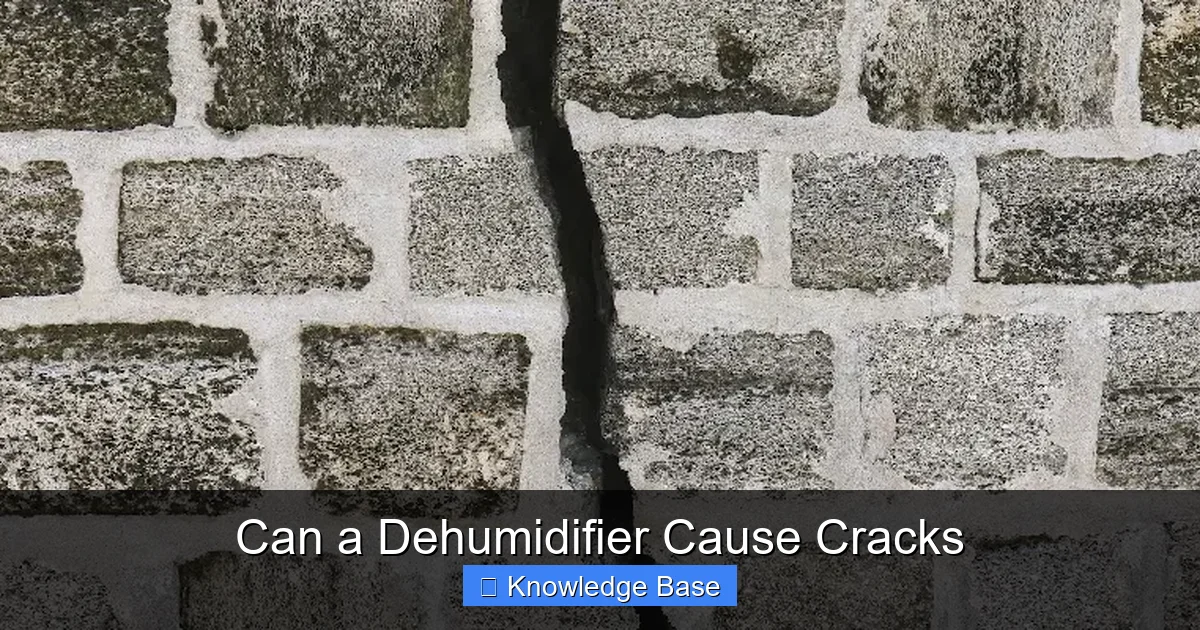
Concrete and masonry are less affected by short-term humidity changes, but they can still be impacted over long periods. Concrete contains water in its pores, and if the surrounding air is very dry for months, it can slowly lose moisture.
This process, called drying shrinkage, can cause fine cracks in concrete slabs, basement floors, or foundation walls. However, this usually happens during the curing phase (first few months after pouring), not years later. Still, in extremely dry indoor environments, older concrete might experience minor stress.
When Can a Dehumidifier Actually Cause Cracks?

Visual guide about Can a Dehumidifier Cause Cracks
Image source: dehumidifierhireauckland.co.nz
Now that we know how materials react to humidity, let’s look at real-world scenarios where a dehumidifier might contribute to cracking.
Overuse or Incorrect Settings
The most common cause of dehumidifier-related damage is simply using the unit too aggressively. Some people set their dehumidifier to 20% or 25% humidity “just to be safe.” But that’s overkill.
The ideal indoor humidity range is 30% to 50%. Going below 30% can dry out wood and other materials. In winter, when outdoor air is already dry and heating systems further reduce indoor moisture, running a dehumidifier at low settings can push humidity into the dangerously dry zone.
For example, a homeowner in Minnesota might run a dehumidifier in their basement all winter to prevent mold. But if the unit is set to 25% and the furnace is running constantly, the basement air could drop to 20% or lower. Over several months, this could dry out wooden support beams or flooring, leading to cracks.
Poorly Sized or Placed Units
Using a dehumidifier that’s too powerful for the space can also be a problem. A large commercial-grade unit in a small basement might remove moisture too quickly, creating uneven drying.
Similarly, placing the dehumidifier in a corner or behind furniture can restrict airflow. This leads to “microclimates” where some areas are very dry while others remain damp. Uneven drying stresses materials and increases the risk of cracking.
Lack of Monitoring
Many people set their dehumidifier and forget it. But humidity levels change with the seasons, weather, and indoor activity. Without regular checks, you might not realize the air has become too dry.
A hygrometer—a simple device that measures humidity—is essential. Place one in the room where the dehumidifier runs and check it weekly. If the reading drops below 30%, adjust the settings or turn the unit off temporarily.
Seasonal Misuse
Dehumidifiers are most useful in summer and humid seasons. In winter, especially in cold climates, indoor air is often too dry already. Running a dehumidifier during this time can worsen the problem.
For instance, in a heated home during January, the relative humidity might already be 25%. Adding a dehumidifier could push it to 15%—far too dry for comfort or material health.
How to Use a Dehumidifier Safely and Prevent Cracks
The good news? You can enjoy the benefits of a dehumidifier without risking cracks—just follow these best practices.
Set the Right Humidity Level
Aim for 30% to 50% indoor humidity. In summer or humid climates, 45% to 50% is ideal. In winter, especially in heated homes, 30% to 40% is better.
Most modern dehumidifiers have a built-in humidistat that lets you set your target humidity. Choose a reputable model with accurate controls.
Use a Hygrometer to Monitor Levels
Don’t rely solely on the dehumidifier’s display. Built-in sensors can be inaccurate. Buy a separate digital hygrometer (they cost $10–$20) and place it in the room. Check it weekly and adjust the dehumidifier as needed.
Size the Unit Correctly
Choose a dehumidifier based on the square footage and moisture level of the space:
– 30-pint unit: for small, moderately damp areas (up to 1,000 sq ft)
– 50-pint unit: for large or very damp spaces (up to 2,500 sq ft)
– 70-pint or higher: for extremely wet basements or crawl spaces
An oversized unit may cycle on and off too frequently, causing rapid humidity swings that stress materials.
Place the Dehumidifier Properly
Position the unit in an open area with good airflow. Keep it at least 6–12 inches away from walls and furniture. Ensure air can circulate freely around the intake and exhaust.
Avoid placing it near sources of dry air, like heating vents, which can create overly dry pockets.
Maintain the Unit Regularly
A dirty filter or clogged coils reduce efficiency and can cause the unit to work harder, potentially over-drying the air. Clean the filter monthly and inspect the coils annually.
Empty the water tank regularly, or use a model with a continuous drain hose to avoid overflow and humidity spikes.
Adjust Seasonally
Turn off the dehumidifier in winter unless you have a specific moisture problem (like a damp crawl space). In summer, run it during humid days or after rain.
If you use a whole-house dehumidifier, ensure it’s integrated with your HVAC system and set to maintain balanced humidity year-round.
Signs Your Dehumidifier Might Be Causing Problems
How do you know if your dehumidifier is drying the air too much? Watch for these warning signs:
– Wood floors or furniture developing gaps or cracks
– Doors or windows sticking less than usual (indicating shrinkage)
– Static electricity shocks (a sign of very dry air)
– Dry, itchy skin or respiratory irritation
– Hairline cracks appearing in plaster or drywall seams
– Musty smell disappearing but replaced by a “stale” or “dusty” odor
If you notice any of these, check your hygrometer. If humidity is below 30%, reduce the dehumidifier’s runtime or increase the target setting.
Myths vs. Facts: Debunking Common Misconceptions
There’s a lot of misinformation about dehumidifiers and home damage. Let’s clear up some myths.
Myth: Dehumidifiers always cause cracks.
Fact: No—properly used dehumidifiers prevent damage by controlling excess moisture. Cracks are rare and usually result from misuse.
Myth: All homes need a dehumidifier year-round.
Fact: Only homes with high humidity or moisture problems need one. In dry climates or winter, a humidifier may be more appropriate.
Myth: Lower humidity is always better.
Fact: Extremely low humidity harms materials and health. Balance is key.
Myth: Cracks from dryness appear immediately.
Fact: Most cracking happens gradually over months or years of sustained low humidity.
When to Call a Professional
If you notice new or worsening cracks in walls, floors, or foundations, don’t assume it’s the dehumidifier. Other issues—like foundation settling, plumbing leaks, or poor construction—could be the real cause.
Consult a structural engineer or home inspector if:
– Cracks are wider than 1/8 inch
– Cracks are growing over time
– You see signs of water intrusion or shifting floors
– Multiple materials (wood, plaster, concrete) are cracking simultaneously
A professional can determine whether humidity is a factor or if there’s a deeper issue.
Conclusion: Smart Use Prevents Problems
So, can a dehumidifier cause cracks? The answer is: only if it’s used incorrectly. In the vast majority of cases, dehumidifiers protect your home by preventing mold, musty odors, and moisture damage. They’re essential tools for maintaining healthy indoor air and preserving building materials.
The risk of cracking comes not from the appliance itself, but from over-drying the air—especially in already dry environments or with aggressive settings. By maintaining humidity between 30% and 50%, monitoring levels with a hygrometer, and adjusting use seasonally, you can enjoy all the benefits of a dehumidifier without the downsides.
Think of your dehumidifier like a thermostat: it’s not about extremes, but balance. Keep the air comfortably moist, not soggy or bone-dry, and your home—and its materials—will thank you for years to come.
Frequently Asked Questions
Can a dehumidifier damage hardwood floors?
Yes, if humidity drops too low. Wood shrinks when dry, which can cause gaps, cupping, or cracks. Maintain 30–50% humidity to protect floors.
Is it safe to run a dehumidifier 24/7?
It’s safe if humidity stays in the 30–50% range. Use a model with an auto-humidistat to avoid over-drying. Check levels regularly.
Do dehumidifiers cause static electricity?
Yes, if they make the air too dry. Static shocks are a sign humidity is below 30%. Increase the setting or use a humidifier in winter.
Can a dehumidifier crack concrete?
Rarely. Concrete can shrink if dried too quickly during curing, but years later, cracking from dehumidifiers is unlikely unless humidity is extremely low for long periods.
What’s the best place to put a dehumidifier?
Place it in a central, open area with good airflow—like a basement center or laundry room. Avoid corners or behind furniture.
Should I use a dehumidifier in a crawl space?
Yes, if the space is damp or has moisture issues. Use a dedicated crawl space dehumidifier with a drain hose and proper insulation to prevent over-drying.