
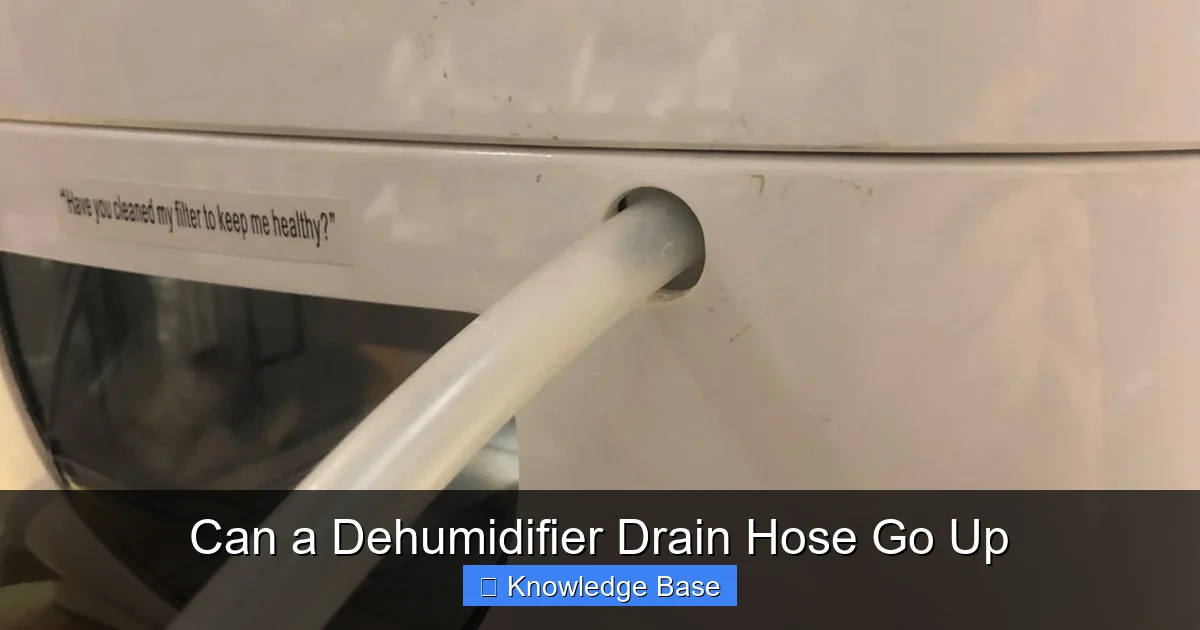
Yes, a dehumidifier drain hose can go up—but only under the right conditions. While gravity normally pulls water downward, some units support upward drainage using built-in pumps or external accessories. Proper setup is key to avoid leaks, clogs, or damage.
Key Takeaways
- Most dehumidifiers rely on gravity drainage: Water flows downhill, so the hose must slope downward from the unit to the drain point.
- Some models include built-in condensate pumps: These allow vertical hose runs of several feet, making upward drainage possible in tight spaces.
- External pumps can enable upward drainage: If your unit lacks a pump, you can add a separate condensate pump to lift water vertically.
- Hose length and diameter matter: Longer or narrower hoses increase resistance, reducing flow efficiency—especially when going up.
- Improper setup risks water damage: Backflow, siphoning, or overflow can occur if the hose isn’t installed correctly.
- Always check your owner’s manual: Manufacturer guidelines specify whether upward drainage is supported and how high the hose can safely rise.
- Regular maintenance prevents clogs: Clean the hose and pump (if used) every few months to ensure smooth, uninterrupted drainage.
Quick Answers to Common Questions
Can I run a dehumidifier drain hose up through a wall?
Yes, as long as your unit has a pump (built-in or external) and the hose is properly secured and sloped downward after the vertical section.
How high can a dehumidifier pump lift water?
Most pumps can lift water 10–15 feet vertically. Check your model’s specs for exact limits.
What happens if the drain hose goes up without a pump?
Water will pool in the hose, back up into the unit, or stop flowing entirely—leading to overflow and potential damage.
Can I use a garden hose for dehumidifier drainage?
No. Garden hoses are too large, rigid, and prone to kinking. Use smooth, flexible vinyl or PVC tubing instead.
Do I need to clean the drain hose regularly?
Yes. Clean it every 3–6 months to prevent clogs from mold, algae, or mineral buildup.
📑 Table of Contents
Can a Dehumidifier Drain Hose Go Up? The Short Answer
So, you’ve got a dehumidifier humming away in your basement, laundry room, or crawl space—and you’re wondering: *Can the drain hose actually go up?* It’s a great question, and one that comes up more often than you’d think. After all, not every room has a floor drain or sink conveniently located below the dehumidifier. Sometimes, the only practical drainage option is to route the hose upward—toward a sink, utility tub, or even an upstairs bathroom.
The short answer? **Yes, a dehumidifier drain hose can go up—but only if your unit supports it.** Most basic dehumidifiers are designed to use gravity to move collected water out through a hose. That means the hose must slope downward from the machine to the drain. If you try to run the hose upward without the right equipment, water will pool, back up, or simply refuse to flow—leading to overflow, mold growth, or even damage to your unit.
But here’s the good news: many modern dehumidifiers come with built-in condensate pumps, and even if yours doesn’t, you can often add an external pump to make upward drainage work. With the right setup, you can lift water several feet vertically and then run it horizontally to a suitable drain point. This opens up a world of installation possibilities, especially in homes without easy access to floor drains.
In this guide, we’ll walk you through everything you need to know about routing a dehumidifier drain hose upward—from how it works and what equipment you’ll need, to common pitfalls and pro tips for a leak-free setup. Whether you’re dealing with a finished basement, a crawl space under a raised floor, or just a tricky layout, we’ve got you covered.
How Dehumidifier Drainage Works
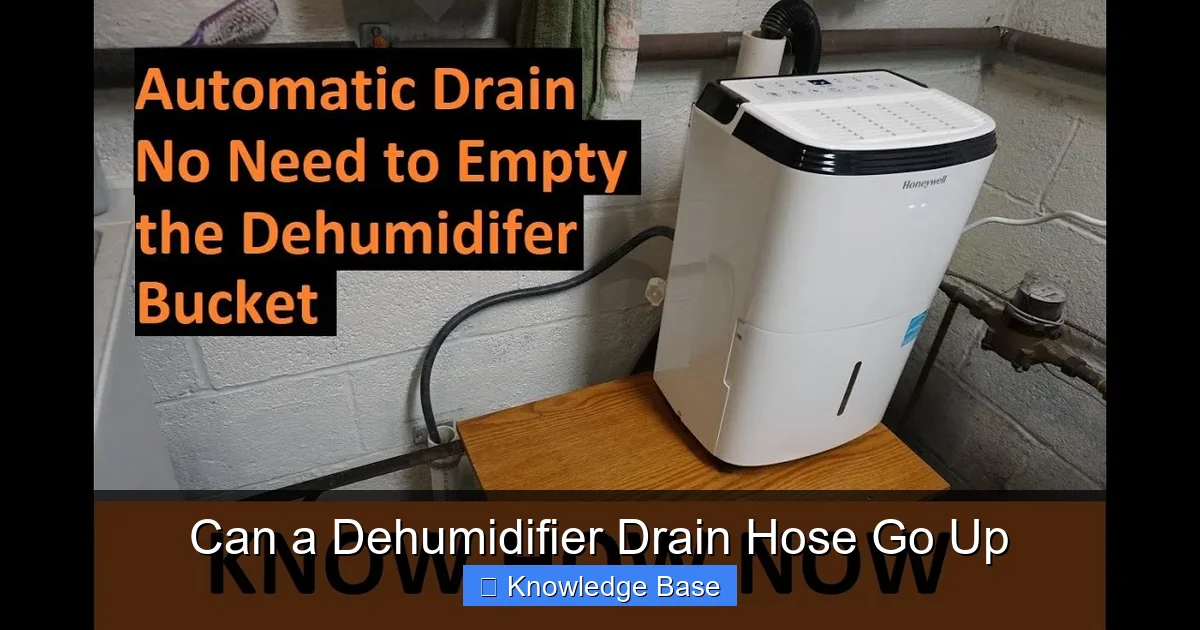
Visual guide about Can a Dehumidifier Drain Hose Go Up
Image source: i.ytimg.com
Before we dive into whether a hose can go up, let’s first understand how dehumidifiers remove and dispose of moisture. When humid air passes over the dehumidifier’s cold coils, moisture condenses into water droplets—just like how dew forms on a cold drink on a hot day. This collected water drips into a built-in reservoir or collection bucket inside the unit.
Now, here’s where things get interesting: some dehumidifiers require you to manually empty this bucket every few hours or days, especially in high-humidity environments. But many newer models come with a continuous drainage option—a hose attachment that lets water flow out automatically, so you don’t have to keep checking and dumping the tank.
This continuous drainage system typically uses one of two methods: **gravity drainage** or **pump-assisted drainage**.
Gravity Drainage: The Standard Approach
Gravity drainage is the most common and simplest method. It relies on—you guessed it—gravity. The dehumidifier has a drain port (usually at the back or side), and you attach a hose (often 1/4-inch or 3/8-inch vinyl tubing) to it. As water collects, it flows down the hose and out into a nearby floor drain, sink, or bucket.
For this to work, the hose must slope downward from the dehumidifier to the drain point. Think of it like a slide: water needs a clear, downward path to flow smoothly. If the hose levels out or goes up at any point, water will stop flowing and may back up into the unit.
This method is reliable, low-maintenance, and doesn’t require any extra power—but it’s limited by your home’s layout. If there’s no drain below the dehumidifier, gravity drainage won’t cut it.
Pump-Assisted Drainage: When Gravity Isn’t Enough
That’s where pump-assisted drainage comes in. Some dehumidifiers come with a built-in condensate pump—a small, quiet device that actively pushes water through the hose, even against gravity. These pumps can lift water vertically (typically 10 to 15 feet, depending on the model) and then push it horizontally for another 20 to 30 feet.
This feature is a game-changer for installations where the drain is above the dehumidifier—like routing water up from a basement to a first-floor utility sink. It’s especially useful in crawl spaces, garages, or homes with raised foundations.
Even if your dehumidifier doesn’t have a built-in pump, you can often add an external condensate pump. These standalone units sit between the dehumidifier and the hose, sensing when water is present and activating to pump it upward. They’re affordable (usually $30–$60), easy to install, and compatible with most dehumidifier models.
When Can You Safely Run a Drain Hose Upward?
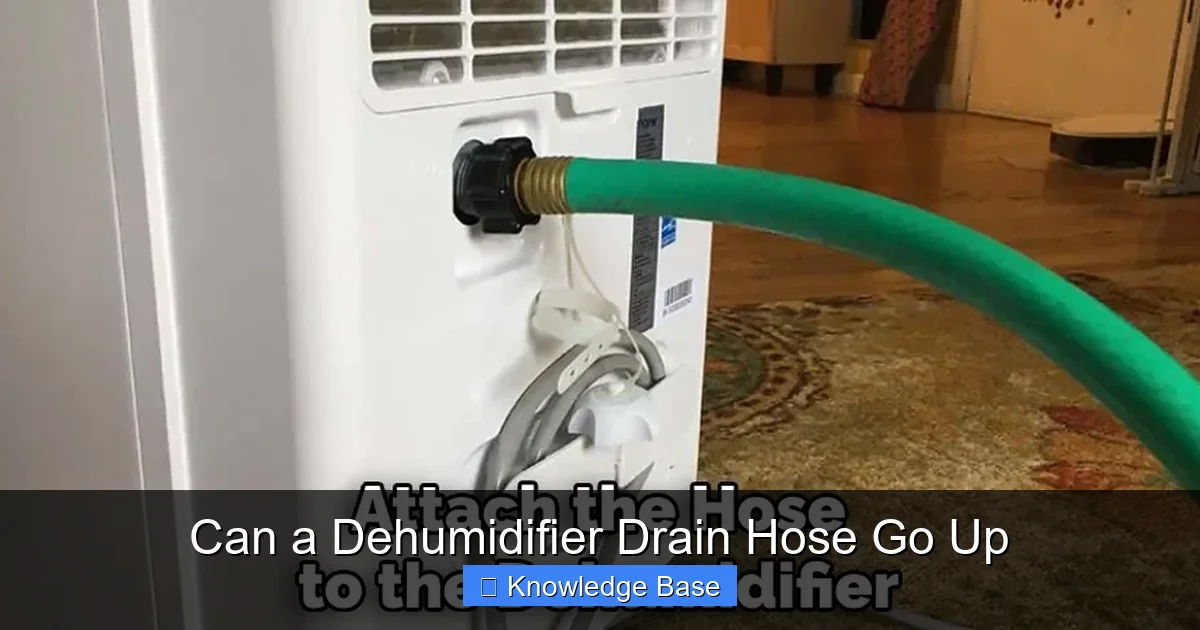
Visual guide about Can a Dehumidifier Drain Hose Go Up
Image source: theplumbero.com
Now that we understand the mechanics, let’s answer the big question: *When is it safe—and effective—to run a dehumidifier drain hose upward?*
The answer depends on your dehumidifier’s capabilities and the tools you’re using. Here are the key scenarios where upward drainage is not only possible but practical.
Your Dehumidifier Has a Built-In Pump
If your unit includes a built-in condensate pump, you’re in luck. These pumps are designed specifically to lift water vertically, so you can run the hose upward without worrying about backflow or stagnation.
For example, the **Frigidaire FFAD7033R1** and **hOmeLabs HME020034N** are popular models with integrated pumps. According to their manuals, they can lift water up to 12–15 feet vertically. That means you could place the dehumidifier in a basement and route the hose up through a wall cavity, into a utility closet, and into a sink on the main floor.
Always check your owner’s manual for the exact lift capacity. Exceeding the recommended height can strain the pump, reduce efficiency, or cause it to fail prematurely.
You’re Using an External Condensate Pump
No built-in pump? No problem. An external condensate pump can bridge the gap. These devices are simple to install: you connect the dehumidifier’s drain hose to the pump’s inlet, then run a second hose from the pump’s outlet to your desired drain point.
Popular options include the **Dri-Eaz F413** and **Little Giant VCMA-15ULS**. These pumps can lift water 10–20 feet vertically and push it another 20–30 feet horizontally. They’re often used in HVAC systems, but they work great with dehumidifiers too.
One tip: place the pump on a stable, level surface near the dehumidifier. Avoid mounting it high up, as it needs to be accessible for maintenance and cleaning.
The Hose Has a Consistent Downward Slope After the Rise
Even with a pump, the hose should slope downward after the vertical section. Think of it like a roller coaster: the pump gets the water up the first hill, but gravity takes over for the rest of the ride.
For example, if you’re lifting water 8 feet up to a sink, make sure the hose continues to slope downward from that point. A slight decline (about 1/4 inch per foot) is ideal. This prevents water from pooling in the hose and ensures smooth, uninterrupted flow.
Avoid sharp bends or kinks in the hose, as these can restrict flow and increase the risk of clogs. Use smooth, gradual curves instead.
You’re Using the Right Hose Type and Size
Not all hoses are created equal. For upward drainage, you’ll want a hose that’s:
– **Flexible but kink-resistant:** Vinyl or reinforced PVC tubing works well.
– **Smooth interior:** Reduces friction and prevents debris buildup.
– **Proper diameter:** Most dehumidifiers use 1/4-inch or 3/8-inch tubing. Using a larger diameter can improve flow, especially over long distances.
Avoid using garden hoses or rigid plastic tubes—they’re not designed for this purpose and can cause leaks or blockages.
Common Mistakes to Avoid When Routing a Hose Upward
Even with the right equipment, it’s easy to make mistakes that can lead to leaks, clogs, or pump failure. Here are the most common pitfalls—and how to avoid them.
Ignoring the Manufacturer’s Guidelines
Every dehumidifier is different. Some support upward drainage; others don’t. Always check your owner’s manual before attempting to route the hose upward. Look for sections on “continuous drainage,” “pump operation,” or “hose installation.”
If the manual says “gravity drain only,” don’t assume an external pump will work. Some units aren’t designed to handle backpressure or may have internal valves that prevent reverse flow.
Creating an Air Lock or Siphon
When water flows upward, air can get trapped in the hose, creating an air lock that stops flow. This is especially common if the hose has loops or dips.
To prevent this:
– Prime the hose before use (fill it with water to remove air).
– Avoid loops or U-shaped bends.
– Ensure the hose exits the dehumidifier at the lowest possible point.
Also, be cautious of siphoning. If the drain end of the hose is lower than the dehumidifier, water might siphon out even when the unit is off. This can empty the collection tank prematurely or cause the pump to cycle unnecessarily.
Overloading the Pump
Condensate pumps have limits. If you exceed the recommended vertical lift or horizontal run, the pump may struggle to move water, overheat, or wear out quickly.
For example, a pump rated for 10 feet of vertical lift won’t perform well if you try to lift water 15 feet. Always stay within the manufacturer’s specifications.
Also, avoid connecting multiple appliances (like an air conditioner and dehumidifier) to the same pump unless it’s rated for combined loads.
Neglecting Maintenance
Pumps and hoses need regular cleaning. Over time, algae, mold, or mineral deposits can build up inside the hose or pump chamber, causing clogs or odors.
Clean the hose every 3–6 months by flushing it with a mixture of water and vinegar. For the pump, follow the manufacturer’s cleaning instructions—usually involving disassembly and rinsing with a mild cleaner.
Step-by-Step Guide to Setting Up Upward Drainage
Ready to try it? Here’s a simple, step-by-step process to safely route your dehumidifier drain hose upward.
Step 1: Check Your Dehumidifier’s Capabilities
Read the manual. Confirm whether your unit supports continuous drainage and if it has a built-in pump. If not, determine if an external pump is compatible.
Step 2: Choose the Right Equipment
– If using an external pump, select one with sufficient lift and flow rate.
– Use smooth, kink-resistant tubing in the correct diameter.
– Get hose clamps to secure connections and prevent leaks.
Step 3: Plan the Route
Map out the path from the dehumidifier to the drain. Measure the vertical rise and horizontal run. Ensure the total distance and height are within the pump’s limits.
Step 4: Install the Hose and Pump
– Attach the hose to the dehumidifier’s drain port.
– Connect the other end to the pump (if using one).
– Run the hose upward, securing it with clips or tape to prevent sagging.
– After the vertical section, ensure the hose slopes downward to the drain.
Step 5: Test the System
Turn on the dehumidifier and let it run for 30–60 minutes. Check for leaks, proper flow, and pump operation. Listen for unusual noises or vibrations.
Step 6: Maintain Regularly
Set a reminder to clean the hose and pump every few months. Inspect connections for wear or loosening.
Alternative Drainage Solutions
If upward drainage isn’t feasible, don’t worry—there are other options.
Use a Larger Collection Tank
Some dehumidifiers have removable tanks with larger capacities (e.g., 1.5–2 gallons). This reduces how often you need to empty it, especially if you’re only running the unit part-time.
Install a Floor Drain or Sump Pit
For long-term solutions, consider adding a floor drain or connecting to an existing sump pit. This allows gravity drainage without routing hoses upward.
Use a Timer or Humidistat
Set your dehumidifier to run only during high-humidity periods (e.g., after showers or laundry). This reduces water output and gives you more time between emptying cycles.
Final Thoughts
So, can a dehumidifier drain hose go up? Absolutely—**if you have the right setup**. Gravity-only units require downward-sloping hoses, but models with built-in pumps or external condensate pumps can lift water several feet vertically. The key is following manufacturer guidelines, using proper equipment, and maintaining the system regularly.
Whether you’re dealing with a tricky basement layout or just want the convenience of hands-free drainage, upward hose routing is a practical solution when done correctly. With a little planning and the right tools, you can keep your home dry, comfortable, and mold-free—no manual emptying required.
Frequently Asked Questions
Can all dehumidifiers drain upward?
No, only models with built-in pumps or those used with external condensate pumps can safely drain upward. Most standard units rely on gravity and require downward-sloping hoses.
What’s the maximum height a dehumidifier hose can go up?
It depends on the pump. Built-in pumps typically lift 10–15 feet; external pumps may go up to 20 feet. Always follow the manufacturer’s guidelines.
Can I connect multiple dehumidifiers to one pump?
Only if the pump is rated for combined loads. Most are designed for single units, so check the specifications before connecting multiple devices.
Will upward drainage reduce my dehumidifier’s efficiency?
Not if done correctly. A properly sized pump and hose won’t affect performance, but an overloaded pump may struggle and reduce efficiency.
Can I route the hose upward without a pump if it’s very short?
Even a short upward section can cause water to pool and back up. Without a pump, the hose must slope downward at all times.
Is it safe to run the hose through a finished wall?
Yes, but use a protective sleeve or conduit to prevent damage. Ensure the hose is secured and won’t be pinched or kinked inside the wall.