
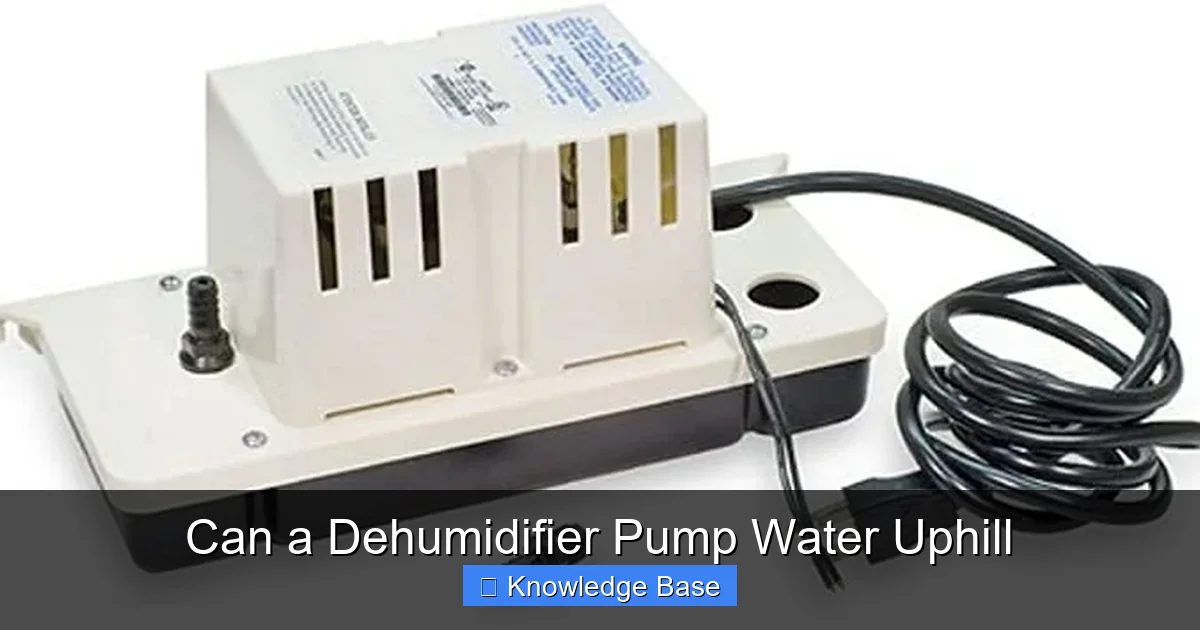
Yes, a dehumidifier can pump water uphill—but only with the right equipment. Most standard units rely on gravity drainage, but adding a condensate pump enables upward water movement. This guide explains how it works, when you need one, and how to set it up safely and effectively.
Key Takeaways
- Standard dehumidifiers use gravity drainage: They collect moisture in a bucket or tray and require a downward slope for drainage—no uphill pumping.
- Condensate pumps enable uphill pumping: These small, electric pumps attach to the dehumidifier’s drain line and push water vertically up to 15 feet or more.
- Ideal for basements and crawl spaces: If your dehumidifier is below floor level, a condensate pump is essential for moving water to a sink, drain, or outside.
- Automatic operation saves time: Most condensate pumps turn on when water reaches a certain level and shut off when empty—no manual emptying needed.
- Proper installation prevents leaks and damage: Secure tubing, avoid kinks, and ensure the pump is level and stable to avoid malfunctions.
- Not all dehumidifiers support pumps: Check your model’s manual—some require a specific pump or have built-in pump compatibility.
- Maintenance is minimal but important: Clean the pump and float switch every 3–6 months to prevent clogs and ensure reliable performance.
Quick Answers to Common Questions
Can a dehumidifier pump water uphill without a pump?
No, standard dehumidifiers cannot pump water uphill on their own. They rely on gravity drainage, which only works when the exit point is at the same level or lower than the unit.
How high can a condensate pump lift water?
Most residential condensate pumps can lift water vertically up to 10–15 feet, depending on the model. Always check the manufacturer’s specifications.
Do all dehumidifiers work with condensate pumps?
Not all dehumidifiers are compatible. Check your user manual to see if your model supports a condensate pump or has a dedicated drain port.
Can I use a condensate pump with a portable dehumidifier?
Yes, as long as the unit has a drain port and the pump is compatible. Portable units with continuous drainage options work well with pumps.
How often should I clean my condensate pump?
Clean the pump’s reservoir and float switch every 3–6 months to prevent clogs and ensure reliable operation.
📑 Table of Contents
- Can a Dehumidifier Pump Water Uphill? The Surprising Answer
- How Dehumidifiers Collect and Remove Water
- Why Gravity Drainage Has Limitations
- How Condensate Pumps Enable Uphill Water Movement
- When Do You Need a Condensate Pump?
- How to Install a Condensate Pump with Your Dehumidifier
- Maintenance Tips to Keep Your System Running Smoothly
- Common Mistakes to Avoid
- Conclusion: Yes, Your Dehumidifier Can Pump Water Uphill—With the Right Setup
Can a Dehumidifier Pump Water Uphill? The Surprising Answer
If you’ve ever dealt with a damp basement, musty crawl space, or humid laundry room, you know how vital a dehumidifier can be. These handy appliances pull moisture from the air, helping prevent mold, mildew, and structural damage. But what happens when the water it collects needs to go *up*—not down? Can a dehumidifier pump water uphill?
The short answer is: **not on its own**. Most standard dehumidifiers are designed to drain water by gravity. That means the water flows out through a hose or spout and into a floor drain, sink, or bucket—only if it’s at the same level or lower than the unit. If your dehumidifier is in a basement and the nearest drain is upstairs, you’ve got a problem.
But don’t worry—there’s a solution. With the right add-on equipment, your dehumidifier *can* pump water uphill. It’s all about using a **condensate pump**, a small but powerful device that does the heavy lifting for you. In this guide, we’ll explore how dehumidifiers work, why gravity drainage has limits, and how condensate pumps make uphill pumping possible. You’ll also learn how to choose, install, and maintain the right setup for your home.
Whether you’re dealing with a flooded basement, a tight crawl space, or just want a hands-free dehumidifying experience, this article will give you the knowledge you need to keep your space dry—no matter where the water needs to go.
How Dehumidifiers Collect and Remove Water
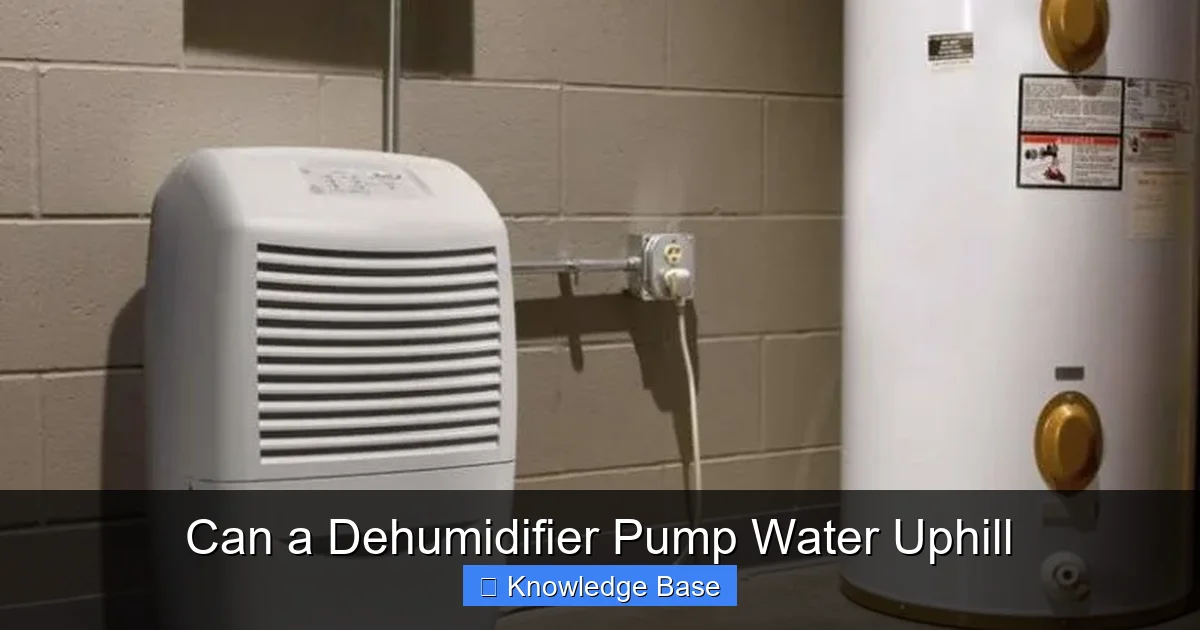
To understand whether a dehumidifier can pump water uphill, it helps to know how these machines actually remove moisture from the air. At their core, dehumidifiers work like air conditioners. They pull in humid air, cool it to condense the moisture, and then reheat the air before blowing it back into the room.
Here’s a step-by-step breakdown of the process:
The Cooling and Condensation Stage
Humid air enters the dehumidifier through a vent. Inside, the air passes over cold coils (similar to an AC unit). As the air cools, its ability to hold moisture decreases. The excess water vapor condenses into liquid droplets—just like dew forming on a cold drink can.
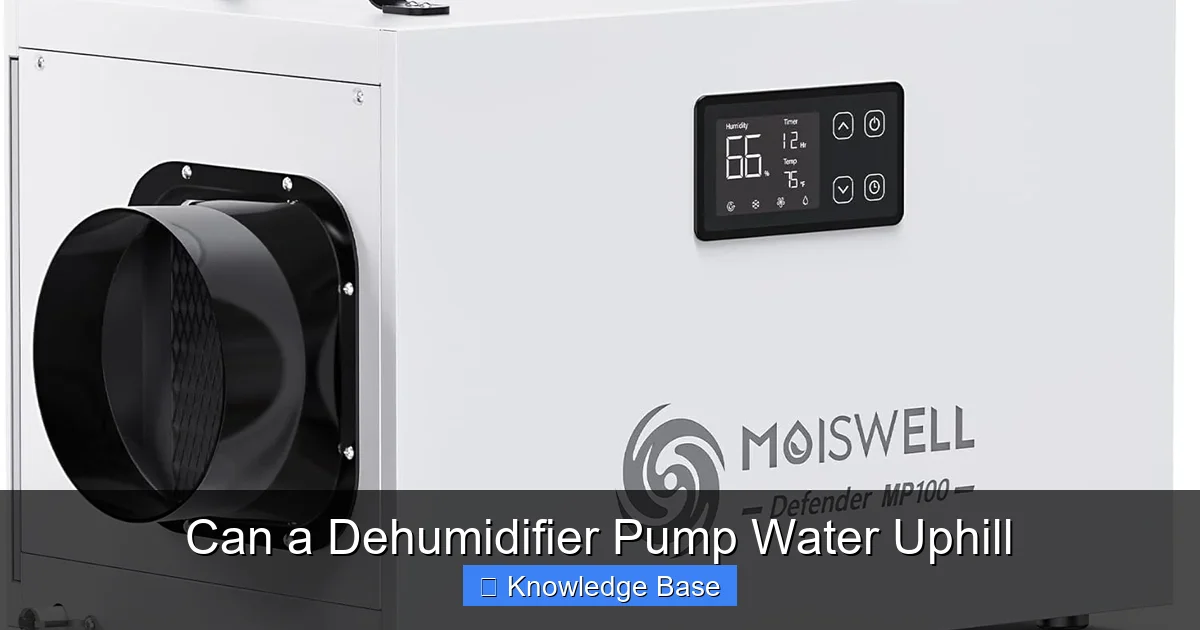
Visual guide about Can a Dehumidifier Pump Water Uphill
Image source: m.media-amazon.com
Water Collection in the Reservoir
The condensed water drips down into a collection tray or bucket inside the unit. Most residential dehumidifiers have a built-in reservoir that holds anywhere from 1 to 2 gallons of water, depending on the model. When the bucket fills up, the machine automatically shuts off to prevent overflow—this is why you often see a “bucket full” warning light.
Drainage Options: Gravity vs. Pump-Assisted
There are two main ways to remove the collected water:
- Manual emptying: You physically remove and empty the bucket. This is common in portable units and requires regular attention.
- Continuous drainage via hose: Many dehumidifiers have a threaded drain port where you can attach a garden hose or vinyl tubing. The water flows out by gravity—but only if the exit point is at the same level or lower than the unit.
This gravity-based system works great if you have a floor drain nearby. But if your dehumidifier is in a basement, under a deck, or in a crawl space with no accessible drain, gravity alone won’t cut it. That’s where the question “can a dehumidifier pump water uphill?” becomes critical.
Why Gravity Drainage Has Limitations
Gravity is a reliable force—but it only works in one direction: down. If your dehumidifier is located below the level of your home’s main drain, sink, or exterior exit point, you can’t rely on gravity to move the water out. This is a common issue in basements, garages, and below-grade utility rooms.
Let’s say your dehumidifier is in a basement corner, and the nearest floor drain is 10 feet away—but it’s also 3 feet higher in elevation. Without a pump, the water simply won’t flow uphill. You’d either have to empty the bucket manually every few hours (a hassle, especially overnight) or risk overflow and water damage.
Even if you try to rig a siphon system, it’s unreliable and prone to failure. Siphons require a continuous downward slope after the initial lift, and they can break if air gets into the line. Plus, most dehumidifiers don’t produce enough water pressure to sustain a siphon over long distances or significant height differences.
Another limitation? **Space and access**. In tight crawl spaces or under stairwells, running a long hose downhill may not be possible due to obstructions, walls, or flooring. And if your dehumidifier is tucked into a corner with no nearby drain, you’re stuck with frequent bucket emptying.
So while gravity drainage is simple and cost-effective, it’s not always practical. That’s why many homeowners turn to condensate pumps—small, affordable devices that solve the uphill pumping problem once and for all.
How Condensate Pumps Enable Uphill Water Movement
Now for the good news: **yes, a dehumidifier can pump water uphill—if you use a condensate pump**. These compact devices are specifically designed to move small amounts of water vertically, making them perfect for dehumidifiers, air conditioners, and HVAC systems.
What Is a Condensate Pump?
A condensate pump is a small electric pump with a built-in reservoir and float switch. When water from your dehumidifier enters the pump’s collection chamber, the float rises. Once it reaches a certain level, the pump automatically turns on and pushes the water through a discharge hose to a higher elevation—like a sink, laundry drain, or outdoor area.
Visual guide about Can a Dehumidifier Pump Water Uphill
Image source: evaporativehumidifiers.com
How It Works
Here’s the process in action:
- Water from the dehumidifier flows into the condensate pump’s reservoir via a small hose.
- As the water level rises, a float switch inside the pump lifts.
- When the float reaches the “on” position, the pump motor activates.
- The pump pushes the water through a discharge tube, which can go uphill, around corners, or even outside.
- Once the reservoir empties, the float drops, and the pump shuts off automatically.
Most condensate pumps can lift water vertically up to 10–15 feet and push it horizontally up to 100 feet or more, depending on the model. That means you can place your dehumidifier in a basement and send the water up to a second-floor sink or out through a wall vent.
Types of Condensate Pumps
There are two main types:
- Standard condensate pumps: Designed for light-duty use with dehumidifiers and AC units. They’re quiet, energy-efficient, and often include a safety switch to shut off the dehumidifier if the pump fails.
- High-capacity or industrial pumps: Built for heavy-duty applications like commercial HVAC systems. These are overkill for most homes but may be needed in large basements or high-humidity environments.
For residential use, a standard 120V condensate pump with a 1/30 to 1/20 horsepower motor is usually sufficient. Look for models with a built-in check valve (to prevent backflow) and a safety switch that cuts power to the dehumidifier if the pump clogs or fails.
When Do You Need a Condensate Pump?
Not every dehumidifier setup requires a pump. But if any of the following scenarios sound familiar, a condensate pump could be a game-changer:
Your Dehumidifier Is Below Drain Level
This is the most common reason people install a condensate pump. If your unit is in a basement, crawl space, or under a deck, and the nearest drain is upstairs or outside at a higher elevation, gravity won’t work. A pump lets you send water up to a sink, laundry tub, or exterior wall.
You Want Hands-Free Operation
Even if you have a floor drain, you might not want to empty the bucket every day. A condensate pump allows for continuous, automatic drainage—ideal for busy households or vacation homes where no one is around to monitor the dehumidifier.
You’re Dealing with High Humidity or Large Spaces
In areas with persistent moisture—like coastal regions, rainy climates, or homes with poor ventilation—dehumidifiers can fill their buckets quickly. A pump ensures uninterrupted operation, even during heavy use.
You Have Limited Space or No Access to Drains
In tight crawl spaces or under cabinets, running a hose downhill may not be feasible. A condensate pump gives you flexibility in routing the discharge line, allowing you to snake it through walls, under floors, or up through joists.
You’re Using a Whole-Home Dehumidifier
Whole-house dehumidifiers are often installed in mechanical rooms or basements and connected to central HVAC systems. These units produce more condensate and typically require a pump for reliable drainage.
If you’re unsure whether you need a pump, ask yourself: Can water from my dehumidifier flow downhill to a drain without assistance? If the answer is no, a condensate pump is likely your best bet.
How to Install a Condensate Pump with Your Dehumidifier
Installing a condensate pump is simpler than it sounds—most homeowners can do it in under an hour with basic tools. Here’s a step-by-step guide to get you started.
Step 1: Choose the Right Pump
Check your dehumidifier’s manual to see if it supports a condensate pump. Some models have a dedicated pump outlet or require a specific type of pump. Look for a pump with:
- A reservoir capacity of at least 1–2 gallons
- A vertical lift of 10–15 feet
- A built-in check valve and safety switch
- Quiet operation (under 50 decibels)
Popular brands include Little Giant, Superior Pump, and Diversitech.
Step 2: Gather Your Tools and Materials
You’ll need:
- Condensate pump
- Vinyl or polyethylene tubing (usually 1/4″ or 3/8″ ID)
- Hose clamps or zip ties
- Drill (if routing through walls)
- Level (to ensure the pump sits flat)
- Electrical outlet nearby
Step 3: Position the Pump
Place the pump on a flat, stable surface near the dehumidifier. It should be level to ensure the float switch works correctly. Avoid placing it on carpet or uneven flooring.
Step 4: Connect the Inlet Hose
Attach one end of the tubing to the dehumidifier’s drain port (usually located at the back or bottom). Secure it with a hose clamp to prevent leaks. Run the other end into the condensate pump’s inlet.
Step 5: Route the Discharge Hose
Connect the discharge hose to the pump’s outlet and route it to your desired exit point—such as a sink, laundry drain, or exterior wall. Use clips or tape to secure the hose and avoid kinks. If going through a wall, drill a small hole and seal it with caulk to prevent air leaks.
Step 6: Plug In and Test
Plug the pump into a GFCI outlet (for safety). Turn on the dehumidifier and let it run. Pour a small amount of water into the pump’s reservoir to test the float switch. The pump should activate and push the water out through the discharge hose.
Step 7: Monitor and Maintain
Check the system weekly for the first month, then monthly thereafter. Clean the pump’s reservoir and float switch every 3–6 months to prevent algae or mineral buildup.
Maintenance Tips to Keep Your System Running Smoothly
A condensate pump is a low-maintenance device—but it’s not maintenance-free. Neglecting it can lead to clogs, leaks, or pump failure, which could damage your dehumidifier or home.
Clean the Reservoir and Float Switch
Over time, algae, mold, or mineral deposits can build up inside the pump’s reservoir. This can interfere with the float switch or clog the impeller. To clean:
- Unplug the pump.
- Remove the cover and empty any water.
- Wipe the interior with a mixture of water and white vinegar (1:1 ratio).
- Rinse thoroughly and dry before reassembling.
Check the Discharge Line for Clogs
If the pump runs but no water comes out, the discharge hose may be blocked. Disconnect the hose and flush it with water. Use a pipe cleaner or compressed air to remove debris.
Inspect the Check Valve
The check valve prevents water from flowing back into the pump after it shuts off. If it’s stuck open, the pump may cycle frequently or fail to build pressure. Replace the valve if it’s damaged or worn.
Test the Safety Switch
Most pumps have a safety feature that shuts off the dehumidifier if the pump fails. Test this by pouring water into the reservoir until the pump activates, then unplug the pump. The dehumidifier should stop running. If not, the switch may need replacement.
Keep the Area Dry and Ventilated
Even though the pump handles water, it should be kept in a dry, well-ventilated area. Avoid placing it directly on concrete floors where condensation can accumulate.
Common Mistakes to Avoid
Even with the best intentions, homeowners sometimes make errors that reduce efficiency or cause damage. Here are a few pitfalls to watch out for:
Using the Wrong Size Tubing
Too-small tubing creates resistance, reducing the pump’s ability to move water uphill. Use the manufacturer-recommended size (usually 1/4″ or 3/8″ inner diameter).
Ignoring the Pump’s Elevation Limits
Every pump has a maximum vertical lift. Exceeding this limit can cause the motor to overheat or fail. Check the specs before installation.
Routing Hoses with Sharp Bends or Kinks
Kinked tubing restricts flow and can cause the pump to run continuously. Use gentle curves and secure the hose with clips.
Forgetting to Use a Check Valve
Without a check valve, water can flow back into the pump after it shuts off, causing unnecessary cycling and wear.
Plugging Into a Non-GFCI Outlet
Since the pump handles water, it should always be plugged into a Ground Fault Circuit Interrupter (GFCI) outlet to prevent electrical shock.
Conclusion: Yes, Your Dehumidifier Can Pump Water Uphill—With the Right Setup
So, can a dehumidifier pump water uphill? The answer is a resounding **yes—but not without help**. Standard dehumidifiers rely on gravity, which means they can only drain water downward. If your unit is in a basement, crawl space, or any location below your home’s main drains, you’ll need a condensate pump to move water upward.
Condensate pumps are affordable, easy to install, and incredibly effective. They allow for continuous, hands-free operation, prevent overflow, and give you flexibility in where you place your dehumidifier. Whether you’re fighting basement humidity, protecting a crawl space, or just want a more convenient setup, a condensate pump is a smart investment.
Just remember: choose the right pump for your needs, install it correctly, and perform regular maintenance. With a little effort, you can keep your home dry—no matter where the water needs to go.
Frequently Asked Questions
What is a condensate pump?
A condensate pump is a small electric device that collects water from appliances like dehumidifiers and air conditioners and pumps it to a higher elevation. It uses a float switch to turn on automatically when water reaches a certain level.
Can I install a condensate pump myself?
Yes, most homeowners can install a condensate pump in under an hour with basic tools. Just follow the manufacturer’s instructions and ensure the pump is level and properly connected.
Will a condensate pump increase my electricity bill?
No, condensate pumps use very little power—typically less than 50 watts. They only run briefly when needed, so the impact on your energy bill is negligible.
What happens if the condensate pump fails?
Many pumps include a safety switch that shuts off the dehumidifier if the pump stops working. This prevents water from overflowing and causing damage.
Can I use a condensate pump outdoors?
Most condensate pumps are designed for indoor use. If you need to discharge water outside, route the hose through a wall or window—but keep the pump itself indoors and protected from the elements.
Do I need a condensate pump if I have a floor drain?
Not necessarily. If the floor drain is at the same level or lower than the dehumidifier, gravity drainage may be sufficient. But a pump offers convenience and prevents the need for manual emptying.