
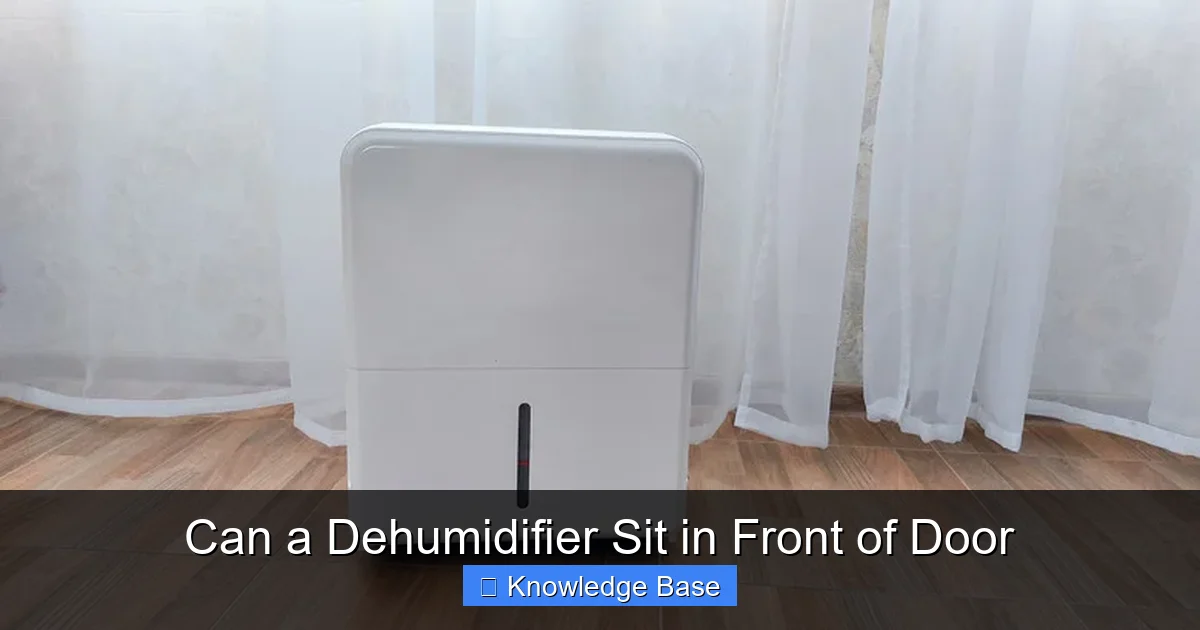
Yes, a dehumidifier can sit in front of a door—but only if it doesn’t block airflow or create a safety hazard. Proper placement ensures efficient moisture removal, prevents tripping risks, and maintains clear emergency exits. Always prioritize ventilation, accessibility, and manufacturer guidelines.
Key Takeaways
- Airflow is critical: Dehumidifiers need unobstructed intake and exhaust vents to work efficiently—blocking them reduces performance and may damage the unit.
- Safety first: Never place a dehumidifier where it blocks a door used for emergency egress, as this violates fire codes and poses serious risks.
- Door type matters: Interior doors with gaps or screens allow better airflow than solid exterior doors, making placement near them more viable.
- Noise and accessibility: Consider noise levels and ease of emptying the water tank—placing the unit too close to a frequently used door may be disruptive.
- Use furniture or risers: Elevating the dehumidifier slightly or using a stand can improve airflow and reduce vibration noise near doorways.
- Monitor humidity levels: Use a hygrometer to verify effectiveness—if humidity remains high, reposition the unit for better circulation.
- Follow manufacturer instructions: Always check the user manual for specific clearance requirements and placement recommendations.
Quick Answers to Common Questions
Can I put a dehumidifier right in front of my front door?
It’s not recommended if the door is used for emergency exit. Blocking the path can violate safety codes and create tripping hazards. Place it to the side with proper clearance instead.
Will a dehumidifier work if the door is always closed?
Yes, but only if the room has some airflow. A completely sealed room may limit effectiveness. Ensure vents aren’t blocked and consider using a fan to circulate air.
Can I place a dehumidifier near a bathroom door?
Yes, as long as it’s not in a high-moisture zone like directly outside the shower. Keep it at least 3 feet away and ensure the floor is dry to prevent water damage.
Should I move my dehumidifier if it’s near a frequently opened door?
If the door disrupts airflow or causes the unit to cycle inefficiently, yes. Try repositioning it slightly or using a fan to help distribute dry air.
Is it safe to run a dehumidifier near a door with a pet or child?
Yes, but keep cords secured and the unit out of reach. Use a cord cover and place the dehumidifier on a stable surface to prevent tipping.
📑 Table of Contents
- Can a Dehumidifier Sit in Front of a Door? The Complete Guide
- How Dehumidifiers Work and Why Placement Matters
- Safety Concerns: When Placing a Dehumidifier Near a Door Is a Bad Idea
- Airflow and Performance: The Science Behind Proper Placement
- Practical Tips for Placing a Dehumidifier Near a Door
- Alternative Placement Ideas for Better Results
- Conclusion: Smart Placement Equals Better Performance
Can a Dehumidifier Sit in Front of a Door? The Complete Guide
If you’re dealing with damp basements, musty odors, or condensation on windows, a dehumidifier is likely one of your best allies. These handy appliances pull excess moisture from the air, helping prevent mold, mildew, and structural damage. But once you’ve bought one, a common question pops up: *Can a dehumidifier sit in front of a door?*
The short answer is yes—but with important caveats. While it’s technically possible to place a dehumidifier near or in front of a door, doing so without considering airflow, safety, and functionality can lead to poor performance, safety hazards, or even damage to your unit. In this guide, we’ll walk you through everything you need to know about placing your dehumidifier near a door, including best practices, common mistakes, and smart alternatives.
Whether you’re using a compact portable model in a bedroom or a heavy-duty unit in a basement, understanding proper placement is key to getting the most out of your investment. Let’s dive into the details.
How Dehumidifiers Work and Why Placement Matters

Visual guide about Can a Dehumidifier Sit in Front of Door
Image source: attainablehome.com
Before we talk about door placement, it’s helpful to understand how dehumidifiers function. Most residential dehumidifiers use a refrigeration cycle: a fan pulls humid air into the unit, where it passes over cold coils. The moisture condenses into water, which drips into a collection tank or drains out through a hose. The now-drier air is reheated slightly and blown back into the room.
This process relies heavily on consistent airflow. If the intake or exhaust vents are blocked—whether by walls, furniture, or even a closed door—the unit has to work harder to pull in air. This not only reduces efficiency but can also cause the compressor to overheat, shortening the lifespan of the appliance.
Imagine trying to breathe through a straw—that’s what happens to your dehumidifier when it’s crammed into a tight space. It needs room to “breathe.” Most manufacturers recommend at least 6 to 12 inches of clearance around all sides of the unit, especially near vents. This ensures optimal air circulation and prevents overheating.
So, when considering placing your dehumidifier in front of a door, ask yourself: Will this location allow for proper airflow? Is the door frequently opened, potentially disrupting the unit’s operation? And most importantly—does it create a safety risk?
Safety Concerns: When Placing a Dehumidifier Near a Door Is a Bad Idea

Visual guide about Can a Dehumidifier Sit in Front of Door
Image source: furnaceheaters.com
Safety should always be your top priority when positioning any electrical appliance, especially one that runs for hours at a time. Placing a dehumidifier in front of a door might seem convenient, but it can create serious hazards if not done carefully.
Blocking Emergency Exits
One of the biggest risks is obstructing an exit door—particularly an exterior door used for emergency egress. Building codes and fire safety regulations require that all exit paths remain clear at all times. If your dehumidifier sits directly in front of a door that swings outward or inward, it could prevent the door from opening fully during an emergency.
For example, imagine a basement dehumidifier placed right in front of the basement door. If someone needs to escape quickly during a fire or flood, that unit could become a deadly obstacle. Even if the door opens inward, a large dehumidifier might block the swing path, making it difficult to exit safely.
Trip Hazards and Accessibility
Dehumidifiers aren’t lightweight. Many portable models weigh 30 to 50 pounds, and larger units can exceed 70 pounds. If placed in a high-traffic area like a doorway, they become tripping hazards—especially in dimly lit basements or hallways.
Additionally, dehumidifiers need regular maintenance. You’ll need to empty the water tank (usually every 12 to 24 hours, depending on humidity levels) and clean the filter monthly. If your unit is wedged in front of a door, accessing it becomes a hassle. You might skip maintenance, leading to mold growth inside the machine or reduced efficiency.
Electrical and Water Risks
Dehumidifiers use electricity and produce water—two things that don’t mix well. If placed near a door that’s exposed to rain, snow, or flooding (like a garage or basement entrance), there’s a risk of water splashing onto the unit or its power cord. This could cause electrical shorts, shocks, or even fires.
Even indoor doors can pose risks. For instance, if the dehumidifier is near a bathroom door and the unit leaks or overflows, water could seep under the door and damage flooring or adjacent rooms.
Airflow and Performance: The Science Behind Proper Placement
Now let’s talk performance. A dehumidifier’s effectiveness depends on its ability to circulate air throughout the room. If it’s placed in a corner, behind furniture, or directly in front of a solid door, it may only dehumidify a small area, leaving the rest of the space damp.
Understanding Air Circulation Patterns
Airflow in a room isn’t random. It follows natural convection currents—warm, moist air rises, while cooler, drier air sinks. A well-placed dehumidifier takes advantage of these patterns by drawing in humid air from the room and releasing drier air back in.
When a dehumidifier sits in front of a door, especially one that’s frequently opened, it can disrupt these currents. For example, if you place the unit near an exterior door that’s often opened to the outside, humid outdoor air will rush in, overwhelming the dehumidifier and reducing its effectiveness.
The Impact of Door Type
Not all doors are created equal when it comes to dehumidifier placement. Here’s how different door types affect airflow:
– Solid interior doors: These block airflow completely when closed. Placing a dehumidifier directly in front of one can trap humid air on one side of the door, limiting the unit’s reach.
– Hollow-core or louvered doors: These allow some air passage, even when closed. A dehumidifier placed near such a door may still function reasonably well, especially if the door isn’t always shut.
– Exterior doors with weather stripping: These create a tight seal, preventing air exchange. A dehumidifier near an exterior door may struggle if the door is closed most of the time.
– Screen doors or storm doors: These allow airflow even when the main door is closed, making them more compatible with dehumidifier placement.
Optimal Distance from Walls and Doors
Most dehumidifier manuals recommend keeping the unit at least 6 to 12 inches away from walls, furniture, and doors. This clearance ensures that air can flow freely into the intake vent and out through the exhaust.
If you must place your dehumidifier near a door, try to position it at an angle rather than directly in front. For example, place it 12 inches away from the doorjamb, facing into the room. This allows the door to open fully while still giving the unit room to operate.
Practical Tips for Placing a Dehumidifier Near a Door
So, what if you really need to place your dehumidifier near a door? Maybe your basement only has one usable outlet, or your laundry room is small and cramped. Here are some practical tips to make it work safely and effectively.
Use a Stand or Riser
Elevating your dehumidifier off the floor can improve airflow and reduce noise. A simple wooden stand or plastic riser (available at hardware stores) lifts the unit, allowing air to circulate underneath. This is especially helpful if the floor is concrete, which can retain moisture and reduce efficiency.
Choose the Right Spot Along the Door
Instead of placing the dehumidifier directly in the path of the door, position it to the side—near the hinge side or the latch side, depending on how the door swings. This keeps it out of the way while still allowing access for maintenance.
For example, if your basement door swings inward to the right, place the dehumidifier on the left side of the doorway, about a foot away from the wall. This gives you room to open the door fully and access the unit easily.
Use a Drain Hose for Continuous Operation
If you’re placing the dehumidifier near a door in a basement or garage, consider using a continuous drain hose instead of relying on the water tank. This eliminates the need to empty the tank frequently, reducing the number of times you need to access the unit.
Just make sure the hose is securely attached and drains into a floor drain, utility sink, or sump pump. Avoid routing the hose across the doorway, as it could become a trip hazard.
Monitor Humidity Levels
Even with careful placement, it’s important to verify that your dehumidifier is working effectively. Use a hygrometer (a small, inexpensive device that measures humidity) to check the relative humidity in the room. Ideal indoor humidity levels are between 30% and 50%.
If the humidity remains high despite running the dehumidifier, it may be a sign that the unit is poorly placed or undersized for the space. Try moving it to a more central location or upgrading to a higher-capacity model.
Consider Noise Levels
Dehumidifiers can be noisy, especially on higher settings. If you’re placing one near a bedroom or living area door, consider the noise factor. Look for models with a “quiet” or “low-noise” mode, or place the unit in a less frequented area like a basement or utility closet.
Some users even build simple sound-dampening enclosures (with proper ventilation) to reduce noise—just make sure the unit still has adequate airflow.
Alternative Placement Ideas for Better Results
If placing your dehumidifier in front of a door seems too risky or impractical, consider these alternative locations:
– Center of the room: For maximum coverage, place the dehumidifier in the middle of the space, away from walls and furniture.
– Near a return air vent: If your home has a central HVAC system, placing the dehumidifier near a return air vent can help distribute dry air more evenly.
–
– Under stairs: The space under a staircase can be a great spot—enclosed but still accessible, with good airflow.
Remember, the goal is to place the dehumidifier where it can circulate air effectively, stay safe, and be easy to maintain.
Conclusion: Smart Placement Equals Better Performance
So, can a dehumidifier sit in front of a door? Yes—but only if you do it wisely. Prioritize safety by ensuring the unit doesn’t block emergency exits or create trip hazards. Focus on airflow by maintaining proper clearance around the vents. And always follow the manufacturer’s guidelines for placement and maintenance.
With a little planning, you can position your dehumidifier near a door without sacrificing performance or safety. Whether you’re fighting mold in a basement or reducing allergens in a bedroom, the right placement makes all the difference. Keep these tips in mind, and your dehumidifier will keep your home dry, healthy, and comfortable for years to come.
Frequently Asked Questions
Can a dehumidifier be placed in front of an interior door?
Yes, as long as it doesn’t block the door’s swing or create a tripping hazard. Ensure there’s at least 6–12 inches of clearance for airflow and easy access.
Will blocking a door reduce my dehumidifier’s efficiency?
It can, especially if the door is solid and frequently closed. Blocked airflow limits the unit’s ability to circulate and dehumidify the entire room.
Is it okay to place a dehumidifier near a basement door?
Yes, but avoid placing it directly in the doorway. Position it to the side with proper ventilation and ensure it doesn’t obstruct emergency exit routes.
Can I use a dehumidifier in a room with no windows or exterior doors?
Absolutely. Dehumidifiers work in enclosed spaces like basements or closets. Just ensure adequate airflow around the unit and monitor humidity levels.
Should I turn off the dehumidifier when opening the door frequently?
Not necessarily. Modern dehumidifiers are designed to handle fluctuating humidity. However, frequent door opening may reduce efficiency—consider using a fan to help circulate air.
Can a dehumidifier cause drafts if placed near a door?
It might create a slight breeze from the exhaust fan, but this is usually minimal. Avoid placing it where the airflow directly hits seating or sleeping areas.