
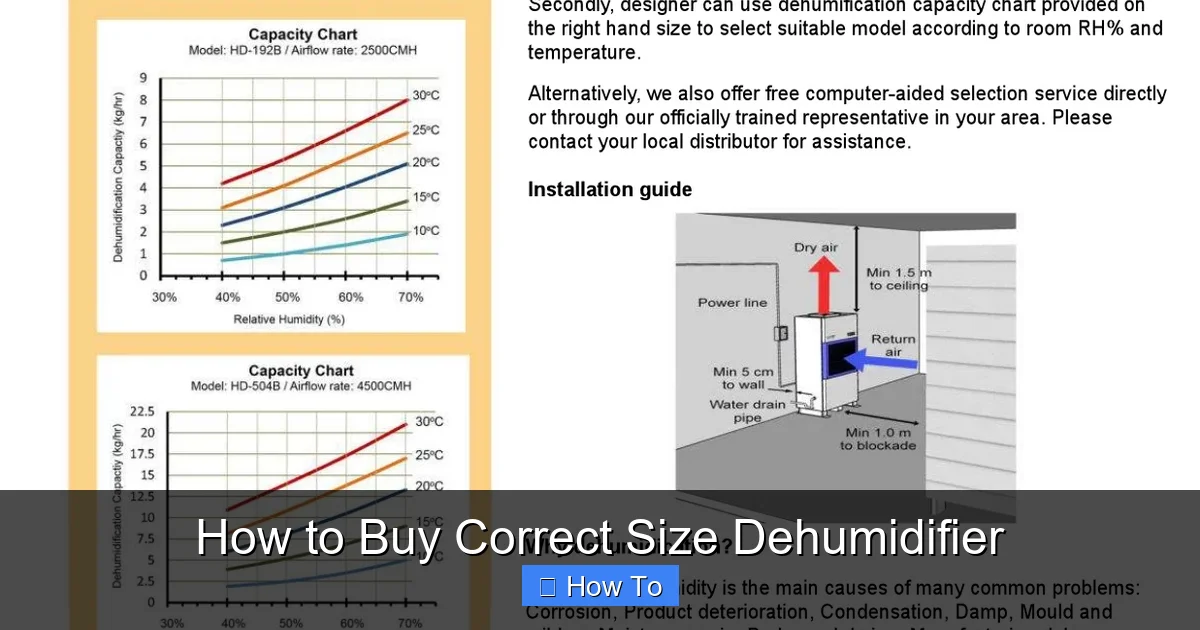
Choosing the right size dehumidifier ensures efficient moisture removal, energy savings, and better air quality. This guide walks you through room size, humidity levels, and key features to help you pick the perfect unit for your home or basement.
Quick Answers to Common Questions
Tip/Question?
How do I know if my dehumidifier is the right size?
Check if it runs continuously during humid weather and reduces moisture levels. If it cycles on and off too quickly or can’t lower humidity, it may be too small or too large.
Tip/Question?
Can I use one dehumidifier for my whole house?
Portable units work best in single rooms. For whole-house coverage, consider a whole-house dehumidifier integrated with your HVAC system.
Tip/Question?
Should I buy a dehumidifier with a built-in pump?
Yes, if you’re using it in a basement without easy access to a drain. A pump allows continuous drainage without manual emptying.
Tip/Question?
How often should I empty the water tank?
It depends on humidity and tank size. Most 30–50 pint units need emptying every 12–24 hours in damp conditions.
Tip/Question?
Is a higher pint rating always better?
Not necessarily. A unit too large for your space will short-cycle, wasting energy. Match the rating to your room size and humidity level.
How to Buy the Correct Size Dehumidifier
If you’ve ever walked into a damp basement and felt that musty smell, you know how uncomfortable excess moisture can be. It’s not just unpleasant—it can lead to mold, mildew, and even structural damage over time. That’s where a dehumidifier comes in. But here’s the catch: not all dehumidifiers are created equal. Buying the wrong size can leave you with a unit that’s either too weak to make a difference or so powerful it wastes energy and money.
In this guide, we’ll walk you through everything you need to know to buy the correct size dehumidifier. You’ll learn how to measure your space, assess humidity levels, understand capacity ratings, and choose the right features for your needs. By the end, you’ll be confident in selecting a dehumidifier that keeps your home dry, comfortable, and healthy.
Step 1: Measure the Square Footage of the Room
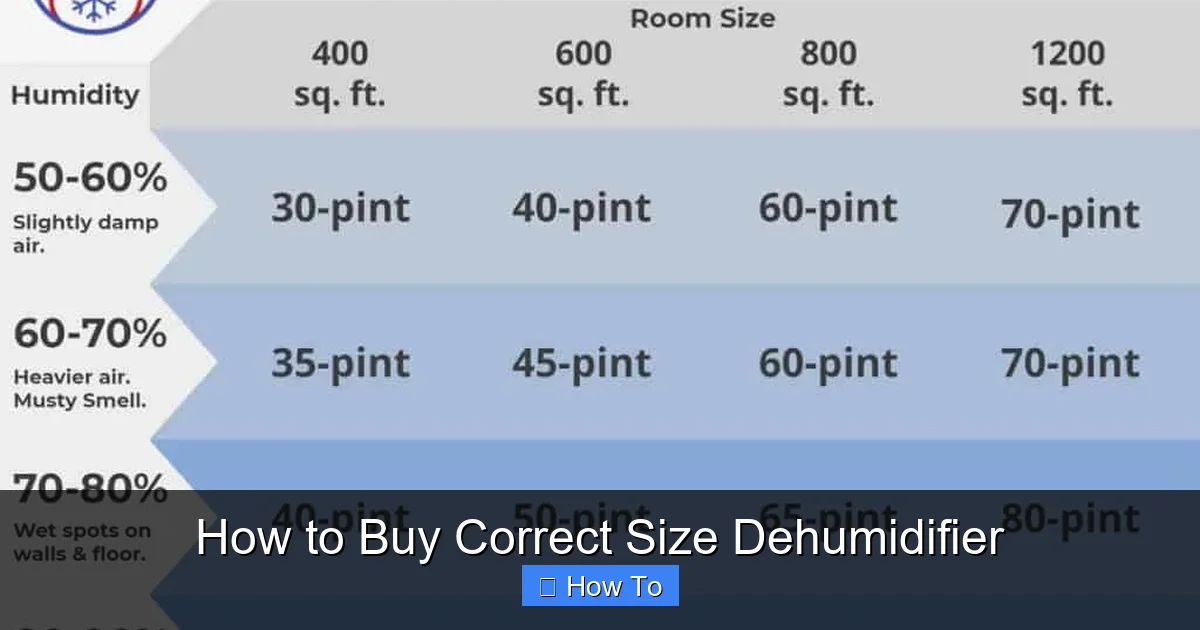
Visual guide about How to Buy Correct Size Dehumidifier
Image source: hvactrainingshop.com
The first step in buying the right dehumidifier is knowing exactly how much space you need to cover. Dehumidifiers are rated based on the square footage they can effectively serve. If you buy a unit too small for the area, it will struggle to remove moisture. If it’s too large, it may cycle on and off too frequently, wasting energy and reducing its lifespan.
How to Calculate Square Footage
To find the square footage of a room, simply multiply the length by the width. For example, if your basement is 20 feet long and 15 feet wide, the total area is 300 square feet.
- Use a tape measure to get accurate dimensions.
- For irregularly shaped rooms, break the space into smaller rectangles, calculate each, and add them together.
- Don’t forget to include closets, alcoves, or storage areas that may also be damp.
Why Room Size Matters
Dehumidifier manufacturers provide size recommendations based on square footage. For instance, a 30-pint dehumidifier is typically recommended for spaces up to 500 square feet, while a 50-pint model is better for areas up to 1,500 square feet. Matching your room size to the unit’s capacity ensures efficient moisture removal.
Example: Choosing Based on Room Size
Let’s say you have a 700-square-foot basement. A 30-pint dehumidifier might work in a very dry climate, but in a humid region or a damp basement, you’ll likely need a 50-pint model. Always consider both size and humidity when making your choice.
Step 2: Assess the Humidity Level in Your Space
Room size is important, but it’s only half the story. The actual moisture level in your space plays a huge role in determining the right dehumidifier size. A small bathroom with a chronic leak may need a more powerful unit than a large, dry living room.
Use a Hygrometer to Measure Humidity
A hygrometer is a small, inexpensive device that measures relative humidity (RH). You can buy one at most hardware stores or online for under $20. Aim for a humidity level between 30% and 50%. Anything above 60% increases the risk of mold and mildew.
- Place the hygrometer in the center of the room, away from windows or vents.
- Check the reading at different times of day, especially after showers or rainy weather.
- Take multiple readings over a few days for accuracy.
Classify the Dampness Level
Once you know your humidity level, classify the dampness to guide your dehumidifier choice:
- Light dampness (30–50% RH): Slight moisture, occasional musty smell. A smaller unit (20–30 pints) may suffice.
- Moderate dampness (50–70% RH): Noticeable dampness, damp spots, or condensation. A 30–50 pint unit is usually needed.
- Severe dampness (70%+ RH): Standing water, strong mildew odor, or visible mold. You’ll need a high-capacity unit (50+ pints) and possibly professional remediation.
Real-World Example
Imagine your basement has a consistent humidity reading of 65%. Even if it’s only 400 square feet, you’ll need a 50-pint dehumidifier to handle the excess moisture. Ignoring humidity levels could lead to buying a unit that’s too small and ineffective.
Step 3: Understand Dehumidifier Capacity (Pints per Day)
Dehumidifiers are rated by how many pints of moisture they can remove in 24 hours. This is known as “pints per day” (PPD). This number is crucial—it tells you how powerful the unit is.
What Do Pint Ratings Mean?
A 30-pint dehumidifier removes up to 30 pints of water from the air daily. But this doesn’t mean it will always remove exactly 30 pints. The actual amount depends on temperature, humidity, and air circulation.
- 20–30 pints: Best for small, lightly damp spaces like bathrooms or closets.
- 30–50 pints: Ideal for average-sized basements, laundry rooms, or damp living areas.
- 50+ pints: Designed for large, very damp spaces like flooded basements or crawl spaces.
Matching Capacity to Your Needs
Use this general guide to match capacity to your situation:
- Up to 500 sq. ft., light dampness: 20–30 pints
- 500–1,000 sq. ft., moderate dampness: 30–50 pints
- 1,000+ sq. ft., severe dampness: 50–70 pints
Keep in mind that these are estimates. Always consider both size and humidity together.
Don’t Oversize Your Unit
It might seem smart to buy the biggest dehumidifier available, but oversized units can cause problems. They remove moisture too quickly, causing short cycling—turning on and off frequently. This reduces efficiency, increases wear and tear, and may not allow the unit to run long enough to properly dehumidify the air.
Step 4: Consider the Environment and Usage
Not all rooms are created equal. The environment where you’ll use the dehumidifier affects its performance and the size you need.
Basements and Crawl Spaces
Basements are often cool, poorly ventilated, and prone to moisture from the ground. These spaces typically need larger, more powerful dehumidifiers. A 50-pint or higher model is common for basements over 500 square feet.
- Look for units with built-in pumps for continuous drainage.
- Choose models with auto-restart in case of power outages.
- Consider a dehumidifier with a hose connection to drain directly into a floor drain.
Laundry Rooms and Bathrooms
These areas generate a lot of moisture from showers and washing machines. A 20–30 pint portable dehumidifier is usually sufficient. Look for compact, quiet models with easy-to-empty tanks.
Garages and Workshops
Garages are often unheated and exposed to outdoor humidity. They may need a heavy-duty dehumidifier, especially in humid climates. A 50-pint unit with a washable filter and durable casing works well.
Whole-House Dehumidifiers
If you have a central HVAC system, consider a whole-house dehumidifier. These are installed in your ductwork and can handle the entire home. They’re more expensive but highly efficient for large spaces or high humidity.
Step 5: Evaluate Key Features and Functions
Once you’ve narrowed down the size, look at features that improve convenience, efficiency, and performance.
Auto-Humidistat
This feature lets you set your desired humidity level (e.g., 45%). The dehumidifier automatically turns on and off to maintain that level. It saves energy and ensures consistent comfort.
Continuous Drainage Option
Most dehumidifiers have a water tank that needs to be emptied manually. But many models offer a hose connection for continuous drainage. This is ideal for basements or unattended spaces.
- Use a garden hose to drain into a floor drain or sump pump.
- Ensure the hose is positioned downhill to allow gravity drainage.
Portability and Mobility
Look for units with caster wheels and a built-in handle. This makes it easy to move the dehumidifier from room to room or store it when not in use.
Washable Air Filter
A clean filter improves airflow and efficiency. Washable filters can be rinsed and reused, saving money and reducing waste.
Energy Efficiency
Check the Energy Factor (EF) rating—higher numbers mean better efficiency. Look for ENERGY STAR-certified models, which use up to 15% less energy than standard units.
Noise Level
Dehumidifiers can be noisy, especially in living areas. Look for models with a noise level below 50 decibels (dB) for quiet operation.
Step 6: Compare Brands and Read Reviews
Not all dehumidifiers are built the same. Some brands are known for durability, quiet operation, or advanced features.
Top Brands to Consider
- Frigidaire: Reliable, energy-efficient models with good customer support.
- hOmeLabs: Popular for basements, with large tanks and continuous drainage.
- GE: Offers a range of sizes and smart features like Wi-Fi connectivity.
- Eva-Dry: Known for compact, portable units ideal for small spaces.
- AprilAire: Specializes in whole-house systems for integrated humidity control.
Read Customer Reviews
Before buying, check reviews on Amazon, Home Depot, or Consumer Reports. Look for comments about:
- Actual performance in real homes
- Noise levels
- Ease of maintenance
- Durability over time
Avoid units with frequent complaints about leaks, breakdowns, or poor customer service.
Step 7: Set a Budget and Compare Prices
Dehumidifiers range from $100 for small portable units to $1,000+ for whole-house systems. Set a budget based on your needs.
Average Price Ranges
- $100–$200: Small 20–30 pint units for bathrooms or closets.
- $200–$400: Mid-sized 30–50 pint models for basements or large rooms.
- $400–$700: High-capacity 50–70 pint units with advanced features.
- $700+: Whole-house or commercial-grade systems.
Value vs. Cost
Don’t just go for the cheapest option. A slightly more expensive model with better efficiency, durability, and features can save you money in the long run through lower energy bills and fewer repairs.
Troubleshooting Common Sizing Mistakes
Even with careful planning, it’s easy to make mistakes. Here’s how to avoid common pitfalls.
Mistake 1: Ignoring Humidity Levels
Buying based only on room size can lead to underpowered units. Always check humidity with a hygrometer.
Mistake 2: Oversizing the Unit
A dehumidifier that’s too large will short-cycle, wasting energy and reducing lifespan. Stick to recommended sizes.
Mistake 3: Forgetting About Drainage
If you can’t empty the tank daily, choose a model with continuous drainage. Otherwise, you’ll be constantly monitoring it.
Mistake 4: Overlooking Noise
A noisy dehumidifier in a bedroom or living room can be disruptive. Check decibel ratings before buying.
Mistake 5: Not Considering Climate
If you live in a humid region like Florida or Louisiana, you may need a larger unit than someone in a dry climate like Arizona.
Final Tips for a Smart Purchase
Before you click “buy,” double-check these points:
- Confirm your room’s square footage.
- Measure humidity with a hygrometer.
- Match capacity (pints per day) to size and dampness.
- Choose features that fit your lifestyle (drainage, portability, etc.).
- Read reviews and compare brands.
- Check for ENERGY STAR certification.
- Ensure the unit comes with a good warranty (at least 1–2 years).
Conclusion
Buying the correct size dehumidifier doesn’t have to be overwhelming. By measuring your space, assessing humidity, understanding capacity ratings, and considering your environment and features, you can make a smart, informed decision. A properly sized dehumidifier will keep your home dry, prevent mold, improve air quality, and save you money on energy bills.
Remember: it’s not just about size—it’s about matching the right unit to your specific needs. Take your time, do your research, and invest in a dehumidifier that works as hard as you do to maintain a healthy, comfortable home.