
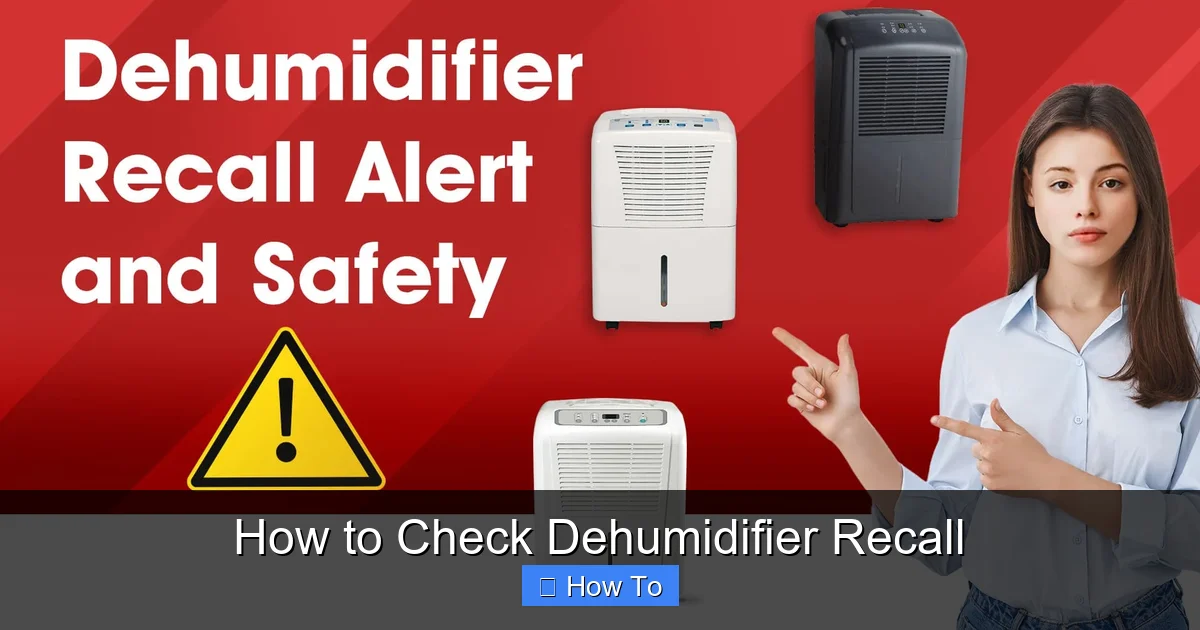
Concerned about your dehumidifier’s safety? This guide shows you exactly how to check for recalls using model numbers, government databases, and manufacturer tools. Stay informed, avoid hazards, and keep your home safe with simple, reliable steps.
Quick Answers to Common Questions
Tip/Question?
How often should I check for dehumidifier recalls?
Check at least once a year, or whenever you hear news about appliance recalls. Registering your unit ensures you’ll be notified automatically.
Tip/Question?
Can I still use my dehumidifier if it’s recalled?
No. Stop using it immediately and follow the manufacturer’s instructions for repair, replacement, or refund.
Tip/Question?
What if I can’t find my serial number?
Use the model number to search for recalls. If needed, contact the manufacturer with photos and purchase details for assistance.
Tip/Question?
Are all dehumidifier brands equally likely to be recalled?
No. Some brands have had multiple recalls due to shared components. Always check regardless of brand reputation.
Tip/Question?
Can I get a refund for a recalled dehumidifier?
Yes, many recalls offer refunds, replacements, or repair services—usually at no cost to you.
How to Check Dehumidifier Recall: A Complete Step-by-Step Guide
Dehumidifiers are essential appliances in many homes, especially in humid climates or basements prone to moisture. They help prevent mold, mildew, and musty odors by pulling excess moisture from the air. But like any electrical device, dehumidifiers can have safety issues—sometimes serious enough to warrant a product recall.
Recalls happen when a manufacturer or government agency discovers a defect that could pose a risk to users, such as fire hazards, electrical malfunctions, or excessive overheating. In recent years, several major brands—including Frigidaire, GE, and LG—have issued recalls for dehumidifiers due to fire risks. That’s why it’s crucial to know how to check dehumidifier recall status regularly.
In this guide, you’ll learn exactly how to check if your dehumidifier has been recalled. We’ll walk you through finding your model number, using official recall databases, contacting manufacturers, and what to do if your unit is affected. Whether you’ve owned your dehumidifier for years or just bought a new one, this guide will help you stay safe and informed.
Why Dehumidifier Recalls Happen
Dehumidifier recalls typically occur due to defects in internal components, especially the compressor, fan motor, or power supply. These defects can lead to overheating, smoke, or even fires. In some cases, the issue stems from a manufacturing flaw, while in others, it’s related to long-term wear and tear under certain conditions.
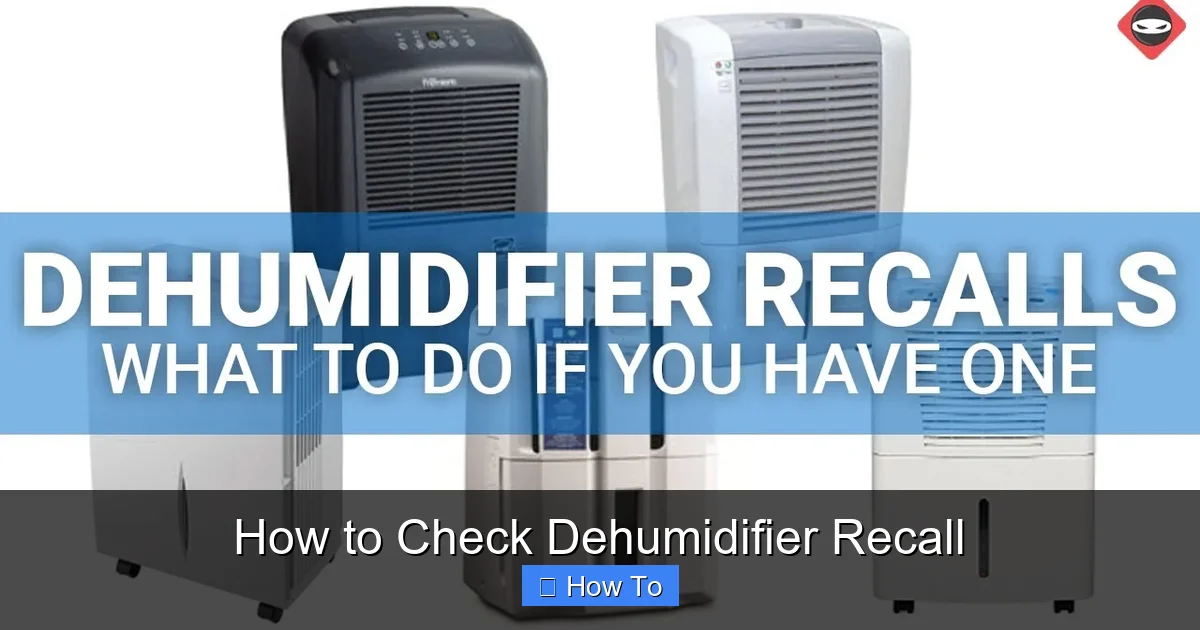
Visual guide about How to Check Dehumidifier Recall
Image source: i.ytimg.com
One of the most notable dehumidifier recalls involved over 2 million units from brands like Frigidaire, GE, and Kenmore. The U.S. Consumer Product Safety Commission (CPSC) announced the recall in 2013 after reports of units overheating and catching fire. Many of these units were manufactured by the same supplier, highlighting how widespread the issue could be.
Other common reasons for recalls include:
- Faulty wiring that increases fire risk
- Compressor failures leading to excessive heat buildup
- Defective control boards that fail to shut off the unit
- Fan motor issues causing the unit to overheat during extended use
Because dehumidifiers often run for long periods—sometimes continuously—they’re at higher risk for overheating if there’s a defect. That’s why checking for recalls isn’t just a good idea; it’s a safety necessity.
Step 1: Locate Your Dehumidifier’s Model and Serial Number
The first and most important step in checking for a dehumidifier recall is identifying your unit’s model and serial number. These numbers are unique to your appliance and are required to verify whether it’s part of a recall.
Where to Find the Model and Serial Number
Most dehumidifiers have a label or sticker that lists the model and serial number. This label is typically located in one of the following places:
- On the back or side of the unit
- Behind the front grille or air filter
- Inside the water collection bucket compartment
- On the bottom of the unit (you may need to tilt it carefully)
The label will usually include:
- Model Number: A combination of letters and numbers (e.g., FAD704DWD)
- Serial Number: A longer series of numbers, often starting with a letter or year code
- Manufacturer Name: Such as Frigidaire, Honeywell, or LG
- Manufacture Date: Sometimes included as a code (e.g., “2022” or “M22”)
Example: Reading a Model Number
Let’s say your dehumidifier has the model number “FAD704DWD.” Here’s how to interpret it:
- FAD: Indicates the product line or series
- 704: Often refers to the pint capacity (70 pints per day)
- DWD: May indicate color, features, or regional variation
While the exact meaning varies by brand, the full model number is what you’ll need for recall checks.
What If the Label Is Missing or Damaged?
If the label is faded, torn, or missing, try these steps:
- Check the original packaging or user manual—model numbers are often printed there.
- Look for a digital copy of the manual online using the brand name and approximate model.
- Contact the manufacturer with any identifying details (purchase date, retailer, photos of the unit).
In rare cases, you may need to open the unit (only if you’re qualified) to find internal labels, but this is not recommended unless you’re experienced with appliance repair.
Step 2: Use Official Recall Databases
Once you have your model and serial number, the next step is to search official recall databases. These are maintained by government agencies and are the most reliable sources for recall information.
Check the U.S. Consumer Product Safety Commission (CPSC)
The CPSC is the primary agency responsible for tracking product recalls in the United States. Their website, cpsc.gov, has a searchable database of all recalled consumer products, including dehumidifiers.
Here’s how to use it:
- Go to cpsc.gov/recalls.
- Use the search bar to type in your dehumidifier’s brand (e.g., “Frigidaire dehumidifier”).
- Browse the results for recalls related to your model number.
- Click on any relevant recall to see details, including affected models, hazards, and remedy options.
The CPSC site also allows you to filter recalls by product type, date, and hazard. You can sign up for email alerts to be notified of new recalls in categories you care about.
Search the Manufacturer’s Website
Most major appliance brands have a dedicated recall or safety page on their websites. These pages are often easier to navigate than government databases and may include model-specific tools.
For example:
- Frigidaire: Visit frigidaire.com/recalls and enter your model number.
- LG: Go to lg.com/us/support/product-recalls.
- Honeywell: Check honeywellhome.com/recalls.
These tools usually ask for your model number and may also ask for your serial number or zip code. Some even allow you to register your product for future alerts.
Use Third-Party Recall Aggregators (With Caution)
Websites like Recalls.gov aggregate recall information from multiple U.S. agencies, including the CPSC, FDA, and NHTSA. While convenient, always verify information on the original source (like CPSC.gov) to ensure accuracy.
Avoid unverified sites or forums that claim to have “secret” recall lists. Stick to official sources to avoid misinformation.
Step 3: Register Your Dehumidifier with the Manufacturer
One of the best ways to stay informed about recalls is to register your dehumidifier with the manufacturer. Registration ensures you’ll be contacted directly if your model is ever recalled.
How to Register Your Product
Most manufacturers offer online registration forms. Here’s how it typically works:
- Go to the manufacturer’s website and find the “Product Registration” or “Warranty” section.
- Fill out the form with your name, email, address, and product details (model, serial number, purchase date).
- Upload a photo of your receipt if required.
- Submit the form and save a confirmation email.
Registration usually takes just a few minutes and is free. Some brands even offer small incentives, like extended warranties or discount codes, for registering.
Why Registration Matters
Not all recalls are widely publicized. Manufacturers often rely on registered customers to notify them directly. If you don’t register, you might miss a critical safety alert—even if you bought the unit new.
For example, a 2020 recall of certain Danby dehumidifiers was only announced through direct mail and email to registered owners. Unregistered users had no way of knowing unless they checked the CPSC site regularly.
What If You Bought It Secondhand?
If you purchased your dehumidifier used or inherited it, you can still register it. Use the model and serial number to complete the registration. Some manufacturers may ask for proof of purchase, but many will accept the serial number alone.
Even if you can’t register, keep the model number handy and check for recalls periodically—especially if the unit is several years old.
Step 4: Monitor for Signs of Defects
Sometimes, a dehumidifier may show signs of a problem before an official recall is issued. Being aware of these warning signs can help you act quickly and prevent accidents.
Common Warning Signs
Watch out for the following symptoms:
- Unusual noises: Grinding, clicking, or loud buzzing could indicate a failing motor or compressor.
- Excessive heat: If the unit feels hot to the touch—especially near the back or vents—it may be overheating.
- Frequent shutdowns: If the dehumidifier turns off unexpectedly, it could be a safety response to overheating.
- Burning smell: Any odor of smoke or burnt plastic is a serious red flag.
- Visible damage: Cracks, melted plastic, or scorch marks near electrical components.
- Tripped circuit breakers: If the unit repeatedly trips your home’s breaker, it may have an electrical fault.
What to Do If You Notice a Problem
If you observe any of these signs:
- Unplug the dehumidifier immediately.
- Do not use it until it’s inspected or repaired.
- Check for a recall using the steps above.
- Contact the manufacturer or a certified technician for evaluation.
Even if no recall is active, the unit may still be unsafe. It’s better to be cautious than risk a fire or electrical hazard.
Step 5: What to Do If Your Dehumidifier Is Recalled
If you discover that your dehumidifier is part of a recall, take action right away. Ignoring a recall can put your home and family at risk.
Immediate Steps to Take
Follow these steps as soon as you confirm a recall:
- Stop using the unit: Unplug it and do not operate it under any circumstances.
- Follow the recall instructions: The recall notice will explain the remedy—usually a repair, replacement, or refund.
- Contact the manufacturer: Use the phone number or website provided in the recall notice to initiate the process.
- Provide required information: You’ll likely need your model number, serial number, and proof of purchase.
- Arrange for service: Many recalls offer free repairs or replacements. Some may even provide a prepaid shipping label.
Common Recall Remedies
Depending on the issue, the manufacturer may offer one of the following:
- Free repair: A technician will fix the defective component.
- Replacement unit: You’ll receive a new or refurbished dehumidifier.
- Refund or voucher: You may get your money back or a credit toward a new purchase.
- Recall kit: Some recalls provide a modification kit to reduce risk (e.g., a new control board).
Never attempt to repair a recalled unit yourself unless instructed by the manufacturer. DIY fixes can void warranties and increase safety risks.
Document Everything
Keep records of:
- The recall notice
- Your communication with the manufacturer
- Receipts or proof of purchase
- Photos of the unit and any damage
These documents may be needed for warranty claims, insurance, or future reference.
Troubleshooting Common Issues
Sometimes, checking for a recall can be confusing or frustrating. Here are solutions to common problems:
“I Can’t Find My Model Number”
If the label is missing or unreadable:
- Check the user manual or original box.
- Search online using the brand and approximate model.
- Contact customer service with photos and purchase details.
“The Recall Site Says My Model Isn’t Affected”
Double-check that you entered the model number correctly. Even a small typo can lead to incorrect results. Try searching by brand and narrowing down by capacity or features.
“The Manufacturer Is No Longer in Business”
If the brand has gone out of business, check the CPSC database for any ongoing recall programs. In some cases, the government or a successor company may still handle recalls.
“I Bought It Years Ago—Is It Still Covered?”
Most recalls have no expiration date. Even if your unit is old, you’re still eligible for the remedy if it’s part of a recall.
Conclusion
Checking for a dehumidifier recall is a simple but vital step in home safety. With just a few minutes of your time, you can protect your family from fire hazards, electrical risks, and other dangers. By locating your model number, using official recall databases, registering your product, and staying alert to warning signs, you’ll be well-prepared to respond if a recall is issued.
Don’t wait for a problem to occur. Make it a habit to check for recalls annually—especially if your dehumidifier is more than a few years old. And remember: when in doubt, unplug the unit and contact the manufacturer. Your safety is always worth the extra effort.