
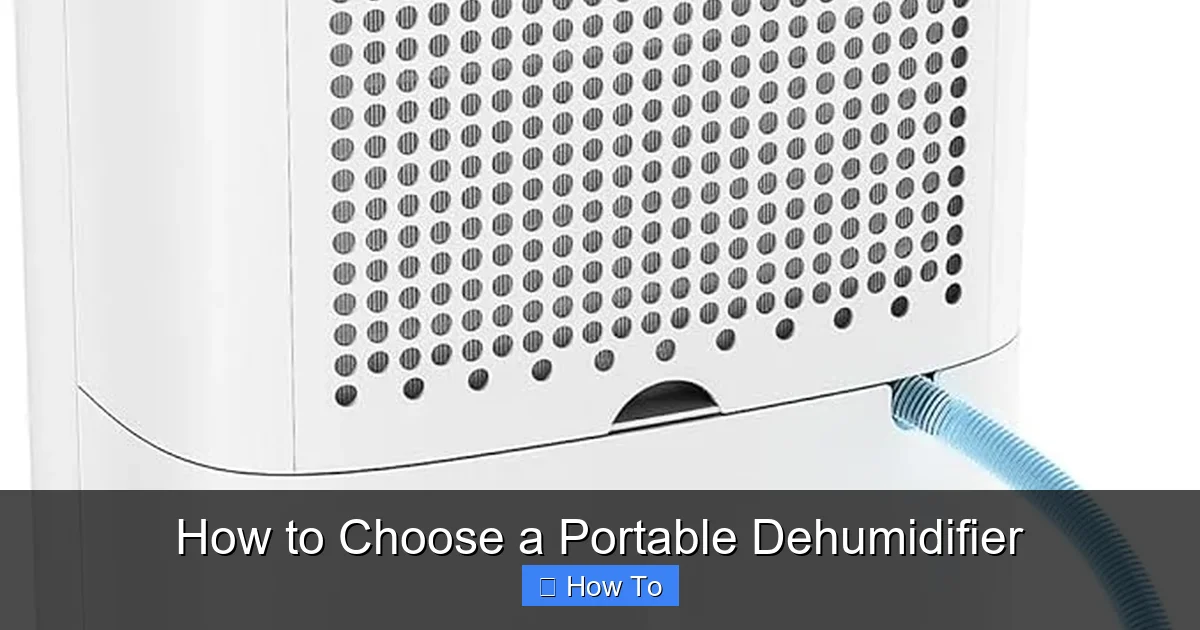
Choosing the right portable dehumidifier can improve air quality, reduce mold, and make your home more comfortable. This guide walks you through key factors like size, capacity, and features so you can make a smart, informed decision.
Quick Answers to Common Questions
What size dehumidifier do I need for a 1,000 sq ft basement?
A 30- to 50-pint dehumidifier is ideal for a 1,000 sq ft basement, depending on humidity. Choose 30 pints for moderate dampness and 50 pints for very wet conditions.
Can I leave a dehumidifier on all the time?
Yes, especially if it has an auto-humidistat. It will cycle on and off to maintain your set humidity level, saving energy and preventing over-drying.
Do dehumidifiers use a lot of electricity?
They can, but ENERGY STAR models are much more efficient. Look for units with high energy factor (EF) ratings to reduce costs.
Should I get a dehumidifier with a hose or tank?
Use a hose for continuous drainage in basements or high-moisture areas. Use a tank for small spaces or when you can empty it regularly.
Are mini dehumidifiers effective?
They work for closets or small bathrooms but aren’t powerful enough for whole rooms. Choose based on your space and needs.
How to Choose a Portable Dehumidifier: A Complete Guide
If you’ve ever noticed musty smells, peeling paint, or condensation on windows, you might be dealing with excess moisture. High humidity doesn’t just feel uncomfortable—it can damage your home and trigger allergies or asthma. That’s where a portable dehumidifier comes in. These compact devices pull moisture from the air, helping you maintain a healthy indoor environment.
But with so many models on the market, how do you pick the right one? This guide will walk you through everything you need to know to choose a portable dehumidifier that fits your space, budget, and lifestyle. Whether you’re tackling a damp basement, protecting your wardrobe, or improving air quality in your bedroom, we’ve got you covered.
By the end of this guide, you’ll understand how to evaluate capacity, features, energy use, and more—so you can buy with confidence.
Step 1: Determine Your Needs and Space
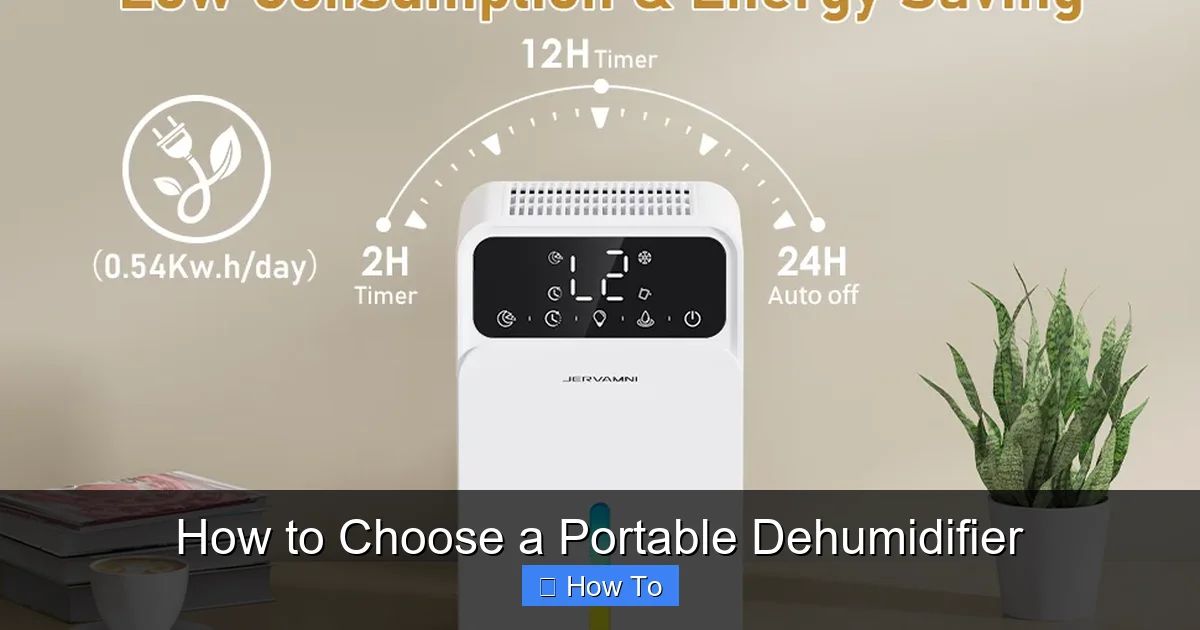
Visual guide about How to Choose a Portable Dehumidifier
Image source: m.media-amazon.com
Before you start shopping, take a moment to assess your situation. Not all dehumidifiers are created equal, and the best one for you depends on where you plan to use it and how severe your moisture problem is.
Identify the Problem Area
Start by pinpointing where you need dehumidification. Common problem areas include:
- Basements: Often cool and damp, especially in summer or after heavy rain.
- Bathrooms: High humidity from showers can lead to mold and mildew.
- Laundry rooms: Wet clothes and dryers add moisture to the air.
- Closets: Poor ventilation can cause musty odors and damage clothes.
- Entire apartments or small homes: If humidity is an issue throughout, a whole-home or large-capacity unit may be needed.
Ask yourself: Is the space consistently damp, or only during certain seasons? Do you see visible mold, water stains, or feel clammy air? These clues help determine how powerful your dehumidifier needs to be.
Measure the Room Size
Most dehumidifiers are rated by the square footage they can effectively cover. Grab a tape measure and note the length and width of the room. Multiply them to get the total square footage.
For example:
- A 10 ft x 12 ft room = 120 sq ft
- A 15 ft x 20 ft basement = 300 sq ft
Keep in mind that open floor plans may require a larger unit, while enclosed spaces like closets need much smaller models.
Assess Humidity Levels
Humidity is measured as a percentage. Ideal indoor humidity is between 30% and 50%. You can check this with a hygrometer (a small, inexpensive device available at hardware stores).
If your humidity is:
- 50–60%: Slightly high—look for a standard dehumidifier.
- 60–70%: Moderately damp—choose a mid-to-high capacity unit.
- Above 70%: Very wet—opt for a high-capacity model with strong moisture removal.
Also consider the climate in your region. Homes in humid areas like Florida or Louisiana may need more powerful units than those in drier states like Arizona.
Step 2: Understand Dehumidifier Capacity
Capacity refers to how much moisture a dehumidifier can remove in 24 hours, measured in pints. This is one of the most important factors when choosing a unit.
What Do Pint Ratings Mean?
A “30-pint” dehumidifier can remove up to 30 pints of water from the air in a day. But don’t just go for the highest number—match the capacity to your needs.
Here’s a general guide:
- 20–30 pints: Ideal for small spaces (under 500 sq ft), closets, or mildly damp areas.
- 30–50 pints: Best for medium rooms (500–1,500 sq ft), basements, or moderately humid homes.
- 50+ pints: Designed for large spaces (1,500+ sq ft), very damp basements, or flood-prone areas.
For example, a 30-pint unit works well in a 500 sq ft basement with average humidity. But if your basement floods after storms, a 50-pint model is a smarter choice.
Don’t Overbuy (or Underbuy)
Choosing a unit that’s too small means it will run constantly and may not keep up. One that’s too large will cycle on and off frequently, wasting energy and potentially over-drying the air.
Tip: If you’re between sizes, go up. It’s better to have a little extra power than not enough.
Step 3: Consider Energy Efficiency
Dehumidifiers can use a lot of electricity, especially if they run for long periods. Choosing an energy-efficient model saves money and reduces your carbon footprint.
Look for ENERGY STAR Certification
ENERGY STAR-certified dehumidifiers meet strict efficiency guidelines set by the U.S. Environmental Protection Agency. They use 10–20% less energy than standard models.
Check the yellow EnergyGuide label on the unit or product page. It shows estimated annual energy use (in kWh) and operating cost.
For example:
- A 30-pint ENERGY STAR model might use 300 kWh/year.
- A non-certified model of the same size could use 350 kWh/year.
Over five years, that difference could save you $50–$100 on electricity.
Understand the Energy Factor
The energy factor (EF) measures how efficiently a dehumidifier removes moisture per kilowatt-hour of electricity. Higher EF = better efficiency.
Look for:
- EF of 1.5 or higher: Very efficient
- EF of 1.2–1.4: Moderately efficient
- EF below 1.2: Less efficient—avoid if possible
Tip: Compact or mini dehumidifiers often have lower EF ratings. They’re fine for small spaces but not ideal for whole-room use.
Step 4: Evaluate Noise Levels
Dehumidifiers use fans and compressors, which can be noisy. If you plan to use yours in a bedroom, home office, or living room, noise matters.
Check the Decibel (dB) Rating
Sound is measured in decibels (dB). Here’s a quick reference:
- 30–40 dB: Quiet, like a whisper or library
- 40–50 dB: Moderate, like a refrigerator
- 50–60 dB: Noticeable, like a conversation
- 60+ dB: Loud, like a vacuum cleaner
Most portable dehumidifiers range from 45 to 60 dB. For quiet operation, aim for under 50 dB.
Look for Quiet Features
Some models include:
- Low-speed fan settings: Reduce noise during light dehumidification.
- Compressor insulation: Dampens sound from the motor.
- Sleep mode: Automatically lowers fan speed at night.
Example: The hOmeLabs 50-Pint Dehumidifier runs at 48 dB on low—quiet enough for nighttime use.
Step 5: Choose the Right Drainage Option
Dehumidifiers collect water in a tank or bucket. When it fills up, you need to empty it—unless you have a continuous drainage option.
Removable Water Tank
Most portable units come with a built-in tank (usually 1–2 gallons). You’ll need to empty it manually when full.
Pros:
- No plumbing required
- Easy to move and set up
- Great for small spaces or occasional use
Cons:
- Requires frequent emptying (every 8–12 hours in humid conditions)
- Can be heavy when full
Tip: Look for a tank with a handle and spill-proof design. Some models alert you when the tank is full.
Continuous Drainage Hose
Many dehumidifiers have a hose connection for continuous drainage. You attach a garden hose and route it to a floor drain, sink, or sump pump.
Pros:
- No need to empty the tank
- Ideal for basements or unattended use
- Perfect for high-moisture areas
Cons:
- Requires access to a drain or sump
- Hose must be positioned correctly to avoid leaks
Tip: If your basement has a floor drain, continuous drainage is a game-changer.
Pump-Assisted Drainage
Some high-end models include a built-in pump that can push water upward (e.g., to a sink or window). This is useful if your drain is above the unit.
Example: The AprilAire E080 has a condensate pump for flexible drainage.
Step 6: Look for Smart and Convenient Features
Modern dehumidifiers come with features that make them easier and more effective to use.
Auto-Humidistat
This sensor measures humidity and automatically turns the unit on or off to maintain your desired level (e.g., 45%).
Why it matters: Prevents over-drying and saves energy.
Timer and Auto-Shutoff
Set the dehumidifier to run for a specific time (e.g., 2, 4, or 8 hours). Auto-shutoff turns it off when the tank is full.
Great for: Running overnight or when you’re away.
Washable or Reusable Filters
Air filters trap dust and allergens. Washable filters save money and reduce waste.
Tip: Clean the filter every 2–4 weeks for best performance.
Defrost Function
In cold environments (below 65°F), moisture can freeze on the coils. A defrost function melts ice so the unit keeps working.
Important for: Unheated basements or garages in winter.
Digital Display and Controls
Easy-to-read screens show humidity levels, settings, and alerts. Touch controls or remote access add convenience.
Portability Features
Since these are portable units, look for:
- Built-in handles: For lifting and carrying
- Wheels or casters: Make moving across floors easy
- Compact design: Fits under sinks or in corners
Example: The Frigidaire FFAD5033W1 has recessed handles and smooth-rolling wheels.
Step 7: Compare Brands and Read Reviews
Not all dehumidifiers are built the same. Some brands are known for reliability, while others cut corners.
Top Brands to Consider
- Frigidaire: Reliable, energy-efficient, widely available
- hOmeLabs: Great value, quiet operation, strong customer support
- GE: Durable, smart features, good for large spaces
- AprilAire: High-end, whole-home models, excellent build quality
- Eva-Dry: Compact, no-electric options (desiccant models)
Read Real Customer Reviews
Don’t rely solely on product descriptions. Check reviews on Amazon, Home Depot, or Consumer Reports.
Look for comments about:
- How well it reduces humidity
- Noise level in real homes
- Tank capacity and ease of emptying
- Durability over time
- Customer service experience
Red flags: Frequent breakdowns, leaks, or poor support.
Step 8: Set a Budget
Portable dehumidifiers range from $50 to $500+. Set a realistic budget based on your needs.
Price Ranges
- $50–$100: Mini or compact models (10–20 pints). Best for small spaces or closets.
- $100–$200: Mid-range units (30–50 pints). Good for average rooms and basements.
- $200–$350: High-capacity or smart models (50+ pints). Ideal for large or very damp areas.
- $350+: Premium or whole-home systems. Often include pumps, advanced controls, and superior build.
Tip: A $150 model that lasts 5 years is a better value than a $100 unit that breaks in 2.
Factor in Long-Term Costs
Consider:
- Energy use (check kWh/year)
- Filter replacement costs
- Warranty length (1–5 years is typical)
A slightly more expensive, efficient model may save you money over time.
Step 9: Check Warranty and Support
A good warranty protects your investment. Most portable dehumidifiers come with a 1- to 2-year limited warranty.
What to Look For
- Length: 2+ years is better than 1
- Coverage: Does it include parts and labor?
- Customer support: Is there a phone number, email, or live chat?
- Return policy: Can you return it within 30–90 days if it doesn’t work?
Tip: Register your product online to activate the warranty.
Troubleshooting Common Issues
Even the best dehumidifiers can have problems. Here’s how to fix common issues:
Unit Won’t Turn On
- Check power cord and outlet
- Ensure the tank isn’t full (auto-shutoff may be triggered)
- Reset the unit by unplugging for 10 seconds
Not Removing Moisture
- Clean the air filter
- Make sure doors/windows are closed
- Check if the room is too cold (below 65°F)
- Verify the humidistat setting
Leaking Water
- Ensure the tank is seated properly
- Check hose connections for cracks or loose fits
- Look for cracks in the water tank
Too Noisy
- Place on a flat, stable surface
- Clean the fan and coils
- Switch to low-speed mode
Final Tips for Buying
Before you click “buy,” ask yourself:
- Does this unit match my room size and humidity level?
- Is it energy-efficient and quiet enough for my space?
- Do I have a way to drain it continuously if needed?
- Are the features worth the price?
- Do real users say it works well long-term?
Take your time. A good dehumidifier is an investment in your home’s health and comfort.
Conclusion
Choosing the right portable dehumidifier doesn’t have to be overwhelming. By focusing on your space, humidity level, and key features like capacity, efficiency, and drainage, you can find a model that works perfectly for your needs.
Remember: The best dehumidifier is the one that fits your lifestyle. Whether you’re fighting basement dampness or protecting your clothes from mildew, the right unit can make a big difference.
Use this guide as your checklist. Compare options, read reviews, and don’t rush the decision. With the right portable dehumidifier, you’ll enjoy fresher air, fewer allergens, and a healthier home—all year long.