
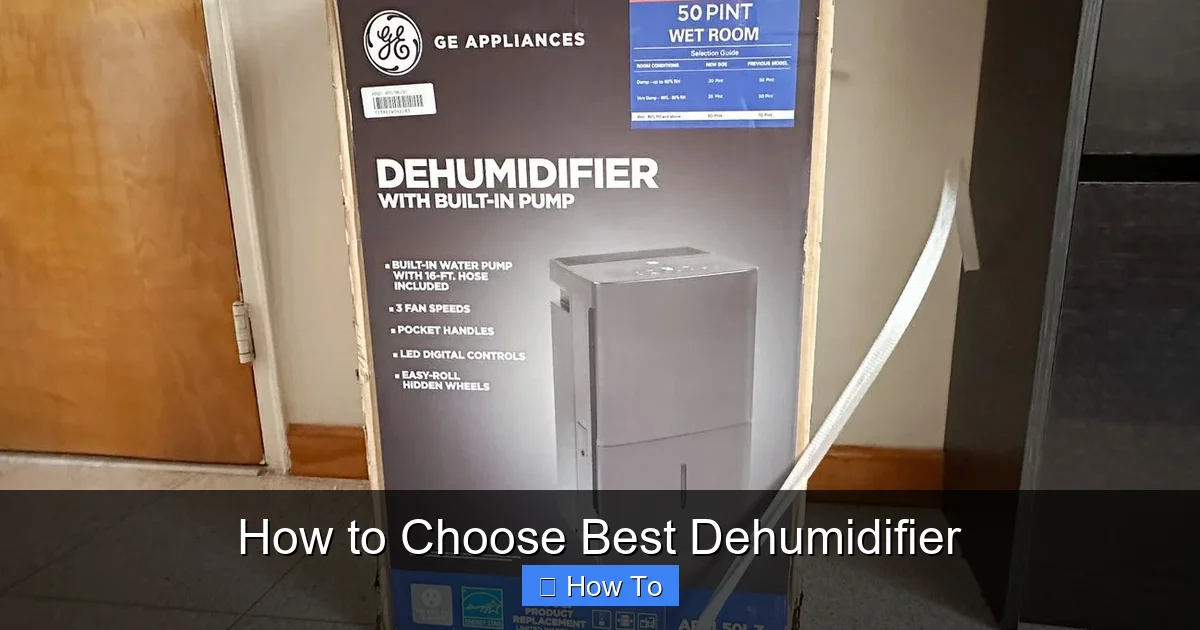
Choosing the best dehumidifier can improve air quality, reduce mold, and boost comfort. This guide walks you through key factors like room size, humidity levels, and smart features to help you pick the right model for your needs.
Quick Answers to Common Questions
What size dehumidifier do I need for a 1,000 sq. ft. basement?
For a 1,000 sq. ft. basement, choose a 50–70 pint dehumidifier, especially if the space is damp or prone to moisture. If humidity is only mild, a 30–50 pint model may suffice.
Can I run a dehumidifier all the time?
Yes, but it’s better to use an auto-humidistat. This keeps humidity at your desired level without overworking the unit or wasting energy.
Do dehumidifiers use a lot of electricity?
They can, but ENERGY STAR models are more efficient. A 50-pint unit typically uses 500–700 watts. Use a timer or smart features to reduce runtime.
Where should I place my dehumidifier?
Place it in the center of the room or near the source of moisture. Keep vents clear and avoid corners or tight spaces for best airflow.
How often should I clean the filter?
Clean the filter every 2–4 weeks during heavy use. A dirty filter reduces efficiency and can cause the unit to overheat.
How to Choose the Best Dehumidifier
High humidity doesn’t just feel sticky—it can damage your home, trigger allergies, and invite mold. Whether you’re dealing with damp basements, musty closets, or a humid climate, a dehumidifier is a smart investment. But with so many models on the market, how do you choose the best dehumidifier for your needs?
In this guide, you’ll learn exactly what to look for when buying a dehumidifier. We’ll cover everything from room size and humidity levels to energy efficiency and smart features. By the end, you’ll know how to pick a unit that’s powerful, reliable, and perfect for your space. Let’s dive in!
Step 1: Understand Why You Need a Dehumidifier
Before shopping, it helps to know what a dehumidifier does and why it matters. These appliances remove excess moisture from the air, helping you maintain a healthy indoor environment. Too much humidity can lead to:
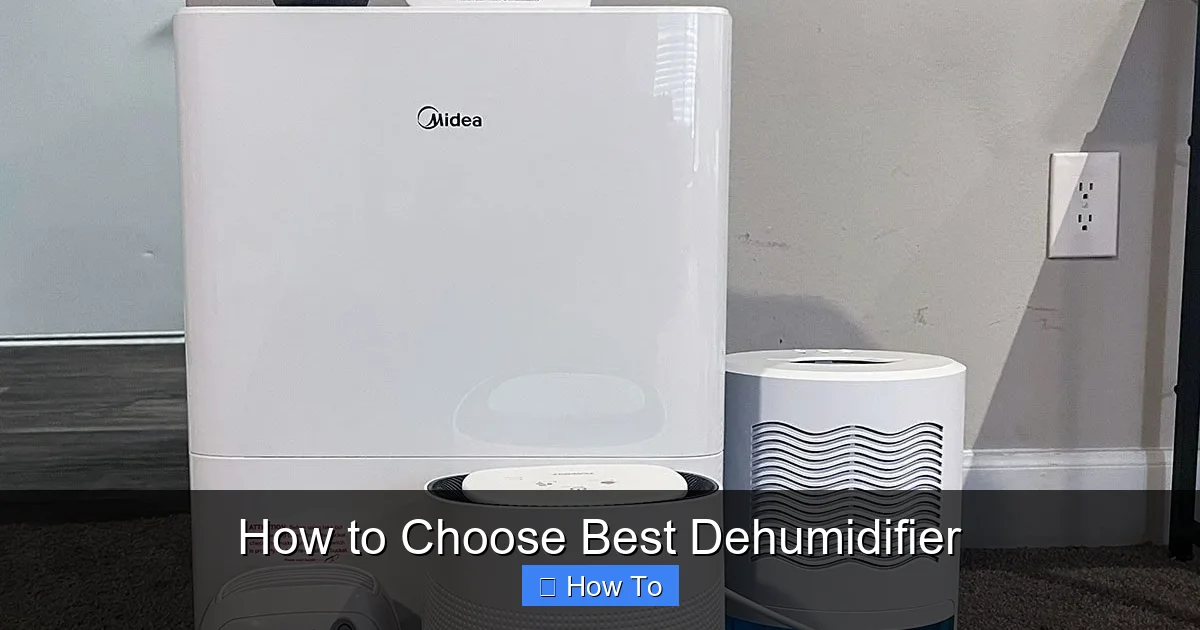
Visual guide about How to Choose Best Dehumidifier
Image source: familyhandyman.com
- Mold and mildew growth
- Musty odors
- Warped wood and peeling paint
- Increased dust mites and allergens
- Uncomfortable, clammy air
On the flip side, too little humidity can dry out your skin and irritate your respiratory system. The ideal indoor humidity level is between 30% and 50%. A dehumidifier helps you hit that sweet spot, especially during humid seasons or in naturally damp areas like basements and bathrooms.
Common Signs You Need a Dehumidifier
- Condensation on windows or walls
- Persistent musty smell
- Visible mold spots
- Allergy symptoms that worsen at home
- Clothes or towels that stay damp after drying
If you notice any of these, it’s time to consider a dehumidifier. But not all units are created equal—so let’s look at how to choose the right one.
Step 2: Measure Your Space and Humidity Level
The first step in choosing the best dehumidifier is understanding your environment. Two key factors matter: room size and humidity level.
Determine Room Size
Dehumidifiers are rated by how many pints of moisture they can remove in 24 hours. This is called the “pint capacity.” Larger rooms need higher capacity units. Here’s a general guide:
- Up to 500 sq. ft.: 20–30 pint capacity
- 500–1,000 sq. ft.: 30–50 pint capacity
- 1,000–1,500 sq. ft.: 50–70 pint capacity
- Over 1,500 sq. ft.: 70+ pint capacity or whole-house system
Measure the length and width of the room and multiply to get square footage. If your space is oddly shaped or has high ceilings, round up to the next size category.
Check Humidity Levels
Use a hygrometer (a small, inexpensive device) to measure indoor humidity. Place it in the room for 24 hours, checking it at different times. If the reading is consistently above 50%, you need a dehumidifier.
For basements or crawl spaces, humidity is often higher due to poor ventilation. In these areas, aim for a unit with a higher capacity and a pump for continuous drainage.
Step 3: Choose the Right Type of Dehumidifier
There are two main types of dehumidifiers: compressor (refrigerant) and desiccant. Each works differently and suits different environments.
Compressor (Refrigerant) Dehumidifiers
These are the most common and affordable type. They use a refrigeration cycle to cool air, causing moisture to condense and collect in a tank. They work best in warm, humid conditions—typically above 65°F (18°C).
Best for: Living rooms, basements, and garages in warm climates.
Pros:
- High moisture removal rate
- Energy-efficient in warm temps
- Widely available and affordable
Cons:
- Less effective in cold spaces
- Can be noisy
- May freeze up in low temperatures
Desiccant Dehumidifiers
These use a moisture-absorbing material (like silica gel) to pull water from the air. They don’t rely on cooling, so they work well in cold environments—down to 40°F (4°C) or lower.
Best for: Cold basements, RVs, boats, and winter use.
Pros:
- Effective in low temperatures
- Quieter operation
- Compact and lightweight
Cons:
- Higher energy use
- Slower moisture removal
- Often more expensive
If you live in a cold climate or plan to use the dehumidifier in an unheated space, a desiccant model may be your best bet. Otherwise, a compressor unit is usually the better choice for everyday use.
Step 4: Match Capacity to Your Needs
As mentioned earlier, capacity is measured in pints per day (PPD). But it’s not just about room size—humidity level also plays a role.
Low Humidity (30–50%)
Choose a lower-capacity unit (20–30 pints) for maintenance or mild dampness.
Moderate Humidity (50–60%)
Go for a mid-range model (30–50 pints) for noticeable dampness or seasonal humidity.
High Humidity (60%+)
Opt for a high-capacity unit (50+ pints) for severe dampness, flooding, or chronic mold issues.
Manufacturers often provide a “coverage guide” based on room size and humidity. For example, a 50-pint dehumidifier might cover up to 1,200 sq. ft. in a moderately damp basement.
Pro Tip: If you’re unsure, go one size up. A slightly larger unit will work more efficiently and cycle less often, saving energy in the long run.
Step 5: Look for Key Features
Modern dehumidifiers come with a range of features that improve performance, convenience, and energy efficiency. Here are the most important ones to consider.
Auto-Humidistat
This built-in sensor monitors humidity and automatically turns the unit on or off to maintain your desired level. Look for models with adjustable settings (e.g., 30%, 40%, 50%).
Why it matters: Prevents over-drying and saves energy by running only when needed.
Continuous Drainage Option
Most dehumidifiers have a water tank that needs to be emptied manually. But many models also offer a continuous drainage hose that you can attach to a floor drain or sump pump.
Why it matters: Ideal for basements or unattended use—no need to empty the tank daily.
Built-in Pump
Some units include a pump that pushes water upward through a hose, even to a sink or window. This is especially useful if you can’t place the dehumidifier near a floor drain.
Why it matters: Adds flexibility in placement and reduces maintenance.
Programmable Timer
Set the dehumidifier to run at specific times—like overnight or during off-peak energy hours.
Why it matters: Saves energy and lets you control when the unit operates.
Air Filter
A washable or replaceable filter traps dust, allergens, and mold spores. Look for a HEPA or activated carbon filter if you have allergies or asthma.
Why it matters: Improves air quality and protects the unit’s internal components.
Smart Controls and Wi-Fi
Some high-end models connect to your smartphone via an app. You can monitor humidity, adjust settings, and receive alerts from anywhere.
Why it matters: Great for frequent travelers or smart home enthusiasts.
Step 6: Check Energy Efficiency
Dehumidifiers can use a lot of electricity, especially if they run frequently. Choosing an energy-efficient model saves money and reduces your carbon footprint.
Look for ENERGY STAR Certification
ENERGY STAR certified dehumidifiers meet strict efficiency guidelines set by the U.S. Environmental Protection Agency. They use 10–20% less energy than standard models.
Check the Energy Factor (EF) on the label—the higher the number, the more efficient the unit. For example, an EF of 1.5 means it removes 1.5 liters of water per kilowatt-hour of electricity.
Estimate Operating Costs
To calculate how much a dehumidifier will cost to run:
- Find the wattage (usually listed on the unit or manual)
- Multiply by hours used per day
- Divide by 1,000 to get kilowatt-hours (kWh)
- Multiply by your electricity rate (e.g., $0.12 per kWh)
Example: A 300-watt dehumidifier running 8 hours a day costs about $0.29 per day, or $8.70 per month.
Tip: Larger units aren’t always more expensive to run. A properly sized dehumidifier works more efficiently than an undersized one that runs constantly.
Step 7: Consider Noise Level
Dehumidifiers make noise—usually from the fan and compressor. If you plan to use it in a bedroom, living room, or office, choose a quieter model.
Check the Decibel (dB) Rating
Most dehumidifiers range from 45 dB to 60 dB. For reference:
- 45–50 dB: Quiet, like a library—ideal for bedrooms
- 50–55 dB: Moderate, like a conversation—fine for living areas
- 55+ dB: Noticeable, like a dishwasher—better for basements or garages
Desiccant models tend to be quieter than compressor types. Look for units labeled “quiet” or “low-noise” if sound is a concern.
Step 8: Evaluate Maintenance and Durability
A good dehumidifier should be easy to maintain and built to last. Here’s what to look for:
Easy-to-Empty Tank
The water tank should be lightweight, have a handle, and be easy to remove and reinsert. Some models have a splash guard to prevent spills.
Washable Filter
A reusable filter saves money and reduces waste. Clean it every 2–4 weeks during heavy use.
Durable Construction
Look for sturdy materials, a solid base, and protective features like auto-defrost (prevents freezing in cold temps).
Warranty
A longer warranty (2–5 years) indicates the manufacturer’s confidence in the product. Check what’s covered—motor, compressor, parts, etc.
Step 9: Read Reviews and Compare Brands
Before buying, research top brands and read customer reviews. Some reliable names include:
- Frigidaire
- hOmeLabs
- Keepsafe
- Eva-Dry
- GE
- LG
Look for consistent feedback on:
- Performance in real-world conditions
- Noise level
- Ease of use
- Customer service and warranty support
Avoid models with frequent complaints about leaks, breakdowns, or poor humidity control.
Step 10: Set a Budget
Dehumidifiers range from $100 to $600+. Here’s what you get at different price points:
- $100–$200: Basic 20–30 pint models, manual controls, smaller tanks
- $200–$350: Mid-range 30–50 pint units, auto-humidistat, continuous drainage
- $350+: High-capacity, smart features, built-in pump, quiet operation
While it’s tempting to go cheap, investing in a quality dehumidifier pays off in performance, durability, and energy savings.
Troubleshooting Common Issues
Even the best dehumidifier can have problems. Here’s how to fix common issues:
Unit Isn’t Removing Moisture
- Check if the room is too cold (below 65°F for compressor models)
- Clean or replace the air filter
- Ensure the unit is the right size for the space
- Verify humidity settings are correct
Water Tank Fills Too Fast
- Room may be extremely humid—run the unit longer
- Use continuous drainage if available
- Check for leaks or poor seals
Unit Is Too Noisy
- Place on a flat, stable surface
- Ensure vents aren’t blocked
- Consider a quieter model for living spaces
Ice Builds Up on Coils
- Auto-defrost should kick in—if not, the unit may be too cold
- Move to a warmer area or use a desiccant model
Conclusion
Choosing the best dehumidifier doesn’t have to be overwhelming. Start by measuring your space and checking humidity levels. Then, match the capacity and type to your needs. Look for energy-efficient models with smart features like auto-humidistats and continuous drainage. Don’t forget to consider noise, maintenance, and warranty.
With the right dehumidifier, you’ll enjoy fresher air, fewer allergens, and a healthier home. Take your time, compare options, and invest in a unit that fits your lifestyle. Your home—and your lungs—will thank you.