
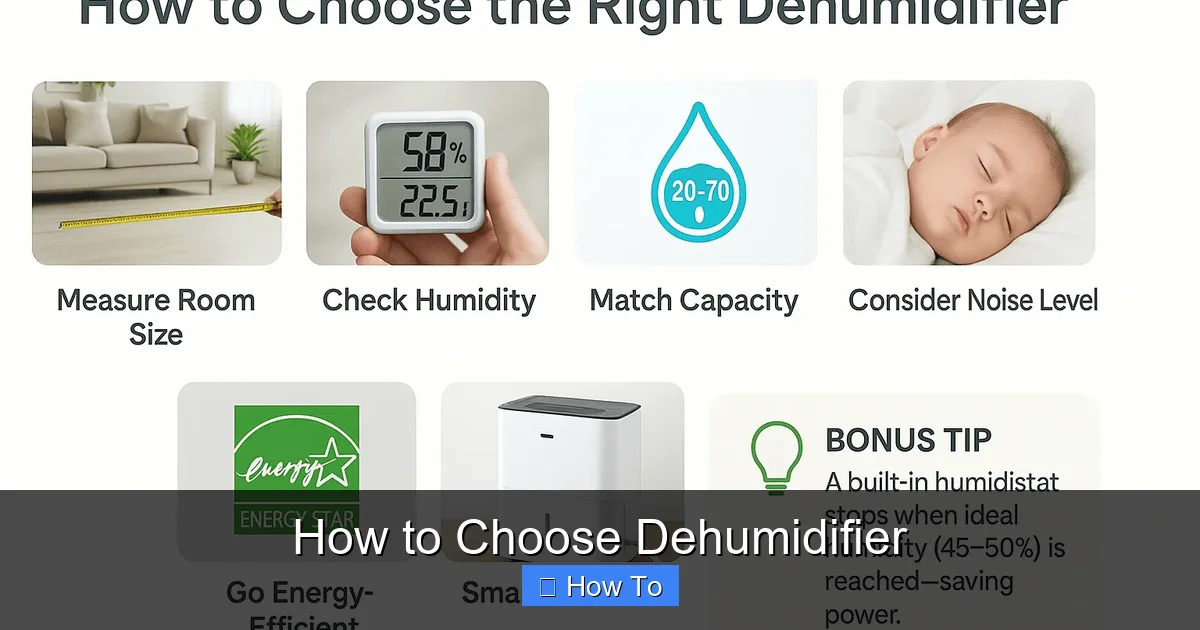
Choosing the right dehumidifier can improve air quality, prevent mold, and protect your home. This guide walks you through everything you need to know—from sizing and features to placement and maintenance—so you can pick the perfect unit with confidence.
Quick Answers to Common Questions
Tip/Question?
What size dehumidifier do I need for a 1,000 sq. ft. basement?
For a moderately damp 1,000 sq. ft. basement, choose a 30–50 pint dehumidifier. If the space is very damp or has standing water, go for a 50–70 pint model.
Tip/Question?
Should I get a dehumidifier with a built-in pump?
A built-in pump lets you drain water vertically (e.g., up to a sink), which is helpful if you don’t have a floor drain. It’s a worthwhile upgrade for basements or tight spaces.
Tip/Question?
Can I run a dehumidifier all the time?
Yes, but use the auto-humidistat to maintain 30–50% humidity. This prevents over-drying and saves energy. Continuous drainage eliminates the need to empty the tank.
Tip/Question?
Are dehumidifiers noisy?
Most run between 45–60 dB—similar to a quiet conversation. Desiccant models are quieter than compressor types. Check decibel ratings before buying.
Tip/Question?
Do dehumidifiers use a lot of electricity?
They can, especially older models. Choose an ENERGY STAR® certified unit and use a timer or humidistat to reduce runtime and save on bills.
How to Choose a Dehumidifier: A Complete Step-by-Step Guide
High humidity isn’t just uncomfortable—it can damage your home, trigger allergies, and encourage mold growth. Whether you’re dealing with a damp basement, a musty closet, or sticky summer air, a dehumidifier can make a big difference. But with so many models on the market, how do you choose the right one?
This guide will walk you through everything you need to know to pick the perfect dehumidifier for your space. We’ll cover how to assess your needs, understand key features, compare energy efficiency, and maintain your unit for long-term performance. By the end, you’ll feel confident choosing a dehumidifier that works efficiently, saves money, and improves your indoor air quality.
Step 1: Assess Your Space and Humidity Level
Before you buy, take a close look at the area where you plan to use the dehumidifier. The size of the room and the severity of the moisture problem will determine the type and capacity of the unit you need.

Visual guide about How to Choose Dehumidifier
Image source: moorgen.hk
Measure the Square Footage
Start by measuring the length and width of the room. Multiply these numbers to get the total square footage. For example, a basement that’s 20 feet by 30 feet equals 600 square feet. Most dehumidifier packaging lists recommended room sizes, so this measurement is essential.
Determine the Humidity Level
Next, figure out how damp the space is. You can do this with a hygrometer, a small device that measures humidity. Ideal indoor humidity is between 30% and 50%. If your reading is above 60%, you likely need a dehumidifier.
Here’s a quick guide to humidity levels:
- Moderately damp: Feels slightly sticky, occasional musty smell. (50–60% humidity)
- Very damp: Noticeable moisture on walls or windows, frequent odors. (60–70% humidity)
- Wet: Standing water, mold growth, condensation on surfaces. (70%+ humidity)
The wetter the space, the more powerful the dehumidifier you’ll need. For example, a damp 500-square-foot basement may only need a 30-pint unit, while a wet 1,000-square-foot crawl space might require a 70-pint model.
Step 2: Understand Dehumidifier Capacity (Pints per Day)
Dehumidifiers are rated by how many pints of moisture they can remove in 24 hours. This is known as the pints per day (PPD) rating. Choosing the right capacity ensures your unit can handle the moisture load without running nonstop.
Match Pints to Room Size and Conditions
Use this general guideline to match capacity to your space:
- 10–20 pints: Small, moderately damp spaces (up to 500 sq. ft.)
- 30–50 pints: Medium to large damp areas (500–1,500 sq. ft.)
- 60–70+ pints: Large, very damp, or wet spaces (1,500+ sq. ft.)
For example, a 30-pint dehumidifier is ideal for a 1,000-square-foot basement with moderate dampness. But if that same basement has standing water or frequent flooding, go for a 50- or 70-pint model.
Don’t Overbuy (or Underbuy)
Too small, and your unit will struggle to keep up. Too large, and it may cycle on and off too quickly, reducing efficiency and failing to remove enough moisture. Aim for a model that matches your room size and humidity level—not one that’s oversized “just in case.”
Step 3: Choose the Right Type of Dehumidifier
There are several types of dehumidifiers, each suited to different needs and environments. Understanding the differences will help you pick the best fit.
Compressor (Refrigerant) Dehumidifiers
These are the most common type. They use a refrigerant to cool air, causing moisture to condense and collect in a tank. They work best in warm, humid environments (above 65°F).
Best for: Living rooms, basements, and bedrooms in temperate climates.
Desiccant Dehumidifiers
These use a moisture-absorbing material (like silica gel) to pull water from the air. They’re quieter and work well in cooler temperatures (as low as 40°F), making them ideal for garages, crawl spaces, or winter use.
Best for: Cold spaces, RVs, or areas with low humidity but persistent dampness.
Whole-House Dehumidifiers
Installed into your HVAC system, these units dehumidify your entire home. They’re more expensive but highly efficient for large homes or high-humidity regions.
Best for: Homes in humid climates, or those with central air systems.
Mini or Portable Dehumidifiers
Small, lightweight units for closets, bathrooms, or RVs. They’re affordable but have limited capacity (usually under 20 pints).
Best for: Small spaces, travel, or supplemental use.
Step 4: Look for Key Features
Modern dehumidifiers come with a range of features that improve convenience, efficiency, and performance. Here’s what to look for.
Auto-Humidistat
This sensor measures the humidity level and automatically turns the unit on or off to maintain your desired setting. It prevents over-drying and saves energy. Look for models with digital displays and adjustable humidity levels (e.g., 30%, 40%, 50%).
Continuous Drainage Option
Instead of manually emptying a water tank, you can connect a hose to drain water directly into a floor drain or sump pump. This is a must-have for basements or 24/7 operation.
Washable or Reusable Filters
Air filters trap dust and allergens. Washable filters save money and reduce waste. Check that the filter is easy to remove and clean.
Auto-Restart and Defrost
Auto-restart resumes operation after a power outage. Auto-defrost prevents ice buildup in cold environments, which can damage compressor units.
Timer and Remote Control
A timer lets you schedule operation (e.g., run for 8 hours at night). Remote controls or smartphone apps add convenience, especially for units in hard-to-reach places.
Quiet Operation
Look for models with noise levels under 50 decibels (dB) if you plan to use the dehumidifier in a bedroom or living area. Desiccant models are typically quieter than compressor types.
Step 5: Check Energy Efficiency
Dehumidifiers can use a lot of electricity, especially if they run constantly. Choosing an energy-efficient model saves money and reduces environmental impact.
Look for ENERGY STAR® Certification
ENERGY STAR® certified dehumidifiers use 15–30% less energy than standard models. They meet strict efficiency guidelines set by the EPA. Check the yellow EnergyGuide label for estimated annual operating cost.
Compare Energy Factor (L/kWh)
The Energy Factor measures how efficiently a unit removes moisture. A higher number means better efficiency. For example, a model with 1.5 L/kWh removes 1.5 liters of water per kilowatt-hour of electricity.
Calculate Operating Cost
Estimate your monthly cost using this formula:
- Daily energy use (kWh) = (Wattage × Hours used per day) ÷ 1,000
- Monthly cost = Daily energy use × 30 × Electricity rate ($/kWh)
Example: A 300-watt dehumidifier running 10 hours a day in a home with $0.12/kWh electricity costs about $10.80 per month.
Step 6: Consider Placement and Installation
Where you place your dehumidifier affects its performance. Proper placement ensures even moisture removal and prevents damage.
Choose a Central Location
Place the unit in the center of the room or near the source of moisture (e.g., near a washing machine in the basement). Avoid corners or behind furniture.
Allow for Airflow
Keep at least 6–12 inches of space around the unit for proper air intake and exhaust. Blocked vents reduce efficiency and can overheat the motor.
Use on a Stable, Level Surface
Place the dehumidifier on a flat, dry surface. Avoid carpet if possible—hard floors reduce vibration and noise.
Elevate if Needed
In flood-prone areas, use a stand or platform to keep the unit above potential water levels. Never place it directly on wet flooring.
Step 7: Compare Brands and Read Reviews
Not all dehumidifiers are created equal. Research brands and read customer reviews to find reliable, well-built models.
Top Brands to Consider
- Frigidaire: Known for durability and strong performance in basements.
- hOmeLabs: Popular for energy efficiency and quiet operation.
- GE: Offers a wide range of sizes and smart features.
- Keeps: Compact, stylish designs for modern homes.
- Eva-Dry: Specializes in small, portable units.
Read Verified Customer Reviews
Look for reviews on Amazon, Home Depot, or Consumer Reports. Pay attention to comments about:
- Noise level
- Ease of emptying the tank
- Reliability over time
- Customer service
A model with 4+ stars and hundreds of reviews is usually a safe bet.
Step 8: Set a Budget
Dehumidifiers range from $50 for mini units to $1,000+ for whole-house systems. Set a realistic budget based on your needs.
Price Ranges
- $50–$150: Small, portable units (10–20 pints). Good for closets or bathrooms.
- $150–$300: Mid-range models (30–50 pints). Ideal for most homes.
- $300–$600: High-capacity or smart units (50–70 pints). Great for large basements.
- $600+: Whole-house or commercial-grade systems.
Don’t sacrifice quality for price. A $200 model that lasts 10 years is better value than a $100 unit that breaks in two.
Step 9: Plan for Maintenance
Regular maintenance keeps your dehumidifier running efficiently and extends its lifespan. Here’s what to do.
Clean the Filter Monthly
Remove the air filter and wash it with warm, soapy water. Let it dry completely before reinserting. A dirty filter reduces airflow and efficiency.
Empty the Water Tank Regularly
Check the tank daily if the unit runs often. Most models have a “tank full” indicator light. Pour out water carefully to avoid spills.
Inspect the Coils and Drain Hose
Every few months, check the coils for dust or ice buildup. Clean with a soft brush. If using a drain hose, ensure it’s not kinked or clogged.
Store Properly Off-Season
If you only use the dehumidifier in summer, clean it thoroughly and store it in a dry place. Cover it to prevent dust accumulation.
Troubleshooting Common Issues
Even the best dehumidifiers can have problems. Here’s how to fix common issues.
Unit Won’t Turn On
- Check the power cord and outlet.
- Ensure the tank isn’t full (some models won’t start if the tank is full).
- Reset the circuit breaker.
Not Removing Enough Moisture
- Clean the filter and coils.
- Check if the room is too large for the unit.
- Ensure doors and windows are closed.
Making Too Much Noise
- Place the unit on a flat, stable surface.
- Check for loose parts or vibrations.
- Consider a quieter desiccant model.
Freezing Up (Compressor Units)
- Move the unit to a warmer area (above 65°F).
- Enable auto-defrost mode if available.
- Reduce runtime or upgrade to a desiccant model.
Conclusion
Choosing the right dehumidifier doesn’t have to be overwhelming. Start by assessing your space and humidity level, then match the capacity and type to your needs. Look for energy-efficient models with useful features like auto-humidistats and continuous drainage. Place the unit correctly, maintain it regularly, and you’ll enjoy fresher, healthier air for years to come.
Remember: the best dehumidifier is the one that fits your home, your budget, and your lifestyle. With the tips in this guide, you’re ready to make a smart, informed decision. Say goodbye to musty smells, mold, and sticky air—and hello to a more comfortable, protected home.