
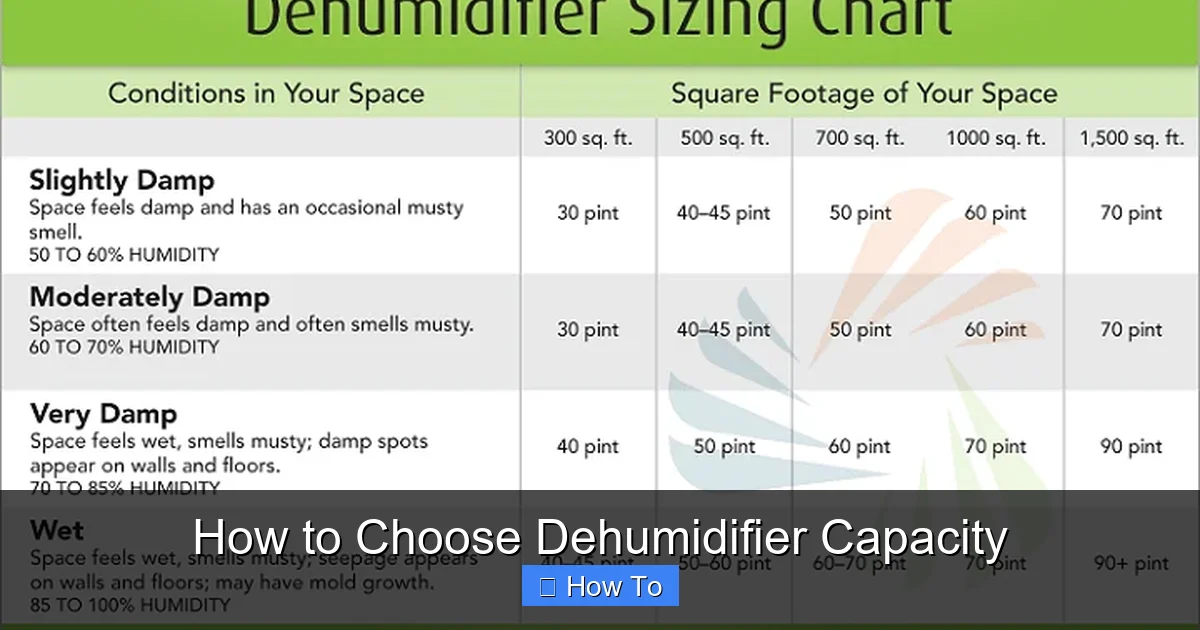
Choosing the right dehumidifier capacity ensures effective moisture control, energy efficiency, and long-term performance. This guide walks you through room size, humidity levels, and usage needs to help you pick the ideal unit.
Quick Answers to Common Questions
Tip/Question?
What’s the easiest way to check humidity levels at home?
Use a digital hygrometer—place it in the room for 24 hours and check readings at different times. Aim for 30–50% relative humidity.
Tip/Question?
Can I use one dehumidifier for my whole house?
Yes, but only if it’s a whole-house model installed with your HVAC system. Portable units are best for single rooms or open areas.
Tip/Question?
Is a 50-pint dehumidifier too big for a 1,000-square-foot basement?
Not necessarily—if the basement is very damp or has poor ventilation, a 50-pint unit may be ideal. Check humidity levels first.
Tip/Question?
How often should I empty the water tank?
It depends on humidity and tank size. Most 30-pint units need emptying once or twice a day. Use a continuous drain to avoid this.
Tip/Question?
Do dehumidifiers use a lot of electricity?
They use moderate energy—similar to a refrigerator. ENERGY STAR models are more efficient and cost less to run long-term.
How to Choose Dehumidifier Capacity: A Complete Guide
Excess moisture in your home can lead to mold, musty odors, damaged furniture, and even health issues like allergies and asthma. A dehumidifier is a simple, effective solution—but only if you choose the right one. The most important factor? Capacity. Picking a dehumidifier with the wrong capacity can mean wasted money, poor performance, or constant maintenance.
In this guide, you’ll learn exactly how to choose dehumidifier capacity based on your room size, humidity level, climate, and daily usage. We’ll break it down step by step, so you can confidently select a unit that keeps your home dry, comfortable, and energy-efficient. Whether you’re tackling a damp basement or a humid bathroom, this guide has you covered.
Step 1: Measure Your Room Size
The first step in choosing the right dehumidifier capacity is determining the size of the space you want to treat. Dehumidifiers are rated by how many pints of moisture they can remove in 24 hours, but that number only matters when matched to the correct room size.
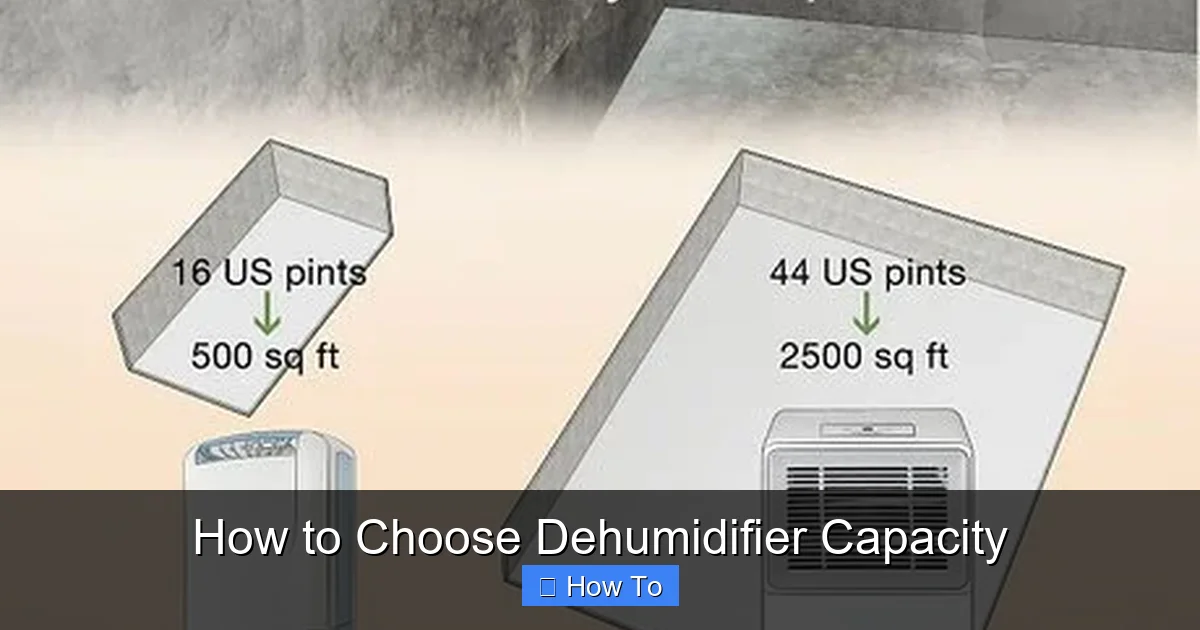
Visual guide about How to Choose Dehumidifier Capacity
Image source: wikihow.com
Calculate Square Footage
Start by measuring the length and width of the room in feet. Multiply these two numbers to get the total square footage. For example, a room that’s 12 feet by 15 feet equals 180 square feet.
If you’re treating multiple connected rooms (like an open-concept living area), add their square footage together. However, if the rooms are separated by doors or have different humidity levels, consider using separate units or a larger whole-house model.
Account for Ceiling Height
Most dehumidifier recommendations assume an 8-foot ceiling. If your ceilings are higher—say, 10 feet—you’ll have more air volume to dehumidify. In such cases, consider upgrading to a higher-capacity unit or using two smaller units.
For example, a 1,000-square-foot room with 10-foot ceilings holds 25% more air than one with 8-foot ceilings. That extra volume means more moisture to remove, so a 30-pint unit might not be enough—even if the square footage suggests it should be.
Use a Room Size Chart
Manufacturers often provide general guidelines based on square footage. Here’s a quick reference:
- Up to 500 sq. ft.: 10–20 pints per day
- 500–1,000 sq. ft.: 20–30 pints per day
- 1,000–1,500 sq. ft.: 30–50 pints per day
- 1,500+ sq. ft.: 50+ pints per day or multiple units
These are starting points—don’t stop here. Humidity level and usage matter just as much.
Step 2: Assess Your Humidity Level
Room size gives you a baseline, but humidity level determines how hard your dehumidifier must work. A small, extremely damp basement may need a larger unit than a large, moderately humid living room.
Use a Hygrometer
A hygrometer is a small, inexpensive device that measures relative humidity (RH). You can find digital models for under $20 at hardware stores or online. Place it in the room for 24 hours, checking it at different times of day.
Ideal indoor humidity is between 30% and 50%. Here’s how to interpret your readings:
- 30–50%: Comfortable, low moisture—standard capacity is fine
- 50–60%: Moderately humid—consider a mid-range or high-capacity unit
- 60–70%: Very humid—opt for a high-capacity model
- 70%+: Extremely damp—may require a commercial-grade dehumidifier
Look for Signs of High Humidity
If you don’t have a hygrometer yet, watch for these red flags:
- Condensation on windows or walls
- Musty or moldy smells
- Peeling paint or wallpaper
- Warped wood floors or furniture
- Visible mold or mildew
These signs indicate high moisture levels, even if the air doesn’t feel “sticky.” In such cases, choose a dehumidifier with a higher pint rating than your square footage suggests.
Consider Seasonal Changes
Humidity levels fluctuate with the seasons. A basement might be dry in winter but swampy in summer. If you live in a region with high seasonal humidity (like the Southeast U.S.), consider a unit that can handle peak conditions—even if it’s overkill in winter.
Some advanced models have auto-humidistats that adjust output based on real-time humidity, making them ideal for variable climates.
Step 3: Evaluate Room Usage and Moisture Sources
Not all rooms are created equal. A bathroom used for daily showers generates far more moisture than a rarely used guest room. Understanding how a space is used helps you choose the right capacity.
High-Moisture Rooms Need More Power
Certain rooms act as moisture factories. Here’s how usage affects dehumidifier needs:
- Basements: Often cool, dark, and poorly ventilated—prime spots for mold. Even if dry on the surface, basements can have hidden moisture. Choose a 30–50+ pint unit, especially if unfinished.
- Laundry Rooms: Wet clothes, running dryers, and poor ventilation create constant humidity. A 30–40 pint unit is recommended, even for small spaces.
- Bathrooms: Steam from showers can spike humidity to 80% or more. A small 10–20 pint unit may suffice for occasional use, but daily showers in a small bathroom may need 20–30 pints.
- Kitchens: Cooking, dishwashing, and boiling water release moisture. Open kitchens may not need a dedicated dehumidifier, but enclosed ones might.
- Garages: Often uninsulated and prone to condensation. A 30–50 pint unit works well, especially in humid climates.
Number of Occupants Matters
People produce moisture—through breathing, sweating, and daily activities. A family of five generates significantly more humidity than a single occupant.
As a rule of thumb, add 5–10 pints to your capacity estimate for each additional person living in the space. For example, a 1,200-square-foot home with four people may need a 50-pint unit instead of a 30-pint one.
Pets and Plants Add Moisture
Houseplants release moisture through transpiration, and pets contribute through breathing and wet fur. While not major factors on their own, they can tip the scale in borderline cases.
If you have many indoor plants or multiple pets, consider a slightly larger unit—especially in smaller spaces.
Step 4: Understand Pint Ratings and What They Mean
Dehumidifiers are labeled by “pint capacity”—but what does that really mean? It’s not how much water the tank holds. Instead, it refers to how much moisture the unit can remove from the air in 24 hours under standard testing conditions.
Standard Testing Conditions
Manufacturers test dehumidifiers at 80°F and 60% relative humidity—conditions set by the Department of Energy (DOE). This allows for fair comparisons between models.
However, real-world conditions vary. A unit rated for 30 pints may only remove 20 pints in a cooler basement (65°F) or 40 pints in a hot, humid attic (90°F). That’s why capacity isn’t the whole story.
Actual vs. Rated Capacity
Always check the “DOE rating” on the label. Some brands advertise “old AHAM ratings,” which were tested at 80°F and 60% RH but often inflated. The DOE standardized testing in 2019 to prevent overstatement.
For example, a dehumidifier labeled “50 pints” might have a DOE rating of 30 pints. Always go by the DOE number for accuracy.
Choosing the Right Pint Range
Use this guide to match pint capacity to your needs:
- 10–20 pints: Small bathrooms, closets, or RVs. Best for light moisture or occasional use.
- 20–30 pints: Medium-sized rooms (500–1,000 sq. ft.) with moderate humidity. Ideal for bedrooms or small basements.
- 30–50 pints: Large rooms, finished basements, or homes in humid climates. Great for daily use with multiple moisture sources.
- 50+ pints: Whole-house dehumidification, large basements, or commercial spaces. Often require ducting or professional installation.
When in doubt, round up. It’s better to have a slightly oversized unit than one that struggles to keep up.
Step 5: Factor in Climate and Seasonal Needs
Your local climate plays a big role in dehumidifier performance. A unit that works perfectly in Arizona may be overwhelmed in Florida.
Hot and Humid Climates
In regions like the Gulf Coast or Southeast U.S., high temperatures and humidity go hand in hand. Even air-conditioned homes can feel clammy because AC units don’t always remove enough moisture.
In these areas, choose a dehumidifier with 10–20% more capacity than your room size suggests. For example, a 1,200-square-foot home in Miami might need a 50-pint unit instead of a 30-pint one.
Cool and Damp Climates
In cooler areas like the Pacific Northwest, basements and crawl spaces can stay damp year-round due to poor ventilation and groundwater. Cold air holds less moisture, so dehumidifiers work less efficiently.
Look for models with “low-temperature operation” (down to 41°F or lower). These use special refrigerants or dual coils to keep working in chilly spaces. Standard units may ice up and shut down.
Seasonal Adjustments
If you only need dehumidification during certain months, consider a portable unit you can store when not in use. Whole-house systems are better for year-round control.
Some smart dehumidifiers can be programmed or controlled via app, allowing you to adjust settings seasonally without manual intervention.
Step 6: Consider Energy Efficiency and Operating Costs
A larger dehumidifier isn’t always better—especially if it’s constantly running or cycling too frequently. Energy efficiency affects both your electricity bill and the unit’s lifespan.
Look for ENERGY STAR Certification
ENERGY STAR-rated dehumidifiers use 15–30% less energy than standard models. They meet strict efficiency guidelines set by the EPA and often qualify for utility rebates.
Check the yellow EnergyGuide label for estimated annual operating cost. A 30-pint ENERGY STAR unit might cost $20–$30 per year to run, while a non-certified model could cost $40–$60.
Avoid Oversizing
A dehumidifier that’s too large for your space will “short cycle”—turning on and off rapidly. This wastes energy, increases wear and tear, and may not run long enough to remove moisture effectively.
For example, a 50-pint unit in a 400-square-foot bathroom may only run for 5 minutes at a time, never reaching optimal efficiency. A 20-pint unit would run longer, remove more moisture, and use less energy overall.
Check the Energy Factor (EF)
The Energy Factor measures how many liters of water a dehumidifier removes per kilowatt-hour of electricity. Higher EF = more efficient.
Look for EF ratings of 1.5 or higher. For example:
- EF of 1.0 = 1 liter per kWh
- EF of 2.0 = 2 liters per kWh (twice as efficient)
Efficient models save money over time, even if they cost more upfront.
Step 7: Choose the Right Features for Your Needs
Capacity is crucial, but features affect convenience, maintenance, and performance. Here’s what to look for:
Auto-Humidistat
This feature lets you set a target humidity level (e.g., 45%). The dehumidifier turns on and off automatically to maintain it. Ideal for hands-off operation.
Continuous Drain Option
Instead of emptying a water tank, you can attach a hose to drain water directly into a floor drain or sump pump. Great for basements or 24/7 operation.
Washable Air Filter
A reusable filter traps dust and allergens. Look for one that’s easy to remove and clean—this improves airflow and efficiency.
Defrost Function
Essential for cold environments. Prevents ice buildup on coils, which can shut down the unit.
Portability and Wheels
If you plan to move the unit between rooms, choose one with sturdy wheels and a handle.
Noise Level
Dehumidifiers can be noisy—especially larger models. Look for units under 50 decibels (dB) for quiet operation. Check reviews for real-world noise reports.
Troubleshooting Common Capacity Issues
Even with the right capacity, problems can arise. Here’s how to fix them:
Unit Runs Constantly But Doesn’t Dry the Air
Possible causes:
- Undersized unit for the space or humidity level
- Dirty air filter blocking airflow
- Low refrigerant or mechanical issue
- Room is too large or has constant moisture sources
Solution: Clean the filter, check for leaks, or upgrade to a larger unit.
Unit Cycles On and Off Too Frequently
Likely caused by oversizing. The dehumidifier removes moisture too quickly, hits the target humidity, and shuts off before completing a full cycle.
Solution: Use a smaller unit or adjust the humidistat to a lower setting to extend run time.
Water Tank Fills Too Fast
Indicates high humidity or a small tank. If you’re emptying it multiple times a day, consider a model with a larger tank or continuous drain.
Solution: Attach a drain hose or upgrade to a higher-capacity unit with a bigger reservoir.
Unit Freezes Up in Cold Basements
Standard dehumidifiers can’t operate below 65°F. Ice forms on the coils, blocking airflow.
Solution: Buy a low-temperature dehumidifier or insulate the space to raise the temperature.
Conclusion
Choosing the right dehumidifier capacity isn’t just about square footage—it’s about understanding your home’s unique moisture challenges. By measuring your space, assessing humidity, considering usage, and factoring in climate, you can select a unit that keeps your home dry, healthy, and energy-efficient.
Remember: the goal is balanced performance, not maximum power. A properly sized dehumidifier will run efficiently, require less maintenance, and last longer. Use this guide as your roadmap, and don’t hesitate to consult a professional if you’re dealing with severe moisture issues.
With the right capacity, you’ll enjoy fresher air, fewer allergens, and peace of mind—all season long.