
Choosing the correct dehumidifier capacity ensures efficient moisture removal, energy savings, and a healthier home. This guide walks you through room size assessment, humidity levels, and capacity matching so you can pick the perfect unit with confidence.
Quick Answers to Common Questions
What’s the fastest way to check if my room is too humid?
Use a hygrometer. Place it in the room for 24 hours and check the average reading. Anything above 60% RH means you likely need a dehumidifier.
Can I use one dehumidifier for my whole house?
Only if your home is small and open-concept. Most homes need a unit per floor or moisture zone. Central systems exist but are more expensive.
Should I buy a dehumidifier with a built-in pump?
Yes, if you’re draining to a sink or upstairs. Pumps push water upward, while gravity drainage only works downward.
How often should I clean my dehumidifier filter?
Clean it every 2–4 weeks during heavy use. A dirty filter reduces efficiency and can cause the unit to overheat.
Is it okay to run a dehumidifier in winter?
Only if the room stays above 60°F. Most models won’t work well in cold garages or unheated basements without a low-temperature rating.
How to Choose Dehumidifier Capacity for Room Size
If you’ve ever walked into a basement that smells like old socks or noticed condensation on your windows, you know how uncomfortable excess moisture can be. High humidity doesn’t just feel sticky—it can damage your home, trigger allergies, and encourage mold growth. That’s where a dehumidifier comes in. But here’s the catch: not all dehumidifiers are created equal. Choosing the right one starts with understanding how to match dehumidifier capacity to your room size.
In this guide, you’ll learn everything you need to pick the perfect dehumidifier for your space. We’ll walk you through measuring your room, assessing humidity levels, understanding capacity ratings, and making smart choices based on your home’s unique needs. Whether you’re tackling a damp crawl space or a humid living room, this step-by-step guide will help you get it right the first time.
Step 1: Measure Your Room Size Accurately
The first step in choosing the right dehumidifier is knowing exactly how much space you’re dealing with. Dehumidifier capacity is typically rated in pints per day (PPD)—the amount of moisture the unit can remove in 24 hours. But that number only matters if it matches your room’s size and conditions.
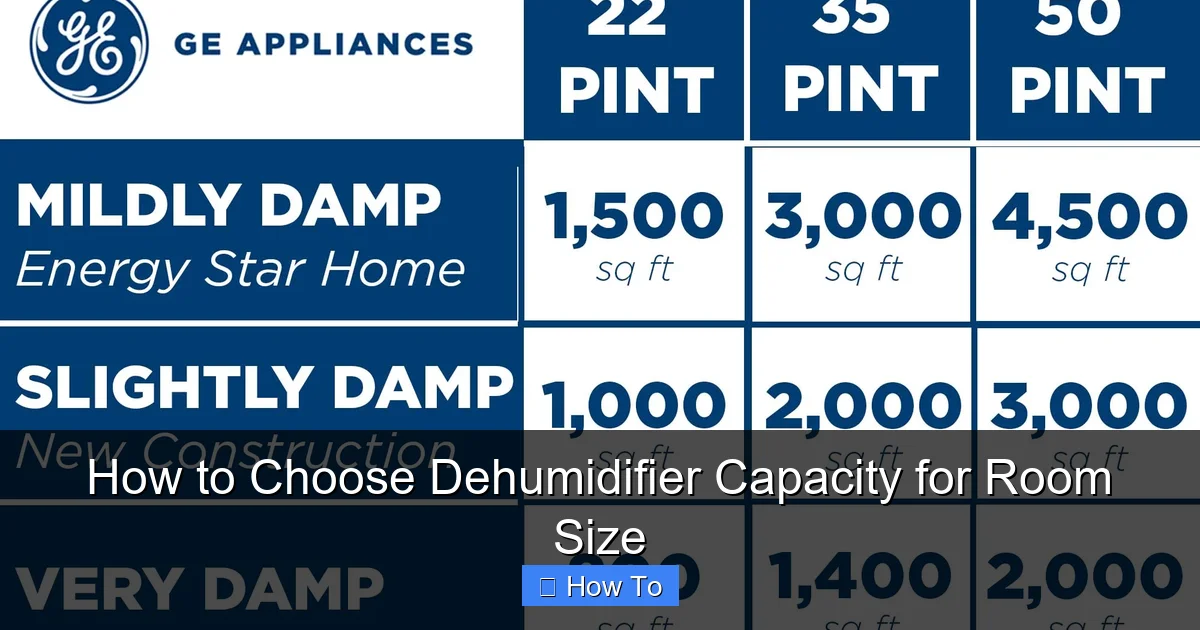
Visual guide about How to Choose Dehumidifier Capacity for Room Size
Image source: gea-oracle-servicecloud.s3.amazonaws.com
Calculate Square Footage
Start by measuring the length and width of the room in feet. Multiply these two numbers to get the square footage. For example, a room that’s 12 feet by 15 feet equals 180 square feet.
- Use a tape measure or laser measurer for accuracy.
- For irregularly shaped rooms, break them into rectangles, calculate each area, and add them together.
- Include all connected spaces if the dehumidifier will serve multiple areas (e.g., an open-concept living and dining room).
Consider Ceiling Height
Most room measurements assume an 8-foot ceiling. But if your ceilings are higher—say, 10 feet in a basement or vaulted living room—you’re dealing with more air volume. This means more moisture to remove.
To adjust for ceiling height:
- Multiply your square footage by the ceiling height in feet.
- Divide that number by 8 (the standard height).
- This gives you an adjusted square footage.
Example: A 200 sq. ft. room with 10-foot ceilings:
200 × 10 = 2,000 cubic feet
2,000 ÷ 8 = 250 adjusted sq. ft.
Now you’re working with 250 sq. ft. instead of 200—important when selecting capacity.
Account for Room Use and Layout
Not all rooms are equal, even if they’re the same size. A basement with no windows and poor ventilation will hold more moisture than a sunny bedroom. Think about:
- Airflow: Is the room well-ventilated or sealed off?
- Usage: Is it a laundry room, gym, or storage space? These generate extra moisture.
- Insulation: Poor insulation can let in humid outdoor air.
These factors influence how hard your dehumidifier will need to work—even in a small space.
Step 2: Assess the Humidity Level in Your Room
Room size tells part of the story, but humidity level tells the rest. A 100 sq. ft. bathroom after daily showers needs a stronger dehumidifier than a 100 sq. ft. closet with minimal use.
Use a Hygrometer to Measure Humidity
A hygrometer is a small, inexpensive device that measures relative humidity (RH). You can find digital models for under $20 at hardware stores or online.
Place the hygrometer in the room for 24 hours, away from direct sunlight, vents, or water sources. Record the average reading.
Here’s what the numbers mean:
- 30–50% RH: Ideal range. No dehumidifier needed unless you’re preventing seasonal issues.
- 50–60% RH: Slightly damp. May feel sticky; ideal for a small dehumidifier.
- 60–70% RH: Very damp. Risk of mold and mildew. Requires a mid- to high-capacity unit.
- 70%+ RH: Wet or flooded conditions. Needs a heavy-duty dehumidifier, possibly with continuous drainage.
Look for Visual and Sensory Clues
Even without a hygrometer, you can estimate humidity levels:
- Slightly damp: Occasional musty smell, light condensation on windows.
- Very damp: Persistent odor, damp spots on walls, peeling paint.
- Wet: Standing water, mold growth, warped wood, or flooding history.
These signs help you choose the right capacity category, even before checking the specs.
Step 3: Understand Dehumidifier Capacity Ratings
Dehumidifiers are labeled by how many pints of moisture they can remove in a day. But these ratings are based on standard testing conditions—80°F and 60% RH. Real-world performance varies.
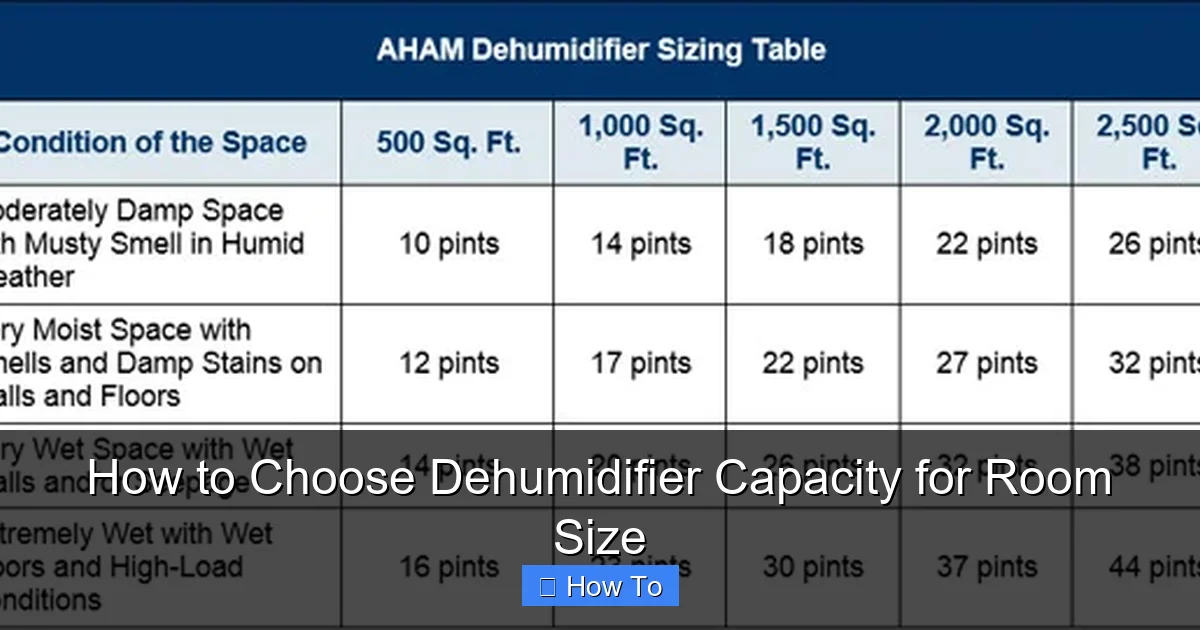
Capacity Categories by Room Size and Condition
Use this general guide to match capacity to your needs:
| Room Size | Humidity Level | Recommended Capacity |
|---|---|---|
| Up to 500 sq. ft. | Slightly damp | 20–30 pints/day |
| 500–1,000 sq. ft. | Very damp | 30–50 pints/day |
| 1,000–1,500 sq. ft. | Wet | 50–70 pints/day |
| 1,500+ sq. ft. | Severely wet or flooded | 70+ pints/day or multiple units |
Note: These are estimates. Always consider ceiling height, insulation, and usage.
Why Bigger Isn’t Always Better
You might think a 70-pint dehumidifier is best for every room—but that’s not true. Oversized units can:
- Cycle on and off too quickly, reducing efficiency.
- Fail to run long enough to remove airborne moisture effectively.
- Increase energy bills without added benefit.
Conversely, an undersized unit will run constantly, wear out faster, and never fully dry the air.
Look for Real-World Performance
Manufacturers often advertise “maximum” capacity, but real performance depends on temperature and humidity. Look for:
- AHAM-certified ratings: The Association of Home Appliance Manufacturers tests units under standardized conditions. These numbers are more reliable.
- Energy Factor (EF): Measured in liters per kilowatt-hour (L/kWh). Higher EF = more efficient.
- Energy Star certification: Indicates top efficiency and performance.
A 50-pint Energy Star model may outperform a non-certified 60-pint unit in real use.
Step 4: Factor in Room-Specific Conditions
Even with the right size and humidity reading, other factors can affect performance. Don’t overlook these details.
Temperature Matters
Dehumidifiers work best in warm, humid conditions. Most consumer models are designed for 65°F and above. In cooler spaces like garages or basements:
- Choose a low-temperature dehumidifier (also called cold-climate or refrigerant models).
- Avoid desiccant models unless you need quiet operation—they’re less efficient in large spaces.
If your room drops below 60°F, check the manufacturer’s operating range before buying.
Airflow and Ventilation
Stagnant air traps moisture. If your room has:
- No windows or vents
- Heavy furniture blocking airflow
- Closed doors most of the time
You may need a higher-capacity unit or a model with a built-in fan to circulate air.
Drainage and Maintenance
Dehumidifiers collect water in a tank or drain it continuously. Consider:
- Tank size: Larger tanks need less frequent emptying. A 1-gallon tank holds about 8 pints.
- Continuous drainage: Ideal for basements or unattended areas. Requires a nearby floor drain or hose setup.
- Auto-shutoff: Prevents overflow when the tank is full.
- Auto-restart: Resumes operation after a power outage.
If you can’t empty the tank daily, go for a model with a drain hose option.
Step 5: Choose the Right Features for Your Needs
Beyond capacity, smart features can make your dehumidifier easier to use and more effective.
Humidistat
A built-in humidistat lets you set your desired humidity level (e.g., 45%). The unit turns on and off automatically to maintain it. This saves energy and prevents over-drying.
Programmable Timer
Set the dehumidifier to run during off-peak hours or only when needed. Great for energy savings.
Remote Control or App Connectivity
Some models let you monitor and control humidity from your phone. Handy for vacation homes or busy schedules.
Washable Filter
Reduces maintenance and improves air quality. Look for easy-access filters.
Quiet Operation
Check the decibel (dB) rating. Under 50 dB is quiet—ideal for bedrooms or living areas.
Step 6: Install and Test Your Dehumidifier
Even the best dehumidifier won’t work well if it’s poorly placed or misused.
Placement Tips
- Place the unit in the center of the room or near the moisture source (e.g., laundry area).
- Keep it at least 6–12 inches away from walls and furniture for proper airflow.
- Avoid placing it near heat sources or in direct sunlight.
Run It Consistently
For best results, run the dehumidifier continuously or on a timer. Don’t turn it off unless you’re away for days.
Monitor Performance
After a week, check:
- Is the humidity level stable?
- Is the tank filling as expected?
- Do you still smell dampness or see condensation?
If not, you may need a larger unit or better ventilation.
Troubleshooting Common Issues
Even with the right capacity, problems can arise. Here’s how to fix them.
Dehumidifier Isn’t Removing Enough Moisture
- Check the filter: A clogged filter restricts airflow. Clean or replace it monthly.
- Ensure proper placement: Move it away from walls or obstacles.
- Verify room conditions: If it’s too cold or dry, the unit may not activate.
- Upgrade capacity: Your room may be wetter than estimated.
Unit Runs Constantly
- Set a lower humidity target: If set too low (e.g., 30%), it will run nonstop.
- Check for air leaks: Drafts from windows or doors add moisture.
- Insulate the space: Better insulation reduces humidity load.
Water Tank Overflows
- Empty it regularly: Don’t wait until it’s full.
- Use a drain hose: Bypass the tank entirely.
- Enable auto-shutoff: Prevents spills when you’re away.
Unusual Noise or Vibration
- Level the unit: Place it on a flat, stable surface.
- Check for loose parts: Tighten screws or contact support.
- Clean the coils: Dust buildup can cause noise.
Conclusion
Choosing the right dehumidifier capacity for your room size isn’t just about square footage—it’s about understanding your space’s unique humidity challenges. By measuring accurately, assessing moisture levels, and matching capacity to conditions, you’ll find a unit that keeps your home comfortable, healthy, and damage-free.
Remember: a well-sized dehumidifier saves energy, reduces maintenance, and works more effectively than an oversized or undersized one. Use this guide as your checklist, and don’t hesitate to test and adjust after installation. With the right approach, you’ll enjoy drier air and peace of mind for years to come.