
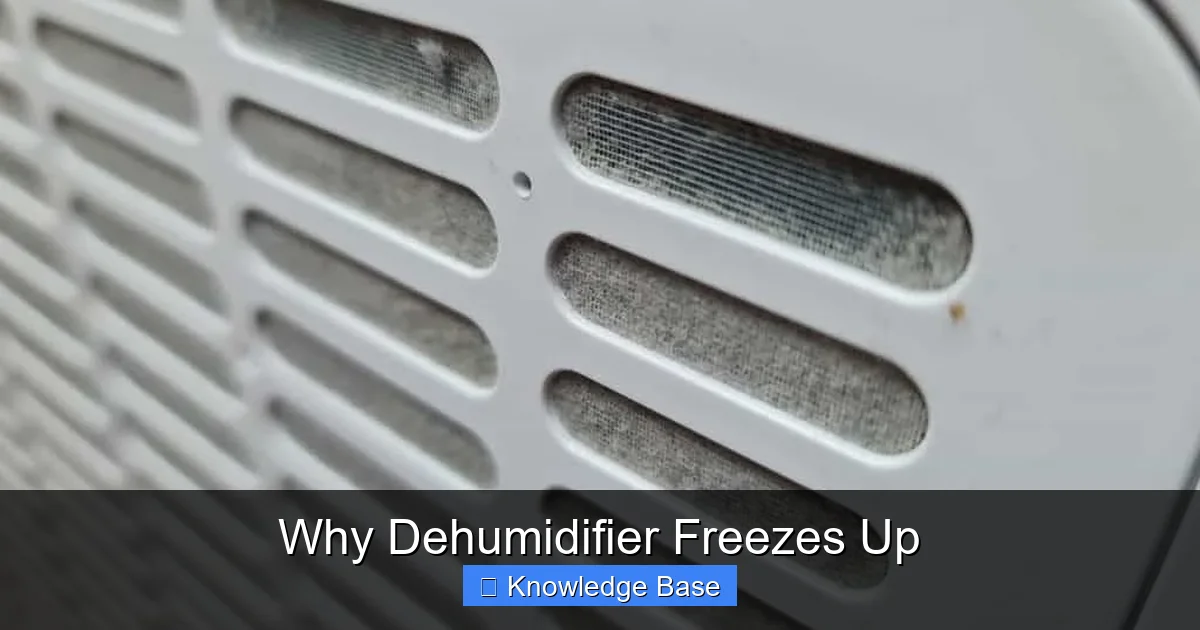
A dehumidifier freezes up when cold coils meet excess moisture in low temperatures, causing ice buildup. This common issue reduces efficiency and can damage your unit if ignored. With proper care and ideal operating conditions, you can prevent freezing and extend your dehumidifier’s life.
Key Takeaways
- Low room temperature: Dehumidifiers struggle below 65°F (18°C), causing coils to drop below freezing and ice to form.
- Dirty air filters: Clogged filters restrict airflow, making coils colder and increasing freeze risk.
- Refrigerant leaks: Low refrigerant levels reduce heat transfer, leading to super-cooled coils and ice buildup.
- Overworked unit: Running a small dehumidifier in a large, damp space forces it to work harder, raising freeze chances.
- Poor ventilation: Blocked vents or poor airflow around the unit trap cold air and hinder proper operation.
- Faulty defrost sensor: A malfunctioning sensor won’t trigger defrost cycles, allowing ice to accumulate unchecked.
- Regular maintenance: Cleaning filters, checking coils, and ensuring proper placement can prevent most freezing issues.
📑 Table of Contents
Why Dehumidifier Freezes Up: The Complete Guide
Imagine this: you’ve just bought a brand-new dehumidifier to tackle that musty basement smell. You plug it in, set it to the right humidity level, and walk away feeling proud of your smart home upgrade. But a few hours later, you return to find the unit silent, the water tank full—and a thick layer of ice covering the internal coils. What happened? Why did your dehumidifier freeze up?
You’re not alone. Freezing is one of the most common problems dehumidifier owners face, especially during colder months or in unheated spaces like basements, garages, or crawl spaces. While it might seem alarming, a frozen dehumidifier is usually a sign of an easily fixable issue—not a broken machine. Understanding why dehumidifier freezes up is the first step toward preventing it and keeping your unit running efficiently year-round.
In this guide, we’ll walk you through the science behind dehumidifier freezing, the most common causes, and practical solutions you can implement today. Whether you’re a first-time buyer or a seasoned homeowner, this information will help you get the most out of your dehumidifier while avoiding costly repairs or replacements.
How a Dehumidifier Works (And Why It Freezes)
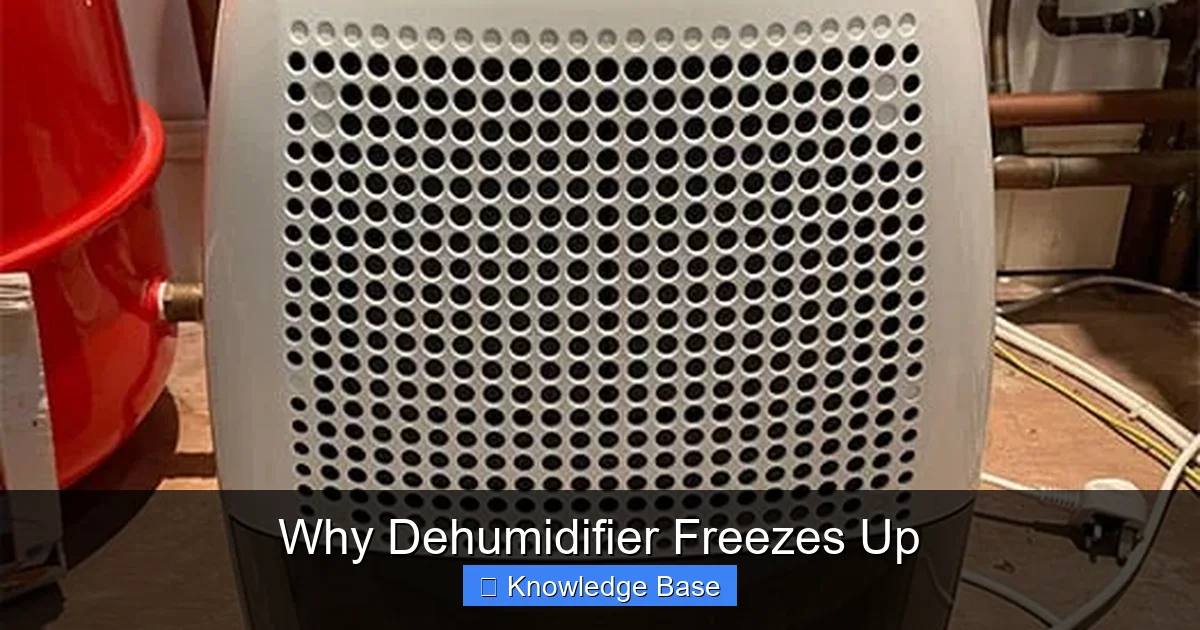
Before diving into the causes of freezing, it helps to understand how a dehumidifier operates. Most home dehumidifiers use a refrigeration cycle—similar to an air conditioner—to remove moisture from the air. Here’s a simplified breakdown:
Visual guide about Why Dehumidifier Freezes Up
Image source: thehumidistat.com
Air is drawn into the unit by a fan and passes over a set of cold evaporator coils. As the warm, humid air hits these coils, the moisture condenses into water droplets, which drip into a collection tank or drain hose. The now-drier air then passes over warm condenser coils, where it’s reheated and expelled back into the room.
The Role of Temperature and Humidity
This process relies heavily on the balance between air temperature and humidity. When the air is warm and moist, the evaporator coils stay above freezing, and condensation happens smoothly. But when the air is cold—especially below 65°F (18°C)—the coils can drop below 32°F (0°C). At that point, instead of condensing into liquid water, moisture turns directly into ice.
Think of it like this: on a cold winter morning, moisture in the air forms frost on your car windshield. The same principle applies inside your dehumidifier. When the coils get too cold, ice builds up, blocking airflow and eventually shutting down the unit.
Why Ice Is a Problem
Ice buildup doesn’t just look bad—it’s harmful to your dehumidifier. As ice accumulates, it insulates the coils, making them even colder and worsening the problem. The fan can’t pull air through the frozen coils, so the unit stops removing moisture. In severe cases, the compressor—the heart of the system—can overheat or fail, leading to expensive repairs.
Some modern dehumidifiers have built-in defrost systems that detect ice and temporarily shut off the compressor to let the coils warm up. But if the root cause isn’t addressed, the cycle will repeat, and your unit will spend more time defrosting than dehumidifying.
Top 5 Causes of Dehumidifier Freezing
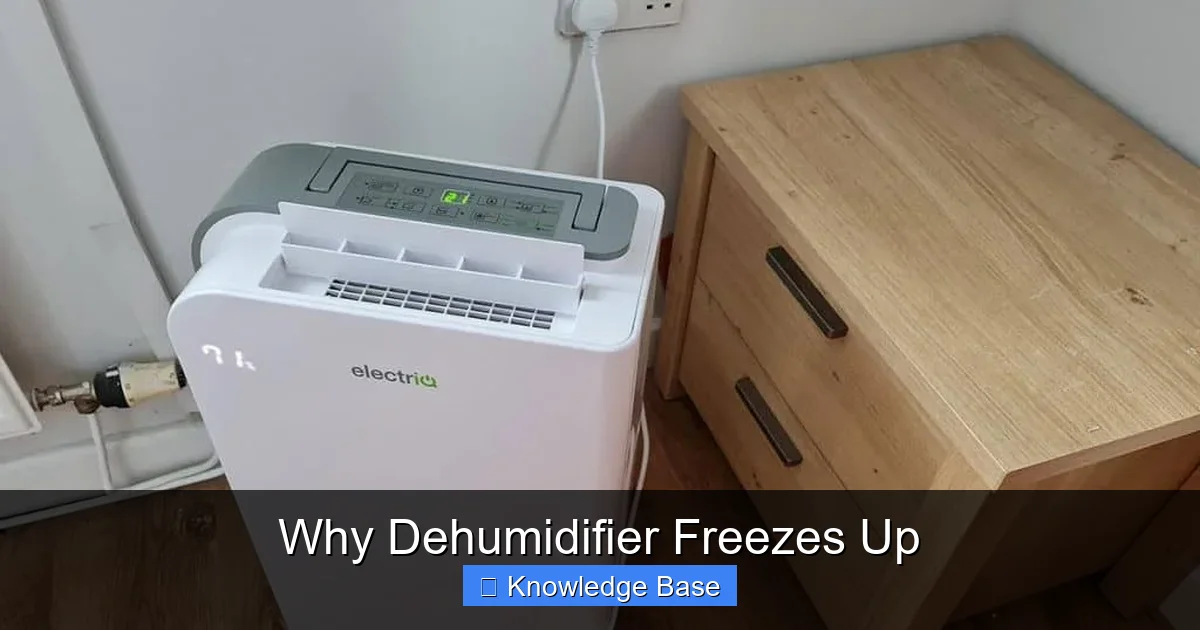
Now that you understand the basics, let’s explore the most common reasons why dehumidifier freezes up. Identifying the cause is the first step toward fixing it—and preventing it from happening again.
Visual guide about Why Dehumidifier Freezes Up
Image source: thehumidistat.com
1. Operating in Low Temperatures
This is the number one reason dehumidifiers freeze. Most consumer-grade dehumidifiers are designed to work best in temperatures between 65°F and 80°F (18°C to 27°C). When the room temperature drops below 65°F, the evaporator coils can cool to freezing levels, especially if the air is still humid.
For example, a basement in winter might stay at 55°F (13°C) but have high humidity due to groundwater or poor ventilation. Your dehumidifier will keep running, but the coils will freeze over time. This is why you’ll often see ice buildup overnight when the room cools down.
Solution: Only run your dehumidifier in spaces that stay above 65°F. If you need moisture control in a cold area, consider a desiccant dehumidifier, which uses moisture-absorbing materials instead of refrigeration and works well in low temperatures.
2. Dirty or Clogged Air Filters
The air filter in your dehumidifier captures dust, pet dander, and other particles before air reaches the coils. Over time, this filter gets clogged—especially in dusty environments like garages or workshops. When airflow is restricted, less warm air passes over the coils, causing them to get colder than normal.
Imagine trying to breathe through a thick scarf—your lungs would struggle. The same happens to your dehumidifier. Reduced airflow means the coils can’t stay warm enough to prevent freezing, even in a moderately cool room.
Solution: Check and clean the air filter every 2–4 weeks during heavy use. Most filters are washable—just rinse them under warm water, let them dry completely, and reinstall. If the filter is damaged or too dirty to clean, replace it with a new one.
3. Refrigerant Leaks or Low Charge
Refrigerant is the chemical that absorbs and releases heat inside the dehumidifier. If there’s a leak or the system wasn’t charged properly at the factory, the refrigerant level drops. This reduces the system’s ability to transfer heat, causing the evaporator coils to get excessively cold.
A refrigerant leak is often invisible and odorless, so you might not notice it until your dehumidifier starts freezing. Other signs include reduced moisture removal, longer run times, or a hissing sound near the coils.
Solution: Refrigerant issues require professional repair. If you suspect a leak, turn off the unit and contact a certified HVAC technician. Attempting to recharge refrigerant yourself is dangerous and often illegal without proper licensing.
4. Overworking the Unit
Using a dehumidifier that’s too small for the space is a recipe for trouble. A compact 30-pint unit might work fine in a small bathroom, but if you place it in a 1,500-square-foot basement with high humidity, it will run nonstop trying to keep up.
Constant operation means the coils never get a chance to warm up, increasing the risk of freezing—even in a room that’s technically above 65°F. The unit is essentially “overcooling” itself.
Solution: Choose the right size dehumidifier for your space. Check the manufacturer’s recommendations based on square footage and humidity level (moderate, high, or severe). If you’re unsure, opt for a slightly larger capacity—it’s better to have extra power than to underperform.
5. Poor Ventilation or Blocked Airflow
Dehumidifiers need space to breathe. If you place the unit in a tight corner, behind furniture, or too close to a wall, airflow is restricted. The same goes for blocked intake or exhaust vents. Without proper circulation, cold air gets trapped around the coils, promoting ice formation.
For example, placing a dehumidifier in a closet with the door closed might seem like a good way to hide it, but it’s a surefire way to cause freezing. The unit can’t pull in enough warm air to balance the cooling effect.
Solution: Leave at least 6–12 inches of clearance around all sides of the dehumidifier. Keep vents unobstructed and avoid running the unit in enclosed spaces unless they’re well-ventilated. If possible, place the unit in the center of the room or near a source of warmer air.
Signs Your Dehumidifier Is Freezing Up
Early detection can save you from major damage. Here are the most common signs that your dehumidifier is freezing up:
- Ice on the coils: The most obvious sign. Open the front panel (when the unit is off) and look for frost or ice buildup on the metal coils.
- Reduced water collection: If the tank isn’t filling as quickly as usual, ice may be blocking moisture removal.
- Unit shuts off unexpectedly: Many dehumidifiers have thermal cutoffs that turn off the compressor if it overheats due to ice buildup.
- Fan runs but no air comes out: Ice can block the airflow path, so the fan spins but nothing happens.
- Unusual noises: Clicking, grinding, or buzzing sounds may indicate the compressor is struggling against ice.
If you notice any of these signs, turn off the dehumidifier immediately. Let it sit for several hours to thaw completely before attempting to restart it. Never try to chip away ice with tools—this can damage the coils.
How to Fix a Frozen Dehumidifier
Once you’ve confirmed your dehumidifier is frozen, here’s how to fix it safely and effectively:
Step 1: Turn It Off and Unplug
Safety first. Always unplug the unit before inspecting or cleaning. This prevents electrical shock and protects the internal components.
Step 2: Let It Thaw Completely
Place towels or a shallow pan under the unit to catch melting ice. Let it sit for 4–6 hours in a warm room. Do not use a hair dryer or heat gun—rapid temperature changes can damage sensitive parts.
Step 3: Clean the Air Filter
While the unit thaws, remove and clean the air filter. A dirty filter is often the culprit, and cleaning it may solve the problem on its own.
Step 4: Inspect the Coils and Vents
Once thawed, check the evaporator and condenser coils for dirt, dust, or debris. Use a soft brush or vacuum with a brush attachment to gently clean them. Also, make sure intake and exhaust vents are clear.
Step 5: Check the Room Temperature
Use a thermometer to confirm the room is above 65°F. If it’s colder, consider relocating the dehumidifier or using a model designed for low temperatures.
Step 6: Restart and Monitor
Plug the unit back in and turn it on. Set it to a moderate humidity level (around 50%) and watch for signs of freezing over the next 24 hours. If ice returns, the issue may be more serious—like a refrigerant leak or faulty defrost sensor.
Preventing Dehumidifier Freezing: Best Practices
An ounce of prevention is worth a pound of cure. Follow these tips to keep your dehumidifier running smoothly and ice-free:
- Maintain proper room temperature: Keep the space above 65°F whenever the dehumidifier is running.
- Clean the filter regularly: Every 2–4 weeks during peak use, or monthly during lighter use.
- Choose the right size unit: Match the dehumidifier’s capacity to your room size and humidity level.
- Ensure good airflow: Leave space around the unit and avoid blocking vents.
- Use a hygrometer: Monitor humidity levels to avoid overworking the unit. Aim for 30–50% humidity.
- Schedule annual maintenance: Have a technician inspect the coils, refrigerant, and electrical components once a year.
- Consider a smart dehumidifier: Models with auto-defrost, humidity sensors, and Wi-Fi controls can prevent freezing by adjusting operation based on conditions.
When to Call a Professional
While many freezing issues can be resolved at home, some problems require expert help. Contact a technician if:
- The dehumidifier freezes repeatedly despite following all prevention steps.
- You hear unusual noises like hissing, bubbling, or grinding.
- The unit leaks water or refrigerant.
- The compressor won’t start or trips the circuit breaker.
- You suspect a refrigerant leak or electrical fault.
Ignoring these signs can lead to permanent damage or safety hazards. A professional can diagnose the issue, recharge refrigerant if needed, and ensure your unit is safe to use.
Conclusion
So, why does a dehumidifier freeze up? In most cases, it’s because the coils get too cold—usually due to low room temperatures, dirty filters, or poor airflow. While freezing can be frustrating, it’s rarely a sign of a broken machine. With the right knowledge and maintenance, you can prevent it from happening and keep your dehumidifier working efficiently for years.
Remember: your dehumidifier is designed to remove moisture, not to double as a freezer. By keeping it in a warm, well-ventilated space, cleaning it regularly, and choosing the right model for your needs, you’ll avoid ice buildup and enjoy a healthier, more comfortable home.
Don’t let a frozen dehumidifier catch you off guard. Stay proactive, stay informed, and your unit will reward you with reliable performance season after season.
Frequently Asked Questions
Can a dehumidifier freeze in summer?
It’s rare but possible. If the dehumidifier is in an air-conditioned room set below 65°F, or if airflow is severely restricted, ice can still form. Always check the room temperature and ensure proper ventilation.
How long does it take for a frozen dehumidifier to thaw?
Most units take 4–6 hours to thaw completely at room temperature. Never speed up the process with heat sources, as this can damage internal components.
Should I run my dehumidifier in winter?
Only if the room stays above 65°F. In colder spaces like unheated basements, consider a desiccant dehumidifier, which works better in low temperatures.
Can I prevent freezing by lowering the humidity setting?
No—lower settings make the unit work harder, increasing freeze risk. Set it to 50% and let the built-in humidistat control operation.
Is it normal for a dehumidifier to make noise when freezing?
Yes. You may hear clicking (defrost cycle), buzzing (compressor strain), or fan noise. If sounds persist after thawing, have the unit inspected.
Can I use my dehumidifier after it freezes?
Yes, once it’s fully thawed and the cause is fixed. Clean the filter, check airflow, and restart. If it freezes again, seek professional help.