

A dehumidifier freezes when cold coils meet excess moisture, often due to low temperatures, dirty filters, or airflow issues. This ice buildup reduces efficiency and can damage the unit if ignored. With proper care and troubleshooting, you can prevent freezing and extend your dehumidifier’s life.
Key Takeaways
- Low ambient temperatures cause freezing: Most dehumidifiers aren’t designed to run below 65°F (18°C), and cold air leads to ice on coils.
- Dirty air filters restrict airflow: Clogged filters reduce air circulation, causing coils to get too cold and freeze.
- Refrigerant leaks lead to improper cooling: Low refrigerant levels make coils excessively cold, promoting ice formation.
- Frost accumulation blocks internal components: Ice buildup can damage fans, motors, and sensors over time.
- Regular maintenance prevents freezing: Cleaning filters, checking vents, and monitoring humidity levels help avoid issues.
- Auto-defrost features aren’t foolproof: Some units have defrost cycles, but extreme conditions can still cause freezing.
- Placement matters: Avoid basements or garages with poor insulation or cold drafts during winter months.
📑 Table of Contents
Why Dehumidifier Freezes: Understanding the Problem
If you’ve ever opened your dehumidifier to find a block of ice covering the coils, you’re not alone. It’s a frustrating and surprisingly common issue, especially during colder months or in damp, chilly spaces like basements or crawl spaces. But why does a dehumidifier freeze in the first place?
At its core, a dehumidifier works by pulling in moist air, cooling it over cold coils to condense the moisture into water, and then reheating the air slightly before releasing it back into the room. This process relies on a delicate balance of temperature, airflow, and refrigerant levels. When any of these elements are off, the system can overcool, leading to frost or ice buildup on the evaporator coils.
Think of it like your car’s air conditioner: if the refrigerant is low or the filter is clogged, the system struggles to function properly. The same principle applies to dehumidifiers. When the coils get too cold—especially below freezing—and there’s still moisture in the air, that moisture turns into frost instead of liquid water. Over time, this frost thickens into ice, blocking airflow and reducing efficiency.
This isn’t just a minor inconvenience. A frozen dehumidifier can’t remove moisture effectively, which defeats its entire purpose. Worse, the ice can cause mechanical stress, damage internal components, or even lead to complete system failure if left unaddressed.
So, what’s really going on behind the scenes? Let’s break down the most common reasons your dehumidifier freezes and how you can stop it from happening again.
Common Causes of Dehumidifier Freezing
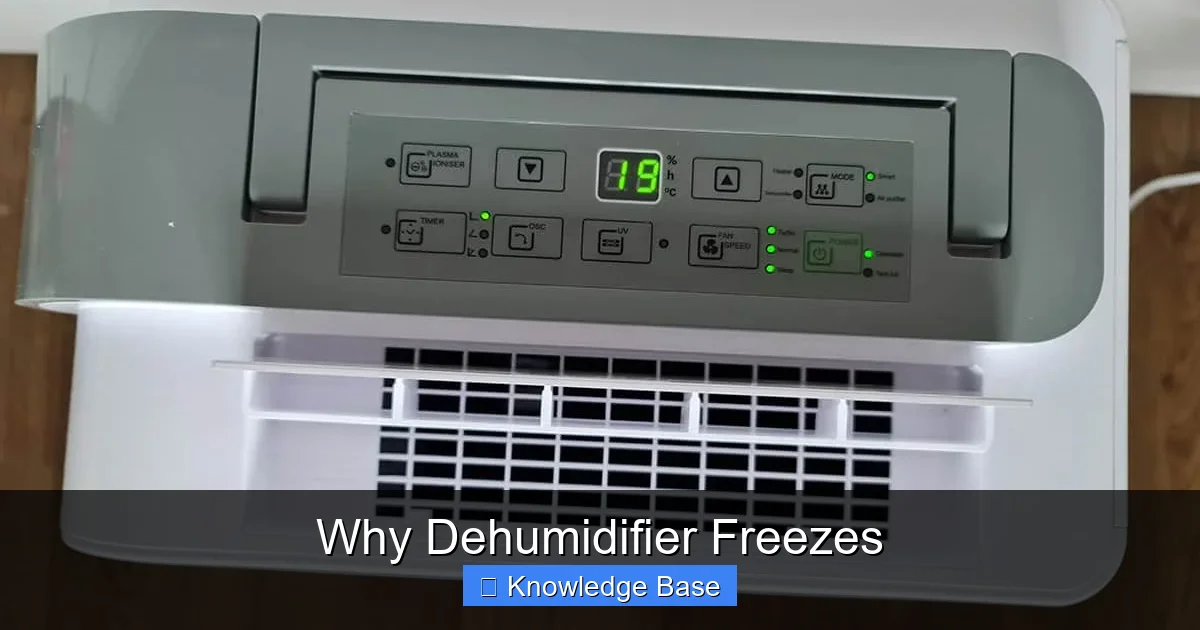
Visual guide about Why Dehumidifier Freezes
Image source: thehumidistat.com
Understanding why your dehumidifier freezes starts with knowing how it works. The evaporator coils are designed to cool incoming air just enough to condense moisture. But if the coils drop below freezing, that moisture turns to ice instead of water. Several factors can trigger this, and most are preventable with a little attention.
1. Operating in Low Temperatures
One of the most frequent causes of dehumidifier freezing is using the unit in a space that’s too cold. Most standard dehumidifiers are rated to operate efficiently between 65°F and 80°F (18°C to 27°C). When the ambient temperature drops below this range—especially under 60°F (15.5°C)—the evaporator coils can become colder than intended.
For example, if you’re running a dehumidifier in an unheated basement during winter, the air might be 50°F (10°C) or lower. The coils cool the air further, and if they dip below 32°F (0°C), any moisture in the air will freeze on contact. This creates a layer of ice that grows thicker over time, eventually blocking airflow and causing the unit to shut down.
Some modern dehumidifiers come with auto-defrost features or are designed for low-temperature operation (often labeled as “cold climate” models). These units have sensors that detect frost buildup and temporarily shut off the compressor to let the ice melt. However, even these models have limits. If the room is consistently too cold, the defrost cycle may not be enough to prevent freezing.
2. Dirty or Clogged Air Filters
Air filters play a crucial role in maintaining proper airflow through your dehumidifier. They trap dust, pet dander, and other particles, keeping the internal components clean. But when filters become clogged, they restrict airflow significantly.
Imagine trying to breathe through a wet paper towel—that’s what it’s like for your dehumidifier when the filter is dirty. With less air moving over the coils, the cooling effect becomes more intense. The coils get colder than they should, increasing the risk of freezing.
This is especially problematic in homes with pets, smokers, or high dust levels. A filter that’s only slightly dirty might not seem like a big deal, but over time, it can lead to serious performance issues. Regular cleaning—typically every 2–4 weeks—can prevent this problem entirely.
3. Blocked Air Vents or Poor Air Circulation
Even with a clean filter, your dehumidifier can freeze if the air intake or exhaust vents are blocked. Furniture, curtains, or even dust buildup around the vents can restrict airflow. Without proper circulation, the coils don’t get enough warm air to balance the cooling process.
For instance, if you place your dehumidifier in a tight corner with only a few inches of clearance on all sides, the unit can’t pull in enough air. This leads to the same overcooling effect as a dirty filter. The solution is simple: always leave at least 6–12 inches of space around the unit to allow for adequate airflow.
Additionally, make sure the dehumidifier isn’t running in a sealed-off area with no air exchange. A room with closed doors and windows may trap cold air, lowering the overall temperature and increasing the risk of freezing.
4. Refrigerant Leaks or Low Charge
Refrigerant is the lifeblood of your dehumidifier’s cooling system. It absorbs heat from the air as it passes over the coils. If the refrigerant level is low—due to a leak or improper charging during manufacturing—the system can’t regulate temperature properly.
A low refrigerant charge causes the evaporator coils to become excessively cold. This isn’t because the system is working harder; it’s because it’s working inefficiently. The compressor may run longer trying to meet the humidity target, but the coils drop below freezing, leading to ice buildup.
Refrigerant leaks are not something you can fix at home. They require a certified HVAC technician to locate the leak, repair it, and recharge the system. If you suspect a refrigerant issue—especially if the unit runs constantly but doesn’t remove much moisture—it’s best to call a professional.
5. Malfunctioning Defrost Sensor or Timer
Many dehumidifiers are equipped with defrost sensors or timers that detect ice buildup and initiate a defrost cycle. These systems temporarily turn off the compressor and activate a heater (or reverse the refrigerant flow) to melt the frost.
However, if the defrost sensor is faulty or the timer is misaligned, the unit may not defrost when needed. This allows ice to accumulate unchecked, eventually blocking the coils and causing the unit to shut down.
Signs of a malfunctioning defrost system include:
– Ice forming on the coils even after the unit has been running for hours
– The compressor running continuously without cycling off
– The unit shutting down unexpectedly
In such cases, the sensor or control board may need replacement. Some models allow you to manually initiate a defrost cycle, which can help confirm whether the automatic system is working.
6. High Humidity in Cold Environments
It might seem counterintuitive, but high humidity in a cold space can actually increase the risk of freezing. When warm, moist air from outside enters a cold basement or garage, it cools rapidly. If the dehumidifier is running, it pulls in this cold, damp air and cools it further.
The result? The coils drop below freezing, and the moisture in the air turns to ice. This is common in spring and fall when outdoor humidity is high but indoor temperatures are still cool.
To prevent this, try to minimize the influx of outside air. Seal windows, doors, and cracks. Use exhaust fans in bathrooms and kitchens to vent moisture outside rather than letting it circulate into the basement.
How to Prevent Your Dehumidifier from Freezing

Visual guide about Why Dehumidifier Freezes
Image source: thehumidistat.com
Now that you know why dehumidifiers freeze, the next step is prevention. The good news is that most freezing issues can be avoided with simple maintenance and smart usage habits. Here’s how to keep your unit running smoothly year-round.
1. Maintain Proper Room Temperature
The easiest way to prevent freezing is to ensure your dehumidifier operates in a warm enough environment. Aim to keep the room temperature above 65°F (18°C). If you’re using the unit in a basement or garage, consider using a space heater to raise the ambient temperature slightly.
Avoid running the dehumidifier overnight in unheated areas during winter. Instead, use it during the day when the house is warmer. Some homeowners install thermostats or smart plugs that automatically turn the dehumidifier on only when the room reaches a certain temperature.
2. Clean or Replace Air Filters Regularly
Check your air filter every two weeks, especially during humid seasons or if you have pets. A clean filter ensures proper airflow and prevents the coils from getting too cold.
Most filters are washable—just rinse them under warm water, let them dry completely, and reinstall. If the filter is damaged or excessively dirty, replace it with a manufacturer-approved model.
3. Ensure Adequate Airflow Around the Unit
Never place your dehumidifier in a cramped space. Keep at least 6–12 inches of clearance on all sides, especially near the intake and exhaust vents. Avoid covering the unit with blankets, boxes, or furniture.
Also, make sure the dehumidifier isn’t sitting directly on a cold concrete floor. Use a small platform or rubber mat to insulate it slightly from the ground.
4. Use a Cold Climate Dehumidifier
If you live in a region with cold winters or frequently use your dehumidifier in unheated spaces, consider investing in a cold climate model. These units are specifically designed to operate efficiently in temperatures as low as 41°F (5°C).
Cold climate dehumidifiers often use different refrigerants or have enhanced defrost systems. While they cost more upfront, they can save you money in the long run by preventing freezing and extending the unit’s lifespan.
5. Monitor Humidity Levels
Use a hygrometer to track indoor humidity. Ideally, you want to maintain a level between 30% and 50%. If the humidity is too high, your dehumidifier will work harder, increasing the risk of freezing in cold conditions.
Set your dehumidifier to the appropriate humidity level and avoid over-drying the air. Some units have built-in humidistats, but an external hygrometer gives you more accurate readings.
6. Schedule Regular Maintenance
In addition to cleaning the filter, inspect the coils, fan blades, and water bucket regularly. Dust and debris can accumulate inside the unit, affecting performance.
Once a year, consider having a professional service your dehumidifier. They can check refrigerant levels, test sensors, and ensure all components are in good working order.
What to Do If Your Dehumidifier Is Already Frozen
If you discover ice on your dehumidifier, don’t panic. Here’s how to safely thaw it and get it back to work.
1. Turn Off and Unplug the Unit
Safety first. Always turn off and unplug the dehumidifier before attempting any repairs. This prevents electrical hazards and gives the unit time to cool down.
2. Let It Thaw Naturally
The best way to remove ice is to let it melt on its own. Place the unit in a warm room and allow 4–6 hours for the ice to thaw completely. You can speed up the process slightly by placing a fan nearby to improve airflow.
Do not use a hair dryer, heat gun, or other direct heat source. These can damage internal components or create a fire hazard.
3. Clean the Coils and Filter
Once the ice has melted, inspect the evaporator coils for dirt or debris. Use a soft brush or vacuum attachment to gently clean them. Also, check and clean the air filter.
4. Check for Blockages
Make sure the intake and exhaust vents are clear. Remove any dust, lint, or obstructions that could restrict airflow.
5. Restart the Unit
After cleaning and ensuring everything is clear, plug the dehumidifier back in and turn it on. Monitor it for the first few hours to make sure it’s running properly and not refreezing.
If the unit freezes again within a short time, there may be a deeper issue—such as a refrigerant leak or faulty sensor—that requires professional attention.
When to Call a Professional
While many freezing issues can be resolved with basic maintenance, some problems require expert help. Here are signs it’s time to call a technician:
– The dehumidifier freezes repeatedly despite cleaning and proper placement
– The unit runs constantly but removes little to no moisture
– You hear unusual noises, such as grinding or hissing
– There’s a burning smell or visible damage to wires or components
– The water bucket fills unusually fast or not at all
A professional can diagnose refrigerant leaks, test electrical components, and replace faulty parts. Regular servicing can also extend the life of your dehumidifier and improve its efficiency.
Conclusion: Keep Your Dehumidifier Running Smoothly
A frozen dehumidifier is more than just an annoyance—it’s a sign that something isn’t right. Whether it’s low temperatures, dirty filters, or airflow issues, the root cause is usually preventable with a little care and attention.
By maintaining proper room temperature, cleaning filters regularly, and ensuring good airflow, you can stop freezing before it starts. And if your unit does freeze, thawing it safely and addressing the underlying issue will get it back on track.
Remember, your dehumidifier is an investment in your home’s comfort and health. It helps prevent mold, dust mites, and musty odors. Taking the time to care for it ensures it continues working effectively for years to come.
So the next time you notice ice on the coils, don’t ignore it. With the right knowledge and a few simple steps, you can keep your dehumidifier running smoothly—no matter the season.
Frequently Asked Questions
Can a dehumidifier freeze in summer?
Yes, though less common, a dehumidifier can freeze in summer if it’s placed in an air-conditioned room that’s too cold or if there’s a refrigerant issue. Ensure the room stays above 65°F and check for airflow blockages.
How long does it take for a frozen dehumidifier to thaw?
Most dehumidifiers take 4–6 hours to thaw naturally. Avoid using heat sources, as they can damage the unit. A fan can help speed up the process slightly.
Should I run my dehumidifier in winter?
Only if the room temperature stays above 65°F. In colder spaces, consider using a cold climate model or running the unit only during warmer parts of the day.
Can I fix a refrigerant leak myself?
No, refrigerant leaks require a licensed HVAC technician. Attempting to fix it yourself can be dangerous and may violate environmental regulations.
Why does my dehumidifier keep freezing even after cleaning?
This could indicate a faulty defrost sensor, low refrigerant, or poor room conditions. If basic maintenance doesn’t help, consult a professional.
Is it safe to use a dehumidifier with ice on it?
No, running a frozen dehumidifier can damage the compressor and other components. Always turn it off, unplug it, and let it thaw completely before restarting.