
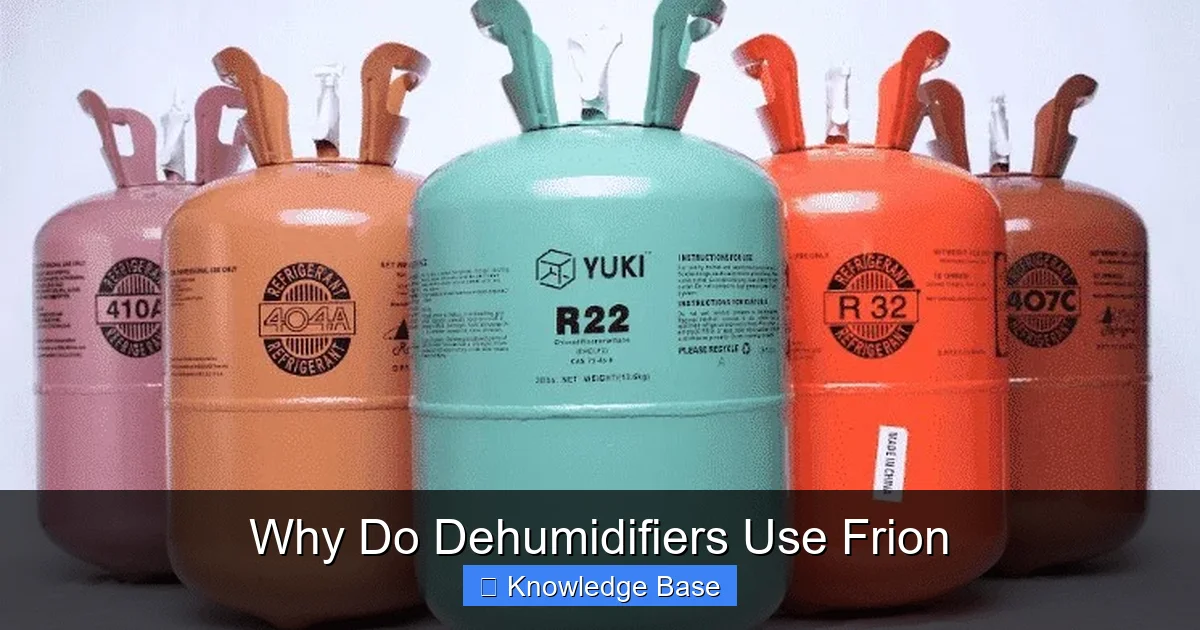
Dehumidifiers use frion (refrigerant) to cool air and condense moisture, making the drying process efficient and effective. This chemical plays a crucial role in the refrigeration cycle, ensuring your home stays dry and comfortable.
Have you ever walked into a damp basement and felt that sticky, heavy air clinging to your skin? Or noticed mold growing in the corners of your bathroom? High humidity isn’t just uncomfortable—it can damage your home, trigger allergies, and even harm your health. That’s where dehumidifiers come in. These handy appliances pull excess moisture from the air, creating a drier, healthier environment. But have you ever wondered how they actually work? The secret lies in a chemical called frion.
Frion, more accurately known as refrigerant, is the lifeblood of most dehumidifiers. It’s the substance that enables the machine to cool air, condense water vapor, and release dry air back into the room. Without frion, your dehumidifier would be little more than a fan blowing humid air around. But with it, the device becomes a powerful tool for controlling indoor humidity. In this article, we’ll dive deep into why dehumidifiers use frion, how it works, the types commonly used, and what you need to know about safety and environmental impact.
Whether you’re a homeowner dealing with dampness, a renter trying to prevent mold, or just curious about how appliances function, understanding frion will give you a clearer picture of how your dehumidifier keeps your space comfortable. So let’s break it down—step by step—and uncover the science behind this essential component.
Key Takeaways
- Frion is essential for cooling: It absorbs heat from air, allowing moisture to condense on cold coils.
- Enables efficient moisture removal: The refrigerant cycle makes dehumidifiers highly effective at reducing humidity.
- Common types include R-410A and R-32: These modern refrigerants are more eco-friendly than older versions.
- Safe when properly maintained: Frion is contained within sealed systems and poses minimal risk if units are serviced correctly.
- Environmental regulations matter: Older frions like R-22 are phased out due to ozone depletion concerns.
- Regular maintenance ensures performance: Clean filters and coils help the frion system work efficiently.
- Understanding frion helps with troubleshooting: Knowing how it works aids in identifying common dehumidifier issues.
📑 Table of Contents
- What Is Frion and How Does It Work in Dehumidifiers?
- Types of Frion Used in Modern Dehumidifiers
- The Science Behind Moisture Removal: How Frion Makes It Happen
- Safety and Environmental Considerations of Frion
- Maintenance Tips to Keep Your Dehumidifier’s Frion System Running Smoothly
- Future of Frion in Dehumidifiers: What’s Next?
- Conclusion
What Is Frion and How Does It Work in Dehumidifiers?
At its core, frion is a chemical compound used in refrigeration systems to transfer heat. In dehumidifiers, it plays a starring role in the refrigeration cycle—the process that allows the machine to remove moisture from the air. But what exactly happens inside that metal box?
When you turn on your dehumidifier, it pulls in warm, humid air from the room using a fan. This air passes over a set of cold coils filled with frion. As the air cools, its ability to hold moisture drops dramatically. The excess water vapor condenses into liquid droplets on the coils—just like how dew forms on a cold glass on a hot day. These droplets collect in a water tank or drain hose, while the now-drier air is reheated slightly and released back into the room.
The magic of frion lies in its ability to change states—from liquid to gas and back again—at low temperatures and pressures. This phase change is what allows it to absorb heat from the air (cooling it down) and then release that heat elsewhere (usually outside the unit or into the surrounding environment). It’s a continuous loop: the frion evaporates, absorbs heat, gets compressed, condenses, releases heat, and then expands again to repeat the cycle.
Think of it like a sponge. The frion “soaks up” heat from the incoming air, making the coils cold enough for moisture to condense. Then, after releasing that heat, it’s ready to absorb more. This cycle runs nonstop as long as the dehumidifier is on, steadily pulling moisture out of the air.
One key advantage of using frion is efficiency. Because it can absorb and release large amounts of heat with minimal energy input, dehumidifiers can remove significant amounts of water without using excessive electricity. This makes them cost-effective and environmentally friendly compared to other methods of dehumidification, like desiccant-based systems (which use materials like silica gel to absorb moisture but often require more energy to regenerate).
But not all frion is created equal. Over the years, different types have been developed to improve performance, safety, and environmental impact. Let’s take a closer look at the most common ones used in modern dehumidifiers.
Types of Frion Used in Modern Dehumidifiers
Visual guide about Why Do Dehumidifiers Use Frion
Image source: i.pinimg.com
Not all refrigerants are the same, and the type of frion used in your dehumidifier can affect its efficiency, environmental footprint, and even its lifespan. Over the decades, the refrigeration industry has evolved to phase out harmful chemicals and adopt safer, more sustainable alternatives.
One of the most widely used frions in today’s dehumidifiers is R-410A. This hydrofluorocarbon (HFC) blend is known for its excellent thermodynamic properties and high energy efficiency. It operates at higher pressures than older refrigerants, which allows for more compact and powerful systems. R-410A doesn’t deplete the ozone layer, making it a better choice than its predecessors. However, it does have a high global warming potential (GWP), meaning it can contribute to climate change if released into the atmosphere.
To address this concern, newer models are increasingly using R-32, a single-component HFC with a lower GWP than R-410A. R-32 is more energy-efficient, requires less refrigerant by volume, and is easier to recycle. Many manufacturers now prefer it for its balance of performance and environmental responsibility.
You might also come across R-134a in some portable or smaller dehumidifiers. This refrigerant is commonly used in automotive air conditioning systems and is known for its stability and low toxicity. While it has a moderate GWP, it’s considered safer for home use and is often found in units designed for lighter-duty applications.
It’s important to note that older refrigerants like R-22 (also known as Freon) are no longer used in new dehumidifiers due to their ozone-depleting properties. R-22 was once the standard, but international agreements like the Montreal Protocol have led to its phaseout. If you have an older dehumidifier that uses R-22, it may still work, but servicing it can be difficult and expensive since the refrigerant is no longer produced.
When shopping for a new dehumidifier, check the product specifications or label to see which refrigerant it uses. Opting for models with R-32 or R-410A ensures you’re getting a modern, efficient, and relatively eco-friendly unit. And if you’re replacing an old appliance, proper disposal is key—many retailers offer recycling programs to safely handle the frion inside.
The Science Behind Moisture Removal: How Frion Makes It Happen

Visual guide about Why Do Dehumidifiers Use Frion
Image source: deye.com
Now that we know what frion is and what types are used, let’s zoom in on the actual science of how it enables moisture removal. It’s not just about cooling the air—it’s about controlling the entire thermodynamic process to maximize efficiency.
The dehumidification process begins when humid air enters the unit and flows over the evaporator coils. These coils contain cold frion in its liquid state. As the warm air passes over them, heat transfers from the air to the frion, causing the refrigerant to evaporate into a gas. This phase change absorbs a lot of energy—specifically, the latent heat of vaporization—which cools the air significantly.
When air cools, its relative humidity increases. If it cools enough, it reaches the dew point—the temperature at which water vapor begins to condense into liquid. This is when moisture starts forming on the cold coils. The condensed water drips down into a collection tray or is directed to a drain hose. Meanwhile, the now-cool, dry air continues through the system.
But the job isn’t done yet. The frion, now in gaseous form, moves to the compressor, where it’s pressurized. This increases its temperature and prepares it for the next stage. The hot, high-pressure gas then flows into the condenser coils. Here, it releases the heat it absorbed earlier—plus the heat from compression—into the surrounding air. As it cools, the frion condenses back into a liquid.
Finally, the liquid frion passes through an expansion valve, which reduces its pressure and temperature, sending it back to the evaporator coils to start the cycle again. This continuous loop allows the dehumidifier to remove moisture efficiently and consistently.
One practical example of this process in action is a basement dehumidifier during the summer. On a hot, humid day, the unit might remove several liters of water in just a few hours. The frion system works tirelessly to keep the coils cold, ensuring maximum condensation. Without this precise control of temperature and pressure, the dehumidifier would struggle to keep up with the moisture load.
Understanding this cycle also helps explain why dehumidifiers work best in certain conditions. Most refrigerant-based models are most efficient in temperatures between 65°F and 80°F (18°C to 27°C). In colder environments, the coils can freeze, reducing performance. That’s why some units have auto-defrost features—they briefly reverse the cycle to melt ice buildup and keep the frion flowing smoothly.
Safety and Environmental Considerations of Frion
While frion is essential for dehumidifier operation, it’s not without risks—especially when it comes to safety and the environment. The good news is that modern refrigerants are much safer and cleaner than their predecessors, but responsible use and disposal are still critical.
One of the biggest concerns with older frions like R-22 was their role in ozone depletion. These chlorofluorocarbons (CFCs) and hydrochlorofluorocarbons (HCFCs) released chlorine atoms when they broke down in the upper atmosphere, which damaged the ozone layer. The ozone layer protects Earth from harmful ultraviolet radiation, so its depletion posed serious health and environmental risks. That’s why international efforts have focused on phasing out these chemicals.
Today’s frions, like R-410A and R-32, are HFCs—they don’t contain chlorine and therefore don’t harm the ozone layer. However, they do have high global warming potential (GWP), meaning they can trap heat in the atmosphere if released. For example, R-410A has a GWP of over 2,000, which is thousands of times greater than carbon dioxide. This has led to regulations pushing for lower-GWP alternatives, such as R-32 and even natural refrigerants like propane (R-290) in some applications.
From a safety standpoint, frion is generally stable and non-flammable in most household dehumidifiers. However, if a unit is damaged or improperly serviced, leaks can occur. While modern refrigerants are less toxic than older ones, exposure to large amounts can still cause dizziness, headaches, or respiratory irritation. In rare cases, if frion comes into contact with a flame or hot surface, it can break down into harmful byproducts.
That’s why it’s crucial to have dehumidifiers serviced by qualified technicians. They have the tools and training to handle frion safely, recover it during repairs, and dispose of it properly. Never attempt to open or repair the refrigerant system yourself—this can be dangerous and is often illegal without proper certification.
When it’s time to replace your dehumidifier, don’t just toss it in the trash. Many components, including the frion, can be recycled. Look for local e-waste programs or retailer take-back initiatives that handle refrigerant recovery. This helps prevent harmful chemicals from entering the environment and supports sustainable practices.
Maintenance Tips to Keep Your Dehumidifier’s Frion System Running Smoothly
Even the best dehumidifier won’t work well if it’s not properly maintained. And since the frion system is at the heart of its operation, keeping it in good condition is essential for performance and longevity.
One of the simplest yet most effective maintenance tasks is cleaning the air filter. Most dehumidifiers have a reusable filter that captures dust, pet dander, and other particles. Over time, this filter can become clogged, reducing airflow and forcing the unit to work harder. A dirty filter also makes it harder for air to pass over the cold coils, which can reduce condensation and efficiency. Check your filter monthly and clean it with warm, soapy water or replace it if it’s damaged.
Another key area to monitor is the coils. Both the evaporator and condenser coils can accumulate dust and debris, especially in dusty environments like basements or garages. This buildup acts as insulation, reducing heat transfer and making the frion system less effective. Use a soft brush or vacuum with a brush attachment to gently clean the coils every few months. Be careful not to bend the delicate fins.
If you notice your dehumidifier isn’t removing as much water as it used to, it could be a sign of a frion-related issue. For example, low refrigerant levels—often due to a slow leak—can cause the coils to not get cold enough, reducing moisture removal. Other symptoms include longer run times, ice buildup on the coils, or unusual noises. If you suspect a frion problem, don’t try to fix it yourself. Contact a certified technician who can diagnose and repair the issue safely.
Also, make sure your dehumidifier has proper airflow. Keep it at least 6 inches away from walls and furniture, and avoid placing it in tight, enclosed spaces. Good airflow ensures that air can move freely over the coils, allowing the frion to do its job efficiently.
Finally, empty the water tank regularly. Most units have an automatic shut-off when the tank is full, but if it overflows, water can damage internal components or even short-circuit the system. Some models come with a continuous drain hose option, which is ideal for basements or areas where you can’t check the tank frequently.
By following these simple tips, you’ll help ensure your dehumidifier’s frion system stays in top shape, delivering reliable performance year after year.
Future of Frion in Dehumidifiers: What’s Next?
As environmental concerns grow and technology advances, the future of frion in dehumidifiers is evolving. Manufacturers are under increasing pressure to reduce the climate impact of their products, and that includes the refrigerants they use.
One trend is the shift toward lower-GWP refrigerants. R-32 is already gaining popularity, but even more sustainable options are on the horizon. Natural refrigerants like propane (R-290) and isobutane (R-600a) have very low GWP and are highly efficient. Some compact dehumidifiers and air conditioners already use these, though they require special handling due to flammability.
Another innovation is the development of hybrid systems that combine refrigerant-based dehumidification with desiccant technology. Desiccants absorb moisture without cooling the air, making them effective in cold environments. By integrating both methods, manufacturers can create units that work efficiently across a wider range of conditions.
Smart technology is also playing a role. Modern dehumidifiers can now connect to Wi-Fi, allowing you to monitor humidity levels, adjust settings, and receive maintenance alerts from your smartphone. Some models even use sensors to detect when humidity spikes—like after a shower or during laundry—and automatically increase fan speed to remove moisture faster.
Looking ahead, we may see more regulations pushing for eco-friendly refrigerants and energy-efficient designs. The European Union’s F-Gas Regulation, for example, is gradually reducing the use of high-GWP HFCs, which could influence global standards.
For consumers, this means more choices and better performance. But it also means staying informed. When buying a new dehumidifier, look for energy ratings, refrigerant type, and smart features that suit your needs.
Conclusion
Dehumidifiers are essential tools for maintaining a healthy, comfortable home, and frion is the unsung hero that makes it all possible. By enabling the refrigeration cycle, this chemical allows dehumidifiers to cool air, condense moisture, and deliver dry, fresh air back into your space. From R-410A to R-32, modern frions offer a balance of efficiency, safety, and environmental responsibility.
Understanding how frion works empowers you to make better decisions about your dehumidifier—whether you’re choosing a new model, maintaining your current unit, or troubleshooting issues. With proper care and awareness, your dehumidifier can keep your home dry and mold-free for years to come.
So the next time you hear your dehumidifier humming away, remember: it’s not just a fan. It’s a sophisticated system powered by science, chemistry, and a little bit of frion magic.
Frequently Asked Questions
What is frion and why is it used in dehumidifiers?
Frion, or refrigerant, is a chemical used in the refrigeration cycle to absorb heat and cool air. In dehumidifiers, it enables moisture to condense on cold coils, effectively removing humidity from the air.
Is frion safe for home use?
Yes, modern frions like R-410A and R-32 are safe when used in properly sealed systems. They are non-toxic and non-flammable under normal conditions, but should only be handled by certified technicians.
Can I replace the frion in my dehumidifier myself?
No, replacing or recharging frion requires special tools and certification. Attempting to do it yourself can be dangerous and is often illegal. Always consult a professional.
What happens if my dehumidifier leaks frion?
A frion leak can reduce efficiency and, in rare cases, cause health issues if inhaled in large amounts. If you suspect a leak, turn off the unit and contact a technician immediately.
Are newer frions better for the environment?
Yes, refrigerants like R-32 have lower global warming potential than older types like R-22. They don’t harm the ozone layer and are more energy-efficient.
How often should I maintain my dehumidifier to protect the frion system?
Clean the air filter monthly and inspect coils every few months. Annual professional servicing can help detect frion issues early and ensure optimal performance.