

LED lights dimming when a dehumidifier starts is a common electrical issue caused by voltage drops, shared circuits, or power supply sensitivity. This happens because dehumidifiers draw high startup current, briefly reducing voltage available to other devices. Understanding the root cause helps you fix it safely and efficiently.
Have you ever been relaxing under the soft glow of your LED lights, only to have them suddenly dim the moment your dehumidifier kicks on? It’s a frustrating and puzzling experience—especially when you’ve invested in energy-efficient lighting. You might wonder: “Is something wrong with my lights? Is the dehumidifier faulty? Or is this just normal?” The good news is, you’re not alone. This phenomenon is more common than you think, and it’s usually not a sign of broken equipment. Instead, it’s a symptom of how electrical loads interact in your home’s wiring system.
Understanding why LED lights dim when a dehumidifier comes on requires a bit of insight into how electricity flows through your house. Unlike older incandescent bulbs, which are relatively forgiving of small voltage changes, LED lights are powered by delicate electronic components called drivers. These drivers convert household AC power into the low-voltage DC power that LEDs need. When the voltage drops—even slightly—these drivers can’t maintain consistent output, resulting in noticeable dimming. Meanwhile, dehumidifiers are among the most power-hungry appliances in a home, especially when they first start up. They contain compressors and motors that require a surge of electricity to get going, and that surge can momentarily pull down the voltage on the circuit.
This article will walk you through the science behind the dimming effect, explore the most common causes, and offer practical, actionable solutions. Whether you’re a homeowner, renter, or DIY enthusiast, you’ll come away with a clearer understanding of your home’s electrical behavior—and how to keep your lights shining bright, no matter what appliances are running.
Key Takeaways
- Voltage Drop: Dehumidifiers draw a large inrush current at startup, causing a temporary dip in household voltage that affects sensitive LED drivers.
- Shared Circuit Issues: If the dehumidifier and LED lights are on the same circuit, the sudden power demand can overwhelm the wiring, leading to dimming.
- LED Driver Sensitivity: Unlike incandescent bulbs, LEDs rely on electronic drivers that are highly responsive to voltage fluctuations, making them more prone to dimming.
- Wiring and Load Imbalance: Older or undersized wiring, or an overloaded electrical panel, can amplify the effect of high-power appliances turning on.
- Power Quality and Surge Protectors: Poor power quality or lack of surge protection can worsen voltage instability during appliance cycling.
- Simple Fixes Available: Solutions include using dedicated circuits, upgrading wiring, installing voltage stabilizers, or choosing dehumidifiers with soft-start technology.
- When to Call an Electrician: Persistent dimming, flickering, or tripped breakers may indicate deeper electrical issues requiring professional assessment.
📑 Table of Contents
Understanding the Electrical Basics: Voltage, Current, and Power
To grasp why LED lights dim when a dehumidifier turns on, it helps to start with the fundamentals of home electricity. Your house is powered by alternating current (AC), which flows through wires at a standard voltage—typically 120 volts in North America. This voltage isn’t perfectly steady; it can fluctuate based on demand, wiring quality, and the number of devices drawing power at once.
When you flip a switch to turn on a light or appliance, you’re completing a circuit that allows electrons to flow. The amount of current (measured in amps) that flows depends on the device’s power needs. For example, a small LED bulb might use only 0.1 amps, while a dehumidifier can draw 5 to 10 amps or more, especially at startup. This sudden jump in current demand creates a temporary voltage drop, much like how water pressure drops when multiple faucets open at once in a house with narrow pipes.
Voltage drop occurs because all wires have some resistance. When high current flows through a wire with resistance, it generates heat and loses a small amount of voltage along the way. In a well-designed electrical system, this drop is minimal and barely noticeable. But in older homes, circuits with long wire runs, or systems already near capacity, even a small drop can affect sensitive electronics like LED drivers.
How Dehumidifiers Draw Power
Dehumidifiers are essentially mini air conditioners. They use a compressor to circulate refrigerant, which cools a coil to condense moisture from the air. This compressor is the main culprit behind the power surge. When the dehumidifier’s humidistat detects high humidity, it signals the compressor to start. At that moment, the motor requires a large inrush current—often 3 to 5 times its normal running current—to overcome inertia and begin spinning.
This inrush lasts only a fraction of a second, but it’s enough to cause a noticeable dip in voltage across the circuit. If your LED lights are on the same circuit or even a nearby one, they’ll feel the effect. Think of it like a traffic jam: when a big truck suddenly accelerates on a narrow road, it slows down everything else for a moment.
Why LEDs Are More Sensitive Than Other Lights
You might wonder why this doesn’t happen with incandescent or halogen bulbs. The answer lies in how different lighting technologies respond to voltage changes. Incandescent bulbs work by heating a filament until it glows. They’re relatively tolerant of voltage fluctuations—when voltage drops, the filament just gets a bit cooler and dims slightly. But because they’re analog devices, the change is gradual and often unnoticeable.
LEDs, on the other hand, are digital devices. They rely on a driver—a small circuit board inside the bulb or fixture—that regulates power precisely. This driver expects a stable input voltage. When the voltage dips, the driver may not be able to maintain the correct output, causing the LED to dim or even flicker. Some low-quality drivers are especially prone to this, but even high-end LEDs can be affected under significant voltage drops.
Moreover, many modern LED lights are dimmable and connected to smart systems or dimmer switches. These setups are even more sensitive to power quality issues. A sudden voltage drop can confuse the dimming circuitry, leading to erratic behavior like flickering, buzzing, or complete shutdown.
Common Causes of LED Dimming When Dehumidifier Starts

Visual guide about Why Do Led Lights Dim When Dehumidifier Comes On
Image source: tachyonlight.com
Now that we understand the basics, let’s look at the most common reasons why your LED lights dim when the dehumidifier kicks in. These causes often overlap, and identifying the right one is key to finding the best solution.
1. Shared Electrical Circuit
The most frequent cause is that your dehumidifier and LED lights are connected to the same circuit. In many homes, especially older ones, circuits are shared among multiple outlets, lights, and appliances. For example, a single 15-amp circuit might power a bedroom’s lights, ceiling fan, and a dehumidifier plugged into a wall outlet.
When the dehumidifier starts, it draws a large burst of current. If the circuit is already near its limit—say, from other devices running—the added load can cause a significant voltage drop. The LED lights, being sensitive, respond by dimming. This is especially common in basements or laundry rooms, where dehumidifiers are often used and lighting circuits may be shared.
To check if this is the issue, try unplugging other devices on the same circuit and see if the dimming stops. You can also use a circuit finder tool or consult your home’s electrical panel to map out which outlets and lights are on the same breaker.
2. Voltage Drop Due to High Inrush Current
As mentioned earlier, dehumidifiers have a high inrush current at startup. This surge can cause a voltage drop across the entire electrical system, not just the local circuit. The severity depends on several factors, including the distance from the main panel, wire gauge, and overall load on the system.
For example, if your dehumidifier is in a basement with long wire runs back to the breaker panel, the resistance in those wires is higher. When the compressor starts, the voltage at the outlet may drop from 120V to 110V or lower. While this might not affect a refrigerator or TV much, it can be enough to trigger dimming in LED lights.
This effect is more pronounced in homes with older wiring or aluminum wiring, which has higher resistance than copper. It’s also worse during peak usage times, like summer afternoons when air conditioners are running.
3. Undersized or Overloaded Wiring
Electrical wiring is designed to handle a certain amount of current safely. If your home has undersized wires—say, 14-gauge wire on a 20-amp circuit—it can’t carry high loads efficiently. This leads to increased resistance and greater voltage drop when large appliances turn on.
Similarly, if your electrical panel is overloaded—meaning too many circuits are drawing power at once—the entire system becomes less stable. This is common in older homes that weren’t designed for today’s high-power appliances. When the dehumidifier starts, it adds to the burden, causing voltage fluctuations that affect lights and electronics.
Signs of overloaded wiring include frequent breaker trips, warm outlets, or buzzing sounds from switches. If you notice any of these, it’s a red flag that your electrical system may need an upgrade.
4. Poor Power Quality and Lack of Surge Protection
Power quality refers to the stability and consistency of your home’s electrical supply. Factors like utility grid fluctuations, nearby industrial equipment, or even solar inverters can introduce noise or instability into your wiring. When a dehumidifier starts, it can exacerbate these issues, creating voltage sags or spikes.
Without proper surge protection or voltage regulation, sensitive devices like LED drivers are left vulnerable. While surge protectors are great for blocking sudden spikes (like from lightning), they don’t always help with voltage sags. For that, you may need a voltage stabilizer or uninterruptible power supply (UPS).
5. Low-Quality LED Drivers or Fixtures
Not all LED lights are created equal. Cheap or poorly designed LED bulbs and fixtures often use low-quality drivers that can’t handle minor voltage fluctuations. These drivers may lack proper filtering or regulation, making them prone to dimming or flickering when power conditions change.
If you’ve recently switched to LEDs and noticed the dimming issue, the problem might be the lights themselves. Try replacing one or two bulbs with higher-quality, name-brand LEDs (like Philips, Cree, or GE) and see if the dimming improves. Look for bulbs labeled “flicker-free” or “stable driver” for better performance.
How to Diagnose the Problem
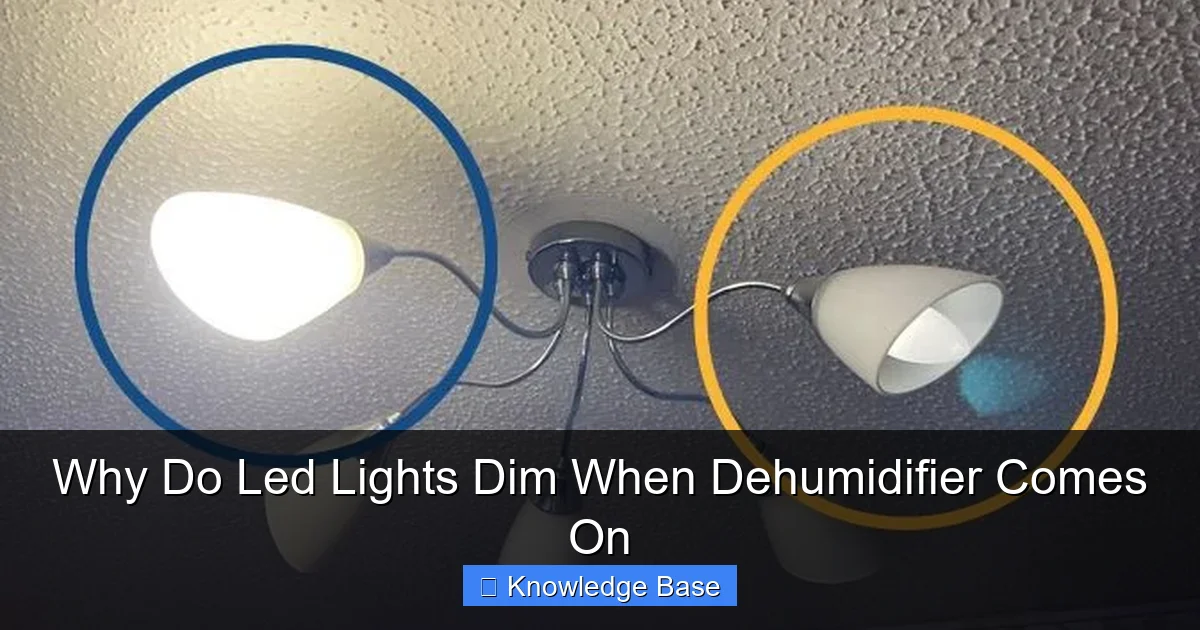
Visual guide about Why Do Led Lights Dim When Dehumidifier Comes On
Image source: ledlightinginfo.com
Before you start making changes, it’s important to confirm what’s causing the dimming. Here’s a step-by-step approach to diagnosing the issue:
Step 1: Observe the Pattern
Pay attention to when the dimming happens. Does it occur only when the dehumidifier starts, or also when it cycles off? Does it affect all lights or just certain ones? If only one light dims, the issue might be local to that fixture. If multiple lights dim, it’s likely a circuit-wide problem.
Step 2: Check the Circuit
Use a circuit tester or consult your breaker panel to identify which outlets and lights are on the same circuit as the dehumidifier. You can also try moving the dehumidifier to a different outlet on a different circuit and see if the dimming stops.
Step 3: Test with Other Appliances
Try turning on other high-power devices—like a vacuum, microwave, or space heater—and see if they cause similar dimming. If they do, the issue is likely systemic (wiring or panel-related). If only the dehumidifier causes it, the problem may be specific to its power draw or location.
Step 4: Use a Voltage Meter
If you’re comfortable working with electricity, use a multimeter to measure the voltage at an outlet when the dehumidifier starts. A drop below 110V is significant and could explain the dimming. Be sure to turn off the power before inserting probes and follow safety guidelines.
Step 5: Consult an Electrician
If you’re unsure or notice signs of electrical problems—like burning smells, hot outlets, or frequent breaker trips—call a licensed electrician. They can perform a thorough inspection, test your wiring, and recommend upgrades if needed.
Practical Solutions to Prevent LED Dimming
Once you’ve identified the cause, you can take steps to fix the problem. Here are several effective solutions, ranging from simple DIY fixes to professional upgrades.
1. Use a Dedicated Circuit for the Dehumidifier
The most reliable fix is to run a dedicated circuit for your dehumidifier. This means installing a new breaker and running a separate wire from the panel to a dedicated outlet. A dedicated circuit ensures the dehumidifier has its own power supply, preventing it from affecting other devices.
This is especially important for high-capacity dehumidifiers (50-pint or larger) or those used in damp areas like basements. While this requires electrical work, it’s a long-term solution that improves safety and performance.
2. Upgrade to a Dehumidifier with Soft-Start Technology
Some modern dehumidifiers come with soft-start or gradual-start features. These models reduce inrush current by slowly ramping up the compressor instead of starting at full power. This minimizes voltage drop and reduces the impact on other devices.
Look for models labeled “soft start,” “inrush current reduction,” or “low startup surge.” While they may cost more upfront, they can save you from electrical issues and extend the life of your appliances.
3. Install a Voltage Stabilizer or UPS
A voltage stabilizer monitors incoming power and adjusts it to maintain a steady output. It’s especially useful in areas with unstable grid power or frequent brownouts. Plug your LED lights or sensitive electronics into the stabilizer to protect them from voltage drops.
For critical lighting, consider a small uninterruptible power supply (UPS). These devices provide backup power and voltage regulation, ensuring your lights stay on and stable even during power fluctuations.
4. Improve Wiring and Circuit Layout
If your home has old or undersized wiring, consider upgrading to heavier-gauge wire (e.g., 12-gauge instead of 14-gauge) for high-load circuits. This reduces resistance and minimizes voltage drop.
You can also reconfigure your circuits to balance the load. For example, move some lights or outlets to a different breaker to prevent overloading. An electrician can help with this and ensure everything meets code.
5. Use High-Quality LED Lights and Drivers
Invest in LED bulbs and fixtures with robust, well-designed drivers. Look for products with certifications like ENERGY STAR or UL listing, which indicate higher quality and reliability. Avoid ultra-cheap LEDs from unknown brands.
If you’re using dimmable LEDs, make sure they’re compatible with your dimmer switch. Mismatched dimmers and LEDs are a common cause of flickering and dimming.
6. Add a Capacitor or Power Conditioner
In some cases, adding a capacitor near the dehumidifier can help smooth out the inrush current. Capacitors store energy and release it quickly, reducing the strain on the circuit. However, this is a more advanced fix and should be done by a professional.
Alternatively, a whole-house power conditioner can filter out electrical noise and stabilize voltage across your entire home. This is a larger investment but can improve the performance of all your electronics.
When to Call a Professional Electrician
While many of these solutions can be tackled by handy homeowners, some situations require expert help. Here’s when you should call a licensed electrician:
– You notice frequent breaker trips, burning smells, or warm outlets.
– The dimming is accompanied by flickering, buzzing, or lights turning off completely.
– You’re considering major upgrades like new circuits, panel work, or wiring replacement.
– Your home is older and hasn’t had an electrical inspection in years.
– You’re unsure about your home’s electrical capacity or wiring condition.
An electrician can perform a load calculation, test your voltage stability, and recommend the best course of action. They can also ensure all work is up to code and safe.
Conclusion
LED lights dimming when a dehumidifier comes on is a common but solvable issue. It’s usually caused by voltage drops due to the dehumidifier’s high startup current, especially when it shares a circuit with sensitive LED drivers. While it might seem alarming, it’s often a sign of normal electrical behavior—not a fault in your lights or appliance.
By understanding the root causes—shared circuits, voltage sensitivity, wiring limitations, and power quality—you can take practical steps to fix the problem. Simple solutions like using a dedicated circuit, upgrading to a soft-start dehumidifier, or installing a voltage stabilizer can make a big difference. And when in doubt, don’t hesitate to consult a professional.
The goal isn’t just to stop the dimming—it’s to create a safer, more efficient electrical system that supports all your modern devices. With the right approach, you can enjoy bright, stable LED lighting no matter what appliances are running.
Frequently Asked Questions
Why do only some of my LED lights dim when the dehumidifier starts?
This usually means those lights are on the same circuit as the dehumidifier or are more sensitive to voltage changes. Lights on different circuits or with better-quality drivers may not be affected.
Can this dimming damage my LED lights or dehumidifier?
Occasional dimming is unlikely to cause damage, but frequent or severe voltage drops can stress LED drivers and shorten their lifespan. It’s best to address the issue to protect your devices.
Will using a surge protector stop the dimming?
Surge protectors block voltage spikes but don’t prevent voltage sags. For dimming caused by low voltage, you’d need a voltage stabilizer or UPS instead.
Is it safe to run a dehumidifier and LED lights on the same circuit?
It can be safe if the circuit isn’t overloaded and the wiring is adequate. However, for best performance and to avoid dimming, a dedicated circuit is recommended.
Do all dehumidifiers cause this problem?
Not all, but most do to some extent. Larger models with powerful compressors are more likely to cause noticeable dimming. Soft-start models reduce the effect.
Can I fix this without hiring an electrician?
Yes, for simple fixes like using a different outlet or upgrading LEDs. But for circuit upgrades or wiring changes, it’s safest to hire a licensed electrician.