

Dehumidifiers make rooms feel warmer because they generate heat during the moisture removal process. While they reduce humidity, the expelled warm air can raise room temperature slightly. Understanding this helps you use your unit more efficiently and stay comfortable.
Key Takeaways
- Dehumidifiers produce heat as a byproduct: The refrigeration cycle used to extract moisture generates warmth, which is released back into the room.
- Warm air feels more humid, even if moisture is reduced: Higher temperatures can make the air feel stickier, counteracting the dehumidifier’s benefits if not managed.
- Energy conversion creates heat: Electrical energy powering the compressor and fan is partially converted into heat, contributing to room warmth.
- Placement matters for temperature control: Keeping the dehumidifier away from walls and in well-ventilated areas helps dissipate heat more effectively.
- Use in conjunction with ventilation or cooling: Pairing a dehumidifier with an exhaust fan or air conditioner can balance humidity and temperature.
- Modern units are more efficient but still emit heat: Even energy-efficient models generate some warmth due to the physics of dehumidification.
- Season and room size affect perceived warmth: In small or poorly ventilated spaces, the heat buildup is more noticeable than in larger, open areas.
📑 Table of Contents
Why Does a Dehumidifier Make the Room Warmer?
You’ve just plugged in your dehumidifier to tackle that muggy, sticky feeling in your basement or laundry room. After a few hours, you notice something odd—the room feels warmer, not cooler. You might even think, “Wait, isn’t this supposed to make things more comfortable?” You’re not imagining things. Yes, a dehumidifier can make a room warmer, and there’s solid science behind it.
At first glance, it seems counterintuitive. Dehumidifiers are designed to remove moisture from the air, which should make a space feel more comfortable, especially in humid climates. But the process of pulling water vapor out of the air involves mechanical work—and where there’s work, there’s heat. Understanding why this happens not only clears up the confusion but also helps you use your dehumidifier more effectively.
This article will walk you through the mechanics of dehumidification, the physics of heat generation, and practical tips to manage the warmth your unit produces. Whether you’re dealing with a damp basement, a humid bathroom, or a stuffy bedroom, knowing how your dehumidifier affects room temperature will help you create a truly comfortable environment.
How a Dehumidifier Works: The Basics
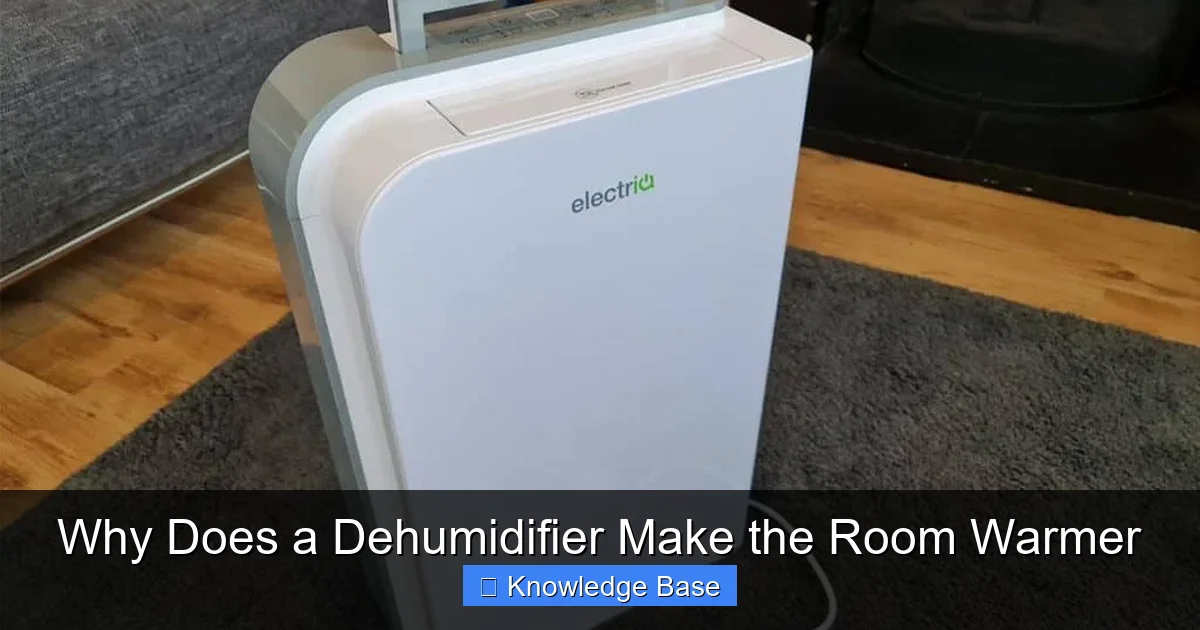
Visual guide about Why Does a Dehumidifier Make the Room Warmer
Image source: thehumidistat.com
To understand why a dehumidifier makes a room warmer, it helps to first understand how it works. Most residential dehumidifiers use a refrigeration-based system, similar to an air conditioner or refrigerator. Here’s a simple breakdown of the process:
Warm, moist air is drawn into the unit by an internal fan. This air passes over a set of cold coils (the evaporator coils), where the temperature drops below the dew point—the point at which water vapor condenses into liquid. As the air cools, moisture condenses on the coils and drips into a collection tank or drains out through a hose.
Once the air is stripped of moisture, it passes over a set of warm coils (the condenser coils). Here, the now-dry air is reheated before being blown back into the room. This reheating step is crucial—it ensures the air returning to the room isn’t cold and clammy, which would feel uncomfortable.
But here’s the catch: the heat used to reheat the air doesn’t come from nowhere. It’s generated by the compressor and other components working to cool the evaporator coils. This process converts electrical energy into thermal energy, and some of that heat is released into the room.
The Refrigeration Cycle and Heat Transfer
The core of a dehumidifier’s operation is the refrigeration cycle. This cycle involves a refrigerant—a special fluid that easily changes between liquid and gas states—moving through a closed system of coils and a compressor.
Here’s how it works step by step:
1. The refrigerant enters the compressor as a low-pressure gas. The compressor squeezes it, increasing its pressure and temperature.
2. This hot, high-pressure gas flows into the condenser coils, where it releases heat to the surrounding air and condenses into a liquid.
3. The liquid refrigerant passes through an expansion valve, which reduces its pressure and causes it to cool dramatically.
4. The cold refrigerant enters the evaporator coils, where it absorbs heat from the incoming humid air, causing moisture to condense.
5. The refrigerant returns to the compressor as a cool gas, and the cycle repeats.
Throughout this cycle, heat is both absorbed and released. The evaporator coils absorb heat from the room air to condense moisture, but the condenser coils release even more heat back into the room as the refrigerant is compressed and cooled. This net release of heat is why the room gets warmer.
Energy Conversion: Electricity to Heat
Another factor contributing to the warmth is energy conversion. Your dehumidifier runs on electricity, and not all of that electrical energy is used efficiently. Some of it is inevitably converted into heat due to resistance in the motor, friction in moving parts, and inefficiencies in the compressor.
Think of it like this: when you turn on a light bulb, it produces light—but it also gets hot. Similarly, when your dehumidifier’s motor and compressor run, they generate heat as a byproduct. This heat doesn’t disappear; it radiates into the surrounding air, raising the room’s temperature slightly.
Even the most energy-efficient dehumidifiers on the market can’t avoid this fundamental law of physics: energy cannot be created or destroyed, only transformed. In this case, electrical energy becomes mechanical work and thermal energy—and the thermal part ends up warming your room.
The Science Behind the Warmth

Visual guide about Why Does a Dehumidifier Make the Room Warmer
Image source: thehumidistat.com
Now that we’ve covered the mechanics, let’s dive deeper into the science. Why exactly does removing moisture lead to a warmer environment? It all comes down to thermodynamics and the behavior of air.
When a dehumidifier extracts water vapor from the air, it’s not just removing humidity—it’s changing the thermal properties of the air. Moist air is actually less dense and can hold more heat than dry air, but the process of dehumidification involves cooling and reheating, which affects how we perceive temperature.
Latent Heat and Sensible Heat
To understand the temperature change, it helps to distinguish between two types of heat: latent heat and sensible heat.
– Sensible heat is the heat you can feel—the kind that raises the temperature of air or objects. When you touch a warm surface, you’re feeling sensible heat.
– Latent heat is the heat absorbed or released during a phase change, like when water evaporates or condenses. You can’t feel it directly, but it plays a big role in how air feels.
During dehumidification, the evaporator coils absorb latent heat from the air as water vapor condenses into liquid. This cools the air. But then, the condenser coils release both the latent heat and additional sensible heat from the compressor’s work back into the air. The result? The air returning to the room is warmer than when it entered.
In fact, studies have shown that a typical dehumidifier can raise the room temperature by 2°F to 5°F (1°C to 3°C), depending on the unit’s size, efficiency, and the room’s ventilation.
Perceived Temperature vs. Actual Temperature
Here’s where things get interesting: even though the room may be getting warmer, the air is also becoming drier. And dry air feels cooler to our skin because it allows sweat to evaporate more easily.
So why does it still feel warmer? Because the increase in actual air temperature can outweigh the comfort gained from lower humidity—especially in small, enclosed spaces.
For example, imagine running a dehumidifier in a 10×10 foot basement with no windows. The unit pulls in 70°F air with 80% humidity, removes the moisture, and blows back 75°F air with 50% humidity. The air is drier, which is good, but it’s also warmer, which might make the space feel stuffier.
This is why many people notice the warmth more in winter or in poorly ventilated areas. In summer, when outdoor air is already warm, the added heat from the dehumidifier can make indoor spaces feel even more uncomfortable.
Factors That Influence How Much Heat Is Generated
Not all dehumidifiers heat a room equally. Several factors determine how much warmth your unit will produce:
Unit Size and Capacity
Larger dehumidifiers with higher pint-per-day (PPD) ratings have more powerful compressors and fans. These components generate more heat simply because they’re working harder. A 70-pint dehumidifier will produce more warmth than a 30-pint model, even if both are running in the same room.
If you’re using a large unit in a small space, the heat buildup will be more noticeable. Conversely, a small unit in a large, well-ventilated room may not raise the temperature much at all.
Energy Efficiency and Technology
Modern dehumidifiers are designed to be more energy-efficient, but efficiency doesn’t eliminate heat—it just reduces the amount of wasted energy. Some high-efficiency models use variable-speed compressors or heat pump technology to recycle some of the heat, but they still emit warmth into the room.
For example, ENERGY STAR-certified dehumidifiers use 15–30% less energy than standard models, but they still generate heat as part of the dehumidification process. The difference is that they do so more effectively, reducing the total heat output slightly.
Room Size and Ventilation
The size of the room and how well it’s ventilated play a huge role in how much the temperature rises. In a small, sealed room, heat has nowhere to go, so it accumulates quickly. In a large room with open windows or an exhaust fan, the warm air can escape, minimizing the temperature increase.
For instance, running a dehumidifier in a walk-out basement with a door to the outside will feel much cooler than using the same unit in a windowless closet. Good airflow helps dissipate the heat and maintain a more stable temperature.
Season and Ambient Temperature
The time of year also affects how noticeable the warmth is. In winter, when indoor temperatures are cooler, a dehumidifier’s heat output might actually be welcome. It can help take the chill off a damp basement or crawl space.
But in summer, when the air is already warm and humid, the added heat can make the room feel oppressive. This is especially true in climates with high humidity, where dehumidifiers are used frequently.
Practical Tips to Manage the Heat
Now that you know why dehumidifiers make rooms warmer, what can you do about it? The good news is there are several practical steps you can take to minimize the heat buildup and maintain comfort.
Improve Ventilation
One of the easiest ways to reduce heat is to improve airflow. Open windows (if outdoor humidity is low), use ceiling fans, or install an exhaust fan to help circulate air and vent warm air out.
In basements or laundry rooms, consider using a ducted exhaust fan that pulls air from the room and vents it outside. This not only removes heat but also helps the dehumidifier work more efficiently by bringing in fresher, less humid air.
Use the Dehumidifier Strategically
Instead of running the dehumidifier continuously, use a timer or humidistat to control when it operates. Set it to run during cooler parts of the day, like early morning or late evening, when the added heat will have less impact.
You can also run it in shorter cycles—30 minutes on, 30 minutes off—to allow the room to cool down between sessions. This approach maintains low humidity without letting the temperature climb too high.
Pair with an Air Conditioner or Fan
If you’re using a dehumidifier in a living space during warm weather, consider pairing it with an air conditioner or portable fan. The AC will cool the air and offset the heat from the dehumidifier, while the fan helps distribute the cooled, dry air more evenly.
Some modern HVAC systems even have built-in dehumidification modes that work in tandem with cooling, providing the best of both worlds.
Choose the Right Location
Where you place your dehumidifier matters. Keep it at least 6–12 inches away from walls and furniture to allow proper airflow around the unit. Blocking the intake or exhaust vents forces the motor to work harder, generating more heat and reducing efficiency.
Also, avoid placing it near heat sources like radiators, ovens, or direct sunlight, as this can cause the unit to overheat and increase the room’s temperature further.
Consider a Desiccant Dehumidifier
If heat is a major concern, you might want to explore alternative technologies. Desiccant dehumidifiers use a moisture-absorbing material (like silica gel) instead of refrigeration coils. They don’t rely on compressors, so they generate less heat.
However, desiccant units are typically less effective in very humid conditions and may use more energy overall. They’re best suited for cooler, moderately humid environments like garages or winterized cabins.
When the Warmth Is Actually Helpful
Believe it or not, the heat from a dehumidifier isn’t always a bad thing. In certain situations, it can be a benefit.
Winter Drying
In cold months, basements and crawl spaces can become damp and chilly. Running a dehumidifier not only reduces mold and mildew risks but also adds a bit of warmth to the space. This can make the area more usable and prevent pipes from freezing.
Laundry Rooms
If you dry clothes indoors, a dehumidifier helps remove the moisture from wet fabrics. The slight warmth it produces can actually help clothes dry faster, especially in cooler homes.
Just be sure to provide some ventilation to avoid creating a sauna-like environment.
Energy Recovery in Mild Climates
In temperate regions with mild summers, the heat from a dehumidifier might not be noticeable or bothersome. In fact, it can reduce the load on your heating system during shoulder seasons, providing a small boost in comfort without extra cost.
Myths and Misconceptions
There are a few common myths about dehumidifiers and heat that are worth clearing up.
Myth: Dehumidifiers Cool the Air
Some people assume that because dehumidifiers remove moisture, they also cool the air. But unless the unit is specifically designed to cool (like a portable AC with dehumidification), it will not lower the temperature. In fact, it usually raises it slightly.
Myth: All Dehumidifiers Are the Same
Not all dehumidifiers generate the same amount of heat. Factors like size, technology, and efficiency vary widely between models. A compact 20-pint unit will produce far less heat than a commercial-grade 100-pint model.
Myth: You Should Avoid Using a Dehumidifier in Summer
While the heat output is more noticeable in warm weather, dehumidifiers are still valuable in summer—especially in humid climates. The key is to use them wisely: in well-ventilated areas, during cooler hours, or in conjunction with cooling systems.
Conclusion
So, why does a dehumidifier make the room warmer? The answer lies in the physics of the refrigeration cycle, energy conversion, and heat transfer. As the unit pulls moisture from the air, it generates heat through the compressor and reheats the dried air before releasing it back into the room. This process, while effective at reducing humidity, inevitably raises the room’s temperature—typically by a few degrees.
But this doesn’t mean dehumidifiers are counterproductive. When used correctly, they greatly improve indoor air quality, prevent mold growth, and enhance comfort—especially in damp environments. The key is understanding the heat output and managing it with smart placement, ventilation, and timing.
By following the tips in this guide—like improving airflow, using timers, and pairing with cooling systems—you can enjoy the benefits of lower humidity without suffering from unwanted warmth. Whether you’re tackling a musty basement or drying clothes indoors, your dehumidifier can be a powerful tool—just remember to keep an eye on the temperature.
Frequently Asked Questions
Why does my dehumidifier blow warm air?
Your dehumidifier blows warm air because the refrigeration cycle generates heat as a byproduct. After removing moisture, the unit reheats the air before releasing it, which raises the room temperature slightly.
Can a dehumidifier heat up a room?
Yes, a dehumidifier can heat up a room by 2°F to 5°F (1°C to 3°C) due to the heat released by the compressor and condenser coils. The effect is more noticeable in small, enclosed spaces.
Is it safe to run a dehumidifier in a closed room?
It’s safe, but the room may get warmer and stuffier over time. For best results, ensure some ventilation—like an open window or exhaust fan—to allow heat and stale air to escape.
Does a dehumidifier use a lot of electricity?
Dehumidifiers use moderate electricity, typically between 300 and 800 watts. ENERGY STAR models are more efficient and can save 15–30% on energy use compared to standard units.
Should I turn off my dehumidifier if the room gets too warm?
If the room becomes uncomfortably warm, consider using a timer or running the unit during cooler hours. You can also improve ventilation or pair it with a fan or air conditioner.
Are there dehumidifiers that don’t produce heat?
All dehumidifiers generate some heat, but desiccant models produce less than refrigerant-based units. However, they may be less effective in very humid conditions and use more energy overall.