
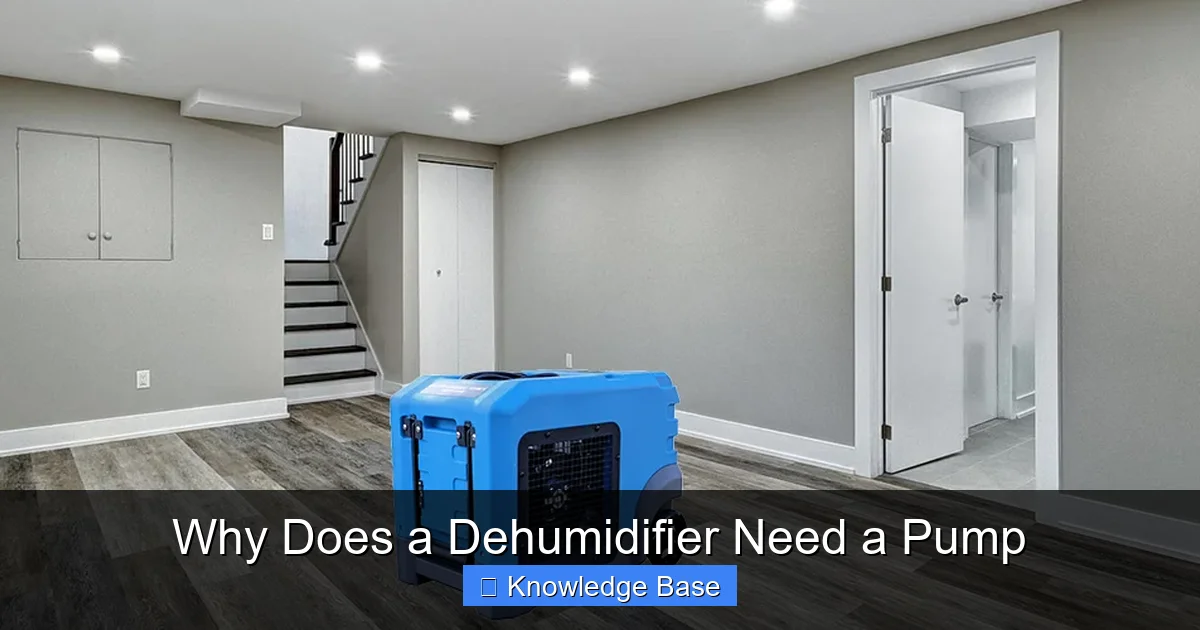
A dehumidifier needs a pump to efficiently remove collected moisture, especially when gravity drainage isn’t possible. Pumps enable continuous operation in basements, crawl spaces, and other hard-to-reach areas by actively moving water upward or over long distances.
Key Takeaways
- Continuous Operation: A pump allows the dehumidifier to run non-stop without manual water tank emptying, ideal for unattended areas like basements.
- Overcoming Gravity: Pumps move water upward or across long distances where gravity drainage fails, such as from a basement to a sink or drain.
- Space Flexibility: With a pump, you can place the dehumidifier in low-lying or enclosed spaces without worrying about drain access.
- Prevents Overflow: Automatic pumping reduces the risk of water spills and damage caused by full collection tanks.
- Enhanced Efficiency: Models with pumps often include smart sensors and timers, improving energy use and moisture control.
- Ideal for Crawl Spaces & RVs: Pumps are essential in confined or mobile environments where traditional drainage isn’t feasible.
- Low Maintenance: Many pump-equipped dehumidifiers include self-cleaning or alert systems, reducing user intervention.
📑 Table of Contents
Why Does a Dehumidifier Need a Pump?
If you’ve ever dealt with damp basements, musty crawl spaces, or humid garages, you know how frustrating moisture can be. It leads to mold, mildew, warped wood, and even health issues like allergies and respiratory problems. That’s where a dehumidifier comes in—your trusty ally in the fight against excess humidity. But have you ever wondered, “Why does a dehumidifier need a pump?” It’s not just about collecting water; it’s about getting that water out efficiently, especially when gravity alone won’t cut it.
Most people assume that a dehumidifier simply collects moisture in a tank that you empty manually. And while that’s true for basic models, many modern units—especially those designed for heavy-duty or continuous use—come equipped with a built-in pump. This small but powerful component plays a crucial role in ensuring your dehumidifier works smoothly, even in challenging environments. Whether you’re dealing with a flooded basement after heavy rain or trying to keep an RV dry during humid summer trips, a pump can make all the difference.
In this guide, we’ll explore the ins and outs of dehumidifier pumps: what they do, why they’re necessary, and how they improve performance. We’ll break down the mechanics, compare pump vs. non-pump models, and offer practical tips for choosing the right unit for your needs. By the end, you’ll understand not just why a dehumidifier needs a pump, but how it can save you time, money, and stress in the long run.
How a Dehumidifier Works: The Basics

Visual guide about Why Does a Dehumidifier Need a Pump
Image source: i.pinimg.com
Before diving into pumps, it’s important to understand how a dehumidifier functions. At its core, a dehumidifier pulls in moist air from the room using a fan. This air passes over cold coils (the evaporator), where the moisture condenses into water droplets—similar to how dew forms on a cold drink can. The collected water drips into a storage tank or drain hose. Meanwhile, the now-drier air is reheated slightly by warm coils (the condenser) and blown back into the room.
This process is effective, but it raises a key question: what happens to the collected water? In basic models, the water accumulates in an internal tank. Once full, the unit either shuts off or alerts you to empty it. This works fine for small spaces or occasional use, but it’s not practical for 24/7 operation or hard-to-reach areas.
That’s where drainage options come in. Some dehumidifiers allow you to connect a hose for continuous drainage via gravity—water flows downhill into a floor drain, sink, or sump pit. But this only works if the dehumidifier is positioned higher than the drain point. If your unit is in a basement below ground level, or in a crawl space with no nearby drain, gravity drainage simply won’t work. And that’s exactly why a pump becomes essential.
The Role of a Pump in a Dehumidifier

Visual guide about Why Does a Dehumidifier Need a Pump
Image source: hvactrainingshop.com
So, what does a pump actually do in a dehumidifier? In simple terms, it actively moves collected water from the unit to a designated drainage point—even if that means going uphill or across a long distance. Unlike gravity drainage, which relies on elevation, a pump uses mechanical force to push water through a hose, enabling flexible placement and continuous operation.
Think of it like a mini water elevator. The pump sits inside or near the water collection tank and activates when the water reaches a certain level. It then forces the water through a connected hose, which can be routed to a sink, utility drain, sump pump, or even outside your home. This means you can place the dehumidifier in a low-lying basement corner, under a sink, or inside a crawl space without worrying about where the water will go.
Pumps are especially valuable in scenarios where manual tank emptying isn’t feasible. For example, if you’re away on vacation or managing a rental property, you can’t be there to empty a full tank every few days. A pump-equipped dehumidifier keeps running automatically, preventing overflow and maintaining optimal humidity levels. This is crucial for preventing mold growth, protecting stored items, and preserving structural integrity.
Moreover, pumps enhance reliability. Many models include float switches or sensors that detect water levels and trigger the pump only when needed. This reduces wear and tear on the motor and ensures efficient operation. Some advanced units even feature dual pumps or backup systems for added peace of mind during power outages or heavy moisture loads.
When Is a Pump Necessary? Common Use Cases
Not every dehumidifier needs a pump, but there are several situations where it’s not just helpful—it’s essential. Let’s look at some real-world scenarios where a pump makes all the difference.
Basements and Crawl Spaces
Basements are prime candidates for dehumidifiers, but they’re also the most challenging when it comes to drainage. Most basements are below ground level, meaning there’s no natural slope for gravity drainage. If your basement has a floor drain, you might get away with a hose, but even then, the dehumidifier must be positioned correctly. A pump eliminates this limitation by allowing you to route water upward to a sink, laundry tub, or sump pit.
Crawl spaces are even trickier. These tight, enclosed areas often have no access to drains or windows. Installing a dehumidifier here usually means relying on a pump to move water out through a small access point. Without a pump, you’d have to manually empty the tank frequently—something that’s impractical and time-consuming.
RVs, Boats, and Tiny Homes
Mobile living spaces like RVs and boats face unique humidity challenges. They’re often sealed tightly to save energy, which traps moisture from cooking, showering, and breathing. Over time, this leads to condensation, mold, and odors. A dehumidifier with a pump is ideal here because it can run continuously without requiring frequent tank emptying—especially important when you’re on the road or docked in remote areas.
Tiny homes face similar issues. With limited space and no basement, every inch counts. A pump allows you to place the dehumidifier under a bed or in a closet and route the hose to an outdoor drain or composting system. This keeps your living area dry and comfortable without sacrificing valuable floor space.
Commercial and Industrial Settings
In warehouses, gyms, or manufacturing facilities, humidity control is critical for product quality, equipment longevity, and employee health. These spaces often use large commercial dehumidifiers that generate significant amounts of water. A pump ensures that water is removed efficiently, even over long distances or through multiple floors. Some systems even integrate with building management systems for remote monitoring and control.
Flood Recovery and Water Damage Restoration
After a flood or burst pipe, rapid moisture removal is essential to prevent mold and structural damage. Restoration professionals rely on high-capacity dehumidifiers with pumps to extract water quickly and continuously. These units can run 24/7, pumping water directly into extraction tanks or sewer lines, speeding up the drying process and reducing downtime.
Pump vs. Gravity Drainage: Pros and Cons
When choosing a dehumidifier, you’ll often face a decision: pump or gravity drainage? Both have their place, but understanding the trade-offs helps you pick the right option for your needs.
Gravity Drainage: Simple and Reliable
Gravity drainage is the most common method. You attach a hose to the dehumidifier and let water flow downhill into a drain. It’s simple, requires no extra power, and has no moving parts to fail. If your dehumidifier is near a floor drain or sink, this is often the easiest solution.
However, gravity drainage has limitations. It only works if the drain is lower than the unit. If your dehumidifier is in a basement or crawl space, you may not have that option. Also, long hose runs can create kinks or siphoning issues, reducing efficiency. And if the hose clogs or freezes (in cold climates), drainage stops entirely.
Pump Drainage: Flexible and Powerful
A pump overcomes these limitations. It can move water upward—up to 15 feet or more—and across long distances. This gives you total freedom in placement. You can hide the dehumidifier in a corner, under furniture, or inside a cabinet, as long as the hose can reach a drain.
Pumps also enable continuous operation. No more checking the tank or worrying about overflow. Many models include automatic shutoff if the pump fails, preventing water damage. Some even have self-cleaning features that flush the pump periodically to prevent clogs.
The downside? Pumps consume a small amount of extra electricity and add complexity. They can fail over time, though quality models are built to last. And they’re typically found in higher-end units, which cost more upfront.
Hybrid Systems: The Best of Both Worlds
Some advanced dehumidifiers offer both pump and gravity drainage options. This gives you flexibility—use gravity when possible, and switch to the pump when needed. For example, you might use gravity drainage during the day when the unit is near a sink, and activate the pump at night to route water to a basement drain. This dual capability is ideal for unpredictable environments or multi-season use.
Choosing the Right Dehumidifier with a Pump
If you’ve decided a pump is necessary, how do you choose the right model? Here are key factors to consider.
Capacity and Coverage
Dehumidifiers are rated by how many pints of water they can remove per day. For basements or large spaces, look for units with 50–70+ pint capacity. Smaller rooms or RVs may only need 20–30 pints. Make sure the unit matches your space size—too small, and it won’t keep up; too large, and it may cycle too frequently, reducing efficiency.
Pump Lift Height and Hose Length
Check the pump’s maximum lift height—how high it can push water vertically. Most pumps handle 10–15 feet, but some go higher. Also, consider hose length. A longer hose gives more routing flexibility, but avoid excessive length, which can reduce flow rate. Look for models with 10–20 foot hoses, and ensure the hose is kink-resistant.
Energy Efficiency
Look for ENERGY STAR-certified models, which use less electricity and save money over time. Pumps add a small energy load, but efficient designs minimize this impact. Check the unit’s energy factor (liters of water removed per kilowatt-hour)—higher is better.
Smart Features
Modern dehumidifiers with pumps often include smart features like:
– Auto-restart after power outages
– Humidity sensors with digital displays
– Timer functions for scheduled operation
– Pump failure alerts
– Wi-Fi connectivity for remote monitoring (in premium models)
These features enhance convenience and reliability, especially in unattended areas.
Noise Level
Pumps and fans create noise. If the dehumidifier will be near living spaces, look for models under 50 decibels. Some units have “quiet mode” settings that reduce fan speed and pump activity during low-humidity periods.
Maintenance and Durability
Choose a model with easy-access filters and a self-cleaning pump system. Some units flush the pump automatically to prevent mineral buildup. Also, check warranty coverage—pumps are mechanical components that may need service over time.
Installation and Maintenance Tips
Once you’ve chosen a pump-equipped dehumidifier, proper installation and maintenance ensure long-term performance.
Proper Placement
Place the unit on a level surface with at least 6–12 inches of clearance on all sides for airflow. Avoid carpeted areas unless using a drain pan. Route the pump hose carefully—avoid sharp bends, pinches, or sagging, which can restrict flow.
Hose Routing
Use a smooth, kink-resistant hose and secure it with clips or tape. If routing outside, protect the hose from UV damage and freezing. For long runs, consider a larger diameter hose to maintain flow.
Regular Cleaning
Clean the air filter monthly to maintain airflow. Check the pump and hose periodically for clogs, especially in hard water areas. Some models have removable pump cartridges for easy cleaning.
Winter Care
In cold climates, drain the hose and pump before winter to prevent freezing. Store the unit in a dry, insulated area if not in use.
Monitor Performance
Use a hygrometer to check humidity levels. If the unit isn’t reducing moisture as expected, check for hose blockages, pump failure, or airflow restrictions.
Conclusion
So, why does a dehumidifier need a pump? Because moisture doesn’t always play by the rules of gravity. In basements, crawl spaces, RVs, and other challenging environments, a pump ensures that collected water is removed efficiently and continuously—no manual emptying, no overflow risks, no mold worries.
While not every dehumidifier requires a pump, it’s a game-changer for anyone dealing with persistent humidity in hard-to-drain areas. It adds flexibility, reliability, and peace of mind, turning a simple appliance into a smart, hands-off solution for moisture control.
When shopping, look for a model with adequate capacity, sufficient pump lift, and smart features that match your lifestyle. With the right dehumidifier and pump system, you can keep your home dry, healthy, and comfortable—no matter where the moisture comes from.
Investing in a pump-equipped dehumidifier isn’t just about convenience. It’s about protecting your property, your health, and your sanity. So the next time you’re battling dampness in a tricky spot, remember: sometimes, you need a little extra power to win the fight against humidity.
Frequently Asked Questions
Can a dehumidifier work without a pump?
Yes, many dehumidifiers work without a pump by using gravity drainage or a manual tank. However, these options limit placement and require more frequent maintenance, especially in basements or crawl spaces.
How high can a dehumidifier pump lift water?
Most dehumidifier pumps can lift water vertically up to 10–15 feet. Check the manufacturer’s specifications, as lift height varies by model and pump strength.
Do all basement dehumidifiers need a pump?
Not all, but most basement dehumidifiers benefit from a pump since basements are often below ground level and lack gravity drainage options. A pump ensures continuous, hassle-free operation.
Can I add a pump to a dehumidifier that doesn’t have one?
Generally, no. Pumps are integrated into the design and require specific plumbing and electrical connections. It’s better to purchase a model with a built-in pump from the start.
How often does a dehumidifier pump need maintenance?
Pumps require minimal maintenance but should be checked every 3–6 months for clogs or wear. Some models have self-cleaning features that reduce the need for manual upkeep.
Will a pump increase my electricity bill?
A pump uses a small amount of extra power, but the increase is usually minimal—often less than 10% of the total energy consumption. Energy-efficient models minimize this impact.