
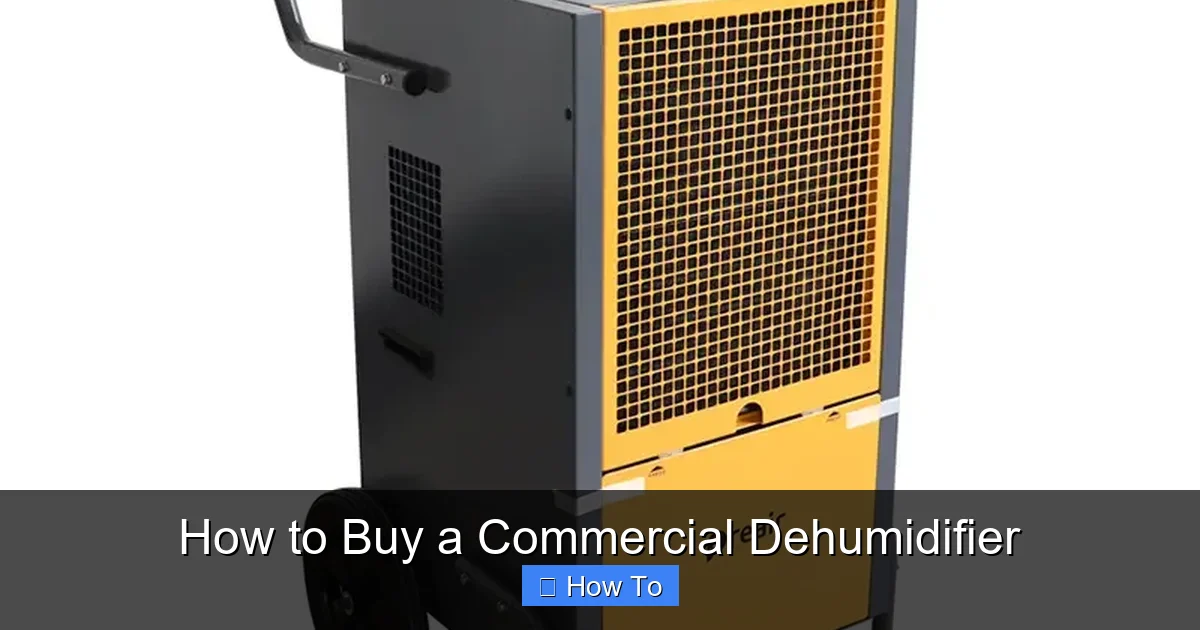
Buying a commercial dehumidifier doesn’t have to be overwhelming. This guide walks you through everything you need to know—from sizing and types to installation and maintenance—so you can choose the right unit for your business or facility with confidence.
Quick Answers to Common Questions
What’s the difference between residential and commercial dehumidifiers?
Commercial units are built for larger spaces, continuous operation, and higher moisture loads. They’re more durable, efficient, and often include advanced features like pumps and remote controls.
Can I use multiple smaller units instead of one large one?
Yes, but it’s often less efficient. Multiple units may compete for airflow and increase energy use. A single properly sized unit is usually better for consistent humidity control.
Do I need a dehumidifier in winter?
Yes, especially in cold, damp areas like basements or unheated warehouses. Desiccant or LGR units work best in low temperatures.
How often should I clean the filter?
Every 2–4 weeks, depending on dust levels. A clogged filter reduces airflow and efficiency, so regular cleaning is essential.
Can a dehumidifier help with allergies?
Yes. By reducing humidity, it inhibits mold, dust mites, and mildew—common allergens. Pair it with an air purifier for best results.
How to Buy a Commercial Dehumidifier: A Complete Step-by-Step Guide
If you’re managing a warehouse, gym, office building, restaurant, or any large commercial space, controlling humidity is essential. Excess moisture leads to mold, rust, odors, and damaged inventory—not to mention poor air quality that affects employee health and comfort. That’s where a commercial dehumidifier comes in.
But with so many models, sizes, and technologies on the market, how do you pick the right one? Don’t worry—this guide will walk you through every step of the process. By the end, you’ll know exactly what to look for, how to compare options, and how to make a smart, cost-effective purchase that keeps your space dry and healthy.
Whether you’re a facility manager, business owner, or maintenance professional, this guide is designed to simplify your decision. We’ll cover everything from understanding humidity needs to installation tips and long-term care. Let’s get started.
Step 1: Understand Why You Need a Commercial Dehumidifier
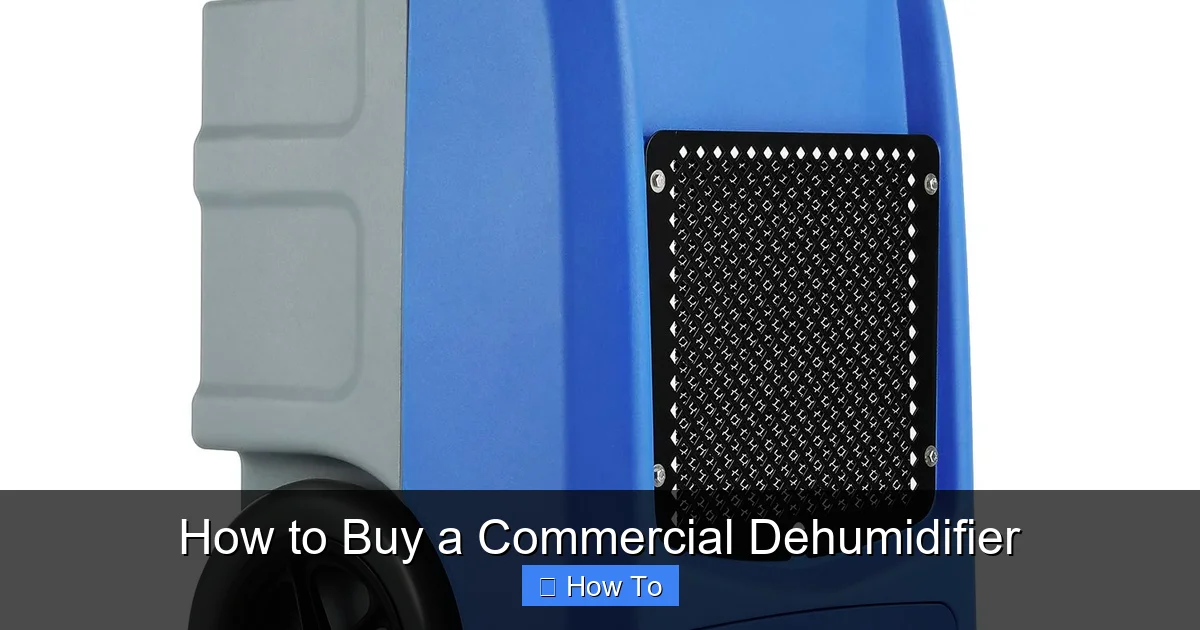
Visual guide about How to Buy a Commercial Dehumidifier
Image source: m.media-amazon.com
Before buying anything, it’s important to understand *why* you need a dehumidifier in the first place. Commercial spaces face unique humidity challenges that residential units simply can’t handle.
High foot traffic, large open areas, poor ventilation, and industrial processes (like cooking, laundry, or manufacturing) all contribute to elevated moisture levels. Over time, this leads to:
– Mold and mildew growth
– Structural damage (warped wood, peeling paint)
– Corrosion of equipment and tools
– Unpleasant odors
– Reduced HVAC efficiency
– Health risks for employees and visitors
A commercial dehumidifier is built to handle these demands. Unlike home units, they’re designed for continuous operation, higher moisture removal rates, and rugged environments. They also often include features like built-in pumps, remote monitoring, and industrial-grade casings.
So, if you’re dealing with dampness, condensation on windows, or musty smells in a business setting, a commercial-grade unit is likely your best solution.
Step 2: Measure Your Space and Assess Humidity Levels
The first technical step is to evaluate your environment. You can’t choose the right dehumidifier without knowing the size of the area and how wet it actually is.
Calculate Square Footage
Start by measuring the length and width of the space in feet. Multiply them to get the total square footage. For example, a 50-foot by 40-foot warehouse is 2,000 square feet.
If your space has multiple rooms or zones, measure each one separately. You may need more than one unit, or a centralized system, depending on layout and airflow.
Determine Humidity Level
Next, use a hygrometer (a humidity meter) to check the current relative humidity (RH). Ideal indoor humidity for most commercial spaces is between 30% and 50%.
– Below 30%: Air is too dry (can cause static, dry skin)
– 30–50%: Comfortable and healthy
– Above 50%: Risk of mold, dust mites, and discomfort
– Above 60%: High risk of structural damage and health issues
If your readings are consistently above 60%, you’ll need a powerful dehumidifier with high capacity.
Consider Airflow and Obstructions
Even in a large space, airflow matters. Are there partitions, shelving, or machinery blocking air circulation? Poor airflow reduces a dehumidifier’s effectiveness. You may need to position units strategically or use fans to improve circulation.
Also, think about how often doors and windows open. Frequent entry can let in humid outside air, increasing the workload on your dehumidifier.
Step 3: Choose the Right Type of Commercial Dehumidifier
Not all dehumidifiers are created equal. Commercial units come in three main types, each suited to different conditions.
Refrigerant (Compressor) Dehumidifiers
These are the most common and work by pulling air over cold coils, causing moisture to condense and drip into a tank or drain. They’re effective in warm, humid environments (above 65°F).
Best for: Offices, gyms, retail stores, and warehouses in temperate climates.
Pros:
– Affordable upfront cost
– High moisture removal in warm air
– Widely available
Cons:
– Less effective in cold temperatures
– Can increase room temperature slightly
Desiccant Dehumidifiers
These use a moisture-absorbing material (like silica gel) to pull water from the air. They don’t rely on cooling coils, so they work well in cold or low-humidity environments.
Best for: Cold storage, museums, archives, and facilities in dry climates needing precise humidity control.
Pros:
– Works in temperatures as low as 32°F
– Quiet operation
– Excellent for low-humidity precision
Cons:
– Higher energy use
– More expensive
– Slower moisture removal
Low-Grain Refrigerant (LGR) Dehumidifiers
A hybrid of refrigerant and desiccant technology, LGR units are designed for water damage restoration and high-moisture environments. They can remove moisture from air with very low grain counts (a measure of humidity).
Best for: Flood recovery, construction sites, and industrial drying.
Pros:
– Extremely efficient in high-moisture conditions
– Fast drying
– Often portable with wheels and handles
Cons:
– Higher cost
– Overkill for normal humidity control
Step 4: Determine the Right Capacity (Size)
Capacity is measured in pints per day (PPD)—how much water the unit can remove in 24 hours. Choosing the right size is crucial. Too small, and it won’t keep up. Too large, and you’re wasting money and energy.
Use a Sizing Chart
Most manufacturers provide sizing guidelines based on square footage and humidity level. Here’s a general rule of thumb:
| Square Footage | Mild Humidity (50–60% RH) | Moderate Humidity (60–70% RH) | Severe Humidity (70%+ RH) |
|—————-|—————————-|——————————-|—————————-|
| 1,000 | 30–50 PPD | 50–70 PPD | 70–100 PPD |
| 2,000 | 60–100 PPD | 100–140 PPD | 140–200 PPD |
| 5,000 | 150–250 PPD | 250–350 PPD | 350–500+ PPD |
For example, a 2,000 sq. ft. gym with moderate humidity might need a 120 PPD unit.
Factor in Heat and Activity
High-heat environments (like commercial kitchens or laundries) generate more moisture. Similarly, spaces with lots of people (gyms, schools) sweat and breathe, adding humidity. In these cases, go one size up.
Also, consider insulation and ventilation. Poorly insulated buildings lose cool air and gain humidity faster, requiring more capacity.
Step 5: Evaluate Key Features and Specifications
Once you know the type and size, it’s time to compare models. Look for these important features:
Drainage Options
Most commercial dehumidifiers offer continuous drainage via a hose. This is essential for 24/7 operation. Look for:
– Built-in condensate pump: Lets you drain water upward or over long distances (great for basements or multi-level buildings).
– Gravity drain hose connection: Simple and reliable if you have a floor drain nearby.
Avoid models that only have a manual tank unless you plan to empty it frequently.
Portability and Mobility
If you need to move the unit between rooms or floors, look for:
– Heavy-duty casters (wheels)
– Handles or lifting grips
– Compact design
Some units weigh over 100 pounds, so mobility matters.
Noise Level
Measured in decibels (dB), noise is critical in quiet environments. Most commercial dehumidifiers run between 50–65 dB—similar to a conversation or air conditioner.
For offices, libraries, or healthcare facilities, aim for models under 55 dB. Desiccant units are often quieter than refrigerant ones.
Control Panel and Automation
Advanced models include:
– Digital humidity display
– Adjustable humidity setpoints (e.g., set to maintain 45% RH)
– Timer functions
– Remote monitoring (via app or building management system)
– Auto-restart after power outage
These features save time and improve efficiency.
Filter Type and Maintenance
Air filters prevent dust and debris from clogging the coils. Look for:
– Washable or reusable filters (easy to clean)
– HEPA or MERV-rated filters (for improved air quality)
– Filter change indicators
Regular filter cleaning is essential—clogged filters reduce efficiency and can damage the unit.
Energy Efficiency
Check the energy factor (liters per kilowatt-hour or L/kWh). Higher numbers mean more moisture removed per unit of electricity.
Also, look for ENERGY STAR certification. These models meet strict efficiency guidelines and may qualify for utility rebates.
Step 6: Set a Budget and Compare Costs
Commercial dehumidifiers range from $500 to $5,000+, depending on size and features. Here’s a rough breakdown:
| Capacity (PPD) | Price Range | Typical Use Case |
|—————-|——————-|————————————–|
| 50–100 | $500–$1,200 | Small offices, retail stores |
| 100–200 | $1,200–$2,500 | Gyms, restaurants, medium warehouses |
| 200–500+ | $2,500–$5,000+ | Large warehouses, industrial sites |
Don’t just focus on the upfront cost. Consider:
– Energy consumption (electricity bills add up)
– Maintenance costs (filters, repairs)
– Lifespan (quality units last 10+ years)
– Warranty (look for 2–5 years)
Sometimes spending more upfront saves money long-term.
Step 7: Research Brands and Read Reviews
Not all brands are equal. Stick with reputable manufacturers known for durability and support. Some top names in commercial dehumidifiers include:
– Dri-Eaz (LGR specialist)
– AprilAire (whole-building systems)
– Santa Fe (energy-efficient refrigerant models)
– Quest (high-capacity industrial units)
– AlorAir (budget-friendly with good performance)
Read customer reviews on sites like Amazon, Grainger, or HVAC supply stores. Look for feedback on:
– Reliability over time
– Ease of maintenance
– Customer service responsiveness
– Noise and performance in real-world conditions
Avoid unknown brands with no service network—you’ll regret it when something breaks.
Step 8: Decide on Installation and Placement
Even the best dehumidifier won’t work well if it’s poorly placed.
Centralized vs. Portable Units
– Centralized systems: Integrated into HVAC, ideal for large buildings with ductwork. Best for consistent, whole-building control.
– Portable units: Standalone machines you can move as needed. Great for targeted drying or temporary use.
Most businesses start with portable units and upgrade to centralized systems later.
Optimal Placement Tips
– Place in the center of the room or near the moisture source (e.g., laundry area).
– Keep at least 6–12 inches of clearance around vents for airflow.
– Avoid placing near heat sources or in direct sunlight.
– Elevate slightly if on a concrete floor (use a pallet or stand to prevent vibration damage).
Professional Installation
For large or complex systems, consider hiring an HVAC technician. They can assess ductwork, electrical needs, and optimal placement.
Step 9: Purchase and Warranty Considerations
When you’re ready to buy, choose a trusted supplier. Options include:
– HVAC supply stores (local or online)
– Industrial equipment retailers (Grainger, Fastenal)
– Manufacturer websites (often with direct support)
– Authorized dealers (best for warranty service)
Always check the warranty. A good commercial dehumidifier should have:
– 2–5 year parts and labor coverage
– Compressor warranty (if applicable)
– Clear return and repair policy
Avoid gray-market or refurbished units unless sold by the manufacturer with full warranty.
Step 10: Maintain Your Dehumidifier for Long-Term Performance
Buying is just the beginning. Regular maintenance keeps your unit running efficiently.
Monthly Tasks
– Clean or replace air filters
– Wipe down exterior and vents
– Check drain hose for clogs
Quarterly Tasks
– Inspect coils for dust or frost buildup
– Test the condensate pump (if equipped)
– Verify humidity settings and accuracy
Annual Tasks
– Deep clean internal components (or hire a technician)
– Check refrigerant levels (for refrigerant models)
– Inspect electrical connections
Neglecting maintenance leads to reduced performance, higher energy bills, and premature failure.
Troubleshooting Common Issues
Even the best units can have problems. Here’s how to handle common issues:
Unit Won’t Turn On
– Check power source and circuit breaker
– Ensure the tank isn’t full (if no auto-shutoff)
– Test the power cord and outlet
Not Removing Enough Moisture
– Clean or replace the filter
– Check for blocked vents or dirty coils
– Verify humidity settings and room conditions
– Ensure the unit is sized correctly
Excessive Noise or Vibration
– Make sure the unit is level and on a stable surface
– Check for loose parts or worn fans
– Elevate on a rubber mat to reduce vibration
Water Leaking
– Inspect drain hose for cracks or clogs
– Ensure the pump is working (if equipped)
– Check tank seal and connections
If problems persist, contact the manufacturer or a certified technician.
Conclusion
Buying a commercial dehumidifier doesn’t have to be complicated. By following these steps—assessing your space, choosing the right type and size, evaluating features, and planning for maintenance—you can make a confident, informed decision.
Remember, the goal isn’t just to remove moisture—it’s to protect your property, improve air quality, and create a healthier, more comfortable environment for everyone who uses your space.
Take your time, do your research, and invest in a quality unit that matches your needs. With the right dehumidifier, you’ll enjoy dry, clean air for years to come.