
Choosing the right dehumidifier for your basement can prevent mold, musty odors, and structural damage. This guide walks you through sizing, features, installation, and maintenance to help you pick the perfect unit for your needs.
Quick Answers to Common Questions
What size dehumidifier do I need for a 1,000 sq. ft. basement?
For a 1,000 sq. ft. basement, choose a 50–70 pint dehumidifier if it’s very damp, or 30–50 pints if it’s only slightly damp. Always check your humidity level first.
Can I run a dehumidifier in a cold basement?
Yes, but compressor models may freeze below 60°F. Use a desiccant dehumidifier or a cold-climate compressor unit for best results in unheated spaces.
Should I use a drain hose or empty the bucket?
A drain hose is more convenient for continuous operation. Use it if you have a floor drain or sump pump. Otherwise, empty the bucket every 1–2 days.
How often should I clean my dehumidifier?
Clean the air filter monthly and the interior coils annually. Empty the water tank regularly if not using continuous drainage.
Is an Energy Star dehumidifier worth the extra cost?
Yes, if you plan to run it frequently. Energy Star models use less electricity and can save you money on utility bills over time.
How to Choose a Dehumidifier for Basement
If your basement feels damp, smells musty, or shows signs of mold, you’re not alone. Basements are naturally prone to high humidity due to poor ventilation, groundwater seepage, and cooler temperatures. Left unchecked, excess moisture can damage furniture, promote mold growth, and even affect your home’s structural integrity. The good news? A dehumidifier can solve these problems—but only if you choose the right one.
This guide will walk you through every step of selecting the perfect dehumidifier for your basement. You’ll learn how to assess your space, understand key features, compare models, and set up your unit for maximum efficiency. Whether you have a small, rarely used basement or a large, finished rec room, we’ve got you covered.
By the end of this guide, you’ll know exactly what to look for in a dehumidifier and how to keep your basement dry, healthy, and comfortable year-round.
Step 1: Assess Your Basement’s Size and Humidity Level
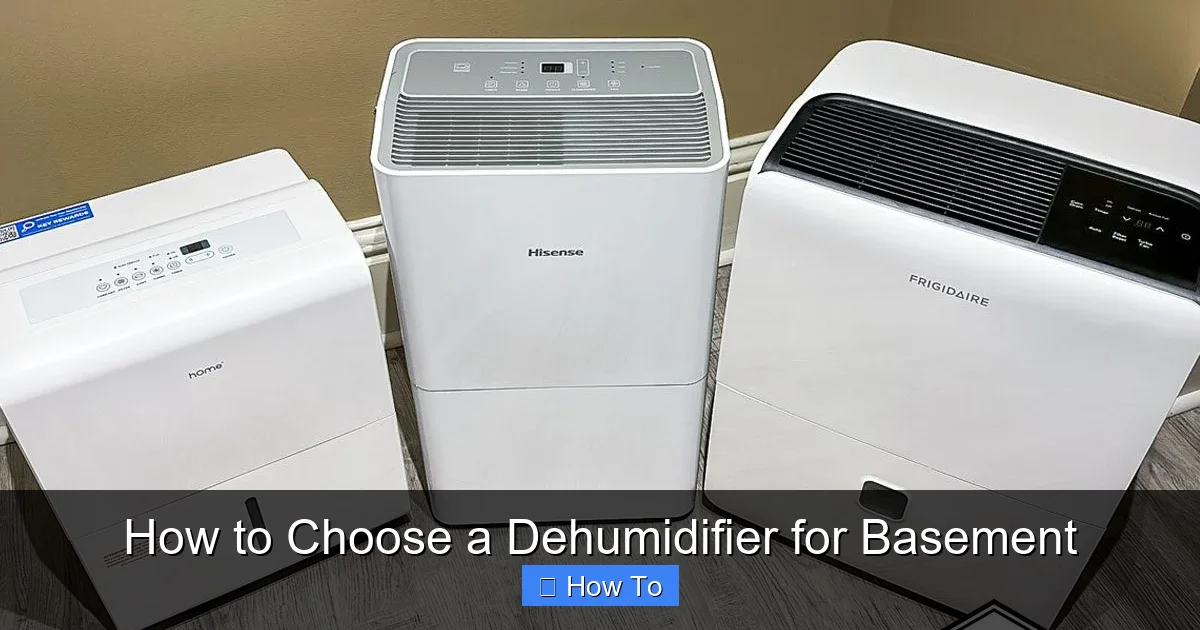
Visual guide about How to Choose a Dehumidifier for Basement
Image source: familyhandyman.com
Before you buy any dehumidifier, you need to understand your basement’s specific needs. Two main factors determine the right unit: square footage and humidity level.
Measure the Square Footage
Start by measuring the length and width of your basement in feet. Multiply these numbers to get the total square footage. For example, a basement that’s 20 feet by 30 feet equals 600 square feet.
Why does size matter? Dehumidifiers are rated by how many pints of moisture they can remove in 24 hours. A unit too small for your space will run constantly and still fail to keep up. One too large may cycle on and off too frequently, wasting energy and reducing efficiency.
Use this general guideline:
– Up to 500 sq. ft.: 20–30 pint capacity
– 500–1,000 sq. ft.: 30–50 pint capacity
– 1,000–1,500 sq. ft.: 50–70 pint capacity
– Over 1,500 sq. ft.: 70+ pint capacity
Keep in mind that these are estimates. Other factors like humidity level and basement conditions can influence your needs.
Test the Humidity Level
Next, check how humid your basement really is. You’ll need a hygrometer—a small, inexpensive device that measures relative humidity (RH). You can find digital hygrometers at hardware stores or online for under $20.
Place the hygrometer in your basement and let it sit for 24 hours in a central location, away from windows, vents, or water sources. Record the average reading.
Ideal basement humidity is between 30% and 50%. Here’s how to interpret your results:
– 30–50%: Healthy range. A standard dehumidifier should maintain this.
– 50–60%: Moderately damp. You’ll need a mid-range unit with good capacity.
– 60–70%: Very damp. Look for a high-capacity model (50+ pints).
– Above 70%: Extremely damp or wet. You may need a commercial-grade dehumidifier or address underlying water issues first.
If your basement has standing water, leaks, or frequent flooding, fix those problems before installing a dehumidifier. No machine can overcome constant water intrusion.
Step 2: Choose the Right Type of Dehumidifier
Not all dehumidifiers are built the same. The two main types—compressor and desiccant—work differently and suit different basement environments.
Compressor (Refrigerant) Dehumidifiers
These are the most common type and work by pulling air over cold coils. Moisture condenses on the coils and drips into a collection tank. The dry air is then reheated and released back into the room.
Best for: Basements with temperatures between 65°F and 80°F (18°C–27°C). They’re highly efficient in warm, humid conditions.
Pros:
– Energy-efficient in warm environments
– High moisture removal capacity
– Affordable upfront cost
Cons:
– Less effective in cold basements (below 60°F/15°C)
– Coils can freeze in low temperatures, reducing performance
If your basement stays cool year-round—common in northern climates—a compressor model may struggle in winter. But if it’s partially finished or near living areas, it’s likely warm enough.
Desiccant Dehumidifiers
These units use a moisture-absorbing material (like silica gel) to pull water from the air. The desiccant is then heated to release the moisture, which is collected or drained.
Best for: Cold basements (below 60°F/15°C) or unheated spaces like garages or crawl spaces.
Pros:
– Works well in low temperatures
– Quiet operation
– Effective in very damp conditions
Cons:
– Higher energy use
– Lower moisture removal capacity (typically 10–30 pints/day)
– Often more expensive
Desiccant models are ideal if your basement is cold and damp, especially in winter. They’re also quieter, which matters if your basement doubles as a home theater or bedroom.
Hybrid and Smart Dehumidifiers
Some newer models combine compressor and desiccant technology or include smart features like Wi-Fi connectivity, app control, and automatic humidity adjustments.
These are great if you want convenience and precision, but they come at a higher price. Consider them if you’re willing to invest in long-term comfort and energy savings.
Step 3: Understand Key Features and Specifications
Once you know your basement’s size and humidity level, it’s time to compare models. Look for these essential features:
Auto-Humidistat
This built-in sensor measures the room’s humidity and automatically turns the dehumidifier on or off to maintain your desired level. Set it to 45%, and the unit will run only when needed.
Without an auto-humidistat, you’d have to manually adjust the settings or risk over-drying the air, which can make your basement feel uncomfortably dry.
Continuous Drainage Option
Most dehumidifiers have a built-in bucket that needs emptying every 12–24 hours. But if you’re not home often or hate the chore, look for a model with a continuous drainage port.
You can attach a standard garden hose to the port and run it to a floor drain, sump pump, or out a window. This eliminates bucket emptying entirely—a huge convenience for busy homeowners.
Tip: Make sure the hose slopes downward to prevent water backup. Use a hose with a built-in check valve if your drain is below the unit.
Auto-Restart and Defrost
Power outages happen. An auto-restart feature ensures your dehumidifier turns back on at the last setting after a power loss.
In cold basements, compressor units can develop frost on the coils. A defrost function automatically melts the ice, preventing damage and maintaining performance.
Washable or Replaceable Air Filter
Dust, mold spores, and pet dander can clog your dehumidifier’s filter, reducing airflow and efficiency. A washable filter saves money and is eco-friendly. Just rinse it monthly with water.
If the filter isn’t washable, check how often it needs replacing and factor that into your long-term cost.
Noise Level (Decibel Rating)
Dehumidifiers can be noisy, especially in finished basements used as living spaces. Look for models under 50 decibels (dB) for quiet operation—about the sound of a quiet conversation.
Check the product specs or customer reviews for noise feedback. Desiccant models are generally quieter than compressor types.
Energy Efficiency (Energy Star Rating)
Running a dehumidifier 24/7 can increase your electricity bill. Energy Star-certified models use up to 15% less energy than standard units.
Look for the yellow EnergyGuide label to compare annual operating costs. A more efficient model may cost more upfront but save you money over time.
Step 4: Compare Capacity and Performance
Dehumidifier capacity is measured in pints per day (PPD)—the amount of moisture removed in 24 hours. But don’t just go for the highest number.
Match Capacity to Your Needs
Use this chart as a starting point based on basement size and dampness:
| Basement Size | Slightly Damp (50–60% RH) | Very Damp (60–70% RH) | Wet (70%+ RH) |
|—————|—————————-|————————|—————-|
| Up to 500 sq. ft. | 20–30 PPD | 30–50 PPD | 50+ PPD |
| 500–1,000 sq. ft. | 30–50 PPD | 50–70 PPD | 70+ PPD |
| 1,000–1,500 sq. ft. | 50–70 PPD | 70–90 PPD | 90+ PPD |
| Over 1,500 sq. ft. | 70+ PPD | 90+ PPD | Commercial unit |
For example, a 1,200 sq. ft. basement with 65% humidity needs at least a 70-pint unit. If it’s also cold, consider a desiccant or cold-climate compressor model.
Beware of Overcapacity
A dehumidifier that’s too powerful can short-cycle—turning on and off rapidly. This wastes energy, wears out the motor, and doesn’t allow enough time to remove moisture effectively.
It can also over-dry the air, leading to static electricity, dry skin, and discomfort. Aim for a balanced capacity that matches your basement’s needs.
Step 5: Consider Placement and Installation
Where you place your dehumidifier affects its performance. Follow these tips for optimal results:
Choose a Central Location
Place the unit in the center of the basement or near the most humid area (like a laundry corner or near a sump pump). Avoid corners or behind furniture, which can block airflow.
Leave at least 6–12 inches of clearance on all sides for proper air circulation.
Elevate the Unit (If Possible)
Placing the dehumidifier on a small platform or stand improves airflow and reduces vibration noise. Just ensure it’s stable and won’t tip over.
Use a Dedicated Circuit (For High-Capacity Units)
Large dehumidifiers (70+ pints) can draw significant power. If your basement has older wiring, consider plugging the unit into a dedicated 15-amp circuit to avoid tripping breakers.
Install a Drain Hose
If your dehumidifier has a continuous drain option, install a hose to a floor drain or sump pit. Use a hose with a slight downward slope and secure it with zip ties to prevent kinks.
For window drainage, use a window kit or drill a small hole (if allowed by local codes) to route the hose outside.
Step 6: Maintain Your Dehumidifier for Long-Term Performance
A dehumidifier is only as good as its maintenance. Follow these steps to keep it running smoothly:
Clean the Filter Monthly
Remove the air filter and rinse it under warm water. Let it dry completely before reinserting. A clogged filter reduces efficiency and can cause the unit to overheat.
Empty the Water Tank Regularly
If you’re not using continuous drainage, empty the bucket when it’s ¾ full. Most units have a float switch that shuts off the machine when the tank is full—so don’t wait until it overflows.
Clean the Coils and Interior Annually
Dust and mold can build up inside the unit. Turn off and unplug the dehumidifier, then use a soft brush or vacuum to clean the coils and interior. For stubborn mold, wipe with a mild vinegar solution.
Check for Frost in Cold Weather
If you use a compressor dehumidifier in a cold basement, check the coils for ice buildup. If frost forms, turn off the unit and let it thaw. Consider switching to a desiccant model for winter use.
Monitor Humidity Levels
Keep your hygrometer in the basement and check it weekly. Adjust the humidistat as needed to maintain 30–50% RH. Seasonal changes may require different settings.
Troubleshooting Common Issues
Even the best dehumidifiers can run into problems. Here’s how to fix common issues:
Unit Won’t Turn On
– Check the power cord and outlet.
– Ensure the water tank is properly seated (many units won’t run if the tank is missing or misaligned).
– Reset the circuit breaker if tripped.
Not Removing Enough Moisture
– Clean the air filter.
– Check for blocked airflow (move furniture or debris).
– Ensure the unit is the right size for your space.
– In cold basements, switch to a desiccant model.
Water Leaking from the Unit
– Check the drain hose for kinks or clogs.
– Ensure the bucket is seated correctly.
– Look for cracks in the tank or drain port.
Unit Is Too Noisy
– Place the dehumidifier on a flat, stable surface.
– Check for loose parts or vibrations.
– Consider moving it to a less-used area if noise is a constant issue.
Frost on Coils (Compressor Models)
– Turn off the unit and let it thaw.
– Move it to a warmer area or use a defrost feature.
– Switch to a desiccant dehumidifier for cold environments.
Conclusion
Choosing the right dehumidifier for your basement doesn’t have to be overwhelming. Start by measuring your space and testing humidity levels. Then, select a unit with the right capacity, type, and features for your needs. Prioritize energy efficiency, quiet operation, and convenient drainage options.
Remember, a dehumidifier is an investment in your home’s health and comfort. It prevents mold, protects your belongings, and improves indoor air quality. With proper placement and regular maintenance, your dehumidifier will keep your basement dry and pleasant for years to come.
Don’t wait until mold appears or your basement smells like a wet basement. Take action today—your home (and your lungs) will thank you.