
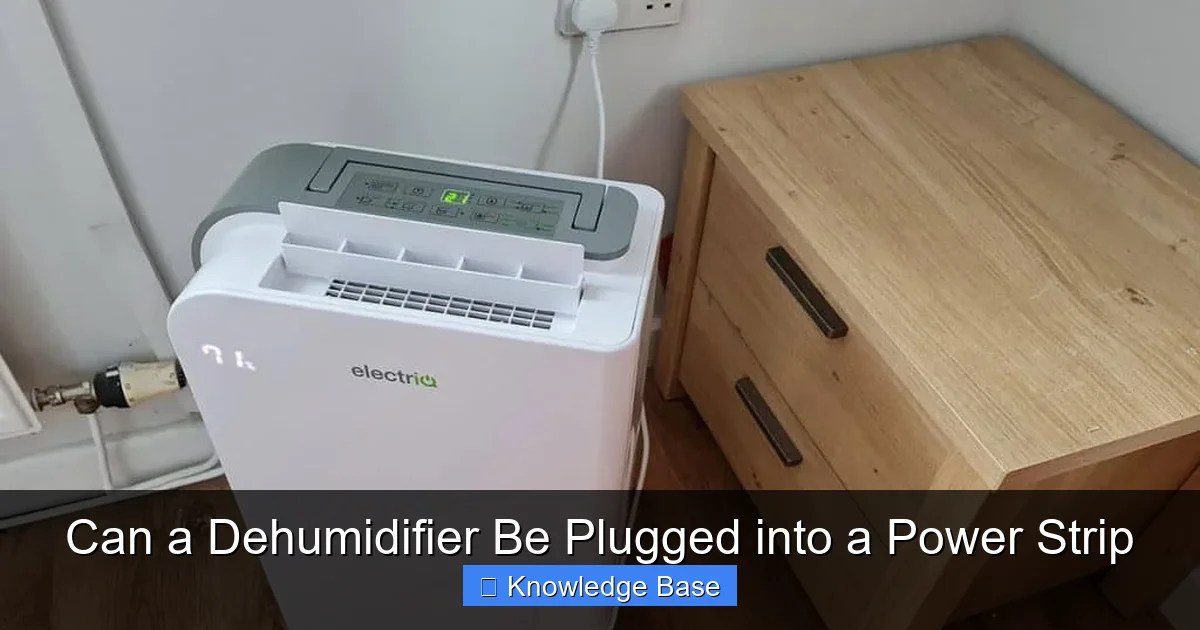
Plugging a dehumidifier into a power strip can be risky due to high power demands. While it’s technically possible, it’s often not recommended unless you use a heavy-duty surge protector and follow strict safety guidelines. Always check your unit’s wattage and the power strip’s capacity before connecting.
Key Takeaways
- Dehumidifiers draw significant power: Most models require 500 to 750 watts, with startup surges exceeding 1,000 watts, which can overload standard power strips.
- Not all power strips are equal: Only heavy-duty, surge-protected power strips rated for high-wattage appliances should be used—never daisy-chain multiple strips.
- Check manufacturer guidelines: Many dehumidifier manuals explicitly advise against using extension cords or power strips for safety reasons.
- Overheating and fire risk: Overloaded power strips can overheat, melt, or even cause electrical fires, especially if used continuously.
- Direct wall outlet is safest: For optimal safety and performance, plug your dehumidifier directly into a grounded wall outlet on a dedicated circuit.
- Use smart plugs cautiously: If remote control is needed, opt for high-capacity smart plugs rated for motor-driven appliances, not basic power strips.
- Regular inspection matters: Routinely check cords, plugs, and outlets for signs of wear, heat, or damage to prevent hazards.
Understanding How Dehumidifiers Work and Their Power Needs
Before deciding whether to plug your dehumidifier into a power strip, it helps to understand what these devices do and how much energy they consume. A dehumidifier removes excess moisture from the air, helping prevent mold, mildew, dust mites, and musty odors—especially in basements, bathrooms, laundry rooms, or humid climates. They work similarly to air conditioners: a fan pulls humid air over cold coils, causing moisture to condense into a water collection tank or drain hose. The dry air is then reheated and released back into the room.
Because dehumidifiers contain compressors, motors, and fans, they are considered motor-driven appliances. This means they don’t draw a steady amount of power. Instead, they experience a brief but intense surge when first turned on—often 2 to 3 times their normal running wattage. For example, a dehumidifier rated at 600 watts may spike to over 1,500 watts during startup. This surge is normal, but it can overwhelm electrical components not designed to handle such loads.
Most residential dehumidifiers operate between 500 and 750 watts under normal conditions. Larger commercial units can exceed 1,000 watts. These power requirements are significantly higher than typical household electronics like lamps (60 watts), laptops (50 watts), or phone chargers (10 watts). As a result, dehumidifiers place a heavier demand on your home’s electrical system—and that includes any power strip or extension cord you might use.
It’s also important to note that dehumidifiers often run for long periods—sometimes 8 to 12 hours a day—especially in damp environments. Continuous operation increases the risk of overheating, particularly if the power source isn’t robust enough. Even if a power strip appears to handle the load initially, prolonged use can cause internal components to degrade, leading to failure or fire hazards.
Understanding your dehumidifier’s specific power needs is the first step in making a safe decision. Check the label on the back or bottom of the unit, or consult the user manual. Look for information like “Rated Power,” “Watts,” “Amps,” or “Voltage.” If it lists amps and volts (e.g., 120V, 5A), you can calculate watts by multiplying the two: 120 × 5 = 600 watts. This number gives you a baseline for determining whether your power strip can safely support the device.
The Risks of Using a Standard Power Strip with a Dehumidifier
At first glance, plugging a dehumidifier into a power strip might seem convenient—especially if wall outlets are scarce or located behind furniture. However, this seemingly simple act can introduce serious safety risks if done improperly. The primary concern is that most standard power strips are not built to handle the high current and sustained load that dehumidifiers require.
Standard power strips—often sold as “surge protectors” or “multi-outlet adapters”—are typically rated for 15 amps and around 1,800 watts total. While this sounds sufficient, it’s important to remember that dehumidifiers can draw close to or exceed this limit during startup surges. Additionally, many power strips are designed for low-power electronics like computers, printers, or lamps—not motor-driven appliances. Their internal wiring, circuit breakers, and connectors may not be robust enough to handle repeated high-current demands.
One of the most dangerous scenarios is daisy-chaining—plugging one power strip into another. This practice drastically increases the risk of overloading the circuit. Even if each strip is rated for 15 amps, the combined load can easily exceed the capacity of the original outlet or the home’s electrical wiring. Over time, this can cause overheating, melted plugs, tripped breakers, or even electrical fires. The National Fire Protection Association (NFPA) lists overloaded circuits as a leading cause of home electrical fires.
Another risk is voltage drop. When a dehumidifier draws a large amount of current through a long or undersized power strip, the voltage at the appliance may drop below optimal levels. This can cause the motor to work harder, overheat, and wear out prematurely. In extreme cases, it may trigger the dehumidifier’s thermal cutoff switch, causing it to shut off unexpectedly—defeating the purpose of using it in the first place.
There’s also the issue of grounding. Dehumidifiers require a grounded (three-prong) outlet for safety. Many cheap power strips either lack proper grounding or use thin internal wires that can’t safely carry the current. If the grounding is compromised, there’s an increased risk of electric shock, especially in damp areas like basements or bathrooms.
Real-world examples underscore these dangers. In one reported incident, a homeowner plugged a 700-watt dehumidifier into a standard power strip in a basement. After running for several hours, the strip overheated, melted, and started smoking. Fortunately, the homeowner noticed it in time, but the incident could have led to a fire. In another case, a dehumidifier connected via an extension cord and power strip caused a circuit breaker to trip repeatedly, eventually damaging the unit’s compressor.
These risks aren’t theoretical—they’re preventable. The safest approach is to avoid using standard power strips altogether for dehumidifiers. If you must use one, ensure it’s a heavy-duty model specifically rated for high-wattage appliances, and never exceed 80% of its total capacity.
When Is It Safe to Use a Power Strip with a Dehumidifier?
While the general recommendation is to plug a dehumidifier directly into a wall outlet, there are limited situations where using a power strip may be acceptable—provided strict safety guidelines are followed. The key is understanding the difference between a basic power strip and a heavy-duty surge protector designed for high-power appliances.
Heavy-duty power strips are built with thicker internal wiring, higher amp ratings (often 20 amps), and robust circuit breakers. They’re typically labeled for use with appliances like refrigerators, air conditioners, or space heaters. These models can better handle the startup surge and continuous load of a dehumidifier. Look for certifications like UL (Underwriters Laboratories) or ETL, which indicate the product has been tested for safety.
Before using any power strip, check its wattage and amperage rating. For example, a 20-amp, 120-volt power strip can safely handle up to 2,400 watts (20 × 120 = 2,400). If your dehumidifier uses 600 watts, this leaves plenty of headroom—even with the startup surge. However, if the power strip is only rated for 15 amps (1,800 watts), it’s cutting it too close, especially if other devices are plugged into the same strip.
Another important factor is the length and gauge of the power strip’s cord. Shorter cords with 14-gauge or 12-gauge wiring are better for high-power devices. Longer cords or those with thinner 16-gauge wires increase resistance, which can lead to voltage drop and overheating. A heavy-duty power strip with a short, thick cord is ideal.
It’s also essential to ensure the power strip has thermal protection—a built-in sensor that shuts off power if it detects overheating. This feature can prevent fires in case of overload or poor ventilation. Additionally, avoid placing the power strip on rugs, under furniture, or in enclosed spaces where heat can build up. Keep it in an open, dry area with good airflow.
Even with a heavy-duty strip, never plug in additional high-wattage devices like space heaters, microwaves, or hair dryers. The cumulative load can easily exceed safe limits. If you need to power multiple devices, consider installing additional wall outlets or using separate circuits.
Finally, always consult your dehumidifier’s user manual. Some manufacturers explicitly prohibit the use of extension cords or power strips. Doing so may void your warranty or increase liability in case of damage. If the manual advises against it, it’s best to follow that guidance—even if your power strip seems capable.
In summary, using a power strip with a dehumidifier is only safe if: (1) the strip is heavy-duty and rated for high-wattage appliances, (2) the dehumidifier’s power draw is well below the strip’s capacity, (3) no other major devices are connected, and (4) the setup is regularly inspected for signs of wear or overheating.
Best Practices for Powering Your Dehumidifier Safely
To ensure your dehumidifier operates efficiently and safely, follow these best practices for powering it. The goal is to minimize electrical risks while maximizing performance and longevity.
Plug Directly into a Wall Outlet
The safest and most recommended method is to plug your dehumidifier directly into a grounded wall outlet. This eliminates the risk of overloading a power strip and ensures the unit receives full, uninterrupted power. Choose an outlet that’s easily accessible and not shared with other high-wattage appliances. If the outlet is behind furniture or in a hard-to-reach spot, consider relocating the dehumidifier or having an electrician install a new outlet.
Use a Dedicated Circuit When Possible
Ideally, your dehumidifier should be on its own electrical circuit. This prevents interference from other devices and reduces the chance of tripping the breaker. If your home’s electrical panel allows, have a licensed electrician install a dedicated 15- or 20-amp circuit for the dehumidifier. This is especially important in basements or garages where multiple tools and appliances may be in use.
Inspect Cords and Outlets Regularly
Check the dehumidifier’s power cord, plug, and the wall outlet for signs of damage, such as fraying, cracking, discoloration, or loose connections. Feel the plug and outlet after use—if they’re warm or hot, it’s a sign of resistance or overload. Unplug the unit immediately and have it inspected by a professional. Also, ensure the outlet is clean and free of dust or moisture, which can cause short circuits.
Avoid Extension Cords Unless Absolutely Necessary
If you must use an extension cord, choose a heavy-duty, grounded model rated for outdoor or appliance use. Look for cords labeled “12 AWG” or “14 AWG” with a three-prong plug. Keep the cord as short as possible—no longer than 6 to 10 feet—to reduce voltage drop. Never run extension cords under rugs or through doorways, as this can damage the insulation and create tripping hazards.
Use Smart Plugs with Caution
Some homeowners use smart plugs to remotely control their dehumidifiers via smartphone apps. While convenient, most standard smart plugs are not rated for motor-driven appliances. Look for models specifically designed for high-wattage devices, such as those rated for 15 amps or 1,800 watts. Even then, monitor the plug for overheating and avoid using it continuously for more than a few hours at a time.
Schedule Routine Maintenance
Beyond electrical safety, regular maintenance helps your dehumidifier run efficiently. Clean or replace the air filter every 1 to 2 months, empty the water tank before it overflows, and inspect the coils for dust buildup. A well-maintained unit draws less power and is less likely to overheat or fail prematurely.
Know When to Call a Professional
If you’re unsure about your home’s electrical capacity, or if you frequently trip breakers when using the dehumidifier, consult a licensed electrician. They can assess your wiring, recommend upgrades, and ensure your setup meets local electrical codes. It’s a small investment that can prevent major hazards.
Alternative Solutions for Limited Outlet Access
What if you simply don’t have a nearby wall outlet? Or perhaps the only available outlet is already in use? While plugging into a power strip may seem like the easiest fix, there are safer alternatives that don’t compromise electrical safety.
Install Additional Wall Outlets
The most reliable long-term solution is to have a licensed electrician install a new outlet near your dehumidifier. This ensures a direct, dedicated power source without relying on extension cords or power strips. Modern outlets can even include USB ports or smart features for added convenience. While there’s an upfront cost, it enhances safety and adds value to your home.
Use a Heavy-Duty Appliance Extension Cord
If installation isn’t an option, a heavy-duty extension cord designed for appliances is a safer alternative to power strips. Choose a cord rated for at least 15 amps, with a grounded plug and a length no longer than necessary. Look for cords labeled “SJTW” or “SJTOW,” which are built for durability and outdoor use. Always fully uncoil the cord to prevent heat buildup.
Relocate the Dehumidifier
Sometimes, the simplest fix is to move the dehumidifier closer to an existing outlet. Even a few feet can make a difference. If the unit is in a corner or behind furniture, reposition it to improve airflow and access to power. This also helps the dehumidifier work more efficiently, as it won’t have to fight against restricted air circulation.
Use a Power Strip Only as a Temporary Fix
If you must use a power strip temporarily—say, during a move or renovation—choose a high-quality, heavy-duty model and monitor it closely. Unplug it when not in use, and never leave it unattended for long periods. This should only be a short-term solution until a safer permanent option is available.
Consider a Battery-Powered or Low-Wattage Alternative
For small spaces or occasional use, consider a compact, low-wattage dehumidifier or a desiccant-based model. These units draw significantly less power—sometimes under 200 watts—and may be safe to use with a high-quality power strip. However, they’re less effective in large or very humid areas, so assess your needs carefully.
Conclusion
So, can a dehumidifier be plugged into a power strip? The short answer is: it depends. While it’s technically possible, it’s generally not recommended due to the high power demands and safety risks involved. Standard power strips are not designed to handle the startup surge and continuous load of a dehumidifier, increasing the chances of overheating, tripped breakers, or even electrical fires.
The safest and most reliable approach is to plug your dehumidifier directly into a grounded wall outlet on a dedicated circuit. If that’s not feasible, use a heavy-duty, high-wattage power strip or extension cord rated for appliances—and never exceed its capacity. Always follow the manufacturer’s guidelines, inspect your setup regularly, and prioritize safety over convenience.
Remember, your dehumidifier plays a vital role in maintaining a healthy, comfortable home environment. Taking a few extra precautions with how you power it can prevent costly damage, extend the life of your unit, and most importantly, keep your family safe. When in doubt, consult a professional electrician—they can help you create a safe, efficient setup tailored to your home’s needs.
Quick Q&A
Can I plug a 700-watt dehumidifier into a 15-amp power strip?
Technically yes, but it’s risky. A 15-amp strip can handle up to 1,800 watts, but the dehumidifier’s startup surge may exceed this. Use only a heavy-duty strip and avoid other devices on the same circuit.
Is it safe to use a smart plug with a dehumidifier?
Only if the smart plug is rated for high-wattage motor-driven appliances (15 amps or 1,800+ watts). Most standard smart plugs are not suitable and can overheat.
Can I daisy-chain power strips for my dehumidifier?
No. Daisy-chaining increases fire risk and can overload circuits. It’s strongly discouraged by electrical safety experts.
What should I do if my power strip feels warm?
Unplug the dehumidifier immediately. A warm power strip indicates overload or poor connection. Inspect for damage and replace the strip if necessary.
Can using a power strip void my dehumidifier warranty?
Yes, if the manufacturer prohibits it in the user manual. Always check the warranty terms before using extension cords or power strips.
FAQS
Can a dehumidifier be plugged into a power strip safely?
It depends on the power strip and dehumidifier wattage. Standard power strips are not recommended, but heavy-duty, high-wattage models may be used with caution. Always check ratings and avoid overloading.
What type of power strip is safe for a dehumidifier?
Use a heavy-duty surge protector rated for at least 20 amps and 2,400 watts, with thick 12- or 14-gauge wiring and thermal protection. Look for UL or ETL certification.
Why do dehumidifiers need so much power?
Dehumidifiers contain compressors and motors that require high startup current. They also run for long periods, drawing sustained power to remove moisture from the air.
Can I use an extension cord instead of a power strip?
Yes, but only a heavy-duty, grounded extension cord rated for appliances. Keep it short and fully uncoiled to prevent overheating.
What happens if I overload a power strip with a dehumidifier?
The strip may overheat, melt, or cause a fire. It can also trip circuit breakers or damage the dehumidifier’s motor due to voltage drop.
Should I unplug my dehumidifier when not in use?
It’s a good safety practice, especially if using a power strip or extension cord. Unplugging also saves energy and reduces wear on electrical components.
This is a comprehensive guide about can a dehumidifier be plugged into a power strip.
Key Takeaways
- Understanding can a dehumidifier be plugged into a power strip: Provides essential knowledge
Quick Answers to Common Questions
What is can a dehumidifier be plugged into a power strip?
can a dehumidifier be plugged into a power strip refers to essential knowledge and techniques.
Frequently Asked Questions
What is can a dehumidifier be plugged into a power strip?
can a dehumidifier be plugged into a power strip is an important topic with many practical applications.