

While a dehumidifier doesn’t actually lower the air temperature in your garage, it can make the space feel cooler and more comfortable by reducing humidity. High moisture levels make heat feel more intense, so removing excess moisture helps your body cool itself more efficiently. For true cooling, you’ll likely need a combination of dehumidification and proper ventilation or air conditioning.
Key Takeaways
- Dehumidifiers reduce humidity, not temperature: They remove moisture from the air, which can make a hot garage feel more comfortable, but they don’t act like air conditioners.
- Lower humidity improves perceived comfort: When sweat evaporates more easily in dry air, your body feels cooler, even if the thermometer hasn’t changed.
- Garages are prone to high humidity: Poor insulation, concrete floors, and lack of ventilation make garages ideal environments for moisture buildup.
- Dehumidifiers help prevent mold and rust: Controlling humidity protects tools, vehicles, and stored items from damage caused by damp conditions.
- Combine with ventilation for better results: Using fans or exhaust systems alongside a dehumidifier improves air circulation and enhances cooling effects.
- Choose the right size dehumidifier: Match the unit’s capacity (in pints per day) to your garage’s square footage and humidity level for optimal performance.
- Consider energy efficiency and noise: Look for Energy Star-rated models and quiet operation if you spend time working in the garage.
Quick Answers to Common Questions
Can a dehumidifier lower the temperature in a garage?
No, a dehumidifier does not lower the air temperature. It removes moisture, which can make the space feel cooler by improving sweat evaporation.
How much humidity should I aim for in my garage?
Keep humidity between 30% and 50% to prevent mold, rust, and discomfort. Use a hygrometer to monitor levels.
Do I need a special dehumidifier for a garage?
Yes, choose a heavy-duty model with high capacity (50–70+ pints), continuous drainage, and durable construction for garage conditions.
Can I run a dehumidifier in winter?
Yes, but only if the temperature stays above 60°F. Most units have auto-defrost for cold-weather use.
Will a dehumidifier help with musty smells in my garage?
Absolutely. By reducing moisture, it prevents the growth of mold and mildew, which cause musty odors.
📑 Table of Contents
- Can a Dehumidifier Cool a Garage?
- How Dehumidifiers Work in Garages
- The Science Behind “Feeling Cooler” Without Lowering Temperature
- Benefits of Using a Dehumidifier in Your Garage
- Choosing the Right Dehumidifier for Your Garage
- Tips for Maximizing Cooling and Comfort
- When a Dehumidifier Isn’t Enough
- Conclusion
Can a Dehumidifier Cool a Garage?
If you’ve ever stepped into your garage on a hot, sticky summer day, you know how oppressive it can feel. The air is thick, tools feel damp, and even standing still makes you sweat. You might wonder: “Can a dehumidifier cool a garage?” It’s a smart question—especially if you’re looking for ways to make your garage more usable without installing a full air conditioning system.
The short answer is: not exactly. A dehumidifier doesn’t cool the air in the same way an air conditioner does. It doesn’t lower the temperature on your thermometer. But it can make your garage feel significantly cooler and more comfortable by reducing humidity. That’s because high humidity makes heat feel worse. When the air is full of moisture, your sweat can’t evaporate easily, so your body struggles to cool itself. By removing excess moisture, a dehumidifier helps restore that natural cooling process, making the space feel fresher and less stifling.
Think of it like this: on a dry 85°F day, you might feel pretty comfortable. But on a humid 85°F day, it can feel like 95°F or more. That’s the “heat index” effect—your body perceives the temperature as higher because of the moisture in the air. A dehumidifier tackles that root cause. While it won’t turn your garage into a refrigerated cave, it can make a noticeable difference in comfort, especially during humid months.
How Dehumidifiers Work in Garages
Visual guide about Can a Dehumidifier Cool a Garage
Image source: m.media-amazon.com
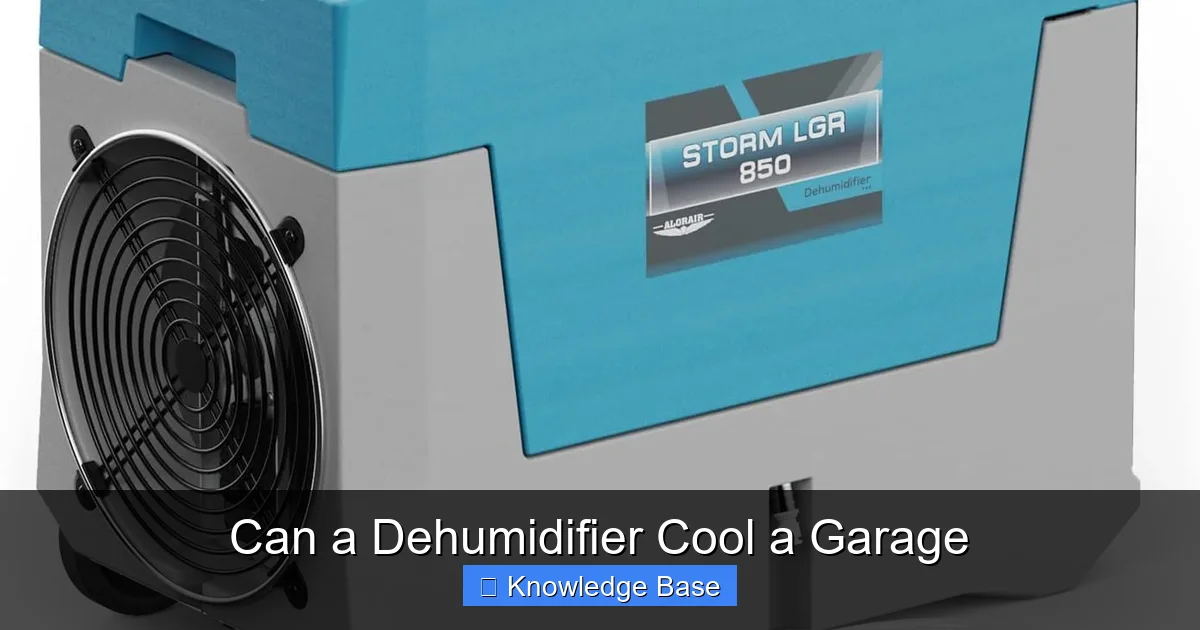
To understand whether a dehumidifier can help cool your garage, it’s important to know how these machines actually work. Most residential dehumidifiers use a refrigeration-based system, similar to an air conditioner, but with a key difference: their primary goal is moisture removal, not temperature control.
Here’s a simple breakdown of the process:
– The dehumidifier draws in warm, humid air from the garage through a fan.
– The air passes over cold coils (evaporator coils), causing moisture to condense into water droplets.
– The collected water drips into a built-in tank or drains out through a hose.
– The now-drier air passes over warm coils (condenser coils) to reheat it slightly.
– The dry air is released back into the room.
This cycle repeats continuously until the desired humidity level is reached—usually set between 30% and 50% for most indoor spaces.
Now, here’s the catch: because the air is reheated after condensation, the overall temperature in the garage doesn’t drop. In fact, some dehumidifiers may slightly increase the air temperature due to the heat generated by the compressor and motor. So while the air feels cooler to you, the actual temperature might stay the same or even rise a little.
But that’s not a dealbreaker. The real benefit comes from the drop in relative humidity. When humidity is high—say, 70% or more—your sweat doesn’t evaporate well, and you feel clammy and overheated. Lowering humidity to 50% or below allows your body to cool itself naturally, creating a much more pleasant environment.
Why Garages Are Especially Prone to High Humidity
Garages are unique spaces when it comes to humidity. Unlike your living room or bedroom, they’re often poorly insulated, have concrete floors that wick moisture from the ground, and lack proper ventilation. Many garages also have doors and windows that don’t seal tightly, allowing humid outdoor air to seep in.
Add to that the fact that garages are used for storing things like paint, gasoline, lawn equipment, and seasonal items—many of which can off-gas or absorb moisture—and you’ve got a recipe for high humidity.
During summer, warm air holds more moisture. When that air enters your garage and hits cooler surfaces like concrete floors or metal tools, condensation forms. This is why you might see water droplets on your car windows or feel a damp film on your workbench.
In winter, the problem reverses slightly—cold air holds less moisture, but when it warms up inside the garage, the relative humidity can spike, especially if there’s no airflow. This creates ideal conditions for mold, mildew, and rust.
A dehumidifier helps break this cycle by actively removing moisture from the air, regardless of the season. It’s one of the most effective ways to maintain a stable, dry environment in a space that’s otherwise hard to control.
The Science Behind “Feeling Cooler” Without Lowering Temperature
Visual guide about Can a Dehumidifier Cool a Garage
Image source: cdn.mos.cms.futurecdn.net
You might be wondering: if a dehumidifier doesn’t lower the temperature, how can it make a garage feel cooler? The answer lies in human physiology and the science of thermal comfort.
Our bodies cool themselves primarily through sweat evaporation. When sweat turns from liquid to vapor, it absorbs heat from your skin, creating a cooling effect. But this only works if the surrounding air isn’t already saturated with moisture.
In high-humidity environments, the air is already holding a lot of water vapor. This slows down evaporation, so sweat stays on your skin, making you feel sticky and overheated. Even if the temperature is only 80°F, high humidity can make it feel like 90°F or more.
By reducing humidity, a dehumidifier restores the balance. Dry air allows sweat to evaporate more efficiently, so your body can cool itself naturally. This is why people often say, “It’s not the heat, it’s the humidity.” The same principle applies in your garage.
For example, imagine working on a car in a garage with 80% humidity. You’re sweating, uncomfortable, and constantly wiping your brow. Now, run a dehumidifier for a few hours until humidity drops to 45%. The temperature might still read 80°F, but you’ll feel noticeably cooler. You’ll sweat less, breathe easier, and be able to focus on your project without feeling like you’re in a sauna.
This effect is especially pronounced in poorly ventilated spaces like garages, where stale, humid air tends to linger. A dehumidifier helps circulate and dry the air, creating a more comfortable microclimate.
Real-World Example: A Weekend Workshop Transformation
Let’s say you’re a DIY enthusiast who uses your garage as a workshop. On a typical summer Saturday, you start your project at 10 a.m. The garage is already warm and muggy. By noon, you’re drenched in sweat, and your tools feel damp. You give up early, frustrated.
Now, try the same scenario with a dehumidifier running overnight. You wake up to a garage with humidity at 40%. The air feels crisp and dry. You start your project at 10 a.m. and work straight through until 2 p.m. without discomfort. Your tools stay dry, your materials don’t warp, and you actually enjoy the process.
That’s the power of humidity control. It’s not about lowering the temperature—it’s about improving the environment so your body can function comfortably.
Benefits of Using a Dehumidifier in Your Garage
Beyond the immediate comfort boost, running a dehumidifier in your garage offers several long-term benefits. These advantages go beyond just feeling cooler—they protect your health, your belongings, and even your home’s structure.
1. Prevents Mold and Mildew Growth
Mold thrives in damp, dark environments. Garages are prime real estate for mold spores, especially in corners, behind stored items, or on walls near the floor. Once mold takes hold, it can spread quickly, releasing allergens and irritants into the air.
A dehumidifier keeps humidity below 60%—the threshold where mold typically grows. This creates an inhospitable environment for spores, reducing the risk of infestations. If you’ve ever dealt with a mold problem, you know how costly and time-consuming remediation can be. Prevention is far easier and cheaper.
2. Protects Tools and Equipment
Metal tools, electronics, and machinery are vulnerable to rust and corrosion in high-humidity environments. Even a little moisture can cause screwdrivers to seize, saw blades to pit, or power tools to short-circuit.
By maintaining a dry atmosphere, a dehumidifier extends the life of your tools. It also prevents warping in wooden items like workbenches or shelving. For car enthusiasts, it helps protect vehicles stored in the garage from interior mold, musty odors, and rust on undercarriages.
3. Improves Air Quality
High humidity doesn’t just encourage mold—it also promotes dust mites, bacteria, and other allergens. These can trigger respiratory issues, especially for people with asthma or allergies.
A dehumidifier reduces these contaminants by making the air less hospitable to them. Cleaner, drier air means easier breathing and fewer allergy flare-ups, especially if you spend a lot of time in the garage.
4. Reduces Musty Odors
That “old garage smell” is often caused by trapped moisture and organic decay. Books, cardboard boxes, and even concrete can absorb and hold odors in humid conditions.
Dehumidifiers help eliminate these smells by drying out the air and surfaces. Many users report that their garages smell fresher and cleaner within days of using a dehumidifier.
5. Enhances Energy Efficiency of Other Cooling Systems
If you do have an air conditioner or evaporative cooler in your garage, a dehumidifier can make it more effective. Air conditioners work harder in humid environments because they have to remove moisture before they can cool the air.
By pre-drying the air, a dehumidifier reduces the load on your AC unit, helping it cool more efficiently and use less energy. This can lower your electricity bills and extend the life of your cooling equipment.
Choosing the Right Dehumidifier for Your Garage
Not all dehumidifiers are created equal—especially when it comes to garage use. Garages are typically larger, less insulated, and more exposed to outdoor conditions than indoor rooms. That means you need a unit that’s powerful, durable, and designed for tough environments.
1. Size and Capacity
Dehumidifiers are rated by how many pints of moisture they can remove in 24 hours. For a standard two-car garage (about 400–600 square feet), you’ll generally need a unit with a capacity of 50 to 70 pints per day.
If your garage is larger, poorly insulated, or located in a very humid climate (like the Southeast U.S.), consider a 70-pint or higher model. Smaller units may struggle to keep up, especially during peak humidity months.
2. Drainage Options
Most dehumidifiers collect water in a built-in tank that needs to be emptied regularly. For a garage, this can be inconvenient—especially if you’re not there every day.
Look for models with continuous drainage options, such as a hose hookup that drains directly into a floor drain, utility sink, or sump pump. This eliminates the need to empty the tank and ensures the unit keeps running even when you’re away.
3. Durability and Build Quality
Garages aren’t climate-controlled, so your dehumidifier may be exposed to dust, temperature swings, and occasional bumps. Choose a model with a sturdy casing, rust-resistant components, and a washable air filter.
Some units are specifically labeled as “garage dehumidifiers” or “heavy-duty,” which often means they’re built to handle rougher conditions.
4. Energy Efficiency
Dehumidifiers can use a lot of electricity, especially if they run for long periods. Look for models with the Energy Star label, which indicates they meet strict efficiency guidelines.
Features like auto-humidistats (which turn the unit on/off based on humidity levels) and defrost functions (for cold-weather operation) can also help save energy.
5. Noise Level
If you use your garage as a workshop or home office, noise matters. Most dehumidifiers produce a low hum, but some are quieter than others. Check the decibel (dB) rating—ideally under 60 dB for comfortable use.
6. Portability and Placement
Garages often have limited outlet access and uneven flooring. Choose a dehumidifier with wheels or a handle for easy movement. Place it in a central location, away from walls and obstructions, to ensure good airflow.
Avoid placing it directly on concrete, which can transfer cold and cause condensation on the unit. Use a rubber mat or stand if needed.
Tips for Maximizing Cooling and Comfort
While a dehumidifier can make your garage feel cooler, it works best when paired with other strategies. Here are some practical tips to enhance its effectiveness:
1. Improve Ventilation
Open windows or install exhaust fans to allow stale, humid air to escape. Cross-ventilation—using two opposite windows or vents—creates a breeze that helps move air through the space.
Even a small window fan can make a big difference when used alongside a dehumidifier.
2. Seal Gaps and Cracks
Check doors, windows, and walls for air leaks. Use weatherstripping or caulk to seal gaps that let humid outdoor air in. This reduces the workload on your dehumidifier and keeps humidity levels more stable.
3. Use Insulation
If your garage is attached to your home, consider insulating the shared wall. This prevents heat transfer and reduces moisture migration. Insulated garage doors also help maintain a more consistent temperature.
4. Avoid Introducing Moisture
Don’t wash cars or run wet tools inside the garage. Dry off wet items before storing them. If you must use water, do it near a drain or open door.
5. Run the Dehumidifier During Peak Humidity
Humidity is usually highest in the early morning and late evening. Set your dehumidifier to run during these times, or use a timer to automate the process.
6. Monitor Humidity Levels
Use a hygrometer (a small, inexpensive device) to track humidity in your garage. Aim to keep it between 30% and 50%. This ensures your dehumidifier is working effectively and prevents over-drying, which can be uncomfortable.
When a Dehumidifier Isn’t Enough
While dehumidifiers are great for comfort and protection, they’re not a complete solution for extreme heat. If your garage regularly hits 90°F or higher, you may still need additional cooling.
In these cases, consider combining your dehumidifier with:
– A portable air conditioner (with a window kit for venting)
– An evaporative cooler (in dry climates)
– A ceiling or wall-mounted fan to improve airflow
– Reflective insulation or radiant barriers to reduce heat gain
For garages used as home gyms, workshops, or living spaces, a mini-split air conditioning system might be worth the investment. These units provide both cooling and dehumidification, offering the best of both worlds.
Conclusion
So, can a dehumidifier cool a garage? Not in the traditional sense—but it can make your garage feel significantly cooler and more comfortable by reducing humidity. By removing excess moisture, it helps your body cool itself naturally, prevents mold and rust, and protects your belongings.
For many homeowners, a dehumidifier is a smart, cost-effective way to improve garage comfort without the expense of full air conditioning. When paired with good ventilation, insulation, and smart usage habits, it can transform a sweltering, damp space into a usable, enjoyable area year-round.
If you’re tired of sweating through weekend projects or worrying about mold on your tools, a dehumidifier might be just what your garage needs. It won’t lower the temperature on the thermometer, but it will make the heat feel much more manageable—and that’s worth its weight in gold.
Frequently Asked Questions
Does a dehumidifier use a lot of electricity?
Dehumidifiers can consume significant energy, especially large models. Look for Energy Star-rated units with auto-humidistats to reduce usage and save on bills.
Can I use a basement dehumidifier in my garage?
Some basement models work in garages, but ensure it’s rated for unconditioned spaces and has adequate capacity and drainage for garage use.
How often should I empty the water tank?
It depends on humidity levels and tank size. Most tanks need emptying every 12–24 hours. Use a continuous drain hose to avoid manual emptying.
Will a dehumidifier prevent rust on my tools?
Yes, by keeping humidity low, it reduces condensation on metal surfaces, which is a major cause of rust and corrosion.
Can a dehumidifier help with allergies?
Yes, lower humidity discourages dust mites and mold, common allergens that thrive in damp environments.
Should I run the dehumidifier all the time?
Not necessarily. Use a humidistat to run it only when humidity exceeds your set level. This saves energy and extends the unit’s life.