
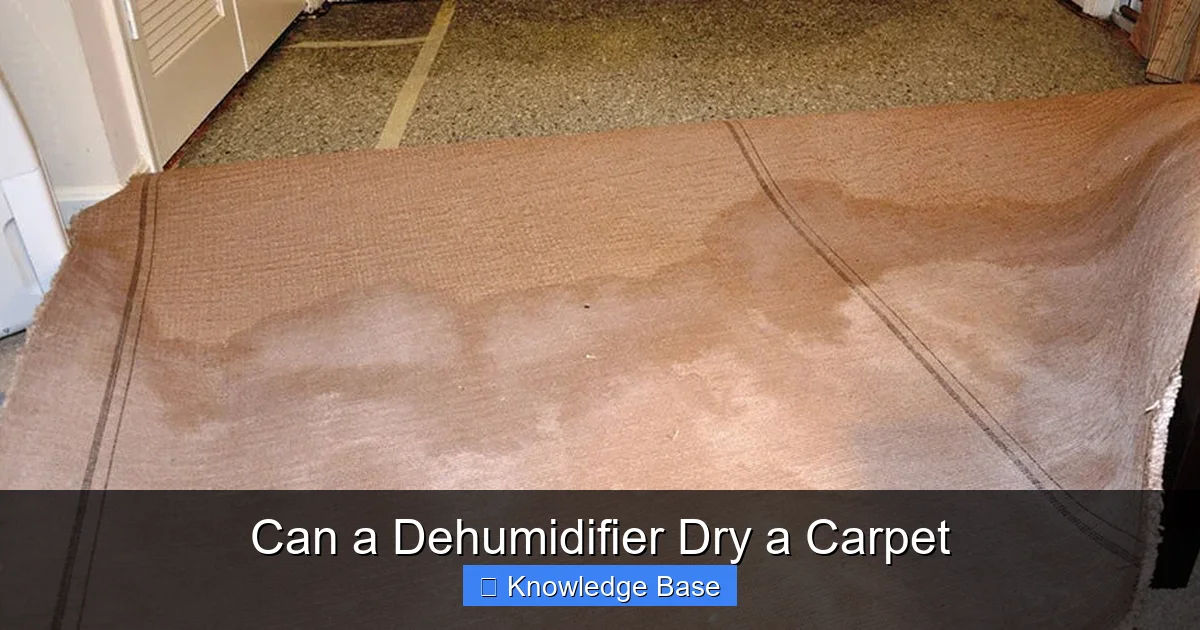
Yes, a dehumidifier can help dry a carpet—especially when used alongside fans and proper ventilation. It works by pulling moisture from the air and the carpet fibers, preventing mold and odors. However, it’s most effective when combined with other drying tools and early intervention.
Key Takeaways
- Dehumidifiers remove moisture from the air: They pull damp air in, extract water vapor, and release dry air back into the room, indirectly drying carpets over time.
- Best used with fans and ventilation: Air circulation speeds up evaporation, so pairing a dehumidifier with box fans or open windows boosts drying efficiency.
- Effective for minor to moderate water damage: For small spills or high humidity, a dehumidifier works well; major floods may require professional equipment.
- Prevents mold and mildew growth: By lowering humidity levels, dehumidifiers stop mold spores from thriving in damp carpet padding and subfloors.
- Placement matters: Position the dehumidifier near the wettest area and ensure good airflow around it for optimal performance.
- Time and patience are key: Drying a carpet with a dehumidifier can take 24–72 hours depending on saturation, room size, and humidity levels.
- Not a standalone solution for deep saturation: If water has soaked into the padding or subfloor, you may need wet vacuums or professional drying services.
Quick Answers to Common Questions
Can a dehumidifier dry a carpet overnight?
It depends on the saturation level and room conditions. Minor spills may dry in 12–24 hours with a dehumidifier and fans, but deeply soaked carpets can take 48–72 hours or more.
Should I lift the carpet when using a dehumidifier?
Yes, if water has soaked into the padding. Lifting the carpet allows air to reach the padding and subfloor, speeding up drying and preventing mold.
Can I use a dehumidifier for a flooded basement carpet?
A dehumidifier helps, but major flooding usually requires professional equipment. Use it alongside wet vacuums and fans, and call a restoration company if the damage is extensive.
Will a dehumidifier remove carpet odors?
It helps prevent odors by drying the carpet and reducing mold growth, but you may need to clean or deodorize the carpet separately to eliminate existing smells.
How long should I run a dehumidifier after a spill?
Run it continuously until the carpet, padding, and subfloor are completely dry—usually 24–72 hours. Use a moisture meter to confirm dryness.
📑 Table of Contents
- Can a Dehumidifier Dry a Carpet? The Complete Guide
- How Dehumidifiers Work: The Science Behind Moisture Removal
- When a Dehumidifier Is Effective for Drying Carpets
- Step-by-Step Guide: How to Use a Dehumidifier to Dry a Carpet
- Tips for Maximizing Drying Efficiency
- Preventing Mold and Odors During the Drying Process
- When to Call a Professional
- Conclusion: Yes, a Dehumidifier Can Dry a Carpet—When Used Right
Can a Dehumidifier Dry a Carpet? The Complete Guide
So, your carpet got wet—maybe from a spilled drink, a leaky pipe, or a recent storm. Your first instinct might be to grab a towel and start blotting. But what if the moisture has already seeped deep into the fibers, padding, or even the subfloor? That’s when you start wondering: *Can a dehumidifier dry a carpet?*
The short answer is yes—but with some important caveats. A dehumidifier isn’t a magic wand that instantly dries soaked carpets. Instead, it’s a powerful tool that helps manage moisture in the air, which in turn helps pull dampness out of your carpet over time. Think of it as part of a team: while fans create airflow and wet vacuums remove standing water, the dehumidifier tackles the hidden moisture that lingers in the air and deep within the carpet layers.
Understanding how dehumidifiers work—and how to use them effectively—can make the difference between a quick recovery and a long-term mold problem. In this guide, we’ll walk you through everything you need to know about using a dehumidifier to dry a carpet, from the science behind moisture removal to practical tips for getting the best results. Whether you’re dealing with a small spill or a more serious water incident, this article will help you act fast and smart.
How Dehumidifiers Work: The Science Behind Moisture Removal

Visual guide about Can a Dehumidifier Dry a Carpet
Image source: carpetsmatter.com
Before we dive into whether a dehumidifier can dry a carpet, let’s break down how these machines actually work. Most people think of dehumidifiers as “air dryers,” but they’re really moisture extractors. They pull in humid air, remove the water vapor, and release drier air back into the room.
There are two main types of dehumidifiers: refrigerant (compressor-based) and desiccant. Refrigerant models are the most common in homes. They use a fan to draw warm, moist air over cold coils. As the air cools, the moisture condenses into water droplets, which collect in a tank or drain hose. The now-drier air passes over warm coils to reheat slightly before being blown back into the room.
Desiccant dehumidifiers, on the other hand, use a moisture-absorbing material (like silica gel) to trap water vapor. These are often used in colder environments where refrigerant models lose efficiency. While both types reduce humidity, refrigerant models are generally better for typical home use.
The key thing to remember is that dehumidifiers don’t directly dry surfaces—they dry the air. But here’s the catch: dry air encourages evaporation. When the air around your carpet is less humid, moisture in the carpet fibers and padding evaporates more quickly. This process pulls water out of the carpet and into the air, where the dehumidifier can capture it. It’s a cycle: the drier the air, the faster the carpet dries.
For example, imagine leaving a wet towel on a clothesline. On a humid day, it takes forever to dry. But on a dry, breezy day, it dries in hours. The same principle applies to your carpet. A dehumidifier creates that “dry day” environment indoors, accelerating the natural drying process.
When a Dehumidifier Is Effective for Drying Carpets

Visual guide about Can a Dehumidifier Dry a Carpet
Image source: carpetsmatter.com
Now that we understand how dehumidifiers work, let’s talk about when they’re actually useful for drying carpets. The answer depends on the extent of the water damage, the type of water involved, and how quickly you respond.
Minor Spills and Surface Moisture
For small accidents—like a knocked-over glass of water, a pet accident, or a damp towel left on the floor—a dehumidifier can be very effective. In these cases, the moisture hasn’t penetrated deeply into the padding or subfloor. You can blot up the excess water with towels, then run a dehumidifier to pull out the remaining dampness.
Let’s say you spilled a full water bottle on your living room carpet. You grab towels and soak up as much as you can. Then, you set up a dehumidifier in the room and run it for 12–24 hours. Combined with a fan to circulate air, the dehumidifier will help dry the fibers and prevent that musty smell. This is a perfect scenario where a dehumidifier shines.
High Indoor Humidity
Even without a visible spill, high humidity can make carpets feel damp or promote mold growth. Basements and bathrooms are common trouble spots. If your carpet feels clammy or you notice a musty odor, a dehumidifier can help. By lowering the overall humidity—ideally to 30–50%—you create an environment where moisture evaporates faster and mold struggles to grow.
For instance, if you live in a humid climate and your basement carpet often feels damp, running a dehumidifier regularly can prevent long-term damage. It won’t “dry” the carpet instantly, but it will stop the cycle of re-absorption from the air.
After Minor Flooding or Leaks
A slow leak from a pipe or a small overflow from a washing machine can soak into the carpet over time. If you catch it early, a dehumidifier can be a key part of your recovery plan. However, you’ll need to act fast. The longer water sits, the deeper it penetrates.
In this case, start by removing as much water as possible with a wet/dry vacuum. Then, lift the carpet if you can (or have someone help) to expose the padding. Place fans underneath to blow air directly onto the padding and subfloor. Run the dehumidifier in the room 24/7 until moisture levels drop.
Limitations: When a Dehumidifier Isn’t Enough
While dehumidifiers are helpful, they’re not a cure-all. If your carpet has been soaked by a major flood, sewage backup, or has been wet for more than 48 hours, a dehumidifier alone won’t cut it. In these cases, you’re likely dealing with contaminated water or deep saturation that requires industrial-grade equipment.
For example, if a burst pipe floods your entire basement, you’ll need more than a home dehumidifier. Professional water damage restoration teams use powerful extractors, air movers, and commercial dehumidifiers that can handle large volumes of water. They also test for mold and may need to remove and replace padding or even the carpet itself.
Similarly, if the water came from a toilet overflow or storm surge (known as “black water”), it’s unsafe to try drying it yourself. These situations require professional cleanup to avoid health risks.
Step-by-Step Guide: How to Use a Dehumidifier to Dry a Carpet
Ready to put your dehumidifier to work? Here’s a practical, step-by-step guide to drying your carpet safely and effectively.
Step 1: Act Immediately
Time is your biggest enemy when it comes to water damage. The sooner you start drying, the better your chances of saving the carpet and preventing mold. As soon as you notice the spill or leak, begin the drying process.
Step 2: Remove Standing Water
Use towels, a wet/dry vacuum, or a mop to remove as much surface water as possible. For larger spills, a wet vac is essential. Don’t just blot—squeeze out the water from the towels frequently to maximize absorption.
Step 3: Lift the Carpet (If Possible)
If the water has soaked into the padding, you’ll need to lift the carpet. Start at a corner and gently pull it back. Use pliers or a carpet knife if needed. Roll the carpet away from the wall and prop it up with buckets or blocks. This exposes the padding and subfloor to air, speeding up drying.
Step 4: Set Up Fans for Air Circulation
Place box fans or air movers around the room, aiming them at the wet areas. Position some fans to blow air under the lifted carpet. Good airflow is critical—it helps moisture evaporate faster so the dehumidifier can capture it.
Step 5: Position the Dehumidifier
Place the dehumidifier in the center of the room or near the wettest spot. Make sure there’s at least 6–12 inches of space around it for proper airflow. If your model has a drain hose, connect it to a floor drain or bucket to avoid frequent emptying.
Step 6: Monitor Humidity Levels
Use a hygrometer (a small device that measures humidity) to track progress. Aim to keep indoor humidity between 30% and 50%. If the dehumidifier has a built-in humidistat, set it to this range. Check the water tank regularly and empty it when full.
Step 7: Be Patient and Persistent
Drying can take 24–72 hours, depending on the situation. Don’t rush to replace the carpet too soon. Wait until the carpet, padding, and subfloor are completely dry. You can test by placing a plastic sheet on the carpet overnight—if condensation forms underneath, it’s still damp.
Step 8: Clean and Disinfect
Once dry, vacuum the carpet thoroughly. If the water was from a clean source (like a pipe), you may not need to disinfect. But if it was from a dirty source (like a pet accident), use a carpet cleaner or hire a professional to sanitize.
Tips for Maximizing Drying Efficiency
Using a dehumidifier to dry a carpet isn’t just about turning it on and walking away. A few smart strategies can make a big difference in how quickly and thoroughly your carpet dries.
Use Multiple Fans
One fan isn’t enough. Set up several fans to create cross-ventilation. Aim some at the carpet surface, others under the lifted carpet, and a few to blow air out of open windows. The more air movement, the faster evaporation occurs.
Open Windows (If Outdoor Air Is Dry)
If the outside air is less humid than indoors, open windows to let dry air in. This works best on cool, dry days. But if it’s humid or rainy outside, keep windows closed—you don’t want to add more moisture.
Run the Dehumidifier Continuously
Don’t turn the dehumidifier on and off. Run it 24/7 until the carpet is fully dry. Most modern models are energy-efficient and designed for long-term use. Just make sure the water tank doesn’t overflow.
Clean the Air Filter
A dirty filter reduces efficiency. Check your dehumidifier’s filter weekly and clean or replace it as needed. This ensures optimal airflow and moisture removal.
Consider a Larger Capacity Unit
If you’re dealing with a large room or heavy saturation, a small dehumidifier may not be enough. Look for a model with a higher pint-per-day (PPD) rating. For example, a 50-pint dehumidifier is better for basements or large living areas than a 30-pint model.
Check for Hidden Moisture
Moisture can hide under baseboards, behind furniture, or in wall cavities. Use a moisture meter to check these areas. If you find damp spots, you may need to remove baseboards or drill small holes to allow airflow.
Preventing Mold and Odors During the Drying Process
One of the biggest risks of a wet carpet is mold growth. Mold can start developing within 24–48 hours in damp, warm environments. A dehumidifier helps prevent this by lowering humidity, but you need to be proactive.
Why Mold Is a Threat
Mold thrives in moist, dark places—exactly what a wet carpet provides. Once it takes hold, it can spread to walls, furniture, and even the air you breathe. Mold spores can trigger allergies, asthma, and other respiratory issues.
How a Dehumidifier Helps
By keeping humidity below 50%, a dehumidifier makes the environment less hospitable to mold. It doesn’t kill existing mold, but it stops new growth. Combined with good ventilation, it’s one of your best defenses.
Additional Mold Prevention Tips
– Clean and disinfect the carpet after drying, especially if the water was dirty.
– Replace water-damaged padding—it’s porous and hard to dry completely.
– Avoid placing furniture back on the carpet until it’s 100% dry.
– Use a HEPA air purifier to capture airborne mold spores.
Dealing with Odors
Even if mold doesn’t grow, damp carpets can develop a musty smell. To combat this, sprinkle baking soda on the carpet before vacuuming. You can also use a carpet deodorizer or hire a professional cleaner for deep sanitizing.
When to Call a Professional
While a dehumidifier can handle many carpet-drying situations, there are times when you should call in the experts.
Major Water Damage
If more than a few square feet of carpet are soaked, or if water has reached walls or furniture, professional help is wise. Restoration companies have industrial equipment that can dry large areas quickly.
Contaminated Water
Water from sewage, toilets, or floodwaters is hazardous. It contains bacteria, viruses, and chemicals that require specialized cleaning. Never try to dry this type of water yourself.
Persistent Dampness or Mold
If your carpet stays damp for more than 72 hours or you see mold growth, stop and call a pro. They can assess the damage, remove affected materials, and ensure your home is safe.
Structural Concerns
If water has damaged subfloors, insulation, or electrical systems, a professional inspection is essential. Water can weaken structures and create fire hazards.
Conclusion: Yes, a Dehumidifier Can Dry a Carpet—When Used Right
So, can a dehumidifier dry a carpet? Absolutely—but it’s not a solo act. It works best as part of a comprehensive drying strategy that includes removing standing water, increasing airflow, and monitoring humidity levels. For minor spills, high humidity, or early-stage leaks, a dehumidifier is a powerful ally in saving your carpet and preventing mold.
However, it’s not a replacement for professional help in severe cases. Major floods, contaminated water, or deep saturation require expert intervention. And remember: speed matters. The faster you act, the better your chances of a full recovery.
By understanding how dehumidifiers work and following best practices, you can turn a wet carpet disaster into a manageable cleanup. Keep your dehumidifier maintained, use it alongside fans and ventilation, and always prioritize safety. With the right approach, your carpet can dry thoroughly—and your home can stay healthy and mold-free.
Frequently Asked Questions
Can a dehumidifier dry a carpet completely on its own?
No, a dehumidifier works best when combined with fans, ventilation, and water removal tools. It removes moisture from the air, which helps the carpet dry, but it can’t extract deep saturation alone.
Is it safe to walk on a carpet while it’s drying with a dehumidifier?
It’s best to avoid walking on a wet carpet to prevent spreading moisture or damaging fibers. Wait until the surface is dry to the touch before light use.
Can I use a dehumidifier in a closed room?
Yes, but ensure there’s some airflow. Completely sealing the room can trap moisture. Use fans and slightly open a window if outdoor air is dry to improve circulation.
Will a dehumidifier prevent mold on a wet carpet?
It significantly reduces the risk by lowering humidity, but mold can still grow if drying is delayed. Combine it with fast action, cleaning, and proper ventilation for best results.
Do I need to replace carpet padding after water damage?
Yes, if it’s soaked. Padding is porous and hard to dry completely, making it a breeding ground for mold. Most professionals recommend replacing it after significant water exposure.
Can a dehumidifier help with musty carpet smells?
Yes, by drying the carpet and reducing humidity, it helps prevent the conditions that cause musty odors. For existing smells, clean the carpet and use deodorizers.