
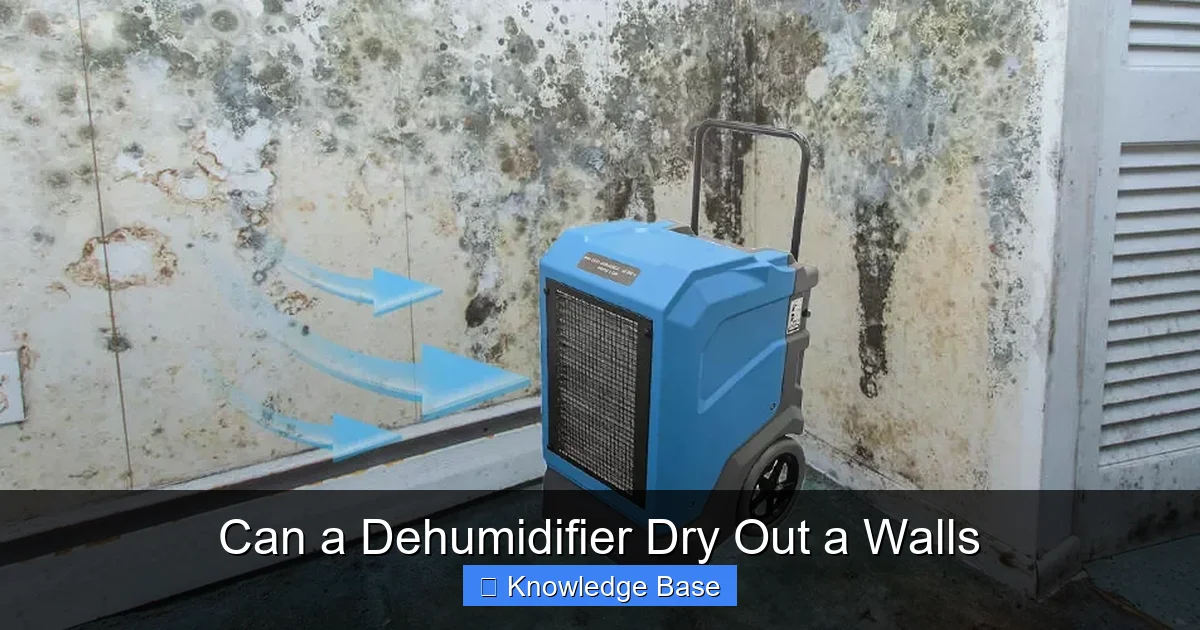
Yes, a dehumidifier can help dry out walls by reducing indoor humidity and pulling moisture from the air—and indirectly from damp wall materials. However, it’s not a standalone solution for severe water damage or structural issues. Proper use, combined with ventilation and source control, is key to effective wall drying.
Key Takeaways
- Dehumidifiers reduce air moisture: They pull excess humidity from the air, which helps dry damp walls over time by creating a drier environment.
- Not a fix for active leaks: If water is still entering the wall (e.g., from a roof leak or pipe burst), a dehumidifier alone won’t solve the problem—source repair is essential.
- Works best with airflow: Pairing a dehumidifier with fans and open windows (in dry weather) speeds up the drying process significantly.
- Prevents mold and mildew: By lowering humidity, dehumidifiers inhibit mold growth that often follows wall moisture issues.
- Choose the right size: A unit too small won’t be effective; match the dehumidifier’s capacity (pints per day) to the room size and moisture level.
- Monitor humidity levels: Use a hygrometer to keep indoor humidity between 30–50% for optimal drying and comfort.
- Complement with other methods: For deep or widespread moisture, combine dehumidification with insulation improvements, vapor barriers, or professional drying equipment.
Quick Answers to Common Questions
Can a dehumidifier dry out a wall after a flood?
Yes, but it should be used alongside fans and professional drying equipment. A dehumidifier helps remove moisture from the air, which aids in drying walls, but severe flooding often requires more comprehensive restoration.
How long does it take for a dehumidifier to dry a damp wall?
It can take anywhere from a few days to several weeks, depending on the wall’s moisture level, room size, and dehumidifier capacity. Monitor humidity and wall condition regularly.
Should I run a dehumidifier constantly when drying walls?
Yes, initially. Run it 24/7 until the walls are dry and humidity stabilizes below 50%. After that, use it as needed to maintain ideal levels.
Can a dehumidifier cause walls to dry too much?
No. Walls naturally reach equilibrium with indoor air. As long as humidity stays between 30–50%, your walls won’t become overly dry or damaged.
Do I need a special dehumidifier for basement walls?
Not necessarily, but choose a unit rated for basements or low-temperature environments if your basement is cool. Desiccant or low-temp refrigerant models work best in cold spaces.
📑 Table of Contents
- Can a Dehumidifier Dry Out a Wall? The Truth About Moisture and Indoor Air
- How Dehumidifiers Work: The Science Behind Moisture Removal
- When a Dehumidifier Can Help Dry Walls
- Limitations: When a Dehumidifier Isn’t Enough
- Best Practices for Using a Dehumidifier to Dry Walls
- Preventing Future Wall Moisture Issues
- Conclusion: A Smart Tool, Not a Miracle Cure
Can a Dehumidifier Dry Out a Wall? The Truth About Moisture and Indoor Air
If you’ve ever noticed damp patches on your walls, peeling paint, or a musty smell in a room, you’re not alone. Moisture in walls is a common issue in homes, especially in basements, bathrooms, and older buildings. It can lead to mold, structural damage, and poor indoor air quality. One solution many homeowners turn to is a dehumidifier. But the big question remains: Can a dehumidifier actually dry out a wall?
The short answer is yes—but with important caveats. A dehumidifier doesn’t directly suck moisture out of the wall like a sponge. Instead, it works by reducing the humidity in the surrounding air. When the air becomes drier, moisture naturally migrates from wetter materials (like damp drywall or plaster) into the air, where the dehumidifier can then capture it. This process, known as evaporation and condensation, is slow but effective over time.
Think of it like drying a wet towel. If you hang it in a humid bathroom, it stays damp for days. But if you hang it in a dry, breezy room, it dries much faster. A dehumidifier creates that “dry, breezy” environment indoors, encouraging moisture to leave the wall and enter the air, where it can be removed.
However, a dehumidifier is not a magic fix. It works best as part of a broader strategy that includes identifying and fixing the source of moisture, improving ventilation, and sometimes using additional drying tools. In this article, we’ll explore how dehumidifiers work, when they’re effective for drying walls, and how to use them properly to protect your home.
How Dehumidifiers Work: The Science Behind Moisture Removal
Visual guide about Can a Dehumidifier Dry Out a Walls
Image source: iororwxhqijjlk5q.ldycdn.com
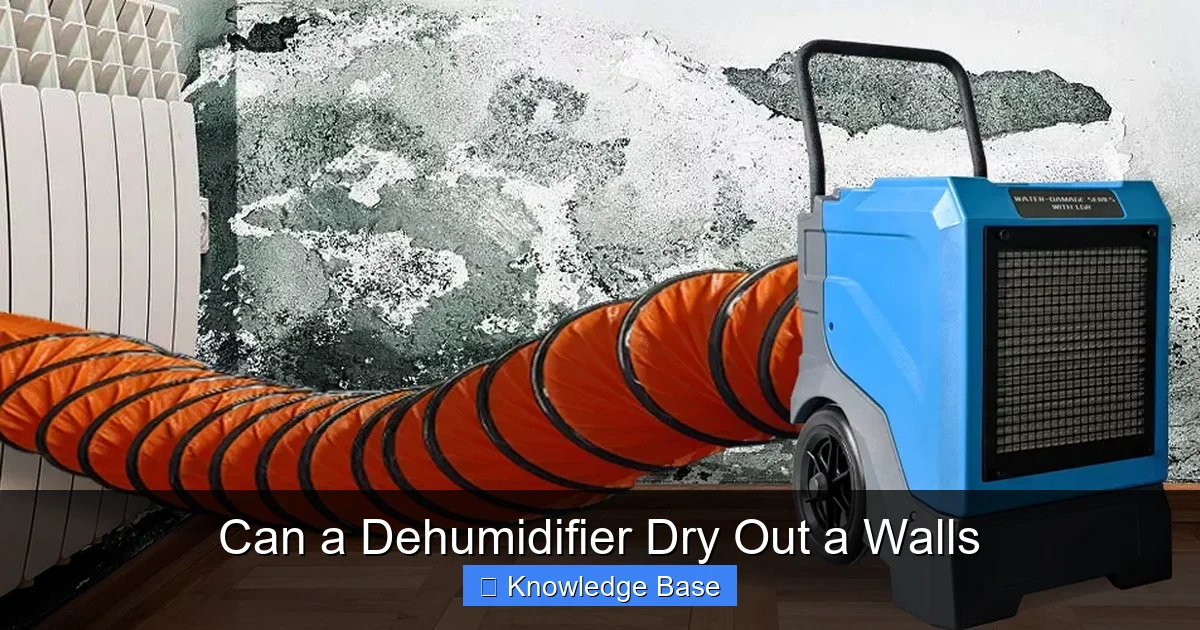
To understand whether a dehumidifier can dry out a wall, it helps to know how these devices actually function. Most residential dehumidifiers use a refrigeration-based system, similar to an air conditioner. Here’s a simple breakdown of the process:
Warm, humid air is drawn into the unit by a fan. As the air passes over cold coils inside the dehumidifier, the moisture in the air condenses into water droplets—just like how dew forms on a cold drink can. This water collects in a tank or drains out through a hose. The now-drier air is then reheated slightly and blown back into the room.
This cycle continuously lowers the relative humidity (RH) in the space. Relative humidity is the amount of moisture in the air compared to what the air can hold at that temperature. When RH is high—say, above 60%—moisture lingers in materials like wood, drywall, and insulation. But when RH drops, those materials begin to release their stored moisture into the air.
This is where the connection to wall drying comes in. Walls absorb moisture from the air when it’s humid and release it when the air is dry. A dehumidifier accelerates this natural process by maintaining a consistently low-humidity environment. Over days or weeks, this can significantly reduce the moisture content in damp walls.
It’s important to note that dehumidifiers are most effective in enclosed spaces with limited airflow. They work best in basements, crawl spaces, and closed-off rooms where humidity can build up. In open or well-ventilated areas, outdoor air may constantly reintroduce moisture, reducing the unit’s effectiveness.
Types of Dehumidifiers and Their Suitability for Wall Drying
Not all dehumidifiers are created equal. The type you choose can impact how well it dries your walls. Here are the main types:
Refrigerant (Compressor) Dehumidifiers: These are the most common and affordable. They work well in warm, humid conditions (above 65°F). However, their efficiency drops in colder environments, making them less ideal for unheated basements in winter.
Desiccant Dehumidifiers: These use a moisture-absorbing material (like silica gel) to pull water from the air. They perform better in cold temperatures and are often used in industrial or restoration settings. They’re quieter but typically more expensive and less energy-efficient.
Whole-House Dehumidifiers: Installed into your HVAC system, these units treat the entire home. They’re great for maintaining consistent humidity levels and can help prevent wall moisture issues before they start.
For most homeowners dealing with damp walls, a high-capacity refrigerant dehumidifier (50–70 pints per day) is a solid choice. If the affected area is cold or poorly heated, consider a desiccant model or a low-temperature refrigerant unit designed for basements.
How Humidity Affects Wall Materials
Different wall materials respond differently to moisture. Drywall, for example, is highly porous and can absorb water quickly. Once saturated, it becomes soft, discolored, and prone to mold. Plaster walls are slightly more resistant but can still suffer from prolonged dampness. Wood framing behind walls can rot if moisture isn’t addressed.
When humidity is high, these materials act like sponges, soaking up moisture from the air. When humidity drops, they release that moisture back out. A dehumidifier helps tip the balance in favor of drying by keeping the air dry enough to pull moisture from the walls.
However, if the wall is already saturated—say, from a flood or major leak—the dehumidifier may not be enough on its own. In such cases, the moisture content is so high that natural evaporation is too slow. You may need to remove wet materials, use industrial fans, or call in water damage restoration professionals.
When a Dehumidifier Can Help Dry Walls
Visual guide about Can a Dehumidifier Dry Out a Walls
Image source: cdn.mos.cms.futurecdn.net
A dehumidifier is a valuable tool in many moisture-related situations, but it’s not always the right solution. Here’s when it can make a real difference:
After Minor Water Incidents
If a pipe bursts or a window leaks during a storm, and the water has soaked into the walls, a dehumidifier can be part of the recovery process. Once standing water is removed and wet items are taken out, running a dehumidifier helps pull residual moisture from the air and wall cavities. This is especially helpful in preventing mold growth, which can start within 24–48 hours of water exposure.
For example, imagine a bathroom wall gets soaked from an overflowing bathtub. After mopping up the water and removing soaked baseboards, placing a dehumidifier in the room for several days can help dry out the drywall and insulation behind the wall. Combined with fans to circulate air, this approach can prevent long-term damage.
In High-Humidity Areas
Basements, crawl spaces, and laundry rooms are naturally prone to high humidity. Even without a leak, condensation can form on cool walls, leading to dampness and mold. A dehumidifier running continuously in these areas can maintain a dry environment, preventing moisture from accumulating in the first place.
In one real-world case, a homeowner in a humid coastal region noticed dark spots forming on their basement walls. After installing a 70-pint dehumidifier and keeping it running daily, the spots stopped spreading and eventually dried out. The key was consistency—keeping the humidity below 50% year-round.
During Home Renovations or After Flooding
After water damage from flooding, a dehumidifier is often used alongside air movers (high-speed fans) in professional restoration. While the fans speed up surface evaporation, the dehumidifier removes the moisture from the air, preventing reabsorption into other materials.
Even during renovations—like replacing insulation or drywall—running a dehumidifier helps ensure the new materials dry properly and don’t trap moisture.
To Prevent Recurring Dampness
If your walls tend to feel cool and damp in certain seasons, especially in winter, it could be due to condensation. Cold exterior walls meet warm indoor air, causing moisture to form on the surface. A dehumidifier reduces the amount of moisture in the air, lowering the risk of condensation.
For instance, a home in Minnesota noticed condensation on interior basement walls every winter. After adding a dehumidifier and improving insulation, the problem disappeared.
Limitations: When a Dehumidifier Isn’t Enough
While dehumidifiers are helpful, they have clear limits. Understanding these can save you time, money, and frustration.
Active Water Intrusion
If water is still entering the wall—from a leaking roof, cracked foundation, or burst pipe—a dehumidifier won’t stop the source of the problem. It can only manage the symptoms. In such cases, you must fix the leak first. Otherwise, the dehumidifier will run constantly, struggling to keep up with the incoming moisture.
For example, a dehumidifier in a basement with a foundation crack letting in groundwater will work overtime but may never fully dry the walls. The real solution is sealing the crack and possibly installing a drainage system.
Severe or Long-Term Water Damage
If walls have been wet for weeks or months, especially if mold is already growing, a dehumidifier alone won’t be sufficient. Mold remediation, removal of damaged materials, and structural drying may be required. In these cases, professional assessment is crucial.
Poor Air Circulation
Dehumidifiers work best when air can move freely. If a room is sealed off or has stagnant air, moisture won’t evaporate efficiently from the walls. Always use fans to circulate air, especially directing them at damp areas.
Incorrect Sizing
Using a dehumidifier that’s too small for the space is a common mistake. A 30-pint unit in a large, damp basement will barely make a dent. Match the unit’s capacity to the room size and moisture level. Most manufacturers provide sizing charts based on square footage and humidity conditions (mild, moderate, or severe).
Best Practices for Using a Dehumidifier to Dry Walls
To get the best results, follow these practical tips:
Choose the Right Location
Place the dehumidifier in the center of the affected room or near the dampest area. Avoid blocking the intake or exhaust vents. Keep it away from walls and furniture to allow proper airflow.
Use a Hygrometer
A hygrometer measures humidity levels. Aim to keep indoor humidity between 30% and 50%. This range is ideal for drying walls and preventing mold. Many modern dehumidifiers have built-in hygrometers, but a standalone one can help you monitor multiple rooms.
Run It Continuously (Initially)
For the first few days or weeks, run the dehumidifier 24/7. Once the walls are dry and humidity stabilizes, you can reduce usage to maintain levels.
Empty the Tank Regularly
Most units have a water tank that fills up. If it overflows, the dehumidifier will stop working. Empty it daily, or use a continuous drain hose if possible.
Combine with Fans and Ventilation
Use box fans or oscillating fans to blow air across damp walls. This speeds up evaporation. If outdoor air is dry, open windows slightly to improve airflow—just don’t do this in humid or rainy weather.
Seal the Room
Close doors and windows to prevent humid outdoor air from entering. This helps the dehumidifier work more efficiently.
Monitor Progress
Check the walls regularly. Look for changes in color, texture, or smell. If dampness persists after several weeks, reassess the situation—there may be a hidden leak or insulation issue.
Preventing Future Wall Moisture Issues
Once your walls are dry, take steps to keep them that way:
Improve Insulation
Cold walls attract condensation. Adding insulation to exterior walls or basement foundations can reduce temperature differences and prevent moisture buildup.
Install Vapor Barriers
In crawl spaces and basements, a plastic vapor barrier on the ground can prevent ground moisture from rising into the walls.
Fix Leaks Promptly
Regularly inspect roofs, gutters, pipes, and foundations for signs of leaks. Address them immediately.
Use Exhaust Fans
In bathrooms and kitchens, run exhaust fans during and after showers or cooking to remove humid air.
Maintain Your Dehumidifier
Clean the filter monthly and check the coils annually. A well-maintained unit works more efficiently and lasts longer.
Conclusion: A Smart Tool, Not a Miracle Cure
So, can a dehumidifier dry out a wall? Yes—when used correctly and in the right circumstances. It’s a powerful ally in the fight against indoor moisture, helping to dry damp walls, prevent mold, and improve air quality. But it’s not a standalone fix for serious water damage or ongoing leaks.
Think of a dehumidifier as part of a moisture management system. It works best when paired with good ventilation, proper insulation, and prompt repairs. By understanding its role and limitations, you can use it effectively to protect your home and maintain healthy, dry walls for years to come.
Whether you’re dealing with a minor damp patch or recovering from a flood, a dehumidifier is a smart investment. Just remember: dry air leads to dry walls. And dry walls mean a healthier, more comfortable home.
Frequently Asked Questions
Can a dehumidifier prevent mold on walls?
Yes, by keeping humidity below 50%, a dehumidifier creates an environment where mold struggles to grow. It’s one of the most effective preventive measures for mold on damp walls.
Will a dehumidifier work if the wall is still leaking?
No. If water is actively entering the wall, the dehumidifier will only manage the symptoms. You must fix the leak first to stop ongoing moisture intrusion.
How do I know if my wall is dry enough?
Check for visual signs like fading damp patches, firm texture, and no musty smell. Use a moisture meter for precise readings—drywall should be below 15% moisture content.
Can I use a dehumidifier in a closed room?
Yes, and it’s often recommended. Closing doors and windows helps the dehumidifier work more efficiently by preventing humid outdoor air from entering.
Is a bigger dehumidifier always better?
Not necessarily. Choose a unit sized for your room and moisture level. An oversized unit may cycle too frequently, while an undersized one won’t keep up.
Can a dehumidifier help with condensation on walls?
Absolutely. By lowering indoor humidity, a dehumidifier reduces the likelihood of condensation forming on cool wall surfaces, especially in winter.