
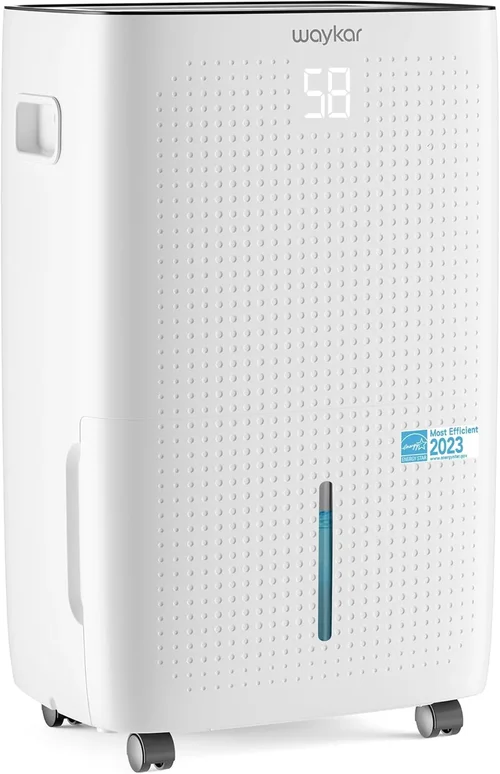
Dealing with excess moisture in your home isn’t just a comfort issue—it’s a health and structural concern. High humidity levels can trigger mold growth, worsen allergies, damage wooden furniture, and even compromise the integrity of your walls and flooring. Whether you live in a damp basement, a humid coastal region, or simply notice condensation on windows during colder months, a reliable dehumidifier can make a world of difference. But with hundreds of models flooding the market—ranging from compact units under $100 to industrial-grade machines costing over $500—choosing the right one can feel overwhelming.
That’s where this comprehensive buyer’s guide comes in. We’ve spent countless hours researching, testing, and analyzing dehumidifiers based on real-world performance, expert reviews (including insights from trusted sources like Wirecutter), and user feedback. Our goal isn’t to push you toward the most expensive model or the flashiest brand—it’s to help you find the dehumidifier that best fits your space, budget, and lifestyle. You’ll learn how to decode technical specs, avoid common pitfalls, understand different types of units, and ultimately make a confident, informed decision. By the end of this guide, you’ll know exactly what to look for—and what to skip—when shopping for your next dehumidifier.
The dehumidifier market has evolved significantly in recent years. Energy-efficient compressors, smart connectivity, auto-defrost features, and quieter operation are now standard in many mid-to-high-tier models. Meanwhile, brands like Frigidaire, hOmeLabs, GE, and Midea dominate the consumer space, each offering unique strengths. Some prioritize raw moisture removal power, while others focus on quiet operation or smart home integration. With so many variables at play—room size, climate, noise tolerance, and ease of maintenance—it’s easy to get lost in the details. This guide cuts through the noise, giving you a clear roadmap to the best dehumidifier for your needs.

What to Look for When Buying Buying Guide
1. Budget & Price Range
Your budget is often the first filter when shopping for a dehumidifier, but it shouldn’t be the only one. Prices typically range from under $100 for small, portable units to over $600 for large-capacity, feature-rich models. While it’s tempting to go for the cheapest option, remember that dehumidifiers are long-term investments. A low-cost unit may save you money upfront but could cost more in energy bills, frequent repairs, or early replacement.
Consider your humidity problem’s severity and the size of the area you need to treat. A $120 dehumidifier might work fine for a 300-square-foot closet or bathroom, but it will struggle in a 1,500-square-foot basement with chronic dampness. Mid-range models ($200–$350) usually offer the best balance of performance, durability, and features for most homeowners. Premium units ($400+) often include advanced controls, larger tanks, better warranties, and superior build quality—ideal for high-humidity environments or those who want minimal maintenance.
2. Performance Specifications
Performance is measured primarily by two metrics: pint capacity and coverage area. Pint capacity refers to how much moisture the unit can remove in 24 hours under standard testing conditions (typically 60% relative humidity at 80°F). Common capacities range from 20 pints (for small spaces) to 70+ pints (for large basements or whole-house use).
Coverage area tells you the maximum square footage the dehumidifier can effectively treat. A 30-pint model might cover 500–800 sq ft, while a 50-pint unit can handle up to 1,500 sq ft. However, these numbers assume average humidity. If your space is extremely damp (e.g., due to flooding or poor ventilation), you may need a higher-capacity unit than the square footage alone suggests.
Also pay attention to the compressor type. Most residential dehumidifiers use refrigerant (compressor-based) systems, which work well in warm environments (above 65°F). Desiccant dehumidifiers, which use moisture-absorbing materials, perform better in colder spaces like garages or crawl spaces but are generally less efficient and more expensive to run.
3. Build Quality & Durability
A dehumidifier is a mechanical device with moving parts—compressors, fans, coils—and it needs to withstand daily use for years. Look for sturdy construction: thick plastic housing, reinforced handles, and well-sealed seams. Cheaper models often use thin, brittle plastics that crack or warp over time, especially in humid environments.
Internal components matter too. Units with all-aluminum coils resist corrosion better than those with copper-aluminum hybrids, which can degrade in high-moisture settings. Check if the water tank is easy to remove and clean—some have molded grips or anti-spill designs. Also, inspect the filter: a washable, reusable filter is more cost-effective than disposable ones.
Durability also ties into brand reputation. Brands like Frigidaire and GE have decades of experience in climate control appliances and tend to use higher-grade components. While newer brands like hOmeLabs or Eva-Dry offer great value, they may not match the longevity of established manufacturers.
4. Features & Functionality
Modern dehumidifiers come packed with features that enhance convenience, efficiency, and control. Here are the most important ones to consider:
- Auto Shutoff & Full Tank Alert: Prevents overflow by turning off the unit when the tank is full and alerting you via light or sound.
- Continuous Drain Option: Allows you to attach a hose for unattended operation—ideal for basements or unattended spaces.
- Humidistat: Lets you set your desired humidity level (e.g., 45–50%), and the unit automatically turns on/off to maintain it.
- Auto Defrost: Essential for cold environments; prevents ice buildup on coils, which can halt operation.
- Timer & Sleep Mode: Schedule operation or reduce noise at night.
- Smart Connectivity: Some models (like certain GE or Frigidaire units) offer Wi-Fi and app control, allowing remote monitoring and scheduling via smartphone.
- Washable Air Filter: Reduces allergens and extends coil life—easy to clean and reuse.
While extra features add convenience, they also increase complexity and potential failure points. If you don’t need smart controls or a timer, a simpler model may be more reliable and easier to maintain.
5. Brand Reputation
Not all dehumidifier brands are created equal. Established names like Frigidaire, GE, and Honeywell have proven track records for reliability, customer service, and parts availability. Frigidaire, in particular, is frequently recommended by Wirecutter and other review outlets for its consistent performance and durable builds.
Newer brands like hOmeLabs and Midea have gained popularity for offering high-capacity units at competitive prices. hOmeLabs, for example, is known for its 50-pint and 70-pint models that rival more expensive brands in performance. However, some users report shorter lifespans or less responsive customer support compared to legacy brands.
When evaluating a brand, check third-party reviews on sites like Consumer Reports, Wirecutter, and Amazon. Look for patterns: Are complaints about leaks, noise, or short lifespans common? Or do users praise ease of use and longevity? Also consider parts and service availability—can you easily find replacement filters or coils if needed?
6. Warranty & Support
A good warranty is a strong indicator of a manufacturer’s confidence in their product. Most dehumidifiers come with a 1-year limited warranty, but premium models may offer 2–5 years. Frigidaire, for instance, provides a 2-year warranty on many of its dehumidifiers, including coverage for both parts and labor.
Pay attention to what the warranty covers. Does it include the compressor—the most expensive component to replace? Is labor covered, or do you have to ship the unit to a service center? Some brands offer extended warranties for purchase, which may be worth it if you live in a high-humidity area where the unit will run frequently.
Customer support matters too. Can you reach a human quickly? Are troubleshooting guides available online? Brands with strong U.S.-based support (like GE and Frigidaire) tend to resolve issues faster than those relying on overseas call centers.
7. Size & Portality
Dehumidifiers vary widely in size and weight. Small 20–30 pint units may weigh 30–40 pounds and fit under a sink or in a closet. Larger 50–70 pint models can weigh 50–70 pounds and require two people to move. Consider where you’ll place the unit and whether you’ll need to move it between rooms.
Look for features that improve portability: recessed handles, smooth-rolling casters, and compact footprints. Some models have top-mounted controls and tanks that are easier to access without bending. If you plan to use the dehumidifier in multiple locations (e.g., basement in winter, bedroom in summer), a lighter, more maneuverable unit is worth the investment.
Also consider clearance space. Most dehumidifiers need at least 6–12 inches of clearance on all sides for proper airflow. Placing a unit too close to walls or furniture can reduce efficiency and cause overheating.
8. User Reviews & Ratings
While expert reviews (like those from Wirecutter) provide valuable insights, real-world user experiences often reveal nuances that lab tests miss. Check Amazon, Home Depot, and Best Buy for verified purchase reviews. Look for recurring themes: Do multiple users mention excessive noise, frequent breakdowns, or poor customer service?
Be cautious of overly positive or negative reviews—they may be fake or based on unrealistic expectations. Instead, focus on detailed reviews that describe specific use cases (e.g., “Used in a 1,200 sq ft basement in Florida—reduced humidity from 70% to 50% in two days”). Also note the review date; older reviews may not reflect current model revisions.
User photos can be especially helpful. They show how the unit looks in real homes, how easy the tank is to remove, and whether the controls are intuitive. If a model has hundreds of reviews with an average rating above 4.0, it’s likely a safe bet.
Different Types of Buying Guide

Common Buying Mistakes to Avoid
❌ Mistake: Buying Based Solely on Pint Capacity
Why it’s bad: A higher pint rating doesn’t always mean better performance. Some manufacturers inflate numbers using non-standard testing conditions. A 70-pint unit might only remove 50 pints in real-world use, especially in cooler or less humid environments.
What to do instead: Match capacity to your space and humidity level. Use online calculators or consult reviews that test performance in similar conditions. When in doubt, choose a model with a slightly higher capacity than needed—but don’t overspend on a 70-pint unit for a 500 sq ft room.
❌ Mistake: Ignoring Noise Levels
Why it’s bad: Dehumidifiers can be noisy, especially compressor-based models. Units running at 50–60 decibels (similar to a conversation or dishwasher) may disrupt sleep or concentration if placed in bedrooms or living areas.
What to do instead: Check decibel ratings in product specs. Look for models labeled “quiet” or “low-noise.” Read user reviews for real-world noise feedback. If noise is a concern, consider placing the unit in a basement or utility room with a continuous drain hose.
❌ Mistake: Overlooking Drainage Options
Why it’s bad: Emptying a full water tank every day is tedious and easy to forget. If the tank overflows, it can cause water damage or trigger the unit to shut off unexpectedly.
What to do instead: Choose a model with a continuous drain port and include a hose (usually ⅝” or ¾” diameter). This allows unattended operation—perfect for basements or vacation homes. Ensure the drain hose can reach a floor drain, sink, or sump pump.
❌ Mistake: Skipping the Humidistat
Why it’s bad: Without a humidistat, you can’t set a target humidity level. The unit may run continuously, wasting energy, or shut off too early, leaving the space too damp.
What to do instead: Always choose a model with a built-in humidistat. Ideal indoor humidity is 30–50%. A good humidistat maintains this range automatically, improving comfort and efficiency.
❌ Mistake: Buying the Cheapest Model Available
Why it’s bad: Budget dehumidifiers often lack durability, efficient compressors, and essential features like auto shutoff or washable filters. They may break down within a year or two, costing more in replacements than a mid-range model.
What to do instead: Invest in a reliable mid-tier model from a reputable brand. Spending $250–$350 on a well-reviewed unit like the Frigidaire FFAD7033R1 or hOmeLabs 50-Pint can save money and frustration long-term.
❌ Mistake: Not Considering Energy Efficiency
Why it’s bad: Dehumidifiers run for hours daily, and inefficient models can significantly increase your electricity bill. Older or poorly designed units may use 500–700 watts or more.
What to do instead: Look for ENERGY STAR certification. These models use advanced compressors and sensors to reduce energy use by up to 30%. Check the annual energy consumption (in kWh) listed on the yellow EnergyGuide label.
❌ Mistake: Forgetting About Maintenance
Why it’s bad: A dirty filter or clogged coils reduce efficiency and can cause the unit to overheat or fail prematurely. Many users neglect regular cleaning, leading to poor performance.
What to do instead: Choose a model with a washable, easy-to-access filter. Clean it monthly during heavy use. Also, wipe down the water tank and coils periodically to prevent mold and bacteria buildup.
Budget Guidelines: How Much Should You Spend?
Your ideal price range depends on your needs, but here’s a practical breakdown to guide your decision:
Entry-Level ($80–$150): These compact units are best for small spaces like closets, bathrooms, or RVs. They typically remove 20–30 pints per day and lack advanced features. Expect basic controls, smaller tanks, and higher noise levels. Ideal for occasional use or mild humidity issues. Brands like Eva-Dry and Ivation offer decent options in this range, but longevity may be limited.
Mid-Range ($150–$350): This is the sweet spot for most homeowners. Models in this tier offer 30–50 pint capacity, reliable performance, and key features like humidistats, auto shutoff, and continuous drain. They’re suitable for bedrooms, living rooms, and medium-sized basements. The Frigidaire FFAD5033R1 and hOmeLabs 50-Pint are standout choices, praised by Wirecutter and users alike for their balance of power, efficiency, and durability.
Premium ($350–$500): These high-capacity units (50–70 pints) are built for large basements, garages, or whole-house use. They often include smart features, larger tanks, quieter operation, and robust warranties. The GE APER50LZ and Frigidaire FFAD7033R1 fall into this category, offering top-tier performance and reliability. Ideal for high-humidity climates or those who want minimal maintenance.
Luxury ($500+): At this level, you’re paying for cutting-edge technology, superior build quality, and advanced automation. Smart dehumidifiers with Wi-Fi, app control, voice assistant compatibility, and energy monitoring are common. These are best for tech enthusiasts, large homes, or commercial applications. While not necessary for most, they offer unparalleled convenience and precision.
Expert Tips for Getting the Best Deal
- Buy During Off-Peak Seasons: Dehumidifiers are in highest demand during summer and rainy seasons. Shop in late fall or winter (October–February) for discounts and clearance sales. Retailers often reduce prices to clear inventory before the next humid season.
- Check Multiple Retailers: Compare prices on Amazon, Home Depot, Lowe’s, Best Buy, and Walmart. Online retailers often offer exclusive deals, free shipping, or bundle discounts. Sign up for price alerts using tools like Honey or CamelCamelCamel.
- Look for Rebates and Incentives: Some utility companies offer rebates for ENERGY STAR-certified dehumidifiers. Check your local provider’s website for available programs—these can save $25–$50.
- Read the Fine Print on Warranties: Don’t assume all warranties are equal. Some cover only parts, while others include labor. Register your product promptly to activate coverage.
- Test Before Committing: If buying in-store, inspect the unit for build quality, ease of tank removal, and control layout. Online, check return policies—most major retailers offer 30-day returns.
- Consider Refurbished or Open-Box Models: Certified refurbished units from reputable sellers (like Amazon Renewed or manufacturer outlets) can save 20–40% and often come with full warranties.
- Bundle with Other Purchases: Some retailers offer discounts when you buy a dehumidifier with an air purifier, humidifier, or HVAC service. Ask about package deals.
- Monitor for Flash Sales: Black Friday, Prime Day, and Memorial Day often feature deep discounts on home appliances. Set reminders and be ready to act quickly.

Frequently Asked Questions
Q: How do I know what size dehumidifier I need?
A: Start by measuring your space in square feet. Then assess the humidity level: mildly damp spaces (like a closet) need 20–30 pints; moderately damp rooms (bedrooms) need 30–50 pints; very damp or wet basements may require 50–70 pints. Use online sizing guides or consult manufacturer recommendations. When in doubt, go one size up.
Q: Can a dehumidifier help with mold?
A: Yes, but it’s not a cure-all. A dehumidifier reduces moisture, making it harder for mold to grow. However, existing mold should be cleaned professionally, and the source of moisture (like leaks or poor ventilation) must be addressed. Use the dehumidifier as part of a comprehensive moisture control plan.
Q: How often should I empty the water tank?
A: It depends on humidity levels and tank size. Most 50-pint units have 1–2 gallon tanks, which may fill daily in high-humidity areas. Use the continuous drain option if possible, or set reminders to check the tank. Auto shutoff prevents overflow if you forget.
Q: Are dehumidifiers noisy?
A: Most produce 45–60 decibels—similar to a refrigerator or quiet conversation. Compressor models are louder than desiccant ones. Look for “quiet” or “low-noise” labels, and place the unit away from bedrooms if noise is a concern.
Q: Do dehumidifiers use a lot of electricity?
A: It varies. ENERGY STAR models use 150–300 watts, costing about $10–$25 per month if run 8 hours daily. Check the EnergyGuide label for estimated annual cost. Efficient models save money over time.
Q: Can I run a dehumidifier all the time?
A: Yes, especially if you have a humidistat. The unit will cycle on and off to maintain your set humidity level, saving energy. Avoid running it in unoccupied spaces unless using a drain hose.
Q: What’s the difference between refrigerant and desiccant dehumidifiers?
A: Refrigerant models use cold coils to condense moisture and work best in warm, humid air. Desiccant models use moisture-absorbing materials and perform better in cold, dry environments like garages. Refrigerant types are more common and energy-efficient for home use.
Q: How do I maintain my dehumidifier?
A: Clean the air filter monthly, wipe the water tank weekly, and inspect coils for dust. Use a soft brush or vacuum to clean fins. Store the unit in a dry place during off-seasons. Replace filters if they become damaged or clogged.
Q: Can I use a dehumidifier in winter?
A: Only if the space is above 65°F. Most refrigerant models have auto-defrost, but they become inefficient in cold temperatures. Desiccant models are better for winter use in unheated spaces.
Q: Should I buy a smart dehumidifier?
A: Only if you value remote control and automation. Smart features are convenient but add cost and complexity. For most users, a standard model with a humidistat and timer is sufficient.
Our Final Recommendations
Best for Budget-Conscious Buyers: hOmeLabs 30-Pint Dehumidifier – At under $150, this compact unit offers solid performance for small spaces, a washable filter, and quiet operation. Ideal for closets, bathrooms, or RVs.
Best Overall Value: Frigidaire FFAD5033R1 50-Pint Dehumidifier – Consistently top-rated by Wirecutter and users, this model delivers powerful moisture removal, a large tank, continuous drain, and a 2-year warranty. Perfect for basements and large rooms.
Best Premium Option: GE APER70LZ 70-Pint Smart Dehumidifier – With Wi-Fi connectivity, app control, and exceptional capacity, this unit is ideal for large homes or high-humidity climates. Offers precise humidity control and energy monitoring.
Best for Beginners: Eva-Dry E-333 Mini Dehumidifier – No electricity needed, silent operation, and perfect for small, enclosed spaces. Great for first-time users or those with minimal humidity issues.
Best for Advanced Users: Frigidaire FFAD7033R1 70-Pint Dehumidifier – Combines industrial-grade performance with user-friendly features, including auto-defrost, washable filter, and continuous drain. Built to last and handle the toughest jobs.
Conclusion: Making the Right Choice
Choosing the best dehumidifier isn’t about finding the most powerful or expensive model—it’s about matching the right unit to your specific needs. Whether you’re battling basement dampness, protecting your home from mold, or simply improving indoor air quality, the right dehumidifier can make a dramatic difference in comfort and health.
Remember to prioritize your space size, humidity level, and must-have features. Don’t overlook energy efficiency, noise, and ease of maintenance. Use this guide to compare options, avoid common pitfalls, and invest wisely. With the insights from trusted sources like Wirecutter and real-world user experiences, you’re now equipped to make a confident, informed decision.
Take action today: measure your space, assess your humidity, and start shopping with clarity. Your home—and your peace of mind—will thank you.