
If you’ve ever walked into a basement that smells like wet socks, noticed condensation fogging up your windows, or spotted mold creeping along the corners of your bathroom walls, you already know how disruptive excess moisture can be in a home. Humidity isn’t just uncomfortable—it’s a silent threat to your health, your belongings, and even the structural integrity of your house. From triggering asthma and allergies to warping wood floors and ruining electronics, high indoor humidity levels create a cascade of problems that are often underestimated until they become serious. That’s where a reliable dehumidifier comes in. And when it comes to finding one that balances performance, durability, and value, Home Depot stands out as a trusted destination for homeowners across the U.S.
This comprehensive buying guide is designed to cut through the noise and help you make an informed decision. Whether you’re dealing with a chronically damp crawl space, a musty laundry room, or simply want to improve indoor air quality during humid summer months, we’ll walk you through everything you need to know. You’ll learn how to evaluate key specs like pint capacity and energy efficiency, understand the differences between compressor-based and desiccant models, avoid common purchasing pitfalls, and discover which brands and models offer the best long-term value. We’ve analyzed dozens of dehumidifiers available at Home Depot—from budget-friendly units under $150 to high-capacity commercial-grade machines—to bring you expert insights grounded in real-world performance, customer feedback, and technical know-how.
The dehumidifier market has evolved significantly in recent years. Advances in compressor technology, smart home integration, and eco-friendly refrigerants have made modern units more efficient and user-friendly than ever before. Yet, with so many options—ranging from compact 30-pint models ideal for small bathrooms to heavy-duty 70-pint beasts built for large basements—it’s easy to feel overwhelmed. This guide demystifies the process by focusing on what truly matters: your specific needs, your space, your budget, and your lifestyle. By the end, you’ll not only know which dehumidifier to buy but also why it’s the right choice for your home.
What to Look for When Buying a Dehumidifier
1. Pint Capacity & Room Size Match
The single most important specification when choosing a dehumidifier is its pint capacity—the amount of moisture it can remove from the air in 24 hours under standard conditions (typically 60% relative humidity at 80°F). This number directly correlates with the size of the space it can effectively serve. A unit rated for 30 pints is generally suitable for areas up to 500–750 square feet with moderate dampness, while a 50-pint model handles spaces up to 1,500 square feet. For severely damp or flooded areas (like basements after heavy rain), look for 70-pint or higher capacities.
However, don’t just match pintage to square footage blindly. Consider the humidity level: a small bathroom with constant steam from showers may need a higher-capacity unit than a larger but dry living room. Home Depot’s product descriptions often include “recommended room size” guidance, but cross-check this with your actual conditions. Over-sizing leads to short cycling (frequent on/off), reduced efficiency, and unnecessary cost, while under-sizing results in poor performance and constant running.
2. Energy Efficiency & Operating Costs
Dehumidifiers run for hours each day, so energy consumption directly impacts your utility bill. Look for the Energy Factor (EF), measured in liters of water removed per kilowatt-hour (L/kWh). Higher EF values mean better efficiency. The U.S. Department of Energy sets minimum standards, but top-tier models exceed them by 20–40%. For example, a unit with an EF of 1.8 L/kWh is significantly more efficient than one at 1.2 L/kWh.
Home Depot clearly labels ENERGY STAR® certified models, which use 15–20% less energy than standard units. These not only save money over time but also qualify for potential rebates in some states. Additionally, check the wattage—most residential dehumidifiers range from 300W to 750W. Multiply daily runtime by wattage and your local electricity rate to estimate monthly costs. A 500W unit running 10 hours/day at $0.12/kWh costs about $18/month.
3. Drainage Options & Maintenance
Emptying a full water bucket every day is tedious and easy to forget—leading to shutdowns and reduced effectiveness. Look for models with continuous drainage options. Most dehumidifiers at Home Depot include a built-in hose connection (usually 5/8″ or 3/4″ threaded) that lets you attach a garden hose and route water directly to a floor drain, sump pump, or outside. This is essential for basements, crawl spaces, or unattended areas.
Also consider auto-restart after power outages, auto-defrost for cold environments (below 65°F), and washable air filters. Filters should be cleaned monthly to maintain airflow and efficiency. Some premium models feature filter-cleaning reminders or indicator lights. Avoid units with proprietary filters that are expensive or hard to replace.
4. Noise Level & Placement Flexibility
Dehumidifiers use compressors and fans, which generate noise—typically between 45 dB and 60 dB. For perspective, 45 dB is similar to a quiet library, while 60 dB resembles normal conversation. If placing the unit in a bedroom, home office, or living area, aim for models under 50 dB. Compressor-based units tend to be louder than desiccant types, though newer inverter-driven compressors are quieter.
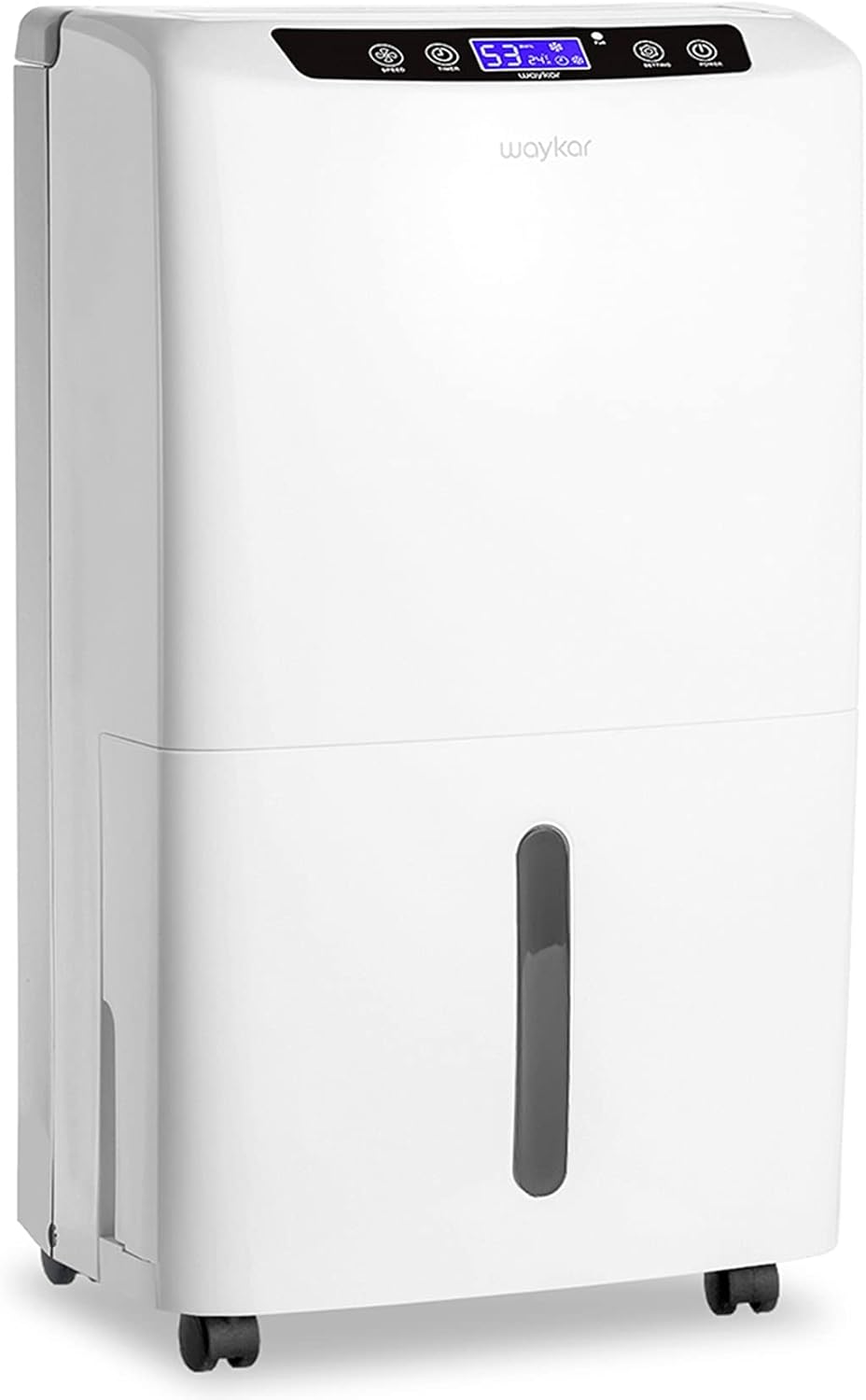
Check the decibel rating in the product specs. Home Depot often lists this under “Additional Features” or “Specifications.” Also consider physical dimensions and weight. A compact, lightweight model (under 40 lbs) is easier to move between rooms or store seasonally. Wheels and handles are practical additions, especially for larger units.
5. Smart Features & Controls
Modern dehumidifiers offer increasingly sophisticated controls. Basic models have analog humidistats with simple on/off switches, while advanced units feature digital displays, programmable timers, humidity setpoints (e.g., 45%, 50%), and Wi-Fi connectivity. Smart models can be controlled via smartphone apps, integrated with Alexa or Google Assistant, and even send alerts when the bucket is full.
While not essential, these features enhance convenience and precision. For example, setting a target humidity level prevents over-drying, which can cause static electricity or dry skin. Timer functions allow you to run the unit only during peak humidity hours (e.g., overnight). At Home Depot, brands like Frigidaire, GE, and hOmeLabs offer smart-enabled options in the mid-to-high price range.
6. Build Quality & Durability
A dehumidifier is a long-term investment. Look for sturdy construction: metal coils (rather than aluminum), reinforced casings, and sealed electrical components. Cheaper models often use thin plastic that cracks or warps over time. Check user reviews for mentions of longevity—units lasting 5+ years are ideal.
Coil type matters too. Copper coils resist corrosion better than aluminum, especially in high-humidity environments. Some premium models use epoxy-coated or hydrophilic coils for added protection. Also, inspect the warranty: a 2-year limited warranty is standard, but some brands (like AprilAire) offer 5-year coverage on compressors.
7. Brand Reputation & Home Depot Availability
Home Depot carries a curated selection of reputable brands, including Frigidaire, GE Appliances, hOmeLabs, Keystone, and AprilAire. These brands consistently receive positive reviews for reliability and customer support. Avoid obscure or no-name brands, even if they’re cheaper—they often lack parts availability and service networks.
Frigidaire, for instance, is known for quiet operation and strong performance in basements. GE offers excellent smart features and ENERGY STAR ratings. hOmeLabs specializes in compact, stylish units ideal for apartments. Keystone provides budget-friendly options without sacrificing core functionality. Home Depot’s in-store staff can also assist with questions, and their online platform includes verified buyer reviews and Q&A sections.
8. Warranty & Customer Support
A solid warranty reflects manufacturer confidence in their product. Most dehumidifiers come with a 1–2 year limited warranty covering parts and labor. However, the compressor—the heart of the unit—is often covered separately. Look for at least a 5-year compressor warranty if available.
Home Depot itself offers extended protection plans (typically 2–5 years) for an additional fee. These can be worthwhile if you’re buying a mid-range or premium unit. Also, check the brand’s customer service reputation. Can you easily reach support? Are replacement parts (like filters or hoses) readily available? Brands with strong U.S.-based support (like Frigidaire and GE) tend to resolve issues faster.
Different Types of Dehumidifiers

Common Buying Mistakes to Avoid
❌ Mistake: Buying Based Solely on Price
Why it’s bad: The cheapest dehumidifier often costs more in the long run due to higher energy bills, frequent repairs, or premature failure. A $99 unit might save you upfront but could consume 50% more electricity and last half as long as a $200 model.
What to do instead: Calculate total cost of ownership—including energy use, maintenance, and expected lifespan. Aim for the best value, not the lowest sticker price.
❌ Mistake: Ignoring Continuous Drainage Needs
Why it’s bad: If you can’t empty the bucket daily (e.g., in a basement you rarely visit), the unit will shut off when full, leaving your space damp and vulnerable to mold.
What to do instead: Choose a model with a built-in hose connection and ensure you can route a drain line to a suitable outlet. Even if you don’t use it immediately, having the option is wise.
❌ Mistake: Overlooking Noise in Living Spaces
Why it’s bad: A loud dehumidifier can disrupt sleep, concentration, or relaxation—especially if placed near bedrooms or home offices.
What to do instead: Check the decibel rating and read user reviews about noise. Desiccant or inverter compressor models are quieter choices for sensitive areas.
❌ Mistake: Mismatching Capacity to Humidity Level
Why it’s bad: A 30-pint unit in a flooded basement will run nonstop and still fail to control moisture, while a 70-pint unit in a mildly damp bathroom will short-cycle and waste energy.
What to do instead: Assess both room size and moisture severity. Use a hygrometer to measure current humidity levels. When in doubt, opt for a slightly larger capacity—but not excessively so.
❌ Mistake: Skipping the Warranty Check
Why it’s bad: Dehumidifiers have complex components (compressors, sensors, pumps) that can fail. Without adequate coverage, repair costs can exceed the unit’s value.
What to do instead: Prioritize brands with at least a 2-year warranty and consider Home Depot’s extended protection plan for added peace of mind.
❌ Mistake: Not Reading Real User Reviews
Why it’s bad: Marketing specs don’t always reflect real-world performance. A unit may claim “whisper-quiet” operation but sound like a jet engine in practice.
What to do instead: Read verified buyer reviews on Home Depot’s website. Look for consistent themes—positive or negative—across multiple users.
❌ Mistake: Assuming All ENERGY STAR Models Are Equal
Why it’s bad: ENERGY STAR certification only means the unit meets minimum efficiency standards. Some models far exceed them.
What to do instead: Compare Energy Factor (EF) ratings directly. Choose the highest EF within your budget for maximum savings.
Budget Guidelines: How Much Should You Spend?
Entry-Level ($80–$150): These are typically mini or 30-pint thermo-electric or basic compressor units. Ideal for small bathrooms, closets, or RVs. Expect limited features, manual drainage, and shorter lifespans (2–3 years). Best for occasional use or very mild dampness. Examples: hOmeLabs Mini Dehumidifier, Eva-Dry E-333.
Mid-Range ($150–$300): This is the sweet spot for most homeowners. You’ll find 30–50 pint compressor models with digital controls, auto-defrost, continuous drainage, and decent energy efficiency. Brands like Frigidaire, GE, and Keystone dominate this tier. Units last 4–6 years with proper maintenance. Perfect for basements, laundry rooms, and medium-sized living areas.
Premium ($300–$500): High-capacity (50–70 pint) models with advanced features: smart controls, Wi-Fi, precise humidistats, quiet operation, and robust build quality. Ideal for large basements, whole-floor coverage, or humid climates. Expect ENERGY STAR ratings, 5-year compressor warranties, and superior moisture removal. Examples: Frigidaire FFAD7033R1, GE APER50LZ.
Luxury ($500+): Whole-house ducted systems or commercial-grade portable units. Designed for entire homes, crawl spaces, or professional use. Integrated with HVAC, ultra-quiet, and built to run 24/7. Brands like AprilAire and Santa Fe offer these. Only necessary for large properties, severe moisture issues, or allergy-sensitive households.
Expert Tips for Getting the Best Deal
- Shop During Off-Season: Dehumidifier demand peaks in summer. Buy in late fall or winter (October–February) for discounts of 15–30%. Home Depot often clears inventory before spring.
- Use Home Depot’s Price Match: If you find the same model cheaper at a competitor (like Lowe’s or Amazon), Home Depot will match the price—even online.
- Check for Rebates: Some utility companies offer rebates for ENERGY STAR dehumidifiers. Home Depot’s website sometimes lists current promotions or links to rebate programs.
- Buy In-Store for Immediate Availability: While online shopping is convenient, visiting a Home Depot location lets you see the unit in person, ask staff questions, and take it home the same day—no shipping delays.
- Inspect Return Policies: Home Depot allows returns within 90 days for most items. Test your dehumidifier within the first week to ensure it works properly and meets your expectations.
- Bundle with Other Purchases: If you’re buying flooring, paint, or insulation, ask about bundle deals. Home Depot occasionally offers discounts on related home improvement products.
- Consider Refurbished or Open-Box: Home Depot sells certified refurbished appliances at significant savings. These come with warranties and are thoroughly tested.
- Read the Fine Print on Warranties: Understand what’s covered (and what’s not). Labor costs, for example, may not be included after the first year.
Frequently Asked Questions
Q: How do I know if I need a dehumidifier?
A: Signs include persistent musty odors, condensation on windows, peeling paint or wallpaper, warped wood, or visible mold. Use a hygrometer to measure indoor humidity—ideal levels are between 30% and 50%. If it’s consistently above 60%, a dehumidifier is recommended.
Q: Can I use a dehumidifier in winter?
A: Yes, but only if the room stays above 60°F. Compressor-based units lose efficiency in cold temperatures and may ice up. For garages or unheated spaces, choose a desiccant dehumidifier, which works down to 40°F.
Q: How often should I clean the filter?
A: Clean the air filter every 2–4 weeks during heavy use. A clogged filter reduces airflow, forcing the unit to work harder and increasing energy consumption.
Q: Will a dehumidifier lower my heating bill?
A: Indirectly, yes. Dry air feels warmer than humid air at the same temperature, so you may be able to lower your thermostat slightly in winter without sacrificing comfort.
Q: Can I run a dehumidifier 24/7?
A: Yes, especially if you have continuous drainage. Most modern units are designed for constant operation. Just ensure proper ventilation and regular maintenance.
Q: What’s the difference between pints per day and actual performance?
A: Pint ratings are measured under standardized lab conditions (80°F, 60% RH). Real-world performance varies based on temperature and humidity. A unit may remove fewer pints in a cool basement than in a warm laundry room.
Q: Are smart dehumidifiers worth the extra cost?
A: If you value convenience and precise control, yes. Features like remote monitoring, scheduling, and alerts can prevent issues before they arise. However, for basic needs, a manual model suffices.
Q: How long do dehumidifiers typically last?
A: With proper care, most last 5–7 years. Compressor failure is the most common end-of-life issue. Regular cleaning and avoiding extreme temperatures extend lifespan.
Q: Can I move my dehumidifier between rooms?
A: Absolutely. Portable units with wheels and handles are designed for this. Just allow the unit to sit upright for a few hours after moving to let refrigerant settle.
Q: Does Home Depot offer installation for whole-house dehumidifiers?
A: Yes, through their professional installation services. This is recommended for ducted systems, which require integration with your HVAC.
Our Final Recommendations
Best for Budget-Conscious Buyers: hOmeLabs 30 Pint Dehumidifier – At under $150, it offers solid performance, quiet operation, and a compact design perfect for small spaces. Includes continuous drainage and auto-restart.
Best Overall Value: Frigidaire 50 Pint Dehumidifier (FFAD5033R1) – Reliable, energy-efficient, and packed with features like digital controls, washable filter, and a 2-year warranty. Ideal for basements and medium-sized rooms.
Best Premium Option: GE 70 Pint Smart Dehumidifier (APER70LZ) – Wi-Fi enabled, ultra-quiet, and highly efficient. Perfect for large homes or severe moisture problems. Includes app control and Alexa compatibility.
Best for Beginners: Keystone 50 Pint Dehumidifier – Simple controls, affordable price (~$180), and easy setup. Great for first-time buyers who want reliability without complexity.
Best for Advanced Users: AprilAire E130 Pro Dehumidifier – Whole-home capability, professional-grade build, and exceptional durability. Best for those with serious moisture challenges or allergy concerns.
Conclusion: Making the Right Choice
Choosing the right dehumidifier isn’t just about picking the biggest or most expensive model—it’s about matching the right tool to your specific environment, needs, and budget. By focusing on pint capacity, energy efficiency, drainage options, and build quality, you can avoid common pitfalls and invest in a unit that delivers lasting comfort and protection. Home Depot’s wide selection, knowledgeable staff, and flexible return policy make it an excellent place to shop, whether you’re buying your first dehumidifier or upgrading to a smarter, more powerful model.
Remember, the goal isn’t just to remove moisture—it’s to create a healthier, more comfortable living space. Take the time to assess your home’s unique conditions, read real user reviews, and prioritize features that matter most to you. With the insights from this guide, you’re now equipped to make a confident, informed decision. Don’t wait until mold appears or your allergies flare—act now to reclaim control of your indoor air quality. Your home—and your health—will thank you.