
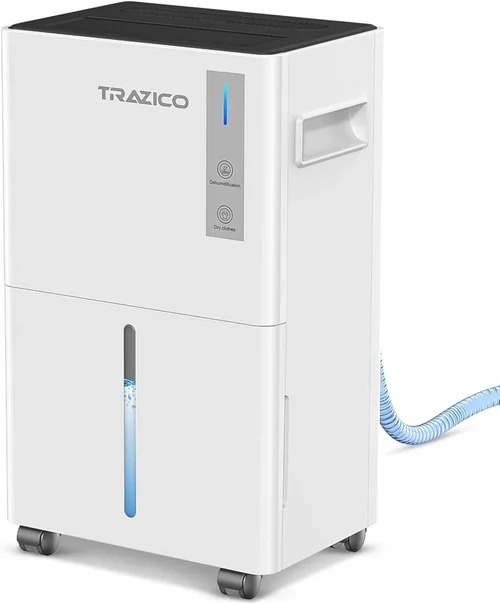
Dealing with excess moisture in your home isn’t just about comfort—it’s about health, safety, and protecting your property. Whether you’re battling musty odors in a basement, preventing mold growth in a humid climate, or simply trying to breathe easier during allergy season, a reliable dehumidifier can make a world of difference. For spaces around 1,500 square feet—a common size for medium to large homes, finished basements, or open-concept living areas—choosing the right unit requires more than just picking the first model you see online. The market is flooded with options, each claiming to be “the best,” but not all are created equal. That’s where this guide comes in.
In this comprehensive buying guide, we’ll walk you through everything you need to know to select the ideal 1,500 sq ft dehumidifier for your specific needs. From understanding performance specs like pint removal capacity and energy efficiency to evaluating build quality, smart features, and long-term reliability, we’ve done the research so you don’t have to. You’ll learn how to avoid common pitfalls, compare different types of dehumidifiers, and determine how much you should realistically spend based on your budget and usage goals. By the end, you’ll be equipped with expert-level knowledge to make a confident, informed decision—whether you’re a first-time buyer or upgrading from an older unit.
The dehumidifier market has evolved significantly in recent years, with advancements in compressor technology, smart connectivity, and eco-friendly refrigerants. Today’s models are quieter, more efficient, and packed with features that were once reserved for commercial-grade units. However, this abundance of choice can also lead to confusion. Some brands overstate their coverage area, while others skimp on durability to hit a lower price point. Our goal is to cut through the noise and deliver actionable insights tailored specifically to 1,500 sq ft spaces—ensuring you get optimal moisture control without overspending or underperforming. Let’s dive into the key factors that truly matter when shopping for your next dehumidifier.

What to Look for When Buying Buying Guide
1. Pint Removal Capacity
The most critical specification for any dehumidifier is its pint removal capacity—the amount of moisture it can extract from the air in 24 hours under standard conditions (typically 60% relative humidity at 80°F). For a 1,500 sq ft space, you’ll generally want a unit rated between 30 and 50 pints per day (PPD). However, this isn’t a one-size-fits-all number. If your area is extremely damp—like a basement with frequent water intrusion or a home in a tropical climate—you may need a 50-pint or even 70-pint model. Conversely, if your space is only moderately humid (e.g., a well-ventilated main floor), a 30-pint unit might suffice.
Always check the AHAM (Association of Home Appliance Manufacturers) rating, which provides standardized testing results. Avoid relying solely on manufacturer claims, as some brands inflate numbers under non-standard conditions. A good rule of thumb: match the PPD rating to your room’s square footage and humidity level. For 1,500 sq ft with average humidity, a 40-pint dehumidifier offers a balanced mix of power and efficiency.
2. Energy Efficiency & Operating Costs
Dehumidifiers run continuously in many homes, especially during humid months, so energy consumption directly impacts your utility bill. Look for units with the ENERGY STAR® certification, which indicates they meet strict efficiency guidelines set by the U.S. Environmental Protection Agency. ENERGY STAR models use up to 15% less energy than standard units, translating to significant savings over time.
Check the unit’s energy factor (liters of water removed per kilowatt-hour of electricity used). Higher values mean better efficiency. For example, a model with an energy factor of 1.8 L/kWh is more efficient than one rated at 1.2 L/kWh. Also consider the wattage—most residential dehumidifiers range from 300 to 700 watts. While higher-wattage models may remove moisture faster, they cost more to operate. If you plan to run the unit daily, prioritize efficiency to keep long-term costs manageable.
3. Coverage Area & Placement Flexibility
Not all dehumidifiers labeled for “up to 1,500 sq ft” perform equally across that entire range. Factors like ceiling height, insulation quality, air circulation, and outdoor humidity levels affect real-world performance. A unit that works perfectly in a dry climate may struggle in coastal Florida or the Pacific Northwest.
Consider placement options: can the dehumidifier be moved easily? Does it have built-in handles or wheels? Is it compact enough to fit in tight spaces like under stairs or in closets? Some models are designed for whole-house integration via ducting, while others are portable and ideal for spot treatment. For 1,500 sq ft, a freestanding unit with caster wheels and a slim profile offers the most flexibility. Also, ensure the hose drain option is available if you don’t want to manually empty the tank.
4. Tank Size & Drainage Options
Dehumidifiers collect water in an internal bucket, which must be emptied periodically—unless you opt for continuous drainage. For a 1,500 sq ft space running daily, a large tank (2+ gallons) reduces the frequency of emptying. However, larger tanks add bulk. Most mid-range models feature 1.5- to 2.5-gallon buckets.
More importantly, look for multiple drainage options. A built-in pump (auto-lift or condensate pump) allows you to drain water vertically—ideal for basements where floor drains aren’t accessible. Gravity drainage via a hose is common but requires the unit to be positioned above the drain point. Some premium models include both pump and hose outlets. If you hate manual emptying, invest in a unit with a reliable pump system. It’s a small feature that makes a huge difference in convenience.
5. Noise Level & Operational Comfort
Dehumidifiers use compressors and fans, which generate noise—typically between 45 and 65 decibels (dB). For context, 50 dB is similar to a quiet conversation, while 65 dB resembles normal office chatter. If you’re placing the unit in a bedroom, living room, or home office, opt for a model under 55 dB.
Check manufacturer specs for “low-noise” or “quiet mode” features. Some brands use insulated compressor housings or variable-speed fans to reduce sound. Real-world user reviews often provide better insight than lab-tested dB ratings, so read customer feedback about nighttime operation. A noisy dehumidifier can disrupt sleep or concentration, turning a helpful appliance into a nuisance.
6. Smart Features & Automation
Modern dehumidifiers increasingly include Wi-Fi connectivity, app control, and integration with smart home systems like Amazon Alexa or Google Assistant. These features allow you to monitor humidity levels remotely, set schedules, receive alerts when the tank is full, or adjust settings from your phone.
While not essential, smart capabilities enhance convenience—especially for busy households or vacation homes. Look for models with built-in hygrometers that auto-adjust based on ambient humidity, preventing over-drying. Some units also offer filter change reminders, energy usage tracking, and compatibility with IFTTT (If This Then That) for custom automation. Just remember: smart features often come at a premium, so weigh the added cost against your actual needs.
7. Build Quality & Durability
A dehumidifier is a long-term investment. Cheap plastic components, flimsy casings, or undersized coils can lead to premature failure. Look for units with metal compressor housings, corrosion-resistant coils (especially important in basements), and sturdy control panels.
Check the warranty length—most reputable brands offer 1- to 2-year limited warranties, with some extending to 5 years on compressors. Longer warranties often signal confidence in product durability. Also, consider where the unit is manufactured and assembled. Units built in facilities with ISO certifications or rigorous quality control tend to last longer. Avoid no-name brands with vague origin details; they’re more likely to use subpar materials.
8. Ease of Maintenance
Regular maintenance ensures optimal performance and extends the unit’s lifespan. Key tasks include cleaning or replacing the air filter, emptying the water tank, and occasionally wiping down coils. Look for models with washable, reusable filters—these save money and reduce waste compared to disposable ones.
Access matters too: can you easily remove the filter without tools? Is the water tank designed for spill-free carrying? Some units feature front-loading filters and wide-mouth tanks, making maintenance hassle-free. Also, check if the unit has a defrost function—essential for cold environments where coils can ice up. Automatic defrost prevents damage and maintains efficiency in temperatures as low as 41°F.
Different Types of Buying Guide
Common Buying Mistakes to Avoid
❌ Mistake: Buying Based Solely on Square Footage Claims
Why it’s bad: Many manufacturers advertise coverage areas that assume ideal conditions—low ceilings, perfect insulation, and moderate humidity. In reality, your basement might have poor airflow, high groundwater levels, or seasonal flooding, requiring a more powerful unit than the label suggests.
What to do instead: Always cross-reference the pint removal rating with your actual humidity level. Use a hygrometer to measure your home’s relative humidity. If it’s consistently above 60%, choose a higher-capacity model (e.g., 50 PPD for 1,500 sq ft). Don’t rely on marketing fluff—focus on performance specs.
❌ Mistake: Ignoring Drainage Needs
Why it’s bad: If you forget to empty the tank daily, the dehumidifier will shut off when full, leaving your space unprotected. This is especially problematic in unattended areas like basements or vacation homes.
What to do instead: Prioritize units with continuous drainage options—either via gravity hose or an internal pump. If your basement has a floor drain, a simple hose setup works. If not, invest in a model with a built-in pump that can lift water several feet vertically. It’s a small upgrade that prevents big headaches.
❌ Mistake: Overlooking Energy Efficiency
Why it’s bad: A cheap dehumidifier might save you $50 upfront but cost hundreds more in electricity over its lifetime. Inefficient models run longer cycles, increasing wear and utility bills.
What to do instead: Always check for ENERGY STAR certification and compare energy factors. Use online calculators to estimate annual operating costs based on local electricity rates. Spending $50–$100 more on an efficient model often pays for itself within two years.
❌ Mistake: Choosing the Loudest Model for Living Spaces
Why it’s bad: A noisy dehumidifier can disrupt sleep, conversations, or work-from-home productivity. Many buyers regret placing loud units in bedrooms or open-plan areas.
What to do instead: Read verified customer reviews focusing on noise levels. Look for decibel ratings under 55 dB for quiet operation. Consider placing the unit in a utility room or basement if noise is a concern, and use ducting or remote sensors if available.
❌ Mistake: Skipping Warranty and Support Research
Why it’s bad: Dehumidifiers contain complex components like compressors and refrigeration systems. If something breaks after the return window, you could be stuck with repair costs exceeding the unit’s value.
What to do instead: Choose brands with at least a 2-year warranty and accessible customer service. Check if local repair centers exist or if the company offers in-home service. Avoid brands with only email support or long response times.
❌ Mistake: Assuming All Filters Are Equal
Why it’s bad: Clogged filters reduce airflow, forcing the unit to work harder and consume more energy. Disposable filters add recurring costs and environmental waste.
What to do instead: Opt for washable, reusable filters that can be cleaned monthly with mild soap and water. Ensure the filter is easy to access and remove without tools. Some models include antimicrobial coatings to inhibit mold growth on the filter itself.
❌ Mistake: Buying Without Testing Return Policies
Why it’s bad: Even the best-reviewed dehumidifier might not perform well in your specific environment. If you can’t return it easily, you’re locked into a poor performer.
What to do instead: Purchase from retailers with generous return windows (30+ days) and free return shipping. Test the unit during peak humidity season to evaluate real-world performance before committing.
Budget Guidelines: How Much Should You Spend?
When shopping for a 1,500 sq ft dehumidifier, your budget will significantly influence the features, durability, and efficiency you can expect. Here’s a realistic breakdown of what you’ll get at different price points:
Entry-Level ($120–$200): These models typically offer 30–40 PPD capacity and basic functionality. You’ll find manual controls, small water tanks (1–1.5 gallons), and limited drainage options. Build quality may be inconsistent, with plastic components prone to cracking. Energy efficiency is often subpar, and warranties are usually 1 year or less. Best for occasional use in mildly humid spaces or as a temporary solution.
Mid-Range ($200–$350): This is the sweet spot for most homeowners. Units in this range deliver 40–50 PPD, ENERGY STAR certification, larger tanks (2+ gallons), and reliable continuous drainage (hose or pump). You’ll also find digital hygrometers, auto-defrost, and quieter operation (under 55 dB). Brands like Frigidaire, hOmeLabs, and Keystone offer excellent value here. Expect 2-year warranties and solid customer support.
Premium ($350–$600): Designed for demanding environments, these dehumidifiers feature advanced pumps, smart connectivity, and robust construction. Many include Wi-Fi apps, remote sensors, and compatibility with whole-house systems. Noise levels drop below 50 dB, and energy factors exceed 1.8 L/kWh. Ideal for basements, large open layouts, or humid climates. Look for models from AprilAire, Santa Fe, or EcoDry.
Luxury ($600+): At this tier, you’re investing in commercial-grade performance and longevity. These units often integrate with HVAC systems, offer multi-zone control, and include professional installation services. They’re built with marine-grade coils, heavy-duty compressors, and extended warranties (up to 5 years). Best for large estates, historic homes, or properties with chronic moisture issues. While overkill for average users, they deliver unmatched reliability.
Expert Tips for Getting the Best Deal
- Buy Off-Season: Dehumidifier prices peak in spring and summer. Shop in late fall or winter (October–February) for discounts of 20–30%. Retailers clear inventory to make room for air conditioners.
- Compare Retailers: Check Amazon, Home Depot, Lowe’s, and specialty HVAC stores. Online retailers often have better prices and customer reviews, but big-box stores allow in-person inspection.
- Watch for Bundle Deals: Some brands offer free shipping, extended warranties, or accessory kits (like extra hoses or filters) during promotions. Sign up for email alerts to catch flash sales.
- Read Return Policies Carefully: Ensure the retailer accepts returns if the unit doesn’t perform as expected. Some charge restocking fees or require original packaging.
- Test Before Committing: Run the dehumidifier for at least a week during high-humidity weather. Monitor tank fill rate, noise, and humidity reduction. If it’s not keeping up, return it promptly.
- Consider Refurbished Models: Certified refurbished units from reputable sellers (e.g., manufacturer websites) often come with full warranties and sell for 25–40% less than new.
- Check Local Rebates: Some utility companies offer rebates for ENERGY STAR dehumidifiers. Visit the ENERGY STAR rebate finder tool to see if you qualify for savings.
- Negotiate Extended Warranties: If buying in-store, ask if the warranty can be extended at a discount. Sometimes bundling with other appliances unlocks better terms.

Frequently Asked Questions
Q: Can one dehumidifier handle my entire 1,500 sq ft home?
A: It depends on your home’s layout and humidity distribution. Open-concept homes with good airflow may work well with a single centrally located unit. However, homes with multiple floors, closed-off rooms, or severe moisture in one area (like a basement) may benefit from two smaller units or a whole-house system. Always assess which zones need dehumidification most.
Q: How often should I run my dehumidifier?
A: For optimal comfort and mold prevention, aim to maintain indoor humidity between 30% and 50%. Run the unit continuously during humid seasons or set it to auto-mode with a built-in humidistat. In drier months, you may only need it occasionally. Avoid over-drying, as excessively low humidity can cause dry skin and static electricity.
Q: Do I really need a pump, or will a hose suffice?
A: A gravity hose works if you can position the dehumidifier above a drain (e.g., near a sink or floor drain). But in basements without elevated drains, a built-in pump is essential—it can lift water 10–15 feet vertically. Pumps eliminate manual emptying and ensure uninterrupted operation.
Q: Are desiccant dehumidifiers better for cold basements?
A: Yes. Unlike refrigerant models, desiccant dehumidifiers don’t rely on cooling coils, so they perform efficiently in temperatures as low as 30°F. They’re ideal for unheated garages, crawl spaces, or winter basements. However, they’re generally less efficient in warm, humid conditions and cost more to operate.
Q: How do I know if my dehumidifier is working properly?
A: Use a hygrometer to measure humidity levels before and after running the unit. You should see a drop to 40–50% within 24–48 hours. Also, check the water tank—if it’s filling steadily, the unit is removing moisture. If the tank stays empty despite high humidity, the filter may be clogged or the coils iced over.
Q: Can a dehumidifier replace an air conditioner?
A: No. While dehumidifiers reduce moisture, they don’t cool the air. In fact, they slightly increase room temperature due to heat generated by the compressor. Use them alongside AC for maximum comfort, especially in humid climates.
Q: What’s the lifespan of a typical dehumidifier?
A: With proper maintenance, most quality dehumidifiers last 5–10 years. Compressor failure is the most common end-of-life issue. Regular filter cleaning, coil maintenance, and avoiding extreme temperatures can extend longevity.
Q: Are there eco-friendly dehumidifiers?
A: Yes. Look for models using R-32 or R-290 refrigerants, which have lower global warming potential than older R-410A systems. ENERGY STAR units also reduce carbon footprint through efficiency. Some brands offer recyclable packaging and take-back programs.
Q: Should I buy a used dehumidifier?
A: Generally not recommended. Used units may have worn compressors, hidden damage, or expired warranties. The cost of potential repairs often exceeds the savings. If you must buy used, choose certified refurbished models with warranty coverage.
Our Final Recommendations
Best for Budget-Conscious Buyers: hOmeLabs 4,500 Sq. Ft Dehumidifier (50 Pint) – At under $250, this ENERGY STAR-certified model delivers strong performance for 1,500 sq ft spaces. It features a 2.5-gallon tank, continuous hose drain, auto-defrost, and quiet operation (51 dB). Ideal for basements and large rooms without breaking the bank.
Best Overall Value: Frigidaire FFAD7033R1 70 Pint Dehumidifier – Slightly oversized for 1,500 sq ft, but its extra capacity ensures it handles spikes in humidity effortlessly. Includes a built-in pump, washable filter, and smart humidity control. Priced around $350, it’s a workhorse with excellent reliability.
Best Premium Option: AprilAire E080 Pro 80 Pint Dehumidifier – Designed for whole-house integration, this basement-specific model boasts a corrosion-resistant coil, 5-year warranty, and optional ducting kit. Though priced near $800, its durability and performance justify the cost for serious moisture problems.
Best for Beginners: Keystone 50 Pint Dehumidifier (KSTAD50B) – Simple digital controls, clear tank window, and straightforward setup make this unit perfect for first-time users. At $220, it offers reliable moisture removal with minimal fuss.
Best for Advanced Users: EcoDry Smart Dehumidifier (ED-50W) – Wi-Fi enabled with app control, remote sensors, and IFTTT integration. Tracks energy usage and sends alerts for filter changes or tank fullness. Priced at $450, it’s ideal for tech-savvy homeowners who want full automation.
Conclusion: Making the Right Choice
Selecting the best 1,500 sq ft dehumidifier isn’t just about finding the most powerful or cheapest option—it’s about matching the right combination of capacity, efficiency, features, and durability to your unique environment and lifestyle. We’ve covered the essential factors: from pint removal ratings and energy efficiency to drainage solutions, noise levels, and smart capabilities. We’ve also highlighted common pitfalls, budget realities, and expert strategies to help you avoid overspending or underperforming.
Remember, your home’s humidity challenges are personal. A basement in Seattle demands a different solution than a main floor in Arizona. Take time to assess your space, measure humidity levels, and prioritize what matters most—whether that’s quiet operation, continuous drainage, or long-term reliability. Don’t let marketing claims cloud your judgment; focus on verified specs and real user experiences.
Finally, invest wisely. A quality dehumidifier is more than an appliance—it’s a guardian of your home’s air quality, structural integrity, and your family’s health. By following this guide, you’re not just buying a machine; you’re making a smart, informed decision that will pay dividends in comfort and peace of mind for years to come. Ready to breathe easier? Start your search with confidence.