
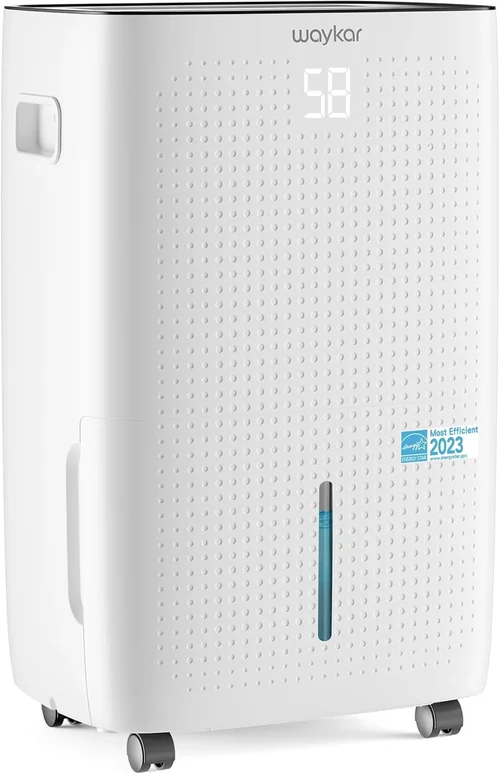
If you’ve ever stepped into a basement and been greeted by that unmistakable damp, musty smell—or worse, noticed water stains on the walls, peeling paint, or mold creeping along the corners—you already know how critical moisture control is in below-grade spaces. Basements are naturally prone to high humidity due to their underground location, poor ventilation, and exposure to groundwater. Left unchecked, excess moisture doesn’t just create an unpleasant environment; it can damage stored belongings, compromise your home’s structural integrity, and even pose serious health risks from mold and mildew exposure. That’s where a high-quality dehumidifier with a built-in pump comes in—not just as a convenience, but as a necessity for long-term basement health.
This comprehensive buying guide is designed to cut through the noise and help you make an informed decision when choosing the best dehumidifier for your basement, specifically one equipped with a condensate pump. Whether you’re dealing with seasonal dampness, chronic flooding issues, or simply want to create a more comfortable, usable space, we’ll walk you through everything you need to know. You’ll learn how to evaluate performance specs, understand key features like auto-pump drainage and smart controls, avoid common purchasing pitfalls, and find models that offer the best value for your budget. With so many options on the market—from budget-friendly units to premium smart systems—it’s easy to feel overwhelmed. But by the end of this guide, you’ll have the confidence and knowledge to choose a dehumidifier that delivers reliable, efficient, and hassle-free moisture removal year-round.
The dehumidifier market has evolved significantly in recent years, with manufacturers focusing on energy efficiency, intelligent automation, and integrated pump technology that eliminates the need for manual emptying. Today’s top basement dehumidifiers aren’t just appliances—they’re climate-control systems designed to work quietly and effectively in challenging environments. From compact 30-pint units ideal for small spaces to heavy-duty 70-pint behemoths capable of handling large, wet basements, there’s a model for nearly every scenario. However, not all dehumidifiers are created equal, especially when it comes to pump functionality, durability in cold temperatures, and long-term reliability. This guide will help you navigate those differences and identify the features that truly matter for basement use.

What to Look for When Buying a Basement Dehumidifier with Pump
1. Pump Functionality and Drainage Options
The single most important feature for basement dehumidifiers is the built-in condensate pump. Unlike standard models that rely on gravity drainage or manual bucket emptying, a pump-equipped unit can actively push collected water upward and outward—even against gravity—to a sink, floor drain, or sump pit located several feet away. This is crucial in basements where floor drains may be elevated or far from the unit. Look for models with quiet, reliable diaphragm or centrifugal pumps capable of lifting water 10–15 feet vertically and 60–100 feet horizontally. Some advanced units include dual drainage options: continuous gravity drain and pump-assisted discharge, giving you flexibility depending on your setup.
2. Capacity (Pints per Day)
Dehumidifier capacity is measured in pints of moisture removed per day (PPD), and choosing the right size is essential for effective performance. Undersized units will struggle to keep up with humidity levels, while oversized ones may cycle too frequently, reducing efficiency and lifespan. For basements, consider both square footage and moisture severity:
– 30–50 PPD: Suitable for small basements (under 1,000 sq ft) with mild dampness.
– 50–70 PPD: Ideal for medium to large basements (1,000–2,500 sq ft) with moderate to high humidity.
– 70+ PPD: Best for very large, wet, or frequently flooded basements.
Use online calculators from reputable brands like Frigidaire or hOmeLabs, or consult the AHAM (Association of Home Appliance Manufacturers) guidelines. Remember: if your basement has standing water, leaks, or poor insulation, lean toward a higher capacity even if your space is modest.
3. Operating Temperature Range
Basements are often cooler than living areas, especially in winter. Standard dehumidifiers may shut down or perform poorly below 65°F (18°C), which defeats the purpose in unheated spaces. Look for units rated for cold-weather operation—ideally down to 41°F (5°C) or lower. These models use specialized compressors and defrost systems (like hot-gas defrost) to prevent ice buildup on coils. If your basement drops below 50°F regularly, a low-temperature dehumidifier isn’t optional—it’s essential.
4. Energy Efficiency and Operating Costs
Running a dehumidifier 24/7 can significantly impact your electricity bill. Check the Energy Factor (EF), measured in liters of water removed per kilowatt-hour (L/kWh). Higher EF = more efficient. ENERGY STAR-certified models typically remove 1.75–2.5+ liters per kWh and can save you 15–30% on energy costs compared to non-certified units. Also consider the wattage: a 50-pint model might use 500–700 watts. Over a month of continuous use, that’s 360–500 kWh—so efficiency matters. Look for auto-humidistat controls that adjust runtime based on actual humidity, preventing unnecessary cycling.
5. Build Quality and Durability
Basements are harsh environments: dusty, damp, and sometimes prone to temperature swings. A flimsy plastic housing or thin-gauge metal won’t last. Prioritize units with:
– Stainless steel or coated coils resistant to corrosion
– Reinforced casings (ABS plastic or powder-coated steel)
– Sealed electrical components to prevent moisture damage
– Robust fan motors rated for continuous duty
Brands like AprilAire, Santa Fe, and Dri-Eaz are known for commercial-grade durability, while consumer favorites like hOmeLabs and Tosot offer solid residential builds. Avoid ultra-cheap models with all-plastic internals—they often fail within 1–2 years.
6. Smart Features and Automation
Modern basement dehumidifiers go beyond basic on/off switches. Look for:
– Built-in humidistat with digital display (ideal range: 30–50% RH for basements)
– Auto-restart after power outages
– Timer functions (24-hour programmable)
– Wi-Fi connectivity (via apps like Google Home or Alexa) for remote monitoring
– Filter change alerts and washable filters
– Pump failure alarms to prevent overflow
These features reduce maintenance and ensure consistent performance even when you’re not home. For example, a Wi-Fi-enabled unit can alert you via smartphone if the pump clogs or the bucket fills—critical for preventing water damage.
7. Noise Level
Basements are often used as laundry rooms, home gyms, or living spaces, so noise matters. Most dehumidifiers operate between 45–60 decibels (dB)—comparable to a quiet conversation or refrigerator hum. Look for models with “quiet mode” or low-RPM fans if noise is a concern. Pay attention to reviews mentioning sound levels; some units are noticeably louder during defrost cycles or high-speed operation.
8. Warranty and Customer Support
A dehumidifier is a long-term investment. A solid warranty reflects manufacturer confidence. Aim for:
– At least 2 years on parts and labor
– 5+ years on sealed systems (compressor, coils)
– Accessible customer service with U.S.-based support
Brands like AprilAire offer 5-year warranties, while others may only provide 1 year. Read the fine print: some exclude pump failures or cold-weather use. Also check return policies—many retailers allow 30-day returns if the unit doesn’t perform as expected.
Different Types of Basement Dehumidifiers with Pump

Common Buying Mistakes to Avoid
❌ Mistake: Ignoring the Pump’s Lift Capacity
Why it’s bad: A pump that can’t reach your drain means manual emptying anyway—defeating the purpose of buying a pump-equipped unit. Many buyers assume “pump = automatic,” but without sufficient lift, you’ll still be hauling buckets.
What to do instead: Measure the vertical and horizontal distance from the dehumidifier to your drain. Choose a model with a pump rated for at least 20% more lift than your requirement. For example, if your drain is 10 feet up, pick a unit with 12–15 feet of lift.
❌ Mistake: Choosing Based Solely on Price
Why it’s bad: The cheapest dehumidifier often lacks durability, efficiency, and reliable pump mechanisms. You may end up replacing it within 2 years, costing more long-term.
What to do instead: View price as part of a total cost-of-ownership calculation. Factor in energy use, warranty length, and expected lifespan. A $400 unit that lasts 8 years is better value than a $200 unit that fails in 2.
❌ Mistake: Overlooking Cold-Weather Performance
Why it’s bad: If your basement drops below 60°F, a standard dehumidifier will ice up and stop working—leaving you vulnerable during the most critical time (winter).
What to do instead: Always check the operating temperature range. If your basement is unheated, invest in a low-temp model with automatic defrost. Don’t rely on “basement use” claims—read specs carefully.
❌ Mistake: Neglecting Maintenance Requirements
Why it’s bad: Clogged filters, frozen coils, or pump failures can render your dehumidifier useless. Many users don’t realize pumps need occasional cleaning or that filters must be washed monthly.
What to do instead: Choose models with washable, reusable filters and accessible pump compartments. Set calendar reminders for maintenance. Some smart units send alerts—use them!
❌ Mistake: Buying Without Checking Drain Hose Compatibility
Why it’s bad: Not all pumps include a hose, or the included hose may be too short or prone to kinking. You might need to buy a separate hose, adding cost and hassle.
What to do instead: Verify hose length, diameter, and material before purchasing. Look for reinforced vinyl or silicone hoses. If none is included, budget $15–$30 for a compatible one.
❌ Mistake: Assuming All “Basement” Models Include a Pump
Why it’s bad: Many dehumidifiers marketed for basements only offer gravity drainage. The pump is often a separate (and expensive) add-on.
What to do instead: Search specifically for “with built-in pump” or “auto-pump” in product titles and descriptions. Read the features list—don’t rely on marketing fluff.
❌ Mistake: Ignoring Return Policies and Trial Periods
Why it’s bad: If the unit doesn’t perform as expected, you could be stuck with a non-returnable appliance. Some retailers charge restocking fees or exclude large items.
What to do instead: Buy from retailers with generous return windows (30+ days) and free return shipping. Test the unit immediately—run it for a week and monitor humidity levels and pump function.
Budget Guidelines: How Much Should You Spend?
– Entry-Level ($150–$250): Basic 30–50 PPD units with manual or gravity drainage. Rarely include pumps. Best for very small, dry basements or temporary use. Expect shorter lifespans and higher energy use. Examples: basic Honeywell or Eva-Dry models.
– Mid-Range ($250–$450): The sweet spot for most homeowners. Includes 50–70 PPD units with built-in pumps, cold-weather operation, and smart features. ENERGY STAR certified, 2–3 year warranties. Reliable brands: hOmeLabs, Tosot, Frigidaire. Ideal for 1,000–2,000 sq ft basements.
– Premium ($450–$800): High-capacity (70+ PPD), ultra-efficient models with advanced controls, Wi-Fi, and commercial-grade components. Excellent for large, wet basements or whole-house integration. Brands: AprilAire, Santa Fe, Dri-Eaz. Often include 5-year warranties.
– Luxury ($800+): Whole-house or industrial systems designed for severe moisture issues, flood recovery, or professional use. May require professional installation and ducting. Best for extreme cases or commercial properties.
Expert Tips for Getting the Best Deal
– Buy in Spring or Early Summer: Demand peaks in humid months, but retailers often discount older models in March–April to clear inventory. You’ll find the best prices before the rainy season hits.
– Shop Online for Better Selection: Websites like Amazon, Home Depot, and Lowe’s offer detailed specs, customer reviews, and price comparisons. In-store selections are often limited to basic models.
– Watch for Bundle Deals: Some retailers include free drain hoses, extended warranties, or smart plugs with dehumidifier purchases. Check for promotions during Black Friday or Prime Day.
– Read Verified Purchase Reviews: Focus on reviews from users with similar basement conditions (e.g., “unheated,” “flood-prone”). Look for comments about pump reliability, noise, and cold-weather performance.
– Consider Refurbished or Open-Box Units: Reputable sellers like Amazon Renewed or manufacturer outlets offer certified refurbished models at 20–40% off, often with full warranties.
– Test Before Committing: Run the dehumidifier for 48–72 hours. Use a hygrometer to verify humidity drops to 45–50%. Listen for unusual noises or pump failures. If it struggles, return it.
– Check Local Utility Rebates: Some energy companies offer rebates for ENERGY STAR dehumidifiers. Search your provider’s website or visit energystar.gov/rebate-finder.
– Negotiate Extended Warranties: If buying in-store, ask if the warranty can be extended at no cost or discounted rate. Sometimes sales associates have flexibility.
Frequently Asked Questions
Q: Do I really need a dehumidifier with a pump for my basement?
A: If your basement has a floor drain, sump pit, or elevated sink, a pump is highly recommended. It eliminates daily bucket emptying and ensures continuous operation—even when you’re away. Without a pump, you risk overflow and water damage if you forget to empty the bucket.
Q: Can I use a regular dehumidifier in my basement?
A: You can, but it’s not ideal. Standard models lack pumps and may not operate efficiently in cold temperatures. For long-term, hands-off moisture control, a pump-equipped, low-temp dehumidifier is the better choice.
Q: How often should I clean the filter and pump?
A: Clean the air filter every 2–4 weeks during heavy use. Rinse it under warm water and let it dry completely. Inspect the pump monthly for debris or clogs—especially if you have hard water or dust issues.
Q: Will a dehumidifier increase my electricity bill significantly?
A: It depends on the model and runtime. An ENERGY STAR 50-pint unit uses about 500 watts and costs roughly $15–$25 per month if run 24/7. Use a humidistat to limit runtime and save energy.
Q: Can I duct a dehumidifier to multiple rooms?
A: Yes, but only with whole-house or ductable models. Portable units aren’t designed for ducting. If you need whole-home control, consider a central dehumidifier integrated with your HVAC system.
Q: What humidity level should I maintain in my basement?
A: Aim for 30–50% relative humidity. Levels above 60% encourage mold growth; below 30% can dry out wood and cause static. Use a digital hygrometer to monitor levels.
Q: Are desiccant dehumidifiers better for cold basements?
A: Yes, especially below 50°F. Desiccant units don’t use compressors and won’t ice up. However, they’re less energy-efficient in warm, humid conditions and often more expensive.
Q: How do I know if my dehumidifier’s pump is working?
A: Listen for a faint humming when the pump activates (usually every few hours). Check the drain hose for water flow. If the bucket fills but no water exits the hose, the pump may be clogged or faulty.
Q: Can I run a dehumidifier in winter?
A: Only if it’s rated for low temperatures. Standard models will freeze and shut down. Low-temp or desiccant units are safe for winter use in unheated basements.
Q: What’s the difference between a condensate pump and a built-in pump?
A: They’re the same thing. “Built-in pump” means the pump is integrated into the unit. “Condensate pump” refers to the type of pump used to move water. Both terms describe automatic drainage capability.
Our Final Recommendations
– Best for Budget-Conscious Buyers: hOmeLabs 50 Pint Dehumidifier with Pump – At under $350, it offers excellent value with a reliable pump, cold-weather operation down to 41°F, and a washable filter. Ideal for medium basements.
– Best Overall Value: Tosot 50 Pint Smart Dehumidifier with Pump – Combines Wi-Fi control, ENERGY STAR efficiency, and a robust pump in a quiet, durable design. Perfect balance of price and performance.
– Best Premium Option: AprilAire E080 Pro 80 Pint Dehumidifier – A whole-home capable unit with a powerful pump, 5-year warranty, and professional-grade build. Best for large, wet basements or whole-house integration.
– Best for Beginners: Frigidaire FFAD7033R1 70 Pint Dehumidifier with Pump – Simple controls, clear display, and reliable pump. Great for first-time buyers who want plug-and-play functionality.
– Best for Advanced Users: Santa Fe Compact 70 Low-Temp Dehumidifier – Engineered for extreme conditions, with a high-efficiency pump, ducting options, and operation down to 38°F. Ideal for off-grid homes or severe moisture issues.
Conclusion: Making the Right Choice
Choosing the right dehumidifier for your basement isn’t just about removing moisture—it’s about protecting your home, your health, and your peace of mind. A unit with a reliable pump transforms a chore into an automated process, ensuring consistent humidity control without daily intervention. By focusing on key factors like pump lift capacity, cold-weather performance, energy efficiency, and build quality, you can avoid common pitfalls and invest in a solution that lasts for years.
Remember, the best dehumidifier is the one that matches your specific basement conditions and lifestyle needs. Don’t overspend on features you won’t use, but don’t cut corners on essentials like pump reliability or low-temperature operation. Take advantage of seasonal sales, read real user reviews, and always test your unit upon arrival. With the insights from this guide, you’re equipped to make a confident, informed decision.
Your basement doesn’t have to be a damp, musty afterthought. With the right dehumidifier, it can become a dry, usable, and healthy part of your home. Start today—your future self (and your walls) will thank you.