
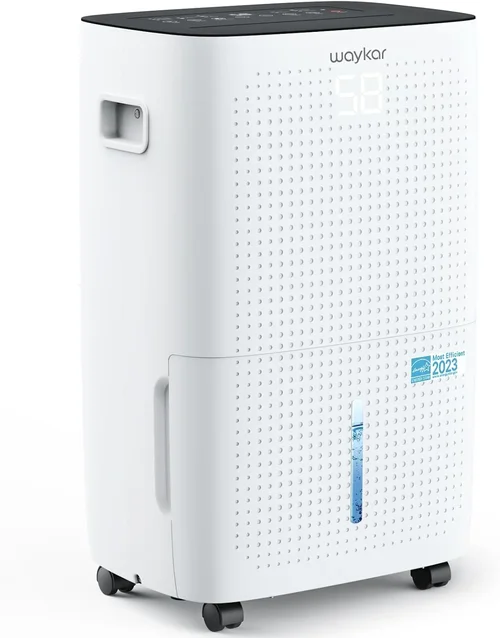
Industrial dehumidifiers are essential tools in environments where moisture control isn’t just a comfort—it’s a necessity. From warehouses and manufacturing plants to hospitals, museums, and large-scale construction sites, excessive humidity can lead to mold growth, equipment corrosion, product spoilage, and even structural damage. Unlike residential units designed for single rooms or basements, industrial dehumidifiers are engineered to handle vast spaces, extreme conditions, and continuous operation. They’re built not just to remove moisture, but to do so reliably, efficiently, and with minimal maintenance over long periods.
This guide exists because choosing the right industrial dehumidifier is a high-stakes decision. A poor choice can result in wasted investment, ongoing operational inefficiencies, or worse—failure to protect critical assets. Whether you’re managing climate control in a food processing facility, preserving artifacts in a museum archive, or drying out a flooded industrial site, the right dehumidifier can make the difference between success and costly setbacks. In this comprehensive buying guide, you’ll learn how to evaluate performance specs, understand different technologies, avoid common pitfalls, and ultimately select a unit that meets your specific needs—without overspending or underperforming.
The market for industrial dehumidifiers is vast and varied, ranging from compact refrigerant-based models to massive desiccant systems capable of extracting hundreds of gallons of water per day. Brands like Dri-Eaz, Quest, AprilAire, and Therma-Stor dominate the space, each offering specialized solutions for different applications. With prices ranging from under $1,000 to well over $10,000, it’s easy to get overwhelmed. But by focusing on key factors—such as capacity, energy efficiency, build quality, and application-specific features—you can cut through the noise and make a confident, informed purchase. This guide will walk you through every step of that process.

What to Look for When Buying Buying Guide
1. Moisture Removal Capacity (Pints or Gallons per Day)
The most critical specification when selecting an industrial dehumidifier is its moisture removal capacity, typically measured in pints or gallons of water extracted per day. This number determines how effectively the unit can handle the humidity load in your space. For example, a small warehouse might require a unit rated at 100–200 pints per day, while a large manufacturing floor or flood restoration site could need 500+ pints daily. Always match the capacity to the square footage, ambient temperature, and humidity level of your environment. Underestimating capacity leads to inadequate drying; overestimating wastes money on oversized equipment.
When evaluating capacity, consider both standard conditions (e.g., 80°F and 60% relative humidity) and real-world operating conditions. Some units perform well in ideal lab settings but falter in colder or more humid environments. Look for models that specify performance across a range of temperatures—especially if your application involves unheated spaces like garages or outdoor tents. Also, note whether the rating is based on AHAM (Association of Home Appliance Manufacturers) standards or manufacturer testing, as the latter can sometimes be inflated.
2. Energy Efficiency & Operating Costs
Industrial dehumidifiers often run 24/7, making energy consumption a major factor in long-term costs. A unit that removes 200 pints per day but consumes 3,000 watts will cost significantly more to operate than one that uses only 1,800 watts for the same output. Check the Energy Factor (EF), measured in liters per kilowatt-hour (L/kWh), which indicates how efficiently the unit converts electricity into moisture removal. Higher EF values mean better efficiency.
Look for ENERGY STAR-certified models, which meet strict efficiency guidelines set by the U.S. Environmental Protection Agency. While industrial units are less commonly certified than residential ones, some high-efficiency models do qualify. Additionally, consider features like variable-speed compressors or auto-defrost cycles, which reduce energy use during low-demand periods. Over a year, even a 20% improvement in efficiency can save hundreds—or thousands—of dollars in electricity, especially in large facilities.
3. Build Quality & Durability
Industrial environments are harsh. Dust, vibrations, temperature swings, and constant use demand rugged construction. Look for dehumidifiers with heavy-duty steel cabinets, powder-coated finishes, and sealed electrical components to resist corrosion and wear. Internal components like compressors, coils, and fans should be commercial-grade, not consumer-grade parts repackaged for industrial use.
Pay attention to ingress protection (IP) ratings, which indicate resistance to dust and water. An IP54 rating, for instance, means the unit is protected against limited dust ingress and splashing water—ideal for construction sites or outdoor use. Also, check for reinforced casters, impact-resistant handles, and protective grilles. A well-built unit may cost more upfront but will last years longer and require fewer repairs, reducing total cost of ownership.
4. Portability & Mobility Features
Even in fixed installations, the ability to move a dehumidifier quickly can be crucial—especially in restoration, construction, or multi-zone facilities. Look for units with large, rugged wheels (preferably pneumatic or semi-pneumatic), telescoping handles, and balanced weight distribution. Some models include lifting hooks or forklift pockets for crane or pallet jack access.
Consider the unit’s footprint and clearance requirements. A compact design saves floor space, while low-profile units can fit under shelves or in tight corridors. Cord management systems and onboard hose storage also improve usability. For remote or off-grid applications, some industrial dehumidifiers offer optional battery packs or generator compatibility, though these are less common.
5. Control Systems & Automation
Advanced controls can dramatically improve efficiency and reduce labor. Basic models may only have an on/off switch and humidity dial, but premium units offer digital displays, programmable timers, remote monitoring, and even integration with building management systems (BMS). Look for features like:
– Humidistat control: Automatically turns the unit on/off based on ambient humidity.
– Defrost cycles: Prevent ice buildup on coils in cold environments.
– Error diagnostics: Alerts for filter clogs, refrigerant issues, or sensor failures.
– Remote access: Wi-Fi or Ethernet connectivity for monitoring via smartphone or computer.
For large facilities, centralized control systems allow you to manage multiple units from a single dashboard, optimizing performance and energy use. In critical environments like data centers or pharmaceutical labs, real-time alerts and data logging are essential for compliance and preventive maintenance.
6. Drainage & Water Management
Continuous operation means continuous water production. Most industrial dehumidifiers offer multiple drainage options: gravity drain, condensate pump, or automatic shutoff when the internal tank is full. Gravity drain is simplest—just attach a hose and let water flow downhill—but requires proper elevation and routing. Condensate pumps are essential for pumping water vertically or over long distances, such as from a basement to a sewer line.
Check the pump’s lift capacity (how high it can push water) and flow rate. Some pumps can lift water up to 15 feet vertically and 100 feet horizontally. Also, ensure the unit has a float switch to prevent overflow if the drain fails. For unattended operation, a reliable drainage system is non-negotiable. Units with dual drainage options (e.g., pump + gravity) offer flexibility for different installation scenarios.
7. Noise Levels & Operational Environment
While industrial settings are generally noisier than homes, excessive noise can still be a concern—especially in occupied spaces like offices, hospitals, or schools. Noise is measured in decibels (dB), with most industrial dehumidifiers ranging from 50 dB (quiet conversation) to 70 dB (vacuum cleaner). Lower noise levels are preferable in sensitive areas.
Look for models with sound-dampening enclosures, insulated cabinets, or variable-speed fans that reduce noise during low-load operation. Some units offer “quiet mode” settings for nighttime or low-traffic periods. If noise is a critical factor, request a noise specification sheet or test the unit in situ before committing.
8. Brand Reputation & Industry Support
Not all brands are created equal. Established manufacturers like Dri-Eaz, Quest, and Therma-Stor have decades of experience in industrial drying and offer proven reliability, extensive service networks, and strong customer support. Lesser-known brands may offer lower prices but often lack technical documentation, spare parts availability, or responsive customer service.
Research user reviews, industry forums, and case studies to gauge real-world performance. Ask vendors about training programs, on-site support, and availability of replacement parts. A reputable brand may cost more initially but pays off in reduced downtime and longer service life. Also, check if the manufacturer offers application-specific engineering support—some even provide custom sizing and system design for complex projects.
Different Types of Buying Guide

Common Buying Mistakes to Avoid
❌ Mistake: Choosing Based Solely on Price
Why it’s bad: The cheapest unit often lacks the capacity, durability, or efficiency needed for industrial use. It may fail prematurely, require frequent repairs, or consume excessive energy, leading to higher long-term costs.
What to do instead: Focus on total cost of ownership, not just upfront price. Consider energy use, maintenance needs, lifespan, and performance. A mid-range unit with better efficiency and build quality often saves money over time.
❌ Mistake: Ignoring Environmental Conditions
Why it’s bad: Refrigerant dehumidifiers lose efficiency below 60°F, while desiccant units excel in cold environments. Using the wrong type in extreme conditions leads to poor performance and wasted energy.
What to do instead: Match the technology to your environment. Use desiccant units for cold storage, archives, or winter construction. Use refrigerant or LGR units for warm, humid spaces like warehouses or pools.
❌ Mistake: Overlooking Drainage Requirements
Why it’s bad: Without proper drainage, water can overflow, damage floors, or require constant manual emptying—defeating the purpose of automation.
What to do instead: Plan your drainage route before purchasing. Choose units with condensate pumps if lifting water is necessary. Test drainage under real conditions to ensure reliability.
❌ Mistake: Underestimating Capacity Needs
Why it’s bad: A unit that’s too small will run continuously without achieving target humidity, increasing wear and energy use.
What to do instead: Calculate your moisture load using industry formulas or consult a professional. Add a 20–30% safety margin for unexpected humidity spikes or larger-than-expected spaces.
❌ Mistake: Neglecting Maintenance Requirements
Why it’s bad: Clogged filters, dirty coils, and worn fans reduce efficiency and can cause system failure. Many buyers assume industrial units are “set and forget.”
What to do instead: Choose models with easy-access filters, washable components, and diagnostic alerts. Schedule regular maintenance and train staff on basic upkeep.
❌ Mistake: Buying Without Testing or Demo
Why it’s bad: Spec sheets don’t always reflect real-world performance. Noise, vibration, or control issues may only appear during operation.
What to do instead: Request a demo or trial period. Test the unit in your actual environment for at least 48 hours. Evaluate noise, ease of use, and effectiveness.
❌ Mistake: Ignoring Warranty and Support
Why it’s bad: Industrial equipment fails. Without strong warranty coverage or local service, downtime can be costly.
What to do instead: Choose brands with at least a 2–5 year warranty and nationwide service networks. Verify response times and availability of spare parts.
Budget Guidelines: How Much Should You Spend?
Entry-Level ($800 – $1,500): These are typically compact refrigerant units suitable for small workshops, garages, or light commercial use. Expect basic controls, limited capacity (50–100 pints/day), and consumer-grade components. Ideal for occasional use or low-humidity environments. Brands like AprilAire and hOmeLabs offer reliable options in this range.
Mid-Range ($1,500 – $4,000): This is the sweet spot for most industrial buyers. Units offer 100–300 pints/day capacity, rugged construction, digital controls, and efficient operation. Look for models from Dri-Eaz, Quest, or Therma-Stor. These are suitable for warehouses, small manufacturing floors, and restoration work. Many include condensate pumps and remote monitoring.
Premium ($4,000 – $8,000): Designed for demanding applications, these units feature high-capacity compressors, advanced automation, and superior build quality. Ideal for large facilities, data centers, or continuous operation. Expect features like variable-speed fans, BMS integration, and extended warranties. Desiccant and LGR models often fall into this tier.
Luxury ($8,000+): Top-tier systems include large desiccant dehumidifiers, whole-building ducted units, or custom-engineered solutions. These are used in museums, pharmaceutical labs, or industrial process control. They offer ultra-precise humidity regulation, redundancy, and remote diagnostics. Only justified for mission-critical environments.
Expert Tips for Getting the Best Deal
– Buy during off-peak seasons: Demand for dehumidifiers peaks in spring and summer. Purchase in fall or winter for better pricing and availability.
– Negotiate with distributors: Many industrial suppliers offer volume discounts, trade-in credits, or extended warranties for bulk or repeat buyers.
– Check for rebates: Some utilities offer energy efficiency rebates for commercial dehumidifiers. Contact your provider before purchasing.
– Compare total cost of ownership: Use online calculators to compare energy use over 5–10 years. A $500 more efficient unit may save $2,000 in electricity.
– Read the fine print on warranties: Some cover parts only, others include labor. Verify what’s included and for how long.
– Test before you buy: Reputable vendors often allow short-term rentals or trials. Use this to evaluate performance in your actual environment.
– Consider refurbished or rental-to-own: Certified refurbished units from trusted brands can offer significant savings with full warranties.
– Bundle with other equipment: Some suppliers offer discounts when purchasing dehumidifiers with air movers, heaters, or moisture meters.
Frequently Asked Questions
Q: How do I calculate the right size dehumidifier for my space?
A: Start with the square footage and humidity level. Use industry guidelines: for moderate humidity, allow 1 pint per 10 sq ft; for high humidity, 1 pint per 5 sq ft. Add 20–30% for safety. Consult an HVAC professional for complex environments.
Q: Can I use a residential dehumidifier in an industrial setting?
A: Not recommended. Residential units lack the capacity, durability, and drainage options needed for continuous industrial use. They may overheat, fail prematurely, or pose safety risks.
Q: What’s the difference between refrigerant and desiccant dehumidifiers?
A: Refrigerant units cool air to condense moisture—best for warm, humid environments. Desiccant units use a drying wheel to absorb moisture—ideal for cold or dry conditions. Choose based on your climate and application.
Q: How often should I service my industrial dehumidifier?
A: Clean filters monthly, inspect coils quarterly, and perform full maintenance annually. In dusty environments, increase frequency. Follow the manufacturer’s schedule.
Q: Can industrial dehumidifiers be used outdoors?
A: Some models are rated for outdoor or semi-outdoor use with IP54 or higher protection. Ensure proper drainage and shelter from direct rain. Never use indoor-only units outside.
Q: Do I need a permit to install an industrial dehumidifier?
A: Usually not, but check local codes—especially for ducted systems or electrical modifications. Some jurisdictions require permits for permanent installations.
Q: How long do industrial dehumidifiers last?
A: With proper maintenance, most last 7–15 years. Refrigerant units may need compressor replacement after 5–7 years; desiccant units can last longer with wheel servicing.
Q: Can I connect multiple dehumidifiers to one control system?
A: Yes, many advanced models support daisy-chaining or network integration. Use a central humidistat or BMS to coordinate operation and optimize efficiency.
Q: What’s the best way to dispose of collected water?
A: In most cases, condensate is non-hazardous and can be drained into sewer systems or used for irrigation (if free of contaminants). Avoid draining near foundations or electrical equipment.
Q: Are there eco-friendly industrial dehumidifiers?
A: Yes. Look for models using R-32 or R-290 refrigerants (lower global warming potential), energy-efficient compressors, and recyclable materials. Some brands offer carbon-neutral shipping.
Our Final Recommendations
Best for Budget-Conscious Buyers: Dri-Eaz F413 – At around $1,800, this 180-pint refrigerant unit offers excellent value with a condensate pump, digital controls, and rugged build. Ideal for small warehouses or restoration jobs.
Best Overall Value: Quest 50 Dual – Priced near $3,500, this 200-pint LGR dehumidifier delivers high performance in tough conditions. Features auto-defrost, remote monitoring, and industry-leading efficiency.
Best Premium Option: Therma-Stor Santa Fe UltraDry 1200 – A $7,500 desiccant powerhouse for museums, archives, or cold storage. Offers precise humidity control down to 1% RH and ultra-quiet operation.
Best for Beginners: AprilAire E130 – A user-friendly 130-pint whole-home unit (~$2,200) with simple controls and reliable performance. Great for first-time industrial buyers.
Best for Advanced Users: Quest 70 MAX – At $5,200, this ductable system supports BMS integration, variable-speed operation, and real-time diagnostics. Perfect for data centers or large facilities.
Conclusion: Making the Right Choice
Selecting the best industrial dehumidifier isn’t about finding the most powerful or expensive unit—it’s about matching the right technology, capacity, and features to your specific environment and needs. Whether you’re protecting inventory, preserving artifacts, or restoring a flood-damaged facility, the right dehumidifier ensures stability, efficiency, and peace of mind.
Remember to prioritize performance over price, consider total cost of ownership, and never skip due diligence. Test units when possible, consult experts, and choose reputable brands with strong support. With the insights from this guide, you’re equipped to make a smart, long-term investment that protects your assets and operations for years to come.
Take the time to evaluate your space, calculate your needs, and compare options carefully. The right dehumidifier doesn’t just remove moisture—it safeguards your bottom line.