
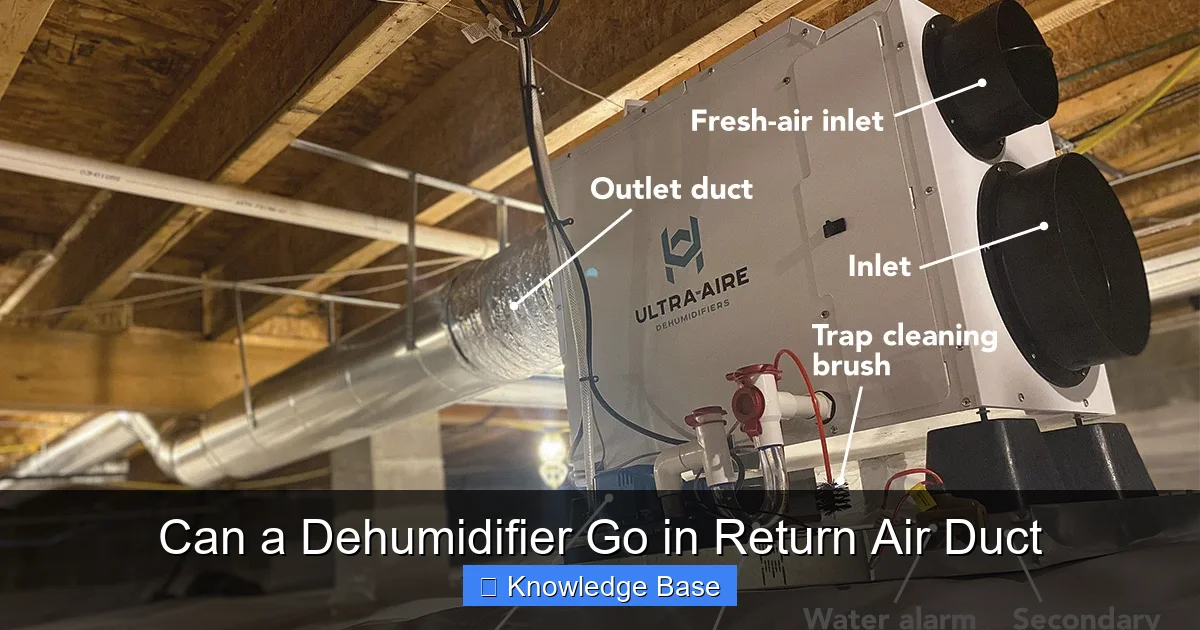
Yes, a dehumidifier can go in a return air duct, but it depends on the type of dehumidifier and your HVAC system setup. Proper installation ensures improved indoor air quality and energy efficiency, while incorrect placement may damage equipment or reduce performance.
Key Takeaways
- Whole-house dehumidifiers are designed for duct integration: These units connect directly to your HVAC system’s return or supply ducts to treat air throughout your home.
- Portable dehumidifiers should not be placed in ducts: They lack the power and design for ductwork and can cause pressure imbalances or motor damage.
- Return air placement improves efficiency: Installing in the return duct allows the dehumidifier to process air before it reaches the HVAC system, enhancing moisture removal.
- Professional installation is recommended: Incorrect sizing, sealing, or electrical connections can lead to system inefficiencies or safety hazards.
- Regular maintenance is crucial: Filters, coils, and drainage must be checked frequently to prevent mold growth and ensure optimal performance.
- Humidity control benefits health and home: Proper dehumidification reduces allergens, prevents structural damage, and improves comfort.
- Compatibility with your HVAC system matters: Not all homes can support duct-mounted dehumidifiers—consult an HVAC technician before installation.
Quick Answers to Common Questions
Can I put a portable dehumidifier in my return air duct?
No, portable dehumidifiers are not designed for duct installation and can overheat or damage your HVAC system.
Where should a whole-house dehumidifier be installed?
It can be installed in the return or supply air duct, but the return side is often preferred for better efficiency.
Do I need a professional to install a duct-mounted dehumidifier?
Yes, professional installation ensures proper sizing, sealing, electrical connections, and safety.
How often should I maintain a whole-house dehumidifier?
Clean filters monthly, inspect coils quarterly, and check the drain line annually.
Will a dehumidifier in the return duct increase my energy bill?
Not necessarily—proper dehumidification can actually improve HVAC efficiency and reduce cooling costs.
📑 Table of Contents
- Can a Dehumidifier Go in Return Air Duct? A Complete Guide
- Understanding Return Air Ducts and Dehumidifiers
- Types of Dehumidifiers Suitable for Duct Installation
- Benefits of Installing a Dehumidifier in the Return Air Duct
- Potential Risks and Challenges
- Step-by-Step Installation Guide
- Alternatives to Duct-Mounted Dehumidifiers
- Conclusion
Can a Dehumidifier Go in Return Air Duct? A Complete Guide
If you’ve ever walked into your basement or laundry room and felt that sticky, heavy air, you know how uncomfortable high humidity can be. It’s not just unpleasant—it can lead to mold, mildew, musty odors, and even damage to your home’s structure. Many homeowners turn to dehumidifiers to solve this problem, but a common question arises: *Can a dehumidifier go in the return air duct?*
The short answer is yes—but with important caveats. While it’s technically possible to install certain types of dehumidifiers in your HVAC system’s return air duct, doing so requires careful planning, the right equipment, and professional expertise. In this guide, we’ll walk you through everything you need to know about placing a dehumidifier in your return air duct, including the benefits, risks, installation tips, and alternatives.
Whether you’re dealing with a damp crawl space, a humid climate, or just want better indoor air quality, understanding how dehumidifiers interact with your HVAC system is key. Let’s dive in.
Understanding Return Air Ducts and Dehumidifiers
Visual guide about Can a Dehumidifier Go in Return Air Duct
Image source: media.angi.com
Before we get into whether a dehumidifier can go in a return air duct, let’s clarify what each component does.
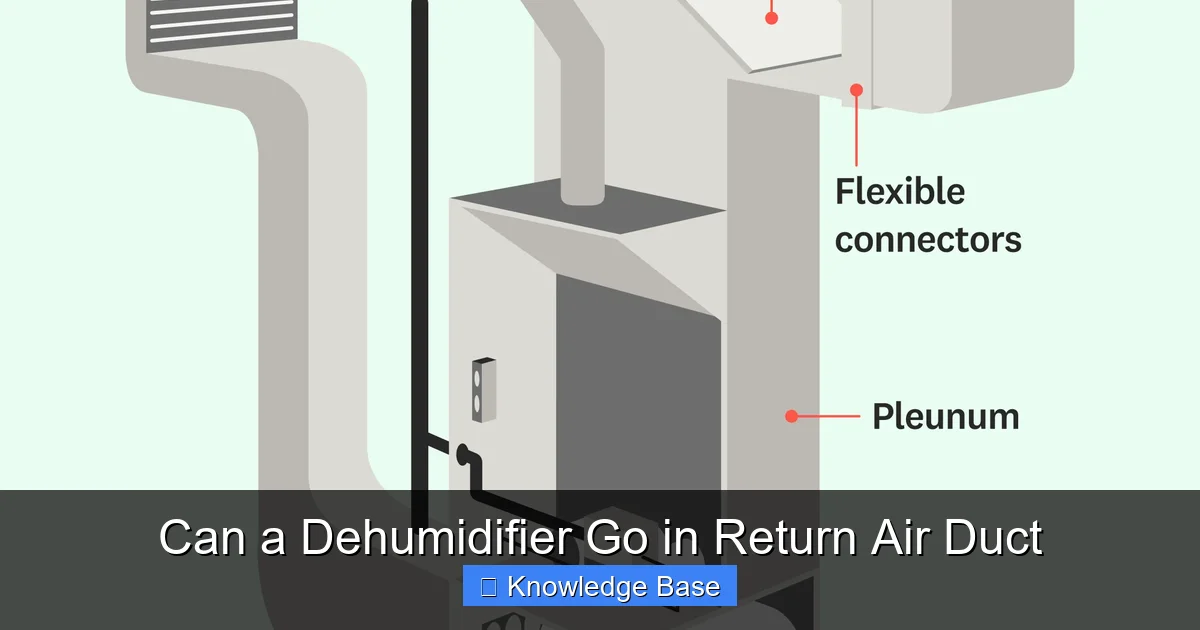
Your HVAC system has two main types of ducts: supply ducts and return ducts. Supply ducts deliver conditioned air (heated or cooled) from your furnace or air conditioner into your living spaces. Return ducts, on the other hand, pull air from your home back to the HVAC unit to be reconditioned. This creates a continuous loop of air circulation.
A dehumidifier, as the name suggests, removes excess moisture from the air. There are two main types: portable dehumidifiers and whole-house (or whole-home) dehumidifiers. Portable units are standalone devices you place in a room, while whole-house models are integrated into your HVAC system.
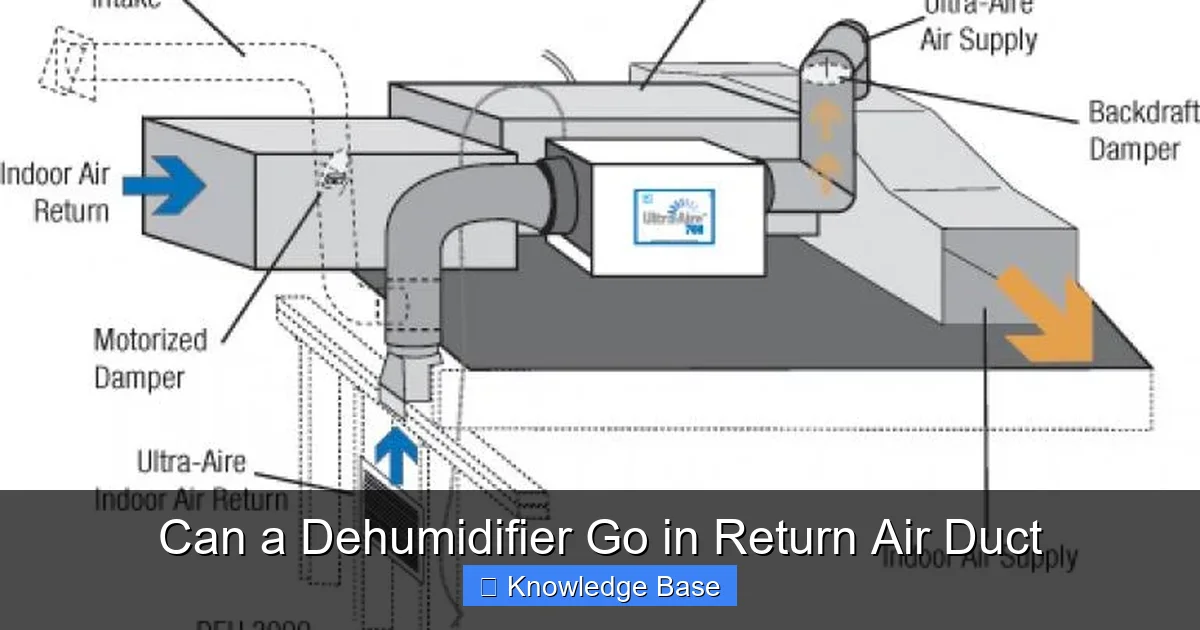
Now, when we talk about placing a dehumidifier in the return air duct, we’re usually referring to a whole-house dehumidifier. These systems are specifically engineered to work with ductwork and can be installed in either the return or supply side of your HVAC system.
How Whole-House Dehumidifiers Work
Whole-house dehumidifiers function similarly to central air conditioners in that they use a refrigeration cycle to remove moisture. Air is drawn into the unit through the return duct, passes over cold coils where moisture condenses, and then the drier air is sent back into the system via the supply duct.
Some models also include reheating coils to warm the air slightly before it re-enters the HVAC system, preventing overcooling. This makes them more energy-efficient and comfortable than portable units, which often blow cold, dry air directly into a room.
Why the Return Air Duct?
Installing a dehumidifier in the return air duct has several advantages. First, it allows the unit to treat air from the entire home before it reaches the HVAC system. This means moisture is removed early in the cycle, reducing the load on your air conditioner and improving overall efficiency.
Second, placing the dehumidifier in the return duct ensures that all air passing through your home is filtered and dehumidified. This is especially beneficial in homes with high humidity levels or those located in humid climates.
However, it’s important to note that not all dehumidifiers are suitable for duct installation. Portable units, for example, are not designed for this purpose and should never be placed inside ductwork.
Types of Dehumidifiers Suitable for Duct Installation
Visual guide about Can a Dehumidifier Go in Return Air Duct
Image source: aeroventic.com
Not every dehumidifier can be installed in a return air duct. Let’s look at the types that are compatible and why.
Whole-House Dehumidifiers
These are the only dehumidifiers designed for integration into HVAC ductwork. They are typically larger, more powerful, and built with features like duct collars, built-in pumps, and controls that sync with your thermostat or humidistat.
Whole-house dehumidifiers come in two main varieties:
– **Ducted dehumidifiers:** These are installed directly into the ductwork and can be placed on the return or supply side. They are ideal for homes with existing HVAC systems and central air.
– **Standalone whole-house units:** These look like large portable dehumidifiers but are designed to connect to ducts. They often include casters for mobility and can be moved between rooms if needed.
Brands like AprilAire, Santa Fe, and Ultra-Aire specialize in whole-house dehumidifiers that are built for duct integration.
HVAC-Integrated Dehumidifiers
Some modern HVAC systems come with built-in dehumidification features. These systems use the existing air conditioner coils to remove moisture, often with enhanced controls or variable-speed compressors. While not a separate dehumidifier, they serve a similar purpose and can be an alternative to duct-mounted units.
However, if your HVAC system doesn’t have this capability, adding a standalone whole-house dehumidifier to the return duct can be a smart upgrade.
Portable Dehumidifiers: Why They Don’t Belong in Ducts
Portable dehumidifiers are great for spot treatment—like in a damp basement or bathroom—but they should never be installed in ductwork. Here’s why:
– They lack the power to handle the airflow of an entire HVAC system.
– Their fans are not designed to overcome the pressure of ductwork.
– Placing them in a duct can cause the motor to overheat or fail.
– They don’t have the proper seals or connections for duct integration.
In short, using a portable dehumidifier in a return air duct is not only ineffective—it’s potentially dangerous.
Benefits of Installing a Dehumidifier in the Return Air Duct
Now that we’ve established which dehumidifiers can go in the return duct, let’s explore the benefits of doing so.
Improved Indoor Air Quality
High humidity creates the perfect environment for mold, mildew, dust mites, and bacteria. By removing excess moisture from the air before it circulates through your home, a duct-mounted dehumidifier helps reduce these allergens and irritants. This is especially beneficial for people with asthma, allergies, or respiratory conditions.
Enhanced HVAC Efficiency
When your air conditioner doesn’t have to work as hard to remove moisture, it runs more efficiently. This can lead to lower energy bills and extended equipment life. In fact, the U.S. Department of Energy estimates that proper dehumidification can reduce cooling costs by up to 10%.
Protection for Your Home
Excess moisture can warp wood, damage drywall, and cause paint to peel. Over time, this can lead to costly repairs. A dehumidifier in the return duct helps maintain a consistent humidity level (ideally between 30% and 50%), protecting your home’s structural integrity.
Comfort and Odor Control
Nobody likes that sticky, clammy feeling on a humid day. By keeping humidity in check, you’ll feel more comfortable even at higher temperatures. Plus, lower humidity means fewer musty odors—especially in basements, crawl spaces, and laundry rooms.
Centralized Control
Whole-house dehumidifiers often come with built-in humidistats and can be controlled via your thermostat or a dedicated app. This allows you to set and maintain your ideal humidity level automatically, without having to monitor multiple portable units.
Potential Risks and Challenges
While there are clear benefits, installing a dehumidifier in the return air duct isn’t without risks. Here are some challenges to consider.
System Compatibility
Not all HVAC systems can accommodate a duct-mounted dehumidifier. Older systems or those with limited space may not have the capacity or airflow to support an additional unit. A professional HVAC technician can assess your system and determine if it’s compatible.
Airflow Restrictions
Adding a dehumidifier to the ductwork can restrict airflow, especially if the unit is undersized or poorly installed. This can lead to reduced HVAC performance, increased energy use, and even system damage over time.
Drainage and Maintenance
Dehumidifiers produce condensate (water) that must be drained properly. In a duct-mounted system, this usually means connecting to a floor drain, installing a condensate pump, or using a gravity drain. If not handled correctly, water can leak, causing mold or water damage.
Additionally, filters and coils must be cleaned regularly. Neglecting maintenance can reduce efficiency and create a breeding ground for mold inside the unit.
Electrical and Installation Requirements
Whole-house dehumidifiers require a dedicated electrical circuit and proper wiring. Improper installation can pose fire or shock hazards. That’s why it’s strongly recommended to hire a licensed HVAC contractor.
Cost Considerations
Whole-house dehumidifiers are more expensive than portable units, with prices ranging from $1,500 to $4,000 or more, depending on capacity and features. Installation costs can add another $500 to $1,500. While the long-term benefits often justify the investment, it’s important to budget accordingly.
Step-by-Step Installation Guide
If you’ve decided to install a dehumidifier in your return air duct, here’s a general overview of the process. Remember, this should always be done by a qualified professional.
1. Assess Your Home’s Needs
Start by measuring the square footage of your home and determining the humidity level. A hygrometer can help you monitor indoor humidity. Most homes need a dehumidifier with a capacity of 70 to 100 pints per day, depending on climate and moisture sources.
2. Choose the Right Unit
Select a whole-house dehumidifier that matches your home’s size and humidity levels. Look for Energy Star-certified models for better efficiency. Popular options include the AprilAire E130, Santa Fe Compact 70, and Ultra-Aire 70H.
3. Locate the Installation Point
The return air duct is usually located near the furnace or air handler. Choose a spot that’s accessible for maintenance and has enough space for the unit. Avoid areas with high heat or vibration.
4. Cut and Modify the Duct
Using a duct cutter, create an opening in the return duct large enough to fit the dehumidifier. Install duct collars and seal all connections with foil tape or mastic to prevent air leaks.
5. Connect Electrical and Drain Lines
Run a dedicated 120V or 240V circuit to the unit, depending on the model. Connect the condensate drain line to a nearby floor drain or install a condensate pump if needed.
6. Test and Calibrate
Turn on the system and check for proper airflow, drainage, and humidity control. Adjust the humidistat settings to maintain your desired humidity level (usually 40–50%).
7. Schedule Regular Maintenance
Clean filters monthly, inspect coils quarterly, and check the drain line annually. Replace filters as recommended by the manufacturer.
Alternatives to Duct-Mounted Dehumidifiers
If installing a dehumidifier in the return air duct isn’t feasible, there are other options to consider.
Portable Dehumidifiers
For small spaces or targeted moisture problems, portable dehumidifiers are affordable and easy to use. Just place them in the affected area, empty the water tank regularly, and enjoy drier air.
Basement or Crawl Space Dehumidifiers
These are specialized units designed for high-moisture areas. They often include built-in pumps and can run continuously without manual drainage.
Upgrading Your HVAC System
Some high-efficiency air conditioners and heat pumps have enhanced dehumidification modes. Upgrading your HVAC system may provide better moisture control without adding a separate unit.
Ventilation Improvements
Improving ventilation in damp areas—like installing exhaust fans in bathrooms or using a dehumidifying ventilator—can also help reduce humidity.
Conclusion
So, can a dehumidifier go in the return air duct? The answer is yes—but only if you’re using a whole-house dehumidifier designed for duct integration. Portable units should never be placed in ductwork, as they can damage your HVAC system and pose safety risks.
When installed correctly, a dehumidifier in the return air duct can dramatically improve indoor air quality, protect your home from moisture damage, and enhance the efficiency of your HVAC system. However, proper sizing, professional installation, and regular maintenance are essential for success.
If you’re considering this upgrade, consult with a licensed HVAC technician to evaluate your home’s needs and ensure compatibility. With the right setup, you’ll enjoy a healthier, more comfortable living environment—no matter the weather outside.
Frequently Asked Questions
Can a dehumidifier be installed in the supply air duct instead?
Yes, some systems are installed in the supply duct, but return duct placement is generally more efficient because it treats air before it reaches the HVAC unit.
How do I know if my home needs a whole-house dehumidifier?
If you consistently have humidity above 50%, notice mold or musty smells, or have moisture issues in multiple rooms, a whole-house unit may be beneficial.
Can a dehumidifier cause my HVAC system to freeze?
Improperly sized or maintained dehumidifiers can restrict airflow and cause coils to freeze. Proper installation and maintenance prevent this issue.
Do duct-mounted dehumidifiers require a separate thermostat?
Many come with built-in humidistats, but some can integrate with your existing thermostat for centralized control.
Are there energy-efficient whole-house dehumidifiers?
Yes, look for Energy Star-certified models, which use less energy and often include advanced features like variable-speed fans.
Can I install a dehumidifier myself to save money?
While DIY installation is possible, it’s not recommended due to electrical, plumbing, and HVAC safety concerns. Hiring a professional ensures safety and performance.