
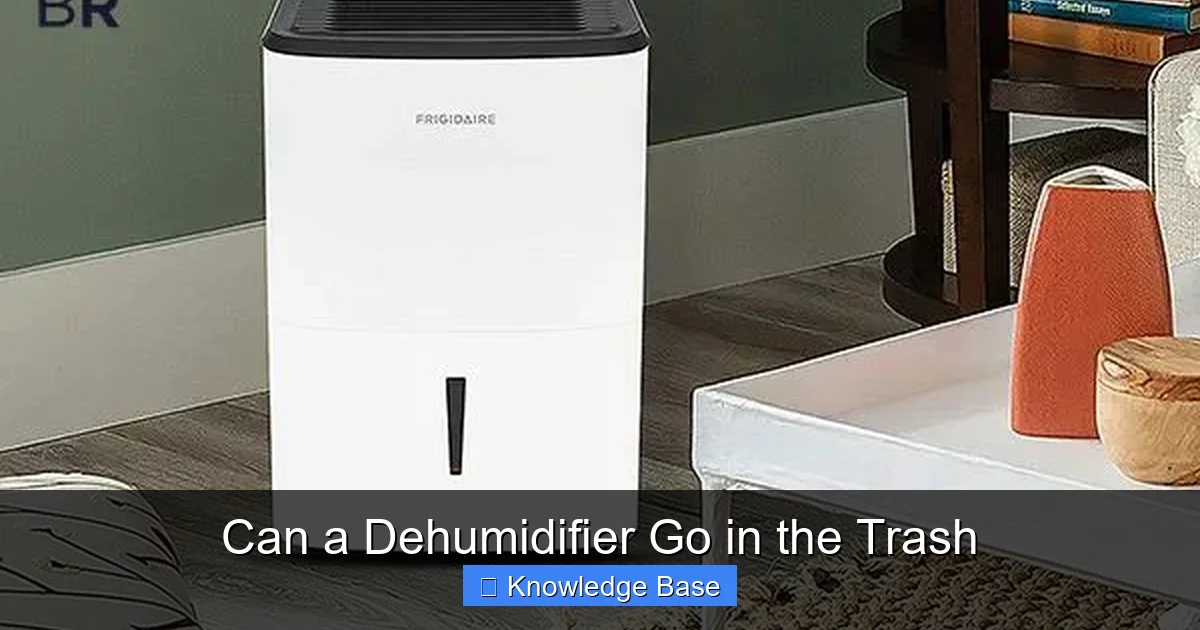
No, a dehumidifier should not simply go in the trash. These appliances contain refrigerants, oils, and electronic components that require special handling. Proper disposal protects the environment and complies with local regulations.
Key Takeaways
- Dehumidifiers contain hazardous materials: They house refrigerants like R-410A or R-32, compressor oil, and electronic parts that can harm the environment if landfilled.
- Landfilling dehumidifiers is illegal in many areas: Federal and state laws, especially in the U.S., restrict disposal of appliances with refrigerants due to ozone and climate concerns.
- Recycling is the best option: Many components—such as metal casings, copper wiring, and plastic parts—can be reclaimed and reused through certified e-waste or appliance recycling programs.
- Manufacturer and retailer take-back programs exist: Brands like Frigidaire, Honeywell, and GE often offer free or low-cost recycling when you purchase a new unit.
- Local waste authorities provide guidance: Contact your city or county waste management department to find drop-off locations or scheduled collection events for large appliances.
- Working units can be donated or resold: If your dehumidifier still functions, consider donating it to charities, shelters, or selling it online to extend its life.
- Improper disposal risks fines and pollution: Dumping dehumidifiers in regular trash can lead to legal penalties and contribute to soil and water contamination.
[FEATURED_IMAGE_PLACEHOLDER]
Can a Dehumidifier Go in the Trash? The Short Answer
Let’s cut to the chase: No, you should not throw a dehumidifier in the regular trash. While it might seem like just another bulky household appliance, dehumidifiers contain substances and materials that make them unsuitable for standard landfill disposal. These devices are classified as “white goods” or “major appliances,” and they fall under specific environmental regulations due to their internal components.
Think of it this way—would you toss an old refrigerator into the dumpster behind your house? Probably not, because you know it’s got coolant inside that could leak and cause harm. A dehumidifier works similarly to a fridge: it uses a refrigeration cycle to pull moisture from the air. That means it contains refrigerant gases, compressor oil, copper coils, and electronic controls—all of which require careful handling at end-of-life.
Throwing a dehumidifier in the trash isn’t just risky for the planet; it can also get you in trouble with local authorities. Many municipalities have strict rules about disposing of appliances with refrigerants. In some places, doing so could result in fines or penalties. Plus, landfills aren’t designed to safely contain these materials. Over time, corroded parts can leak toxins into soil and groundwater, creating long-term environmental damage.
Why Dehumidifiers Can’t Be Tossed Like Regular Trash
To understand why dehumidifiers don’t belong in your curbside bin, let’s break down what’s inside them. At first glance, it looks like a plastic box with a fan and a water tank. But under the hood, there’s a complex system designed to cool air, condense moisture, and reheat it before releasing it back into the room.
The Refrigerant Problem
The biggest concern is the refrigerant. Most modern dehumidifiers use hydrofluorocarbon (HFC) refrigerants like R-410A or R-32. These gases are potent greenhouse gases—thousands of times more effective at trapping heat in the atmosphere than carbon dioxide. If released into the air during improper disposal, they significantly contribute to global warming. Even small leaks from crushed or punctured units in landfills can have a measurable impact.
Under the U.S. Clean Air Act and international agreements like the Kigali Amendment to the Montreal Protocol, it’s illegal to knowingly release these refrigerants into the atmosphere. Certified technicians must recover them using specialized equipment before a unit is scrapped or recycled.
Other Hazardous Components
Beyond refrigerants, dehumidifiers contain other materials that pose risks:
- Compressor oil: Often mixed with refrigerant, this oil can be contaminated and classified as hazardous waste.
- Electronic control boards: These may contain trace amounts of heavy metals like lead or mercury.
- Insulation and wiring: Older models might use materials now known to be toxic, such as certain flame retardants or PVC coatings.
Even the metal and plastic parts aren’t benign in a landfill. While they don’t “leak” toxins immediately, they take decades—or even centuries—to break down. During that time, they occupy valuable space and may release microplastics or leachates as they degrade.
Energy and Resource Waste
Dehumidifiers are built with valuable resources: steel for the frame, copper for the coils, aluminum for heat exchangers, and engineered plastics for housings and tanks. When tossed in the trash, these materials are lost forever instead of being recovered and reused. Recycling just one ton of steel saves over 2,500 pounds of iron ore, 1,400 pounds of coal, and 120 pounds of limestone. That’s a big win for sustainability.
Legal and Environmental Regulations You Should Know
Disposing of a dehumidifier isn’t just a matter of personal choice—it’s regulated by law in many countries. Understanding these rules helps you avoid fines and do your part for the planet.
U.S. Federal Laws
In the United States, the Environmental Protection Agency (EPA) enforces Section 608 of the Clean Air Act, which governs the handling of refrigerants in appliances. This law requires that:
- Refrigerants must be recovered by a certified technician before disposal.
- Only EPA-certified reclaimers can process and recycle refrigerants.
- Homeowners cannot legally vent refrigerants—even if they’re “just replacing the unit.”
While individuals aren’t typically fined for accidentally tossing a small appliance, waste haulers and landfill operators can face serious penalties if they accept improperly prepared units. Many municipal waste systems now inspect loads and reject those containing uncaptured refrigerants.
State and Local Rules
States often have even stricter rules. For example:
- California: Requires all appliances with refrigerants to be processed through certified recyclers. Curbside trash collection will not accept them.
- New York: Offers free appliance recycling through the state’s “Recycle Your Fridge” program, which includes dehumidifiers.
- Texas: Allows some counties to set their own rules, but most require refrigerant recovery before landfill disposal.
Even if your state doesn’t have explicit laws, your city or county likely does. Always check with your local solid waste authority before deciding how to dispose of your unit.
International Guidelines
Outside the U.S., regulations vary but are often more stringent. The European Union’s Waste Electrical and Electronic Equipment (WEEE) Directive requires producers to take back and recycle electronic appliances, including dehumidifiers. In Canada, provincial programs like Ontario’s “Take Back” initiative ensure safe recycling. Australia and Japan also have robust appliance recycling frameworks.
The bottom line: wherever you live, there’s likely a legal or recommended pathway for responsible dehumidifier disposal. Ignorance isn’t an excuse—and it’s easier than ever to find help.
Safe and Responsible Disposal Options
Now that you know why tossing your dehumidifier in the trash is a bad idea, let’s explore the right ways to get rid of it. The good news? There are several convenient, eco-friendly options—many of them free or low-cost.
1. Recycle Through Certified Programs
The most environmentally sound option is recycling through a certified e-waste or appliance recycler. These facilities have the tools and training to safely remove refrigerants, drain oils, and dismantle components for material recovery.
Look for recyclers certified by organizations like:
- EPA’s Responsible Appliance Disposal (RAD) Program: Partners with utilities and retailers to ensure proper handling.
- R2 (Responsible Recycling) or e-Stewards: Third-party certifications that guarantee ethical and safe e-waste processing.
Many cities host periodic “bulk waste” or “hazardous waste” collection days where you can drop off old appliances. Some even offer curbside pickup for a small fee. Call your local waste department or search online for “appliance recycling near me.”
2. Use Retailer or Manufacturer Take-Back Programs
When buying a new dehumidifier, ask if the store offers a take-back service. Major retailers like Home Depot, Lowe’s, Best Buy, and Costco often provide free recycling when you purchase a replacement. They’ll haul away your old unit and ensure it’s processed correctly.
Manufacturers also participate. For example:
- Frigidaire: Partners with local recyclers and offers guidance on their website.
- Honeywell: Provides a recycling locator tool and supports municipal programs.
- GE Appliances: Offers free recycling through their “Recycle My Old Appliance” initiative.
Even if you’re not buying new, some brands accept old units directly. Check their customer service pages or call their support line.
3. Donate or Sell If It Still Works
If your dehumidifier is in good working condition, consider giving it a second life. Donating extends its usefulness and keeps it out of the waste stream entirely.
- Charities: Organizations like Goodwill, The Salvation Army, and Habitat for Humanity ReStore often accept working appliances.
- Community groups: Facebook Marketplace, Nextdoor, or Craigslist are great for local sales or giveaways.
- Shelters and nonprofits: Homeless shelters, senior centers, and disaster relief groups frequently need dehumidifiers for mold prevention.
Before donating, clean the unit thoroughly, replace the filter if possible, and include the original manual if you have it. A little effort goes a long way in making your donation useful.
4. Utility Company Rebates and Recycling
Some electric utilities offer rebates or free recycling for old, inefficient dehumidifiers—especially if you’re upgrading to an Energy Star model. These programs aim to reduce energy consumption and prevent refrigerant release.
For example, Con Edison in New York and PG&E in California have run campaigns where customers receive $50–$100 for recycling old dehumidifiers. Check your utility provider’s website or call customer service to see if such programs are available in your area.
Step-by-Step: How to Prepare Your Dehumidifier for Disposal
Proper preparation ensures your dehumidifier is safe to transport and recycle. Follow these steps to do it right:
Step 1: Unplug and Drain
Turn off and unplug the unit. Remove the water collection tank and empty any remaining water. Wipe it dry to prevent mold or odors during storage or transport.
Step 2: Clean the Unit
Use a damp cloth to wipe down the exterior and interior (if accessible). Replace or clean the air filter according to the manufacturer’s instructions. A clean unit is more likely to be accepted by recyclers or donors.
Step 3: Check Local Requirements
Contact your local waste authority or recycling center to confirm their specific rules. Some may require you to remove the power cord or label the unit as “refrigerant-containing.”
Step 4: Arrange Transport
Dehumidifiers can be heavy (20–70 pounds). Use a dolly or ask for help when moving it. If using a curbside pickup service, place it at the curb the night before collection—but never leave it exposed to rain, as moisture can damage internal components.
Step 5: Get a Receipt (If Applicable)
If you’re using a paid service or donating to a nonprofit, ask for a receipt. This can be useful for tax deductions (for donations) or proof of proper disposal.
Remember: never attempt to dismantle the unit yourself to remove refrigerant. This is dangerous and illegal without proper certification. Leave that to the professionals.
The Environmental Impact of Improper Disposal
Every year, millions of appliances end up in landfills—and dehumidifiers are no exception. The consequences go far beyond wasted space.
When refrigerants leak, they don’t just vanish. They rise into the atmosphere and trap heat, accelerating climate change. One pound of R-410A has a global warming potential (GWP) of over 2,000 times that of CO₂. Multiply that by thousands of discarded units, and the impact becomes significant.
Additionally, heavy metals and oils can seep into groundwater, affecting drinking water supplies and ecosystems. Animals may ingest plastic fragments or become entangled in wiring. And the energy used to manufacture new units increases when recycled materials aren’t available.
By choosing responsible disposal, you’re not just following the law—you’re helping conserve resources, reduce emissions, and protect public health.
Conclusion
So, can a dehumidifier go in the trash? The answer is a clear and firm no. These appliances contain hazardous refrigerants, oils, and valuable materials that demand careful handling. Landfilling them risks environmental harm, legal trouble, and wasted resources.
Instead, explore recycling programs, retailer take-back options, or donation opportunities. With a little effort, you can ensure your old dehumidifier is disposed of safely and sustainably. Not only will you stay compliant with regulations, but you’ll also contribute to a cleaner, greener future.
Next time you’re ready to replace your dehumidifier, remember: the right choice isn’t the trash can—it’s responsible recycling.
Quick Q&A
Can I throw a broken dehumidifier in the trash?
No, even broken dehumidifiers contain refrigerants and other hazardous materials that require special disposal. Always recycle or use a certified disposal service.
Is it illegal to throw away a dehumidifier?
In many U.S. states and countries, yes—especially if the refrigerant hasn’t been properly recovered. Check local laws to avoid fines.
Can I recycle a dehumidifier at Home Depot?
Yes! Many Home Depot locations offer free appliance recycling when you purchase a new dehumidifier. Call ahead to confirm.
What happens to dehumidifiers at recycling centers?
They’re dismantled, refrigerants are captured, and metals, plastics, and electronics are sorted for reuse in new products.
Can I donate a dehumidifier that doesn’t work?
Most charities only accept working units. However, some repair shops or vocational schools may take non-working models for parts or training.
FAQS
Do all dehumidifiers contain refrigerant?
Most compressor-based dehumidifiers do, but desiccant models (common in smaller or low-temperature units) do not. Check your user manual to confirm.
How much does it cost to recycle a dehumidifier?
Many programs are free, especially through retailers or municipal collections. Private haulers may charge $10–$50 depending on location and service.
Can I remove the refrigerant myself?
No. Only EPA-certified technicians can legally recover refrigerants. Attempting to do so is dangerous and violates federal law.
What if I live in a rural area with no recycling programs?
Contact your county waste office—they may offer periodic collection events or mail-in options. Some national programs also provide prepaid shipping labels.
Are mini dehumidifiers treated the same way?
Mini or thermoelectric dehumidifiers often lack refrigerants, so they may be accepted as e-waste. Still, check local rules—they often contain circuit boards and plastics that shouldn’t go in regular trash.
How long do dehumidifiers last before needing replacement?
Most last 5–10 years with proper maintenance. If yours is noisy, inefficient, or no longer removes moisture effectively, it’s likely time to recycle and upgrade.
This is a comprehensive guide about can a dehumidifier go in the trash.
Key Takeaways
- Understanding can a dehumidifier go in the trash: Provides essential knowledge
Quick Answers to Common Questions
What is can a dehumidifier go in the trash?
can a dehumidifier go in the trash refers to essential knowledge and techniques.
Frequently Asked Questions
What is can a dehumidifier go in the trash?
can a dehumidifier go in the trash is an important topic with many practical applications.